
Choosing the right advertising channels isn’t just a tactical step — it directly impacts how your budget performs, how your funnel functions, and how your brand is perceived.
Many campaigns underperform not because the offer is weak or the creative is flawed, but because the ads are showing up in the wrong place, at the wrong time, to the wrong audience.
The truth is: not every channel is built for your product, and not every audience is ready to buy where you’re running ads.
Before you choose where to spend, understand what each platform enables and whether it aligns with your business goals.
Step 1: Anchor Your Platform Choice in Business Logic
Before testing any new platform, take a step back and assess how your business actually drives revenue. This informs where and how your ads should appear.
Start with these two key questions:
What kind of purchase journey does your product require?
-
If you're selling an item under $50 that people can buy without much thought, choose platforms that support discovery and fast action. For example, Meta’s Instagram Reels or Facebook Feed placements work well for low-friction decisions.
-
If you’re offering a high-ticket product or something that involves trust — like coaching, SaaS, or B2B services — use platforms that allow sequencing and longer storytelling, such as Meta video ads or YouTube pre-rolls.
What is your primary sales motion?
-
Self-serve checkout: Use Meta ads with dynamic product catalogs and Facebook Shops for a smooth path to purchase.
-
Sales calls or demos: Use Facebook Lead Ads or Instagram tap-to-message formats to generate qualified inquiries, then retarget with testimonials or longer-form content.
Mapping your buying process to ad delivery ensures your budget supports how people actually decide — not just how you hope they will.
Step 2: Align Each Platform With a Specific Campaign Objective
Every major ad platform is optimized for different goals. When you run ads with the wrong objective — or worse, try to use one campaign for multiple goals — performance suffers.
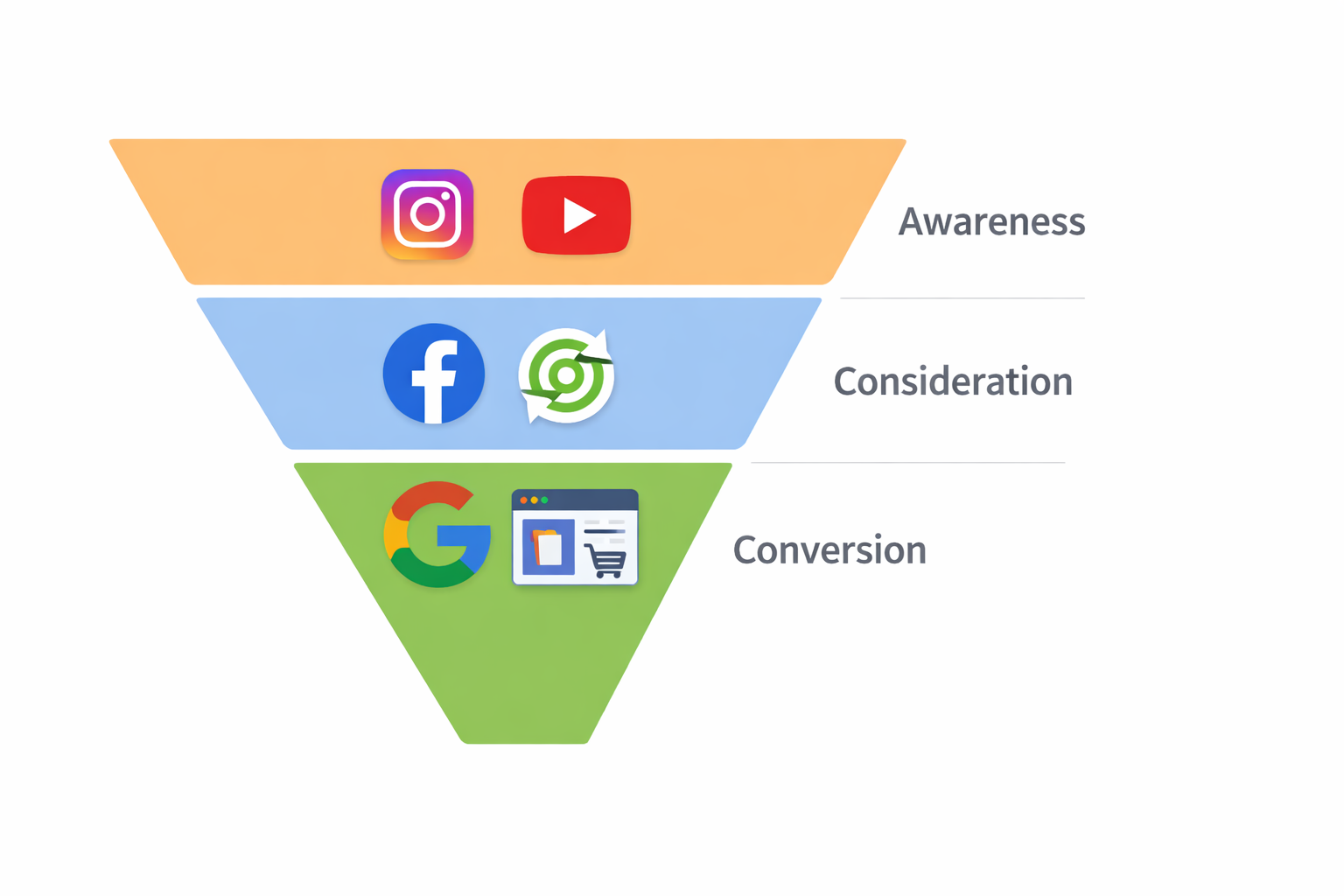
Start by choosing one goal per campaign. Then match that goal to the platform’s actual strength.
To better understand how Meta’s objectives work across campaign types, check out this breakdown: Meta Ad Campaign Objectives Explained.
Here’s a breakdown:
For awareness and reach:
-
Use Instagram Reels to boost visual recall in the 18–34 demographic.
-
Use Facebook video to build early-stage engagement across devices.
-
Avoid starting with YouTube unless you have strong brand assets and attention-holding creatives.
For lead generation:
-
Use Facebook Lead Ads or Instant Forms. These reduce friction by keeping users on-platform and increase volume when paired with engagement retargeting.
-
Use LinkedIn Lead Gen Forms only for high-value, business-specific offers. Cost per lead is high but sometimes justified by deal size.
For direct purchase:
-
Use Facebook and Instagram Dynamic Product Ads if you have a synced product catalog.
-
Use Google Shopping or Performance Max once brand awareness exists and search volume is measurable.
The key is not to rely on one channel to carry the full journey. Assign each one a clear job to do.
Step 3: Use Data to Find Where Your Audience Actually Spends Time
Choosing platforms based on audience assumptions leads to waste. Base decisions on behavioral data, not surface-level demographics.
Here’s how to get that data:
Start with your internal performance data
-
Check Meta’s Breakdown Reports to find which devices, age groups, and placements drive conversions — not just clicks.
-
Review Google Analytics source reports to see where high-value sessions are coming from.
-
If you're using post-purchase surveys, extract platform attribution data directly from your customers.
Step 4: Match Creative Format to Channel Mechanics
One of the most common reasons campaigns underperform is a creative mismatch. You can’t simply crop one ad into five placements and expect it to convert everywhere.
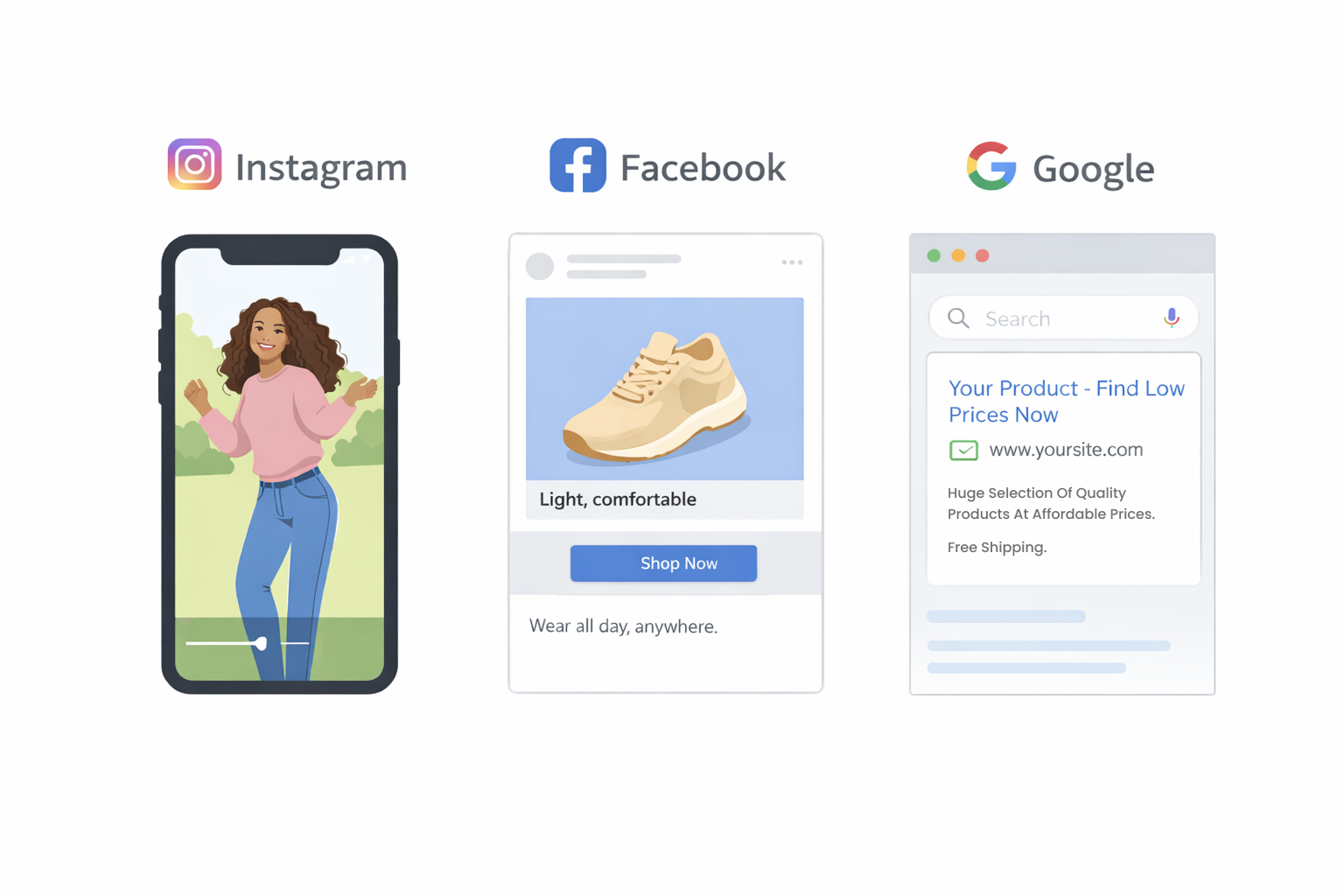
Design ads that are native to each platform’s structure, pace, and user expectations.
For more help crafting ad creative that aligns with buyer intent, read: How to Match Your Ad Copy to Funnel Stage.
Practical guidelines:
-
On Instagram Reels, use vertical video with motion in the first 2 seconds. No long intros. Use audio that fits the current platform tone — not just your brand voice.
-
For Facebook Feed, structured storytelling performs best. Try a carousel with: slide 1 as the “problem,” slide 2 as the “solution,” slide 3 as the CTA.
-
On Google Search, use headlines that mirror the search intent as closely as possible. Use Dynamic Keyword Insertion only if your brand voice can remain intact.
-
On YouTube, front-load the hook. You only have 5 seconds before a user can skip — so avoid intros or heavy branding upfront.
A well-structured ad loses effectiveness when used in the wrong format. Creative and channel strategy should develop together — not separately.
Step 5: Use a Phased Expansion Strategy, Not a Platform Grab
Advertisers often launch across multiple channels at once to “cover their bases.” In most cases, this just splits the budget and slows down learning.
Instead, assign each platform to a role in your funnel and expand in phases based on performance.
Need help mapping that kind of strategy? Check out this article: The Smartest Way to Plan Multi-Stage Facebook Campaigns.
Example rollout strategy:
-
Phase 1 — Facebook and Instagram (Meta):
Use engagement and video view campaigns to build a warm audience. Add retargeting to drive low-friction actions (e.g., add to cart, signup). -
Phase 2 — Google Search:
Once awareness builds, run branded and non-branded search campaigns to capture high-intent traffic. Use this to validate messaging clarity. -
Phase 3 — YouTube or LinkedIn:
Use YouTube to scale mid-funnel storytelling or LinkedIn if your offer requires specific targeting and high-quality leads.
Don’t launch the next channel until you have stable CAC (customer acquisition cost) and attribution from the current one.
Step 6: Measure the Right Metrics Across Platforms
Success on one platform doesn’t always mean immediate conversions. That doesn’t make it unprofitable. Each channel plays a role — and should be measured accordingly.
If you’re unclear on how Meta handles cross-platform attribution, this article breaks it down: How to Use the Facebook Attribution Tool.
Attribution tips:
-
For Meta, use a 7-day click and 1-day view attribution setting to capture delayed conversions from social exposure.
-
For Google Search, track first-click and last-click conversions separately. This helps identify whether the platform is closing sales or initiating them.
-
Use Meta lift tests (if available) to measure actual incremental impact from your social campaigns.
Avoid judging channels by the same metric. Instead, define success by the specific role each one plays in the user journey.
Closing Thoughts
Choosing advertising channels isn’t about following trends or copying competitors. It’s about aligning with how your audience behaves, what your offer requires, and what kind of creative you can deliver consistently.
To build a funnel that functions even if you’re starting from scratch, check out: The Facebook Ad Funnel That Works Even If You Have No Email List.
