Many marketers track clicks as a key success metric. On Facebook and Instagram, high click-through rates often look promising. But they can hide a deeper problem.
Clicking is not buying. A user may tap out of curiosity, habit, or boredom. If they don’t move forward from there, the campaign fails — even if the numbers suggest early success.
Understanding what makes an offer buyable, not just clickable, is how advertisers stop wasting budget and start building real momentum. For a more detailed breakdown, see Why Clicks Don’t Equal Demand.
What Makes an Offer Clickable
Clickable offers are designed to spark interest. They perform well at the top of the funnel, where the goal is often to stop the scroll and earn a response.
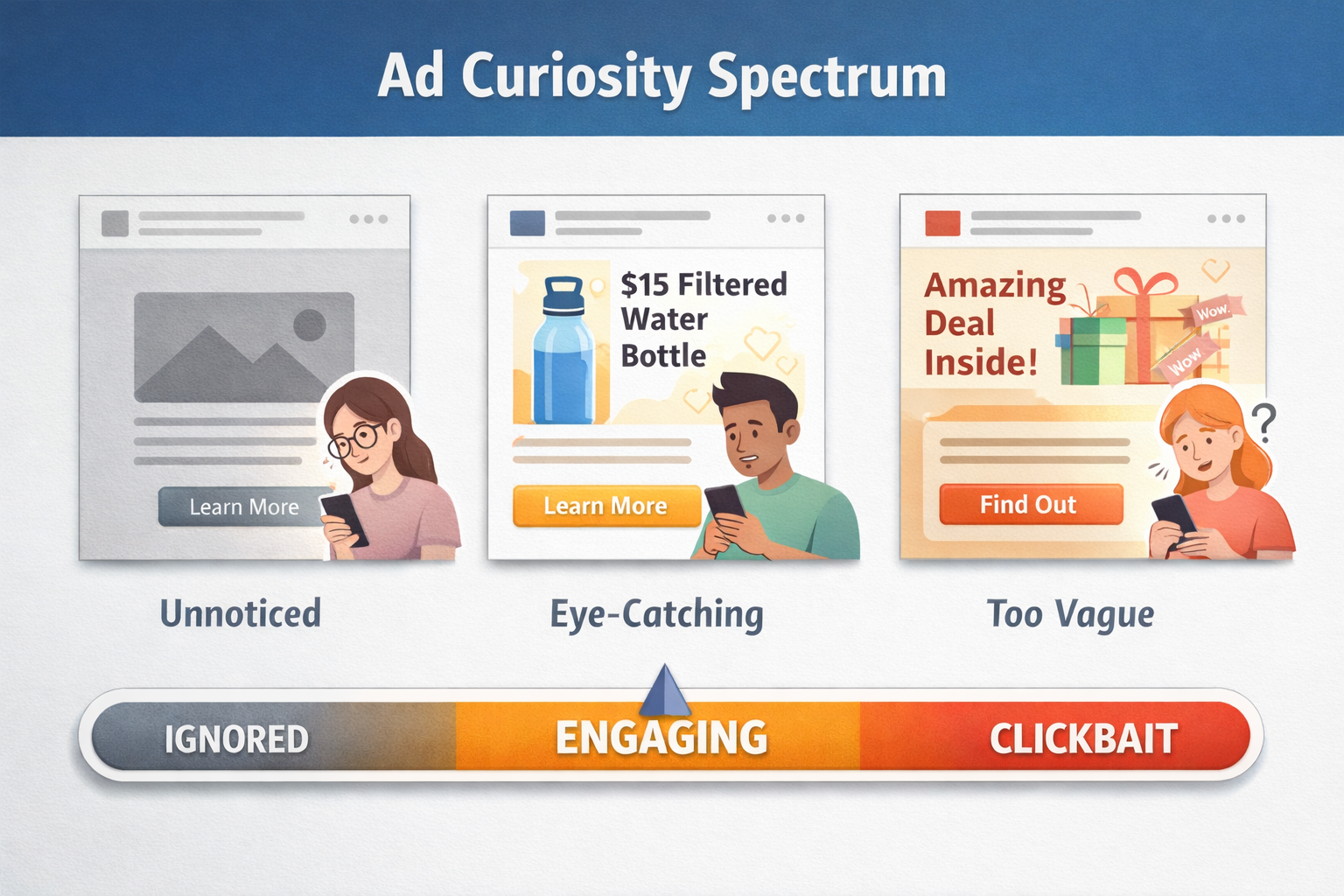
Most clickable ads do at least one of the following:
-
Use bold or visually unusual images, such as extreme close-ups, motion overlays, or unexpected framing;
-
Promise discovery, using open-ended copy like “You won’t believe this” or “This changes everything” without giving away the product;
-
Lower the barrier to engagement, by using soft calls to action such as “Learn more,” “See why,” or “Take a quick quiz.”
These tactics work when the goal is attention. But attention by itself is not enough.
Clickable ads often fall apart once the user lands on the next step. If the offer is unclear, too general, or mismatched with the user’s expectations, they leave — and the cost per acquisition climbs. This drop-off is one of the most common and expensive problems, as outlined in Reducing Drop-Off in Facebook Ads.
What Makes an Offer Buyable
A buyable offer helps the user do one thing: make a confident decision. That requires clarity, consistency, and friction reduction across every element of the experience.
Buyable offers tend to include:
-
Specific product value, clearly framed in terms of the user’s need or context. For example, “Keeps skin hydrated for 8 hours, even in dry winter air”;
-
Clear pricing and incentive, such as “$49 for a 30-day supply, plus free shipping if you order today”;
-
Familiar trust signals, like customer ratings, press mentions, or payment security badges — especially for first-time purchases;
-
A seamless post-click experience, where the product, message, and call to action are fully aligned with the original ad.
If the post-click experience fails to deliver on the ad’s promise, even high-quality traffic won’t convert. For guidance on creating a consistent path, see Creating a Seamless Experience Between Ads and Landing Pages.
Why These Offers Often Don’t Overlap
Clickable and buyable offers operate on different psychological triggers.
Clickable ads often create curiosity by withholding information. Buyable offers, on the other hand, succeed by being direct and specific.
That gap is where many campaigns lose their performance. If the ad leads with mystery, but the landing page demands commitment, users bounce. If the ad feels casual, but the page is dense and sales-heavy, trust breaks down.
Here’s a simple example:
A Facebook ad says, “This small change reversed my back pain.” It gets clicks. But when users arrive on a page selling a $70 posture corrector with no reviews or testimonials, they leave. The interest was there — the buying conditions weren’t.
Now compare it to: “Clinically supported back brace. 3,000+ reviews. $39 this week only. Ships free.” That may get fewer clicks, but the clicks are far more likely to convert.
How to Bridge the Gap Between Clickable and Buyable
To build campaigns that convert, you need to connect the top-of-funnel spark with a bottom-of-funnel structure.
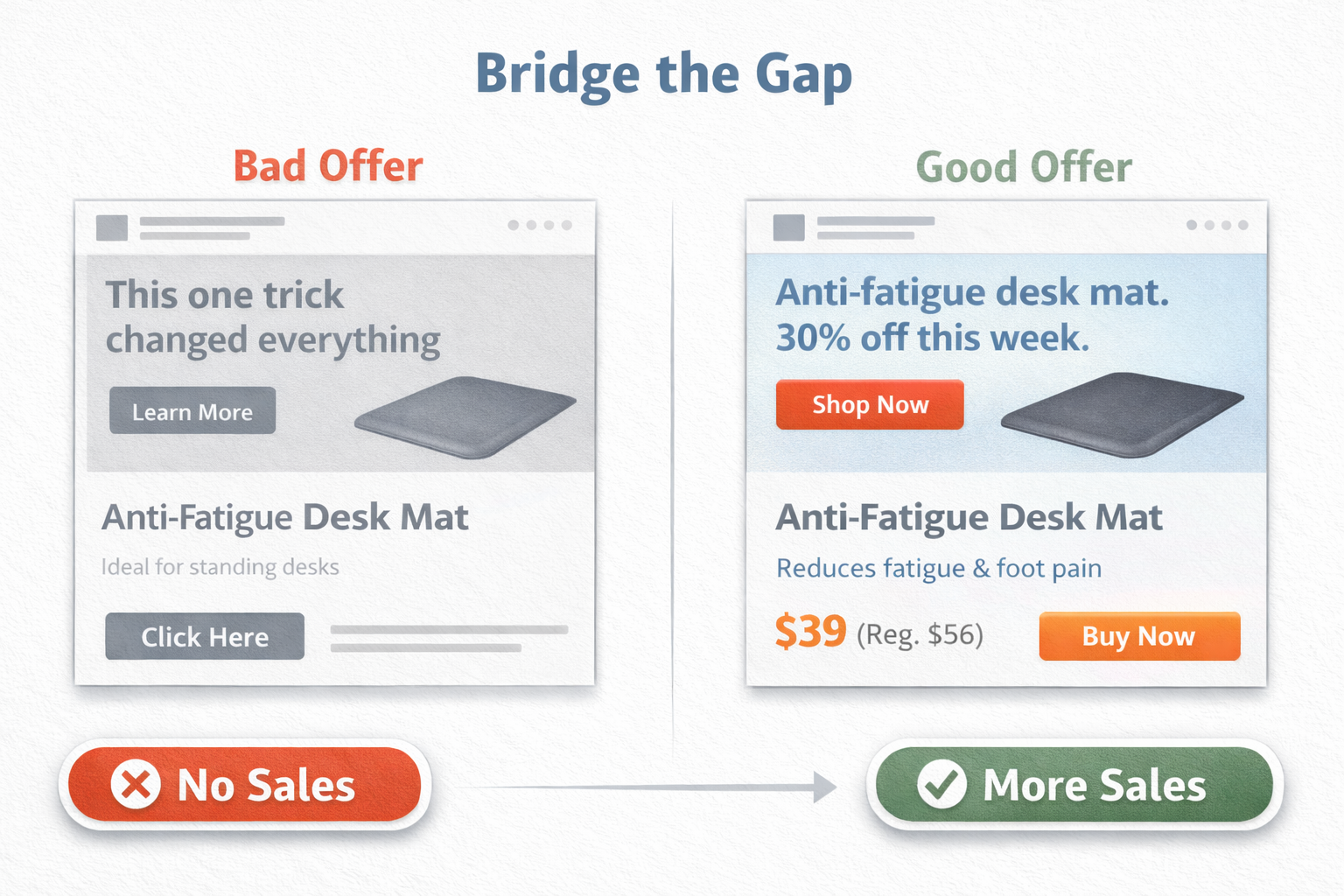
Start by tightening the path from interest to purchase. That includes:
1. Align the Intent With the Stage
Different users respond to different kinds of offers. Targeting top-of-funnel users with purchase-focused ads often leads to wasted spend.
-
Awareness-stage users respond best to product discovery, lifestyle context, or emotional storytelling;
-
Mid-funnel users engage with problem-solution framing, bundles, or comparisons;
-
Ready-to-buy users look for pricing clarity, guarantees, and delivery details.
Don’t assume one offer fits all. For a full-funnel blueprint, check out Facebook Ads Funnel Strategy: From Audience Identification to Conversion.
2. Clarify the Core Offer — Fast
Within three seconds of landing, the user should understand:
-
What the product is;
-
What the product does;
-
What it costs;
-
What happens next.
Avoid vague headlines, generic features, or multi-paragraph explanations. If the user needs to scroll or guess, you’ve lost the moment.
3. Eliminate Micro Friction
Conversion rarely fails because of one obvious issue. It usually dies by a dozen small problems that add up. Look for things like:
-
Slow-loading pages;
-
Inconsistent pricing across ad and landing page;
-
Surprising shipping fees;
-
CTA buttons that blend in;
-
Missing or buried return policies.
Each of these adds hesitation. Reduce them systematically.
Rethink Your Ad Testing Approach
Most A/B tests focus on what gets more clicks. But testing for conversion — not just engagement — gives you better data over time.
Try testing:
-
Ad versions with value-based vs. teaser-based headlines;
-
Different levels of detail in the ad copy, from curiosity to clarity;
-
Stronger offer framing, such as side-by-side comparisons or price anchoring.
Track not just CTR, but also metrics like cost per purchase, purchase rate by ad set, and landing page drop-off. To improve your testing discipline, read Why Most Ad Tests Fail — and How to Fix Them.
The Bottom Line
Clicks are easy to get. Conversions are harder — but they’re what actually moves the business forward.
A clickable offer gets someone interested. A buyable offer helps them decide. The best campaigns don’t just blend both — they build a clear, user-centered path from one to the other.
Success doesn’t come from being louder. It comes from being clearer.