Zero-party data is information your audience gives you on purpose. It’s not tracked, scraped, or guessed. People choose to share it — like their interests, needs, or preferences.
For anyone running Facebook or Instagram ads, this type of data can be a major advantage. It helps you understand your audience, deliver better ads, and improve your results — without relying on cookies or hidden trackers.
Let’s break down how to collect this kind of data, why it matters now more than ever, and how to use it in your campaigns.
Why zero-party data is more important than ever
If you’ve been running ads for a while, you’ve probably noticed some changes. Targeting has become harder. Results are less predictable. Costs are going up.
That’s because of major privacy updates — especially on iOS devices — and new tracking limits. Facebook’s pixel doesn’t see as much. Cookies are going away. Lookalike audiences built from website visits don’t work like they used to.
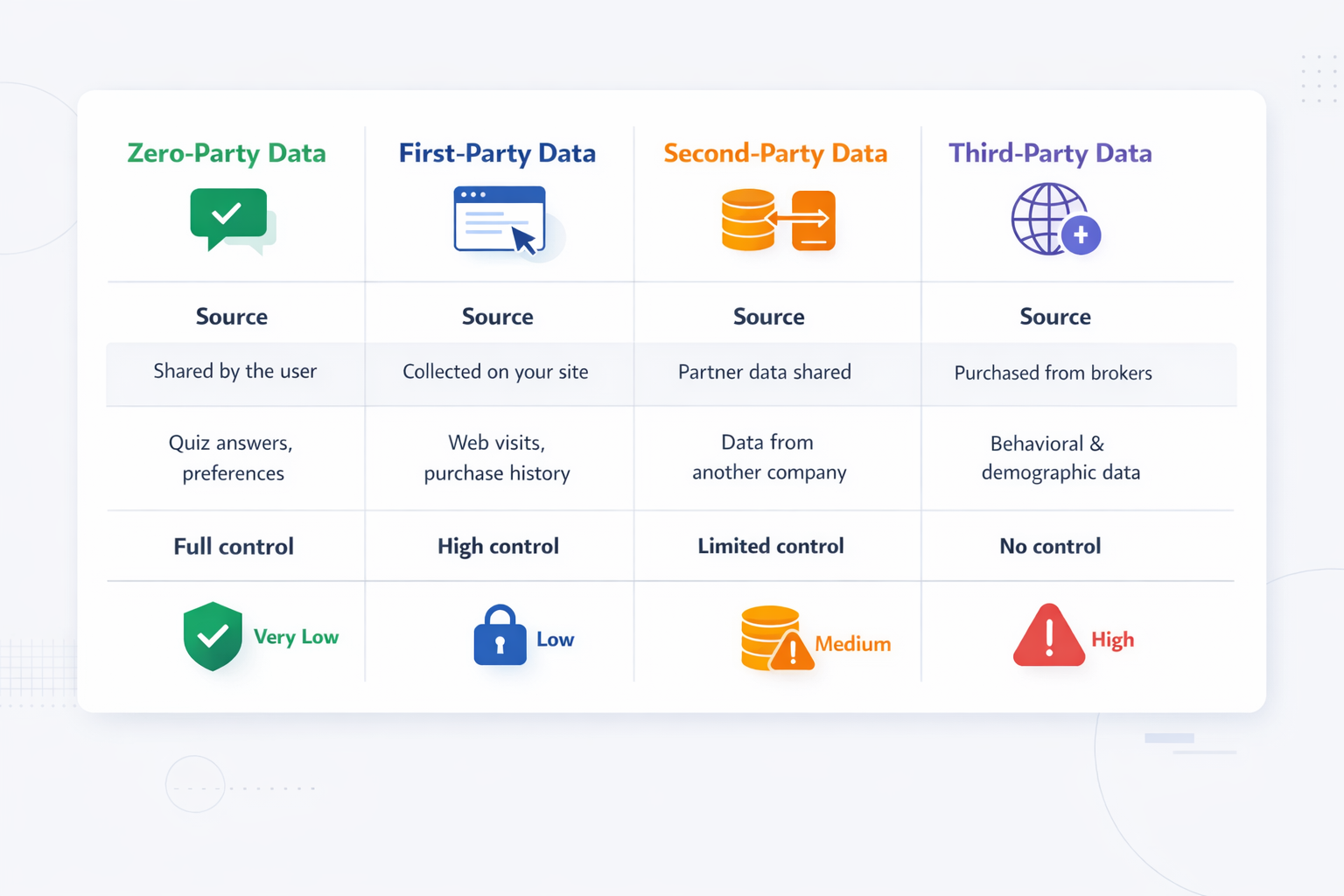
Zero-party data is one way to fix this. You're not relying on tracking. You're asking your audience directly — and they’re telling you what they want. That makes your targeting more accurate, your ads more personal, and your marketing more future-proof.
For more on this shift, check out Zero-Party Data and Facebook Ad Targeting: The Future of Custom Audiences.
What zero-party data actually looks like
Zero-party data is anything a person tells you about themselves voluntarily. Here are some examples:
-
A user selects their hair type on a product quiz;
-
A lead chooses “freelancer” in a dropdown when signing up;
-
A shopper clicks "I'm shopping for a gift" on a product page;
-
A person answers a poll in your Instagram Story.
This kind of data is clear. You’re not guessing someone’s preferences based on what page they visited. You're asking — and they're answering.
How to collect zero-party data using Facebook and Instagram ads
There are many simple, creative ways to start collecting this type of data — without complicated tools or technical setups.
1. Use lead forms with smart, simple questions
Facebook and Instagram let you create lead ads with built-in forms. These are great for getting emails and phone numbers — but they’re also a chance to learn more about your audience.
You can add custom questions that give you useful data for future targeting.
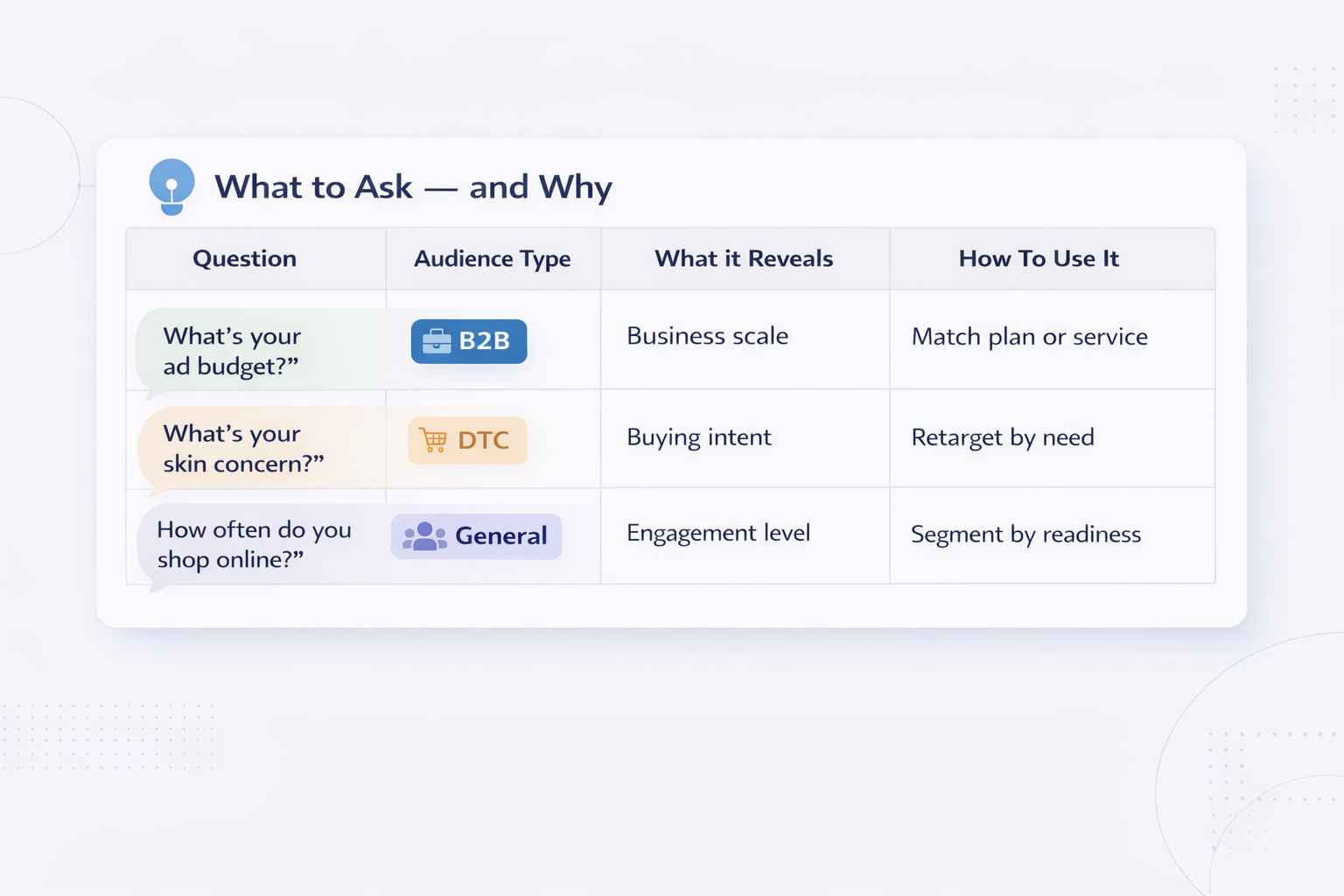
Try questions like:
-
“What type of business do you run?” — Helps you match them to the right offer or service tier.
-
“Which service are you most interested in?” — Lets you send the right follow-up email or ad.
-
“What’s your biggest challenge right now?” — Gives you insight for ad copy and retargeting.
Keep the questions short and clear. Use multiple choice if possible — it’s easier to answer and easier to organize later.
Pro tip: Don’t ask five or six things at once. Stick to one or two questions max. Make it feel fast and low-pressure.
More on this: What Makes a Facebook Lead Form Convert? 5 Key Optimization Tips.
2. Turn your ads into fun, helpful quizzes
Quizzes are one of the easiest ways to collect high-quality zero-party data. People like answering questions when it helps them get something useful.
You can promote a quiz in your ad that helps the user discover something helpful:
-
“Find the perfect skincare routine for your skin type”;
-
“Which productivity method suits you best?”;
-
“Which of our services fits your goals?”
Inside the quiz, ask three to five quick questions. Keep them easy to answer. At the end, show a recommendation or result — and collect contact info.
You now get:
-
A lead;
-
Clear info on what they’re looking for;
-
Someone more likely to buy because they interacted with your ad.
Want to see how quizzes lower cost per lead? Read How to Use Quiz Funnels for Cheaper Leads.
3. Collect small data through interactive story ads
Not every data point needs a form. You can gather useful info from clicks and taps.
Instagram Stories and Reels let you add things like:
-
Poll stickers — for quick preferences;
-
Emoji sliders — to gauge intent or excitement;
-
Tap-to-choose paths — to learn interests.
These actions help you see:
-
What users are interested in;
-
What tone or product type they prefer;
-
How close they are to buying.
Even if they don’t fill a form, you can use their interactions to sort and retarget.
4. Segment your audience based on responses
Once you’ve collected zero-party data — use it.
A lot of advertisers collect quiz answers or form inputs but don’t act on them. That’s a waste.
Use the answers to:
-
Build smaller, more focused audiences;
-
Show different ads to different groups;
-
Personalize follow-up content.
If someone picks "low budget," show them your entry offer. If they choose "growth-focused," promote your higher-tier product.
And if most people select "finding the right audience" as their struggle, turn that into your next ad headline: "Struggling to find the right audience? Here’s a better way."
Need more ideas? Check How to Qualify Leads Through Facebook Ads Without Adding Friction.
5. Make the value exchange clear
People won’t share data without a reason. They want something useful in return.
That could be:
-
A personalized recommendation;
-
A free guide or checklist;
-
A custom quiz result;
-
A faster shopping experience.
Make it clear up front. Even one line helps:
-
"Answer 3 quick questions to get a plan that fits you."
-
"Tell us what you're looking for — we’ll guide you to the right product."
The more helpful it feels, the more likely they are to answer.
6. Match your landing pages to the customer’s stage
Don’t send everyone to the same type of page. Match the format to how ready they are to buy.
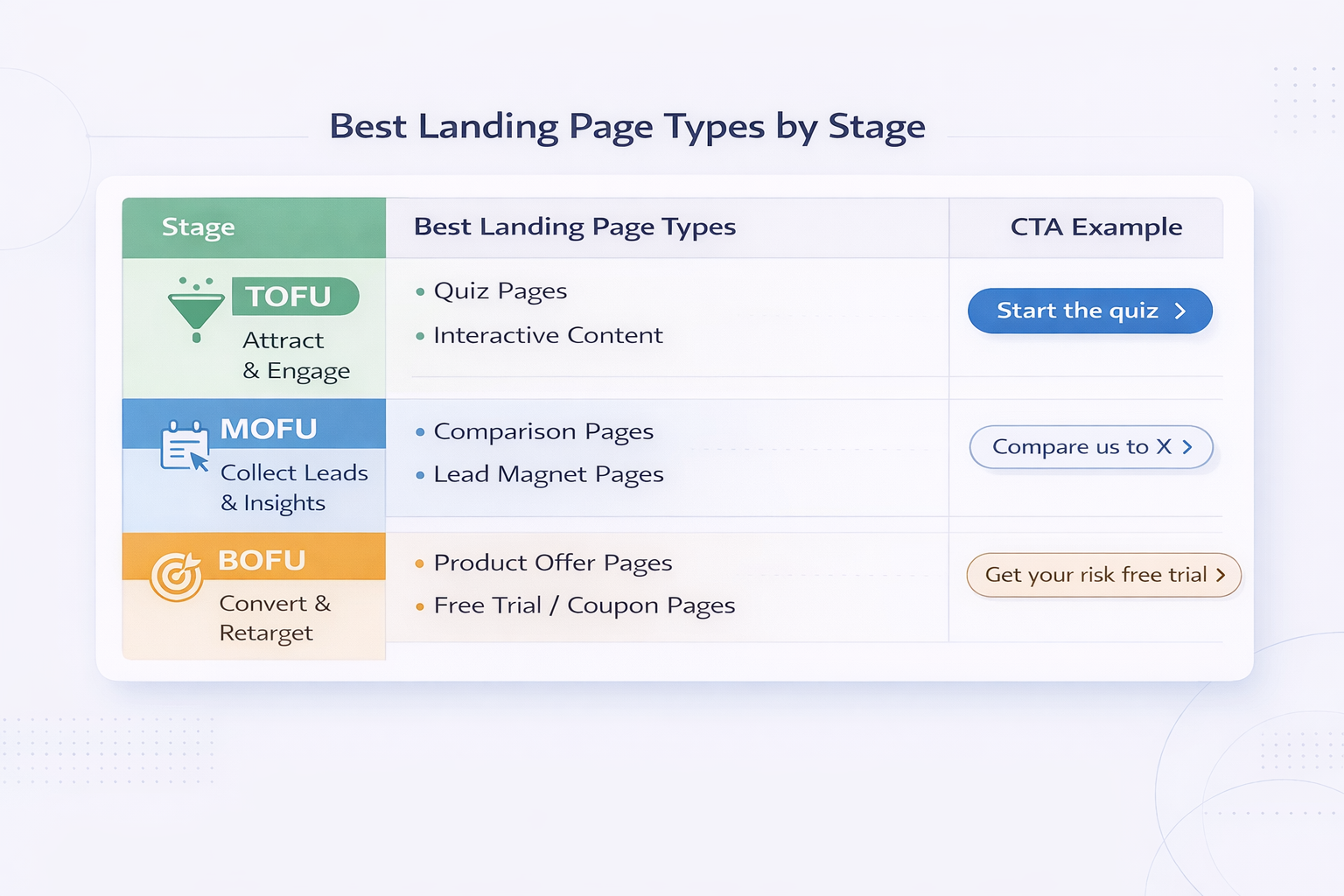
Use each page type to keep collecting light data: one question, one dropdown, one action.
Final tips to get the most from your data
You don’t need a big system to start. Just a clear reason for collecting each answer.
Do this:
-
Ask one or two useful questions per interaction;
-
Use short, plain language that’s easy to understand;
-
Review answers often to find patterns;
-
Send different content based on what people told you.
Bottom line: don’t just collect leads — collect insights
Getting emails is good. Getting real info about your audience is better.
When someone tells you what they want, you don’t need to guess. You can show better ads, write better copy, and build better campaigns.
Zero-party data helps you do that. And it starts by asking the right question.