If you run Facebook or Instagram ads, lead speed is not a backend issue — it's a direct performance driver. The time between someone submitting a form or sending a message and your first response has a measurable impact on conversion rates. When follow-up is fast, intent stays high. When it’s slow, the lead goes cold.
Automation removes delay. It ensures every lead receives an immediate, relevant response — without adding headcount.
This guide explains how to structure automated follow-up for Meta ads in a way that improves both speed and conversion quality.
Why follow-up speed directly affects conversion rates
Leads generated through Meta ads are usually high intent. A user engages with your ad because something caught their attention — in that moment. But that intent decays fast if they don't hear back.
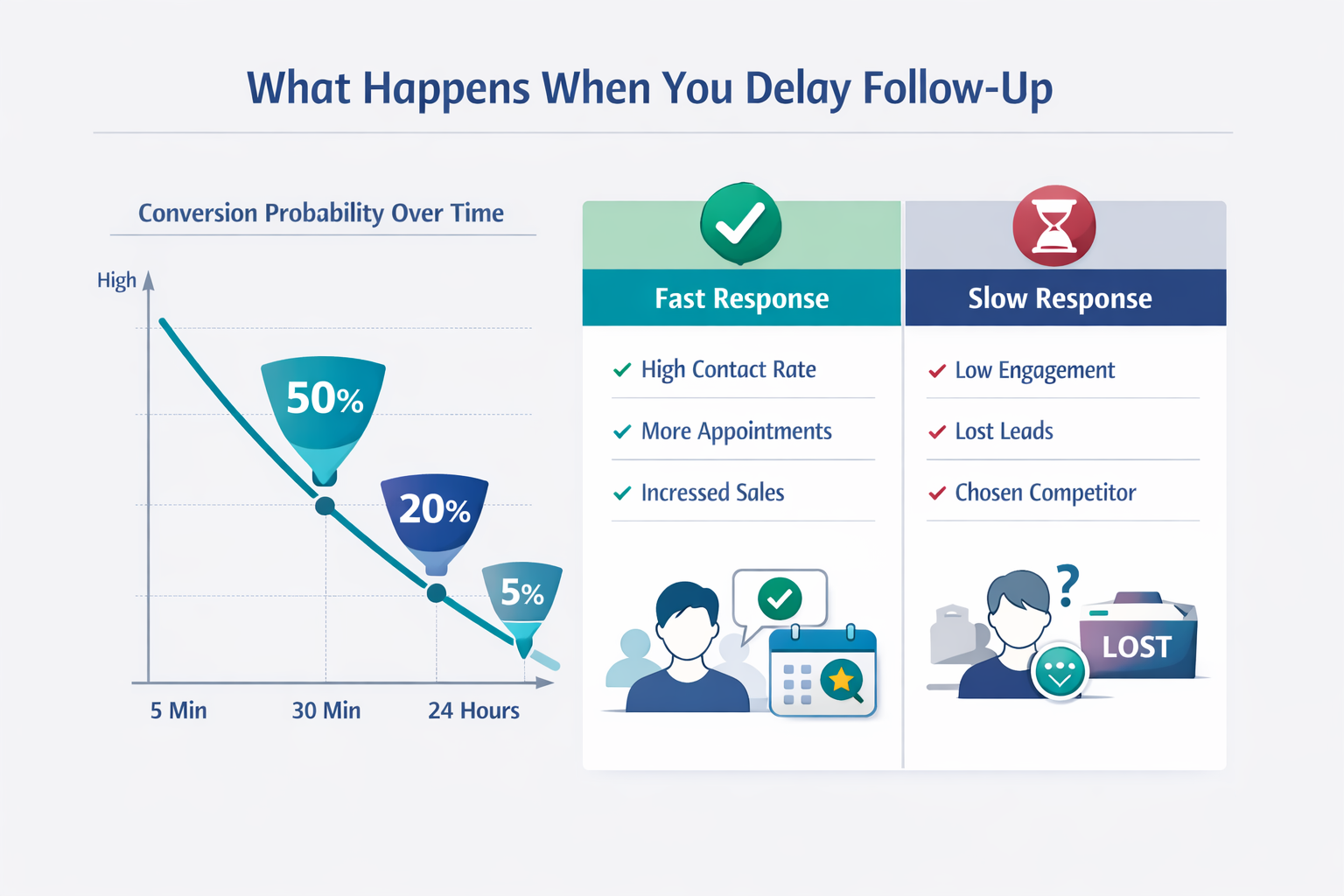
What typically goes wrong:
-
Manual processing: Exporting leads from Ads Manager manually delays outreach;
-
Notification breakdowns: Sales or support teams don’t get real-time updates;
-
Unclear ownership: No set workflow for who responds to which lead;
-
Mismatch in messaging: Follow-up doesn’t align with what the ad promised.
To address these, your follow-up process must be immediate, automated, and connected to the ad experience. For more on aligning lead handling with user expectations, see Why Your Facebook Ads Aren’t Generating Leads and How to Fix It.
Automating follow-up from Facebook lead forms
Facebook lead forms make it easy for users to submit their info — but Meta doesn’t notify you unless you set up integrations. You need a workflow that does more than just collect emails.
Each lead form should trigger:
1. Immediate confirmation
Send an instant message that:
-
Confirms the lead’s submission;
-
Delivers the asset or offer promised;
-
Suggests a next step (“Book a call”, “Try the product”, etc.).
This avoids drop-off and begins a logical conversation thread.
2. Lead tagging and structure
Store and label lead data:
-
Campaign and ad ID;
-
Offer type;
-
Funnel stage or qualification flag.
That data helps trigger follow-up sequences that match intent — like nurturing early-stage leads differently from trial signups.
3. Conditional follow-up
If there's no response in 24–48 hours, send a follow-up message that shifts the angle.
-
First message: delivers offer;
-
Second message: shares social proof;
-
Third message: offers a frictionless next step.
This layered approach helps increase conversions without being aggressive.
Automating Instagram DM and comment-based leads
Instagram leads often come through DMs or comments — but they’re just as easy to lose without automation.
1. Keyword automation
Set up replies for key phrases like:
-
"Price" → sends pricing overview;
-
"Sample" → shares link to request form;
-
"Help" → links to FAQ or chat option.
The response should provide value, set expectations, and allow continued interaction.
2. Comment-triggered DMs
Example workflow:
-
User comments “INFO” on a post;
-
Auto-reply DM: “Here’s what you asked for. Want a breakdown of options? Just reply ‘OPTIONS’.”
You can combine this approach with retargeting later. For guidance, read Instagram for Service Businesses: How to Turn DMs Into Leads.
Automating landing page follow-up
If your Meta ads drive traffic to a landing page or quiz, you need a follow-up system that triggers instantly from the form.
Your follow-up flow should:
1. Send a confirmation message
As soon as a form is submitted, send:
-
A thank-you;
-
The promised resource or link;
-
A short explanation of what happens next.
Even a basic message improves the user experience and reinforces your credibility.
2. Start a follow-up sequence
A short, well-timed sequence performs best:
-
Day 0: Deliver what was promised;
-
Day 1: Reinforce value;
-
Day 2–3: Handle objections or add proof;
-
Final: Clear call to action.
Each step should reduce friction and increase trust.
Using advanced automation logic to boost performance
Basic automation ensures speed. Advanced logic improves your efficiency and cost per acquisition.
1. Segment by behavior
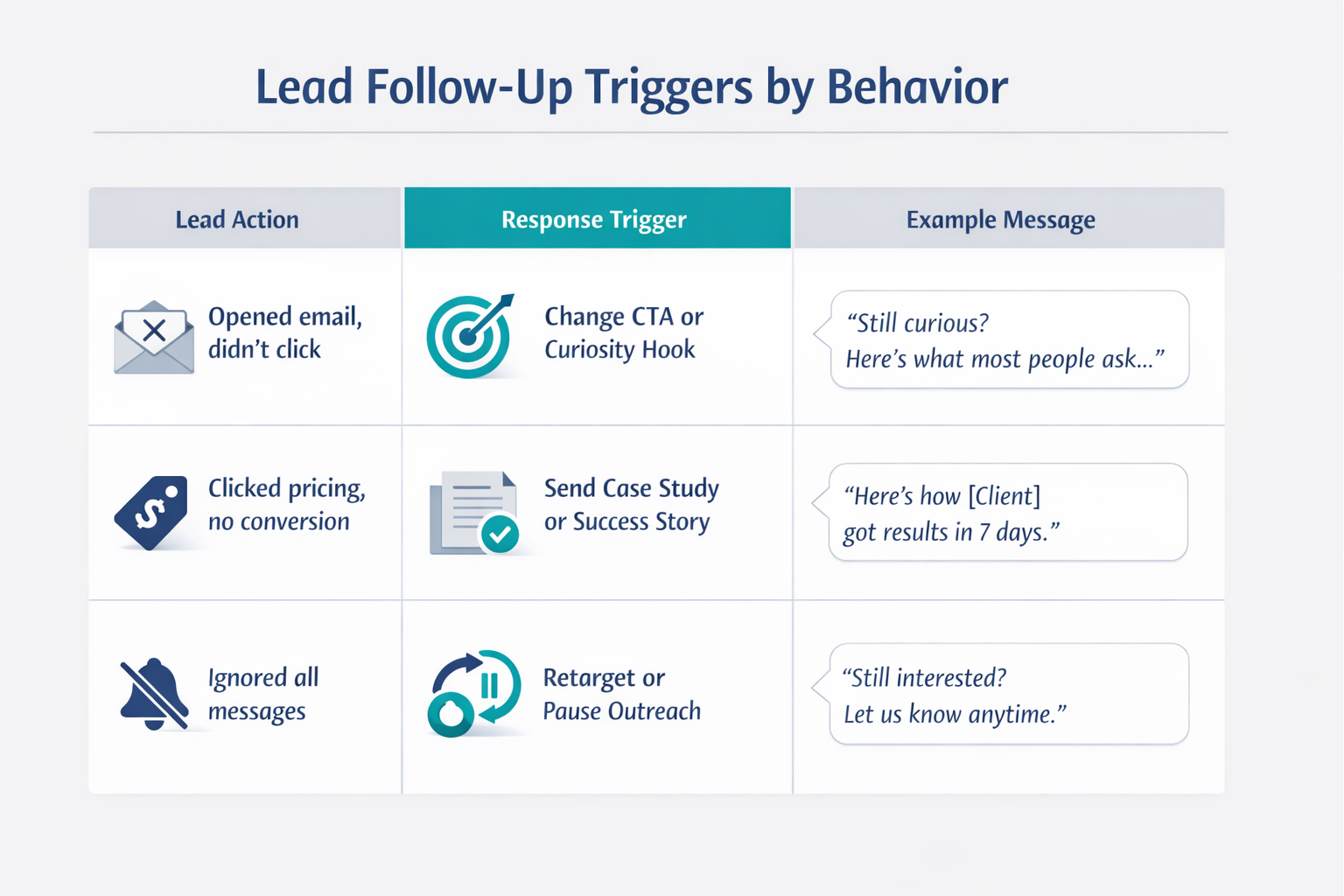
Track how users interact after the first message:
-
Open but no click → try different messaging;
-
Click but no conversion → send review or comparison;
-
No action → slow down or adjust frequency.
Behavior-based flows convert better than static drip campaigns. For more on this, check Behavior-Based Facebook Targeting: The Secret Weapon of Top E-commerce Brands.
2. Retarget leads who drop off
Leads who ignore email or DMs can still convert — via retargeting. Build custom audiences for:
-
Leads who didn’t click;
-
Clickers who didn’t convert;
-
Quiz takers who stopped midway.
Serve retargeting ads with messages like:
-
“Still curious? Here’s how it works.”
-
“Customer results from people like you.”
Make sure your creative aligns with the original lead source.
3. Escalate to human follow-up when needed
Not every lead needs human contact — but high-intent signals should trigger a manual response.
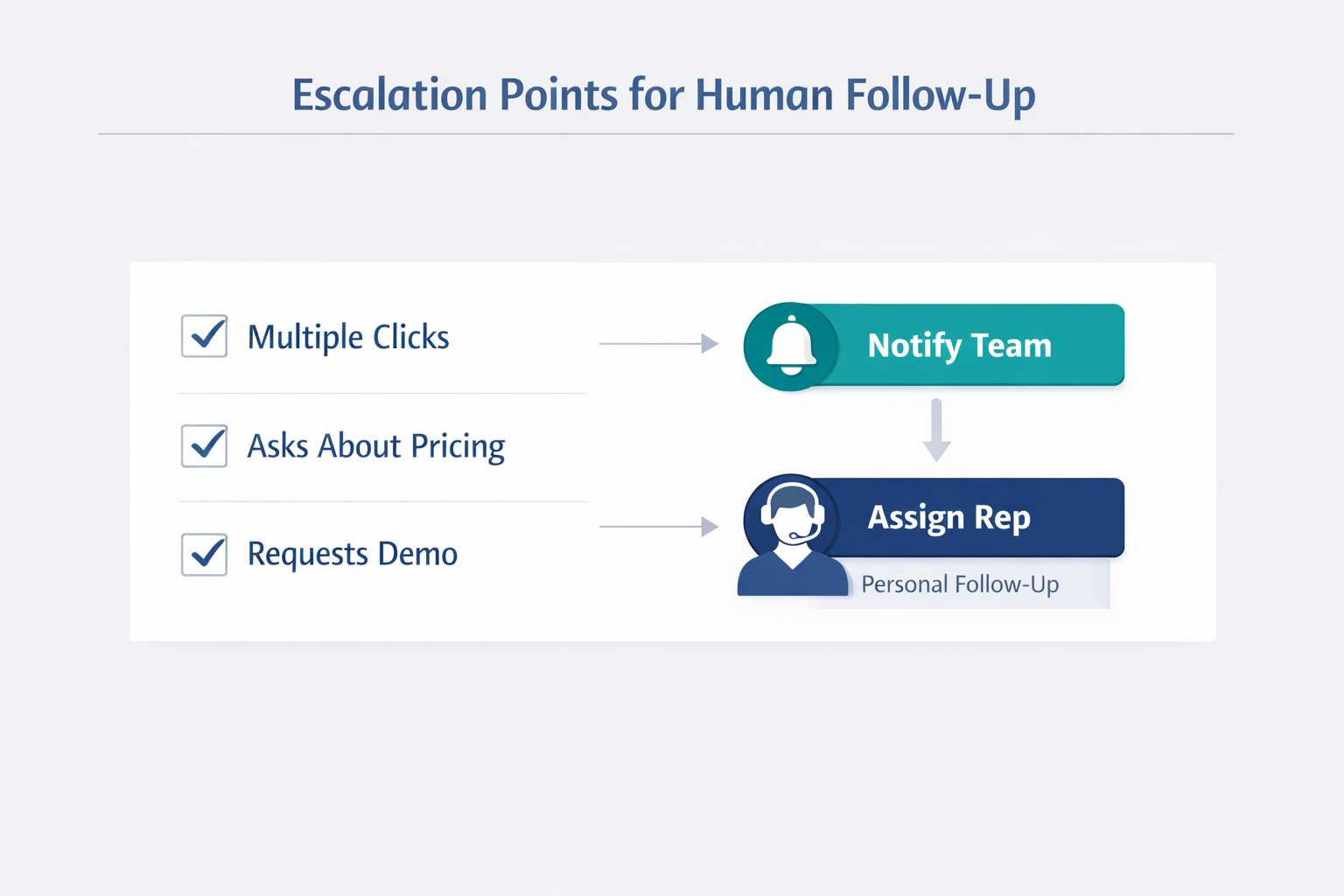
Escalation criteria might include:
-
Multiple link clicks;
-
Direct pricing questions;
-
Visits to product/pricing pages.
Send internal alerts with full lead context so the sales or support team can respond appropriately.
Final checks before launch
Before rolling out your automation, validate it with internal testing. Make sure:
-
Follow-ups send instantly;
-
Sequences are accurate;
-
Leads are tagged and sorted properly;
-
Escalations trigger correctly;
-
Messaging matches the ad promise.
Walk through every flow as if you were the lead. Break it, fix it, and only then scale.
Next steps for Meta advertisers
If you're generating leads from Meta ads and handling them manually, you're limiting your ROI.
Here's what to do next:
-
Identify all lead sources — forms, DMs, landing pages;
-
Set up immediate follow-up for each;
-
Segment leads based on campaign and behavior;
-
Use conditional sequences to improve conversion;
-
Retarget cold leads through matched creative;
-
Escalate high-intent leads for personal follow-up.
For more, explore how to align this system with your overall Meta campaign structure in Facebook Ads Funnel Strategy: From Audience Identification to Conversion.
With automation in place, you're not just speeding up lead handling — you're building a conversion system that improves over time.