SEO and Meta Ads (Facebook and Instagram) are powerful on their own. But when combined, they unlock even greater results.
Too often, marketers treat them as separate. One is “organic,” the other “paid.” But your customers don’t think that way. They move across channels, expecting a consistent message and experience.
In this guide, we’ll show you how to align Meta Ads and SEO — so you can attract smarter traffic, lower acquisition costs, and grow faster.
Why Combine Meta Ads and SEO?
Meta Ads and SEO target different behaviors, but they’re both essential to a full-funnel strategy.
SEO captures high-intent searchers — people already looking for what you offer.
Meta Ads help you reach people who aren’t searching but are open to discovering new brands.

Together, they offer clear benefits:
-
Stronger visibility across the funnel. Your brand appears both when people browse and when they search;
-
Faster feedback loops. You can test ad messages quickly, then apply the learnings to SEO content;
-
Lower overall CAC. Paid and organic channels reinforce each other, improving conversion rates over time.\
For a deeper dive, read: How to Combine SEO and Paid Ads for Maximum Impact. When you use both channels strategically, each makes the other stronger.
Align Audiences First
To make your channels work together, start by aligning who you're speaking to. Your SEO audience and Meta Ad audience should overlap significantly.
Use SEO Data to Guide Targeting
Organic traffic is a goldmine of insights. Before building any ad campaigns, review your SEO analytics.
Look for:
-
Top blog topics: These show which themes your audience cares about. For example, if your top post is “CRM for solo consultants,” that’s a signal;
-
Search queries with high dwell time: Long time-on-page usually means the topic resonates. These users are more engaged;
-
Location and device data: Identify where users are visiting from and what devices they use. This helps with ad geo-targeting and format decisions.
You can then build audiences in Meta based on:
-
Similar interests and behaviors;
-
Custom audiences from URL visits;
-
Lookalikes based on high-quality SEO traffic.
This ensures that you’re not running Meta Ads blind. Instead, you’re building them based on what already works.
Need help with audience setup? See: Facebook Ads Funnel Strategy: From Audience Identification to Conversion.
Match Personas Across Content and Creative
If your organic content attracts small marketing teams in the tech space, don’t run generic ads to a broad B2B audience.
Instead, sync your ad creative to the same persona:
-
Use language that reflects their pain points;
-
Feature images or products relevant to their industry;
-
Keep tone and positioning consistent with your top-ranking content.
This increases engagement and builds recognition across touchpoints.
Use Meta Ads to Test SEO Content Before You Write
Writing for SEO takes time. You need to research, write, optimize, and wait for results. But Meta Ads give you instant feedback.
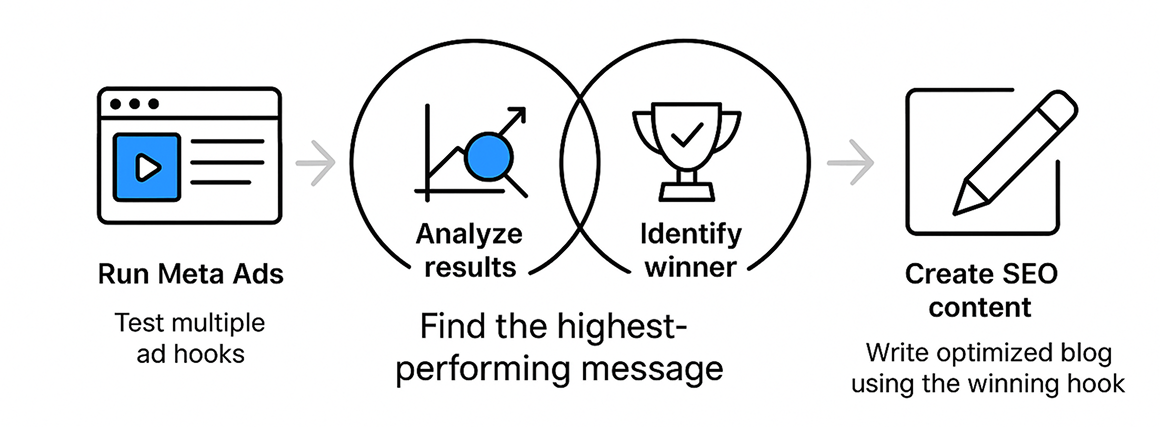
One of the most effective ways to combine paid and organic is to test your SEO content ideas using Meta Ads first.
How It Works
Run a small campaign with 2–4 ad variations. Each version should focus on a different message or angle.
For example:
-
One ad might highlight a key pain point;
-
Another could focus on ease of use;
-
A third might showcase proof or testimonials;
-
A fourth might appeal to emotion or status.
Track engagement metrics like:
-
CTR (click-through rate);
-
Comments and shares;
-
Time spent on the landing page.
Whichever message performs best should become the foundation for an SEO blog post or landing page.
Example
Let’s say you run a SaaS tool. You test four ad headlines:
-
“Still using spreadsheets for sales?”
-
“Automate your sales pipeline today.”
-
“See how [Customer] grew 35% in 60 days.”
-
“Stop wasting time on manual reports.”
Ad #1 performs best. That tells you the spreadsheet pain point resonates.
Now you can write an SEO piece titled: “Why Spreadsheets Kill Sales — and What to Use Instead”, targeting the keyword “CRM vs spreadsheets.”
This process reduces risk and speeds up content strategy.
Retarget SEO Visitors With Meta Ads
Not every SEO visitor converts right away. But that doesn’t mean they’re not valuable. Retargeting helps you stay top of mind and bring them back.
This is where Meta Ads become critical. You can use pixel data and URL visits to build retargeting audiences based on specific pages or content types.
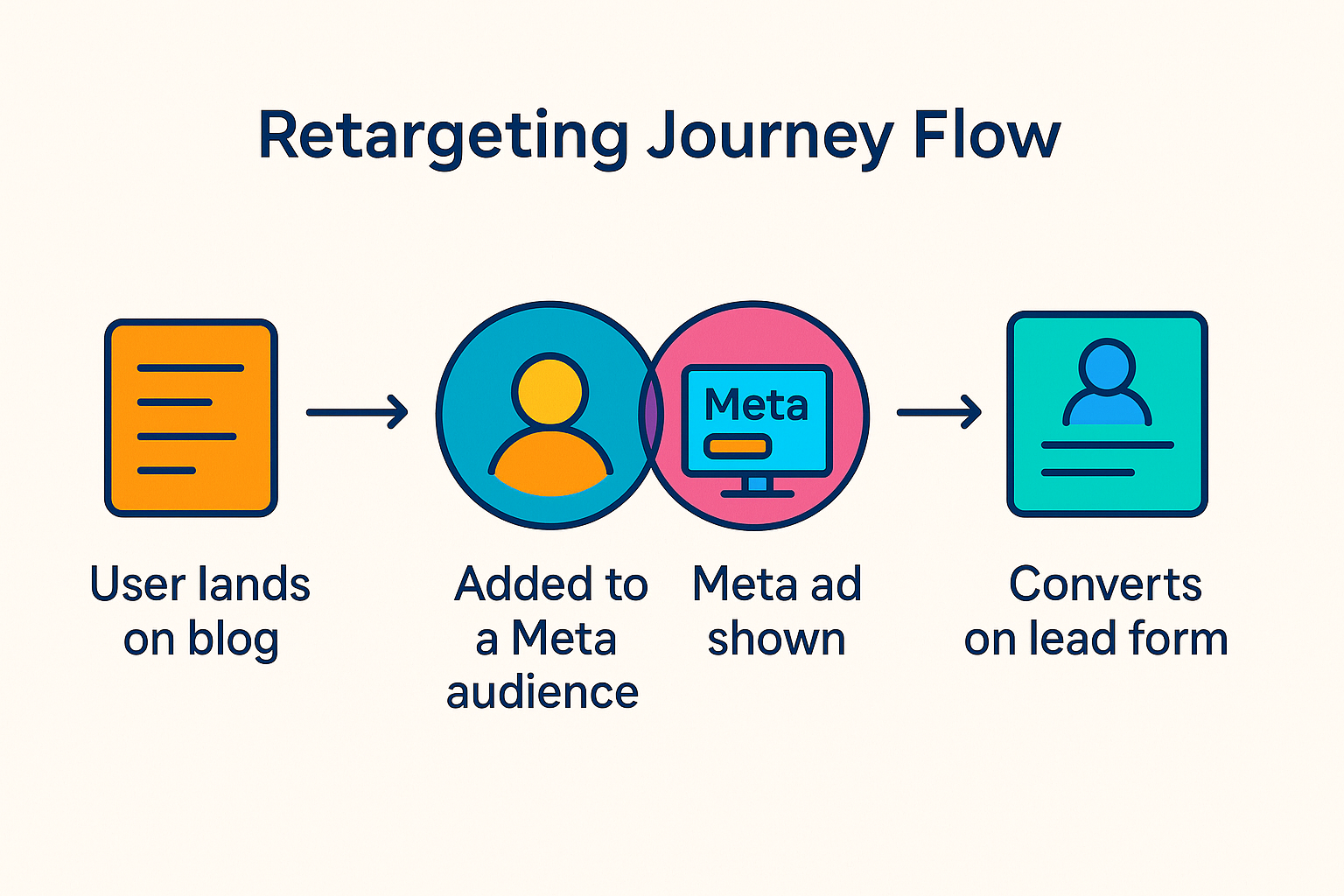
Learn how: How to Set Up Facebook Retargeting.
Create Segments Based on Behavior
Segment your visitors to match their intent. Don’t serve the same ad to everyone.
Examples:
-
Blog readers: Target with a lead magnet, free tool, or webinar. They’re early in the funnel;
-
Product page visitors: Offer a time-sensitive discount, free trial, or benefit reminder. They’re warmer;
-
Returning visitors: Use social proof, testimonials, or feature comparison ads to push them toward conversion.
Use UTM Parameters to Track Source
By tagging your SEO links with UTM codes, you can:
-
See which SEO articles drive the most valuable traffic;
-
Create custom audiences based on those pages;
-
Tailor ad messaging to match the original article or keyword.
This level of tracking ensures a seamless experience across both channels.
Map the Funnel Across Channels
To make Meta Ads and SEO work together, you need to think in funnel stages.
Each stage — awareness, consideration, conversion — should have both an organic and a paid touchpoint. This ensures a consistent user journey.
Awareness Stage
SEO content:
-
Blog post titled “What Is Influencer Marketing?”
-
Targets broad, informational keywords.
Meta Ad:
-
Educational video or carousel showing influencer campaign examples.
-
Goal: Introduce the concept and create initial interest.
Consideration Stage
SEO content:
-
Comparison page titled “Top 5 Influencer Platforms for Small Businesses”.
-
Helps users weigh options.
Meta Ad:
-
Testimonial from a small business using your platform.
-
Focuses on benefits and trust.
Conversion Stage
SEO content:
-
Demo sign-up or pricing page.
-
Optimized for transactional keywords.
Meta Ad:
-
Retargeting ad offering “30% off for new users.”
-
Includes urgency and clear CTA.
Aligning funnel stages like this reduces confusion and reinforces your message at every step.
Track the Combined Results
Don’t measure SEO and Meta Ads in isolation. To truly understand their impact, look at how they influence each other.
If your campaigns underperform, review: Facebook Ads Not Converting: How To Fix It.
Key Metrics to Monitor
-
Branded search growth: If Meta Ads are working, more people will search your brand;
-
Organic CTR improvements: Paid messaging can make users more likely to click your organic results;
-
Lower blended CAC: Users who see both ad and organic content tend to convert at higher rates;
-
Assisted conversions: Use tools like GA4 or attribution reports to see how many users engage with both channels before buying.
By monitoring these cross-channel effects, you’ll uncover opportunities to optimize both sides of the funnel.
Final Thoughts: Integrate for Smarter Growth
Smart marketers don’t treat SEO and paid ads as separate silos. Instead, they build integrated systems where each channel feeds the other.
-
SEO provides insights into what people are searching for;
-
Meta Ads validate which messages drive action;
-
Together, they create a loop of learning, testing, and scaling.
Start with one connection — test an SEO idea using Meta Ads, or build a retargeting audience from blog traffic. From there, layer in more connections.
Over time, you’ll build a smarter, more efficient customer acquisition machine.