If you run Facebook or Instagram ads consistently, you may notice a pattern.
Campaigns start strong. Clicks and conversions come easily. Then slowly, performance begins to dip — even if you change nothing.
Your cost-per-click increases. Conversions drop. Reach stays flat, or even shrinks. This isn’t just ad fatigue or bad luck. It’s a natural result of how Meta’s targeting systems work.
Here’s why your audience quality drops over time and what you can do to fix it.
What Is Audience Quality?
Audience quality measures how likely a group of users is to take a profitable action after seeing your ad.
That includes:
-
Clicking through to your website;
-
Engaging with your creative;
-
Signing up for a lead magnet;
-
Adding a product to cart or completing a purchase.
The higher the audience quality, the more efficient your campaign becomes. You’ll see better results with less spend.
But audience quality doesn’t stay high forever. And if you don’t take action, it will get worse.
Learn more in The Ultimate Guide to Facebook Audience Targeting.
Why Audience Quality Drops Over Time
Even if your targeting and creative stay the same, results will likely decline over time. This is normal.
Let’s explore the key reasons behind it.
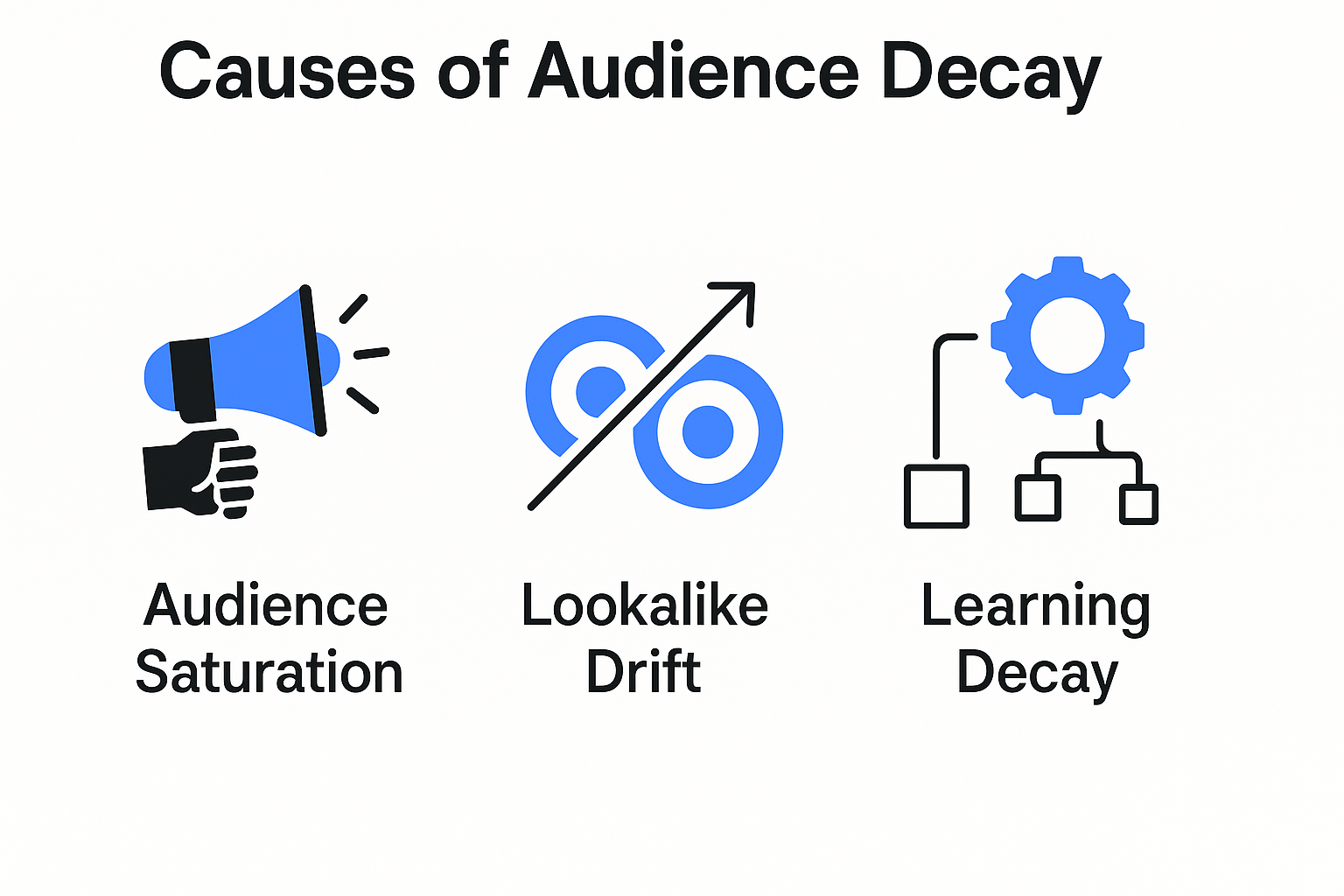
1. Audience Saturation
The longer you advertise to the same people, the less effective your ads become.
There are only three things they can do:
-
Convert and leave your audience;
-
Ignore the ad again and again;
-
Get annoyed or tune out completely.
This is known as audience saturation. Over time, frequency increases, but engagement drops.
For example, if someone sees your ad six times in two weeks without clicking, they’re unlikely to respond in week three.
You’re paying to show ads to people who have already decided not to act.
See Ad Fatigue on Facebook: How to Spot It Early and Fix It Fast.
2. Lookalike Audience Drift
Lookalike audiences are powerful — but they aren’t static.
Meta builds these audiences based on signals from your seed list (such as buyers or leads). But as your seed list updates or grows, the lookalike behavior can shift.
Here’s how it happens:
-
Your new customers may come from different sources or demographics;
-
Meta expands the match pool to find more people, but relevance weakens;
-
As a result, your targeting becomes broader and less aligned with your original audience.
This drift often leads to rising cost-per-click and lower intent users.
A 1% lookalike built on high-LTV buyers is very different from a 1% lookalike based on casual email signups.
Explore the difference in Custom vs Lookalike Audiences: What Works Best for Facebook Campaigns.
3. Algorithmic Learning Decay
Meta’s algorithm learns from who interacts with your ad. But that learning isn’t always helpful.
If your campaign receives early engagement from low-quality users — like bots or click-happy browsers — Meta starts optimizing toward similar profiles.
Over time, this can lead to:
-
Poorer placements and less relevant impressions;
-
Wasted spend on accidental or unqualified clicks;
-
A negative feedback loop where bad performance reinforces itself.
This is called learning decay. It’s common in under-optimized or overly broad campaigns.
Related: Why Facebook Ads Stop Performing After Two Weeks and How to Fix It.
How to Fix Dropping Audience Quality
The good news: Audience decay is fixable. You just need a structured approach to reset, rebuild, and realign.
Here’s what works.
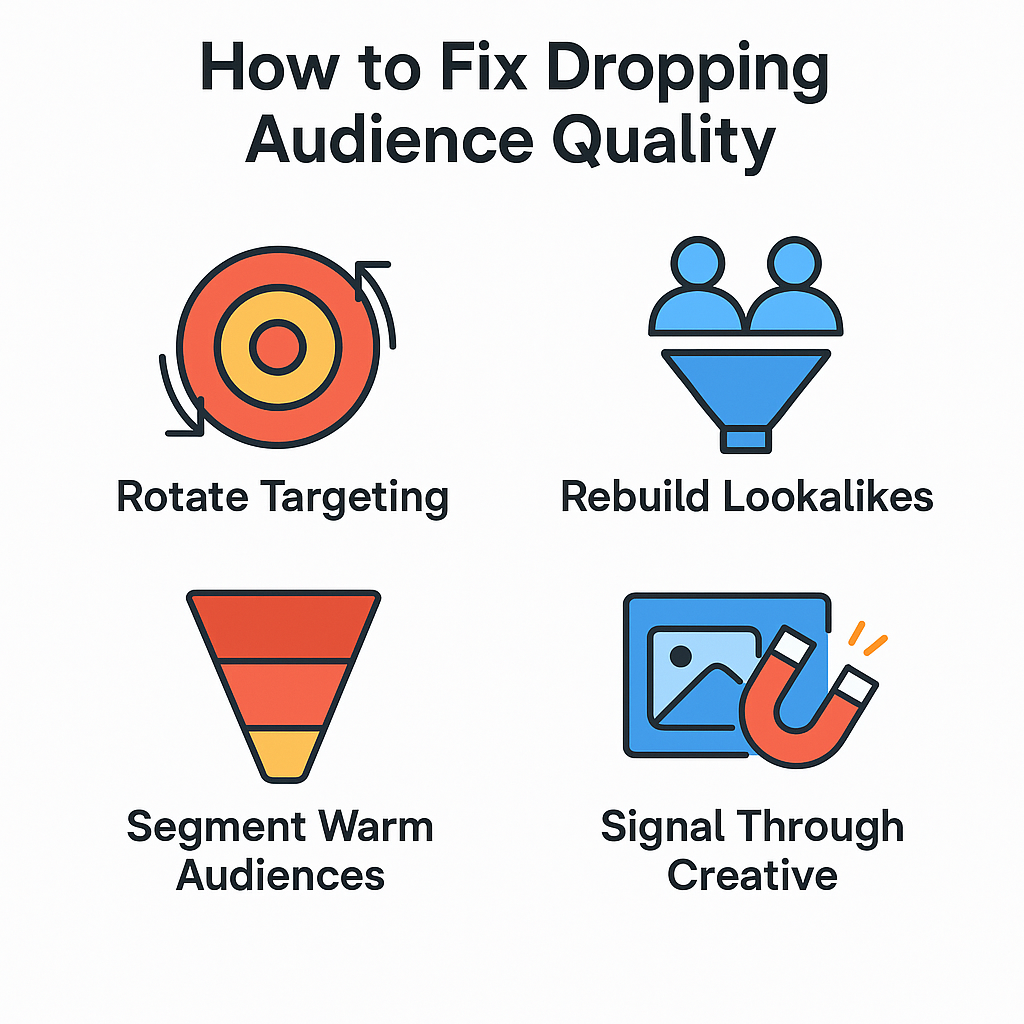
1. Rotate and Refresh Your Targeting
Never let the same audience run for too long without changes.
To prevent fatigue and saturation:
-
Rotate interests and behaviors: Test 3–5 variations of audiences. Combine different layers (e.g., "Nutrition" + "Online Shopping").
-
Use tighter definitions: Instead of broad interests like “Fitness,” try “Gym Members,” “Home Workout Equipment Buyers,” or “Healthy Meal Planners.” Or go with custom audiences that you have more control over.
-
Set frequency caps: Limit how often a user sees your ad. A cap of 1–2 impressions per day helps avoid burnout.
Regular rotation keeps your audience fresh — and your CPMs under control.
Read more: How to Optimize Audience Targeting for Facebook Ads with Limited Data.
2. Rebuild Lookalike Sources With Intent Signals
Your lookalikes are only as good as your seed list. Weak input = weak output.
Here’s how to strengthen your sources:
-
Use recent converters: Build lookalikes from users who purchased in the last 30–60 days. This keeps the model aligned with current trends.
-
Segment by value: Prioritize your top 20% of customers. For example, build a lookalike from high-LTV buyers or repeat purchasers.
-
Avoid soft signals: Don’t rely on list signups or video views unless they strongly indicate purchase intent.
Better inputs help Meta find users who are ready to buy — not just browse.
See also: Why Lookalike Audiences Underperform (And What to Do About It).
3. Use Warm Audiences with Strategy
Many advertisers retarget everyone the same way. That approach wastes budget.
Instead, segment and sequence your warm audiences:
-
Shorter windows for high intent: Retarget users who added to cart or viewed pricing within 7–14 days.
-
Message match: Align the creative with the user's stage. For example, offer a discount to someone who abandoned checkout — but use a testimonial for someone who just read a blog post.
-
Exclude frequent visitors who never convert: Users who’ve visited your site 5+ times with no action may not be worth retargeting.
Treat your warm audiences like real people. The more tailored the experience, the better the performance.
Learn how to improve this process in The Truth About Facebook Ads Warm Audiences: When and How to Use Them.
4. Improve Audience Signals Through Creative
Your ad creative doesn’t just sell. It also tells Meta who to show your ad to.
Weak or generic creative makes it hard for the algorithm to learn.
To send stronger signals:
-
Feature real use cases: If your product is for freelancers, show it in use by a freelancer at work — not just a product shot.
-
Name your audience: Say “For busy parents” or “Built for remote teams” directly in the headline or video.
-
Use qualifying copy: Mention the kind of person your offer is not for. This helps filter out poor fits.
Good creative attracts the right audience and repels the wrong one.
Final Thoughts: Build a System, Not Just an Audience
Audience decay happens to everyone. It’s not a sign of failure. It’s just how digital platforms evolve.
The key difference is whether you:
-
Notice the decline early;
-
Take action to refresh and optimize;
-
Build a repeatable process for maintaining quality.
Don’t rely on one audience setup that “worked before.” Build systems that keep working — even as the platform and your market shift.
Summary: Why Audience Quality Drops and What to Do About It
-
Audience saturation, lookalike drift, and learning decay all contribute to declining quality.
-
To fix it, rotate targeting, rebuild lookalike sources, and use warm audiences strategically.
-
Use ad creative to send stronger signals to Meta’s algorithm.
-
Stay proactive. Good audience performance requires regular maintenance — not luck.
No matter how advanced your targeting tools are, they only work as well as the system behind them. The most successful advertisers build ongoing processes — not one-time setups — to monitor quality, prevent decay, and adapt quickly when performance shifts.
Start treating your audience like a living asset, not a fixed list, and your results will stay strong over time.