Most ad accounts still rely on outdated targeting methods: lookalikes, weak interest groups, or broad demographics. These approaches often produce traffic that looks good on paper but fails to convert.
There is a better way to reach people who are already close to a decision.
By using publicly available social data, you can identify users who actively demonstrate intent — and build more efficient, higher-quality audience segments.
This guide shows you how.
Why Public Social Data Still Works If You Know Where to Look
Privacy changes have limited some forms of targeting, but they haven’t erased public behavior.
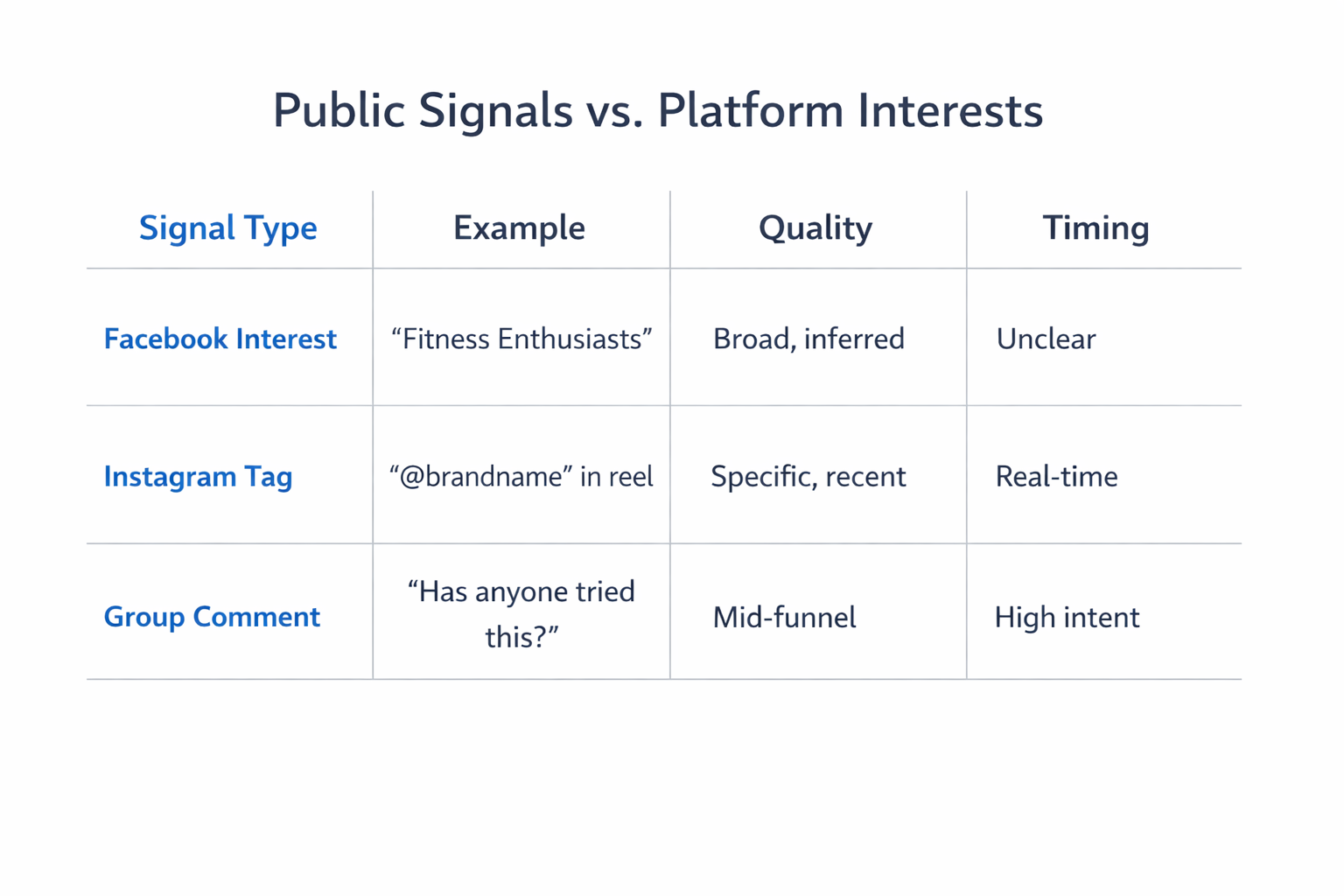
People still leave strong intent signals across social platforms every day. These signals are visible, searchable, and highly actionable if you know where to focus.
Common sources include:
-
Facebook group memberships and comment activity
-
Instagram tags, mentions, and saved posts
-
Public brand mentions and peer recommendations
-
Followers of niche creators or competing brands
-
Users tagging products in comments, stories, or reels
These signals often outperform platform-defined interests. They show what users actually engage with — not what an algorithm assumes they like.
Focus on Commenters, Not Just Followers
Many advertisers target followers of competitor pages. Most of those users are passive and disengaged.
A more effective approach is to focus on people who comment.
Commenters reveal far more than likes. They ask questions, compare options, and seek validation before buying.
To identify them:
-
Review the last 10 to 15 posts on a competitor’s Instagram or Facebook page.
-
Look for comments such as “Is this better than [brand]?”, “Just ordered mine,” or “Where can I buy this?”
-
Collect usernames tied to questions, comparisons, or purchase confirmation.
This method replaces assumptions with observable behavior.
Use Niche Facebook Groups to Build High-Quality Custom Audiences
Facebook groups are often overlooked, yet they contain some of the strongest intent signals available.
Groups represent self-selection. People join them for specific problems, goals, or interests. That makes group followers far more predictive than generic interests.
Instead of targeting broad themes like “Fitness” or “Parenting,” look for groups with narrow, buyer-relevant context, such as:
-
“Meal Prep for Busy Professionals”.
-
“Home Coffee Enthusiasts”.
-
“Shopify Store Owners Sharing Ads”.
To work with group data effectively:
-
Find public or discoverable groups directly related to your offer.
-
Evaluate engagement quality, not just member count.
-
Use Leadenforce to target followers of these groups — even when Meta doesn’t allow direct group targeting.
You’re no longer targeting vague interests. You’re reaching people who’ve already opted into specific conversations.
Track Who Mentions or Tags Relevant Brands
Mentions and tags are high-quality intent signals. They indicate active engagement, not passive awareness.
When someone tags a brand or product, they’re often sharing experience, seeking feedback, or recommending it to others.
How to use this signal:
-
Monitor branded hashtags across Instagram.
-
Identify users who repeatedly tag or mention competitors.
-
Prioritize posts with comments, saves, or replies — not just likes.
These users are frequently closer to purchase than those who only consume content silently.
Don’t Ignore Facebook Marketplace and Creator Collaborations
Some of the strongest intent signals come from areas many advertisers skip.
Marketplace activity reveals problem awareness and price sensitivity. Users saving listings or engaging with sellers are often in the evaluation stage.
Creator collaborations signal social influence. When creators promote products, their audiences are primed to consider similar solutions.
You can:
-
Track frequently listed products and categories in Marketplace.
-
Identify creators using “paid partnership” tags or affiliate links.
-
Segment audiences by behavior — such as resellers, deal-seekers, or trend-driven buyers.
Segment Your Audience Based on Behavior, Not Just Interest
Once you collect public social data, avoid combining everything into a single audience.
Instead, cluster users based on how they behave.
Examples include:
-
Users asking comparison questions → likely in research
-
Users tagging friends in brand posts → influenced by peer interest
-
Users posting branded hashtags → brand-aware and socially active
Each cluster reflects a different stage of intent. Separate audiences allow you to test messaging, offers, and funnel stages more accurately.
Learn more in Smart Audience Building for Facebook.
Use These Custom Audiences to Train Smarter Campaigns
Meta’s algorithm optimizes based on the signals you give it. If you feed it low-quality inputs — like link clicks or 3-second video views — it will learn to find more of those users.
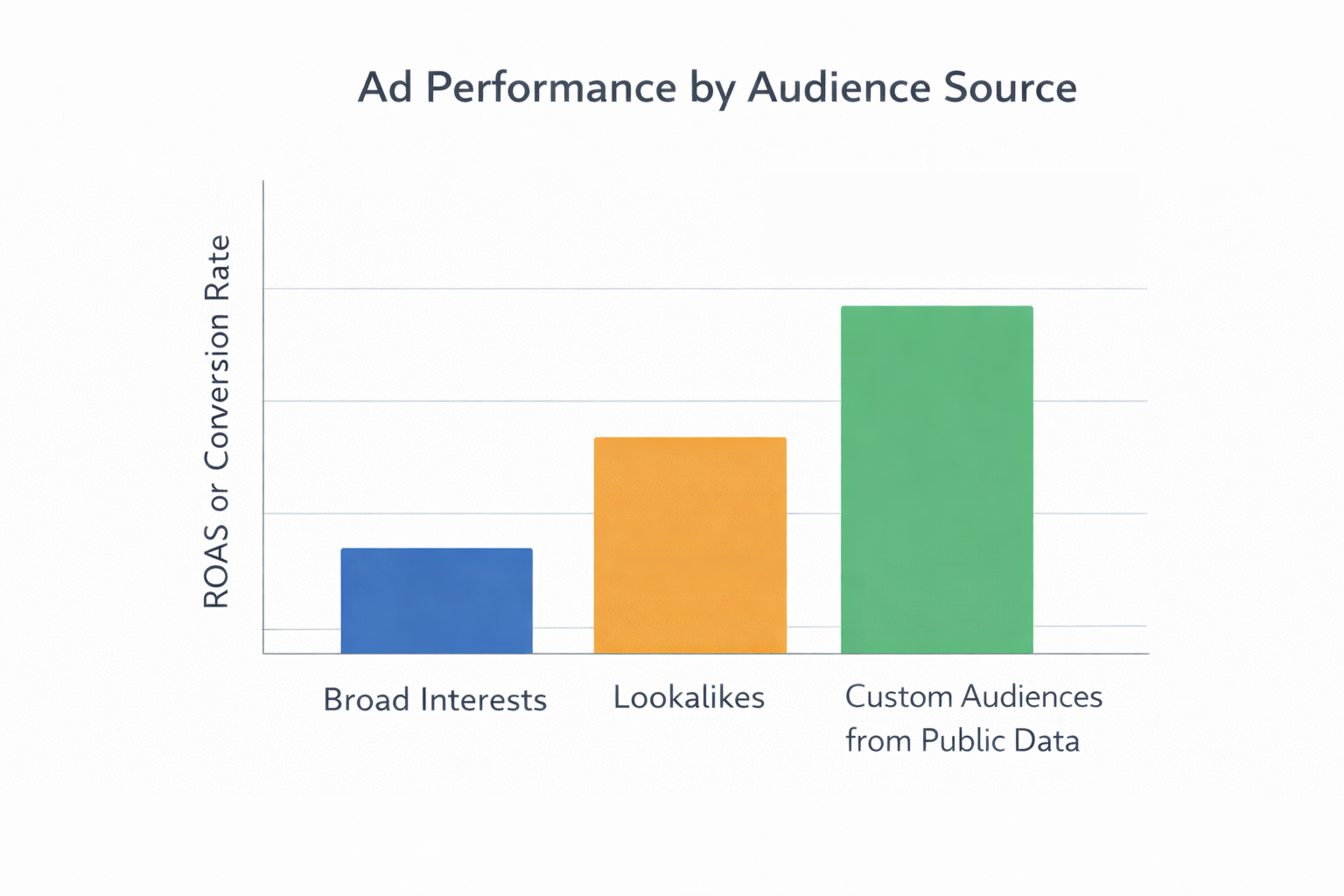
Instead, upload high-intent audiences and optimize for meaningful actions, such as purchases or checkout initiations. Over time, Meta expands toward users with similar behavior patterns. You’re no longer guessing. You’re guiding.
For a deeper explanation, see why custom audiences should be the core of your ad strategy.
Final Thoughts
Public social data isn’t perfect. It takes time to research, analyze, and structure.
But if you're serious about performance, it’s one of the most powerful audience-building tools still available.
Comments, group engagement, brand mentions, and creator interactions show what people are doing — not what an algorithm thinks they might do.
If you want better conversions and less wasted spend, don’t rely on surface-level interest targeting. Use what people are already telling you through their public behavior.