If your ads aren’t performing the way you expected, the problem might not be your budget or creative. It’s often something deeper: a lack of relevance.
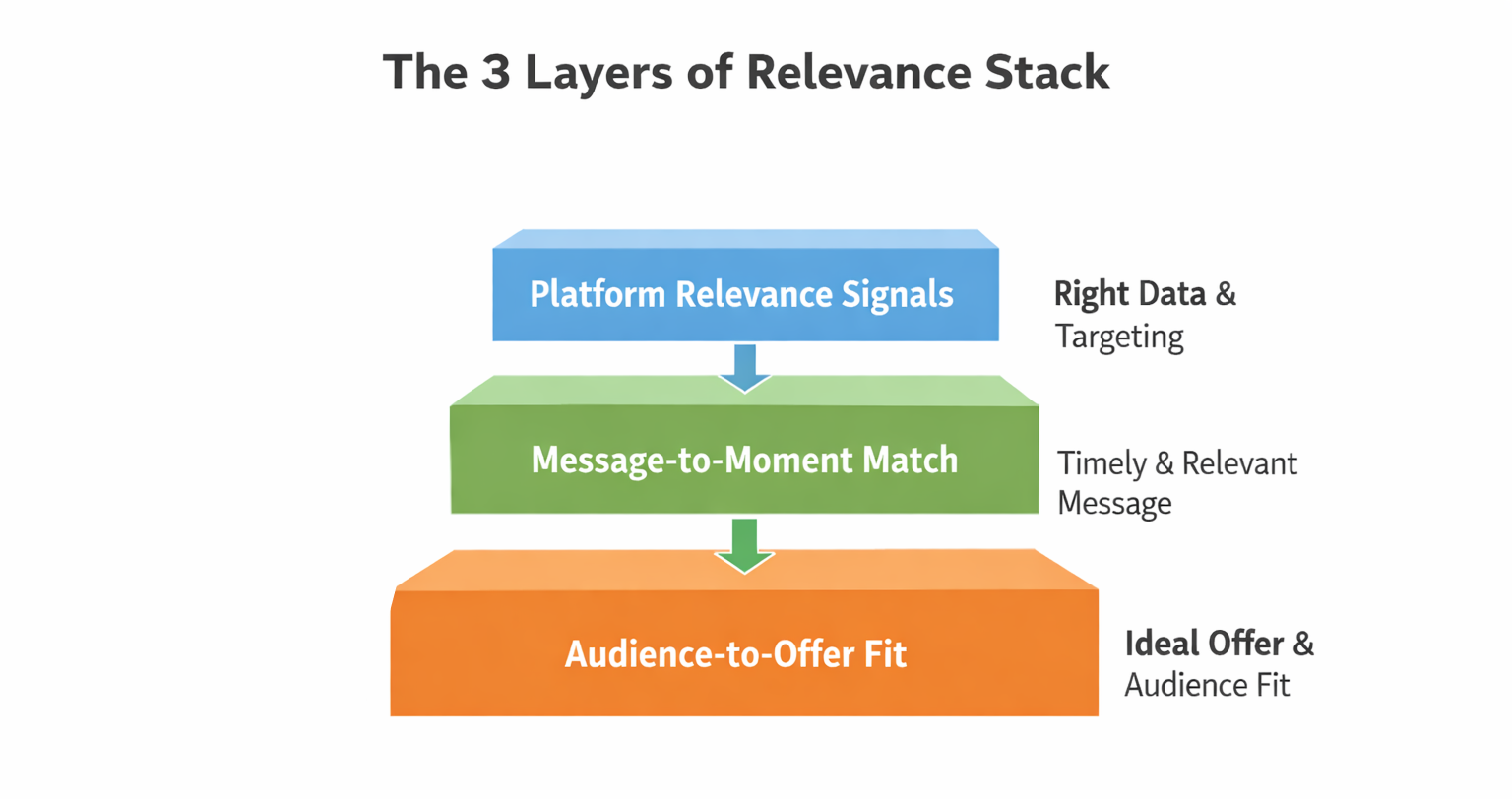
Relevance is what makes someone stop scrolling, pay attention, and take action. But it’s not just about writing a good headline or targeting the right audience. Real relevance happens when three parts of your ad line up.
Let’s walk through the three layers of relevance and how to improve each one.
Layer 1: Match the Offer to the Audience
Your offer is the heart of your ad. But even a strong offer won’t work if it’s shown to the wrong people.
Many advertisers start with the ad creative, then try to find an audience to fit it. It should be the other way around. You need to know who you’re talking to, what they care about, and what they’re ready for.
If you need help identifying real buyer intent on Facebook, check out this guide: How to Identify High-Intent Audiences Using Facebook Insights.
Here’s how to make your offer more relevant:
-
Match the offer to where people are in their journey.
Don’t show a free trial to someone who’s never heard of you. Try a short video or helpful guide first. -
Look at real social signals.
People who join niche Facebook groups, comment on competitor posts, or ask for product advice are already showing interest. -
Speak to their goals, not your features.
Instead of saying, “We have a custom dashboard,” try, “See all your client data in one place — without switching tools.”
When the offer matches what people care about, everything else becomes easier — clicks, conversions, and even engagement.
Layer 2: Show the Right Message at the Right Time
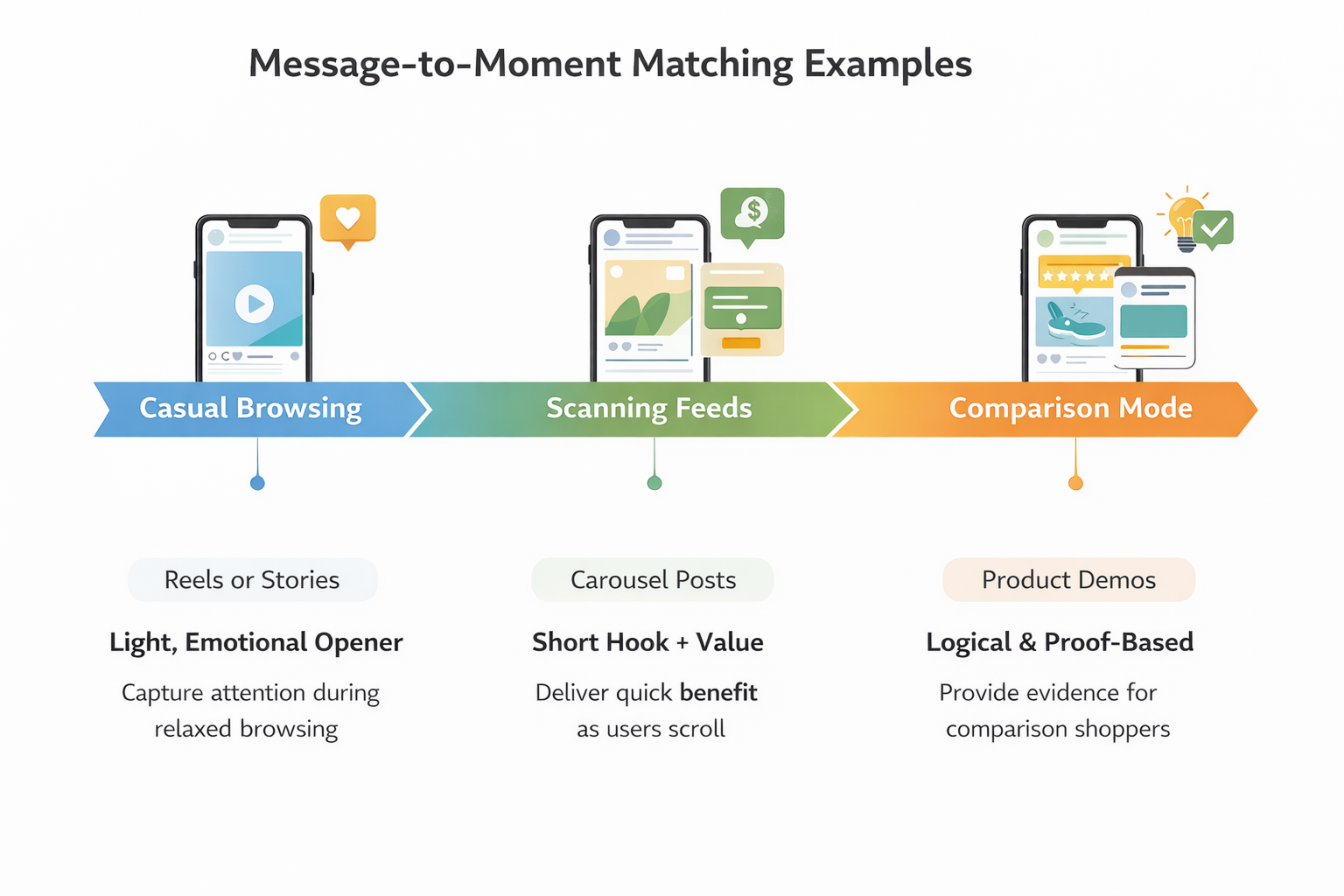
Most people don’t open Instagram or Facebook to buy something. They’re relaxing, scrolling, or avoiding work. That’s why your ad needs to feel like it fits the moment — not interrupt it.
If you’re getting lots of impressions but few clicks or conversions, your message might be showing up at the wrong time or in the wrong way.
You can fix this by:
-
Changing how you open the ad.
Start with a simple, direct question or problem. For example: “Tired of writing cold emails that get ignored?” is more effective than “Introducing our sales automation platform.” -
Choosing the right format.
Use short vertical videos for Reels or Stories. Use carousels or images for the Feed, where people might take more time. -
Matching tone to attention span.
Use emotional hooks or quick benefits for cold audiences. Save detailed, logical messaging for people who already know your brand.
Not sure why your messaging isn’t landing? This breakdown may help: Why Great Creatives Still Fail Without the Right Audience.
Think about what the user might be doing when they see your ad. That small shift can make a big difference.
Layer 3: Help the Platform See Your Ad as Relevant
Facebook and Instagram don’t just look at who your ad is for — they also decide how important it is based on how people react.
If your ad gets skipped, clicked but bounced, or ignored, the platform will stop showing it — or make you pay more to keep it running.
You need to give the algorithm the right signals early.
Try these simple ways to boost those signals:
-
Start with soft engagement.
Before asking for a sale, run a video ad or a post that gets saves, shares, or comments. This helps train the algorithm with positive signals. -
Use formats Meta prefers.
Right now, Meta is pushing Reels and video. If you use these formats, your ad may get more reach for less money. -
Fix your landing page experience.
If people click and leave quickly, it hurts performance. Make sure your page loads fast, matches the ad, and has a clear next step.
Also, be cautious when interpreting surface-level metrics. Some of the most commonly tracked numbers can be misleading
Ad Metrics That Lie: When Good Numbers Hide Bad Performance.
Relevance isn’t just about the content — it’s also about how the system sees and delivers your ad.
How It All Works Together
Most advertisers look at surface-level stats like click-through rate or CPC. But those can be misleading if the core relevance isn’t there.
To create truly effective ads, you need to:
-
Match your offer to the right audience.
-
Show the right message at the right moment.
-
Send the right signals to the platform.
When all three layers are aligned, your ads don’t just get more clicks — they get better results across the board. And you stop wasting money guessing what might work.