While many marketers obsess over conversions and ROAS, it’s easy to overlook the upstream metric that often makes or breaks your campaign: engagement.
Whether you’re running lead gen ads on Facebook or conversion-focused campaigns on Instagram, engagement tells you how well your ad resonates. More importantly, it influences how often and how cheaply your ads are shown.
Meta's algorithm rewards high engagement with better placements and lower CPMs. Low engagement? Your ads struggle for reach — no matter how good your offer is.
Let’s break down how to increase engagement with strategies that experienced advertisers use to stay competitive. You can also explore why your Facebook ads are getting low engagement and how to fix it for a deeper diagnosis of common problems and recovery tips.
First: Know What Meta Considers “Engagement”
Not all actions are treated equally on Facebook and Instagram. Meta looks for engagement signals that show meaningful user interest — not passive scrolling or accidental taps.
These signals help Meta determine if your ad deserves more visibility. Understanding them is the first step to improving performance.
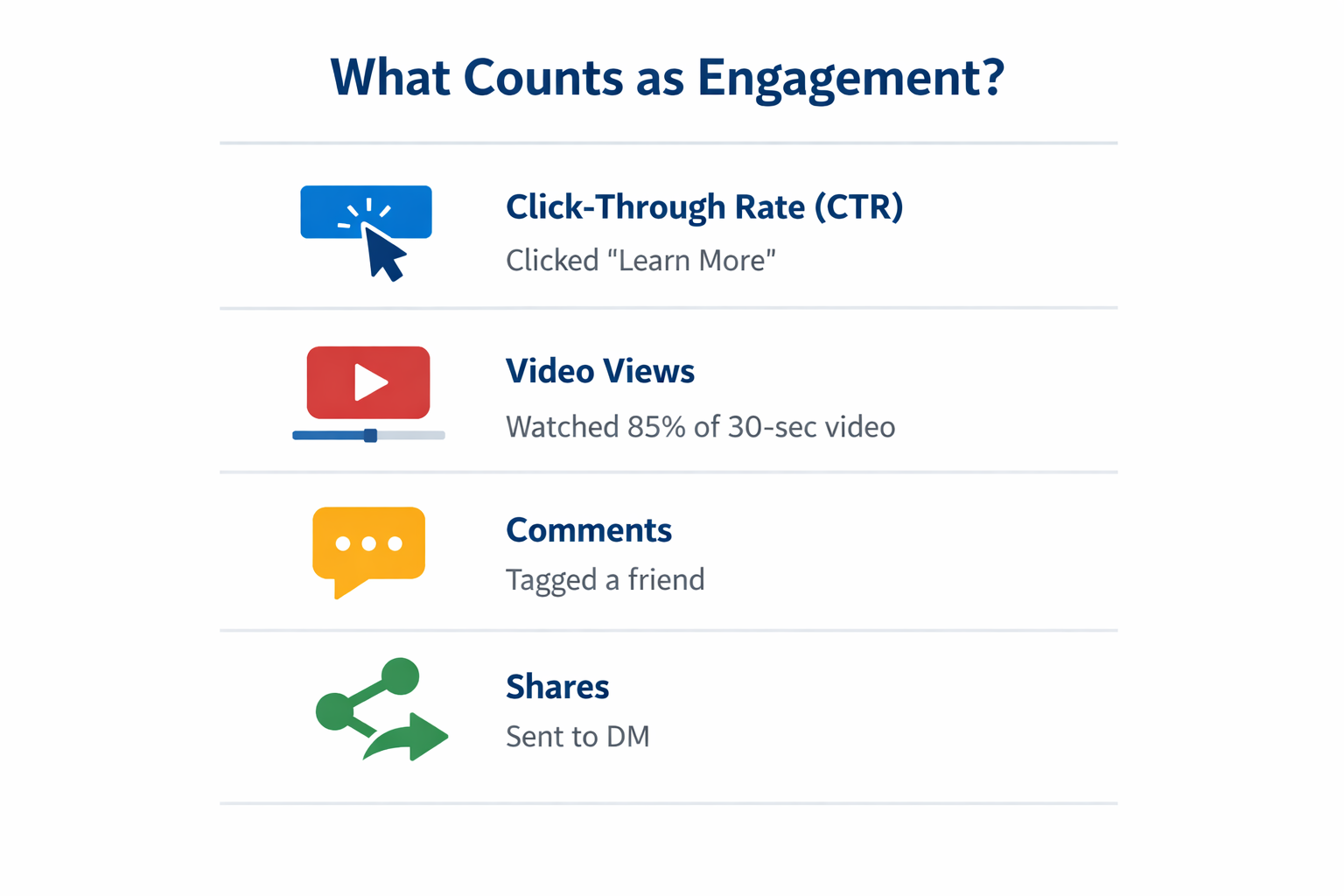
Core Engagement Metrics to Watch:
-
Click-through rate (CTR): One of the strongest signals of intent. A CTR above 1% is generally healthy, but this varies by industry.
-
Video views and retention: Meta prioritizes videos with higher average watch times. A strong video view-through rate (VTR) suggests people are paying attention.
-
Post reactions and comments: More important than likes. Thoughtful comments and varied reactions (like “Love” or “Wow”) indicate emotional connection.
-
Shares and saves: These are top-tier signals. If someone shares your ad or saves it for later, Meta sees it as highly valuable content.
For example, if you’re running a reel about a skincare product, a viewer who watches the full video and shares it with a friend will have a far greater impact on your delivery than someone who just scrolls past.
Match the Message to the Audience Context
No amount of design polish can fix a message that doesn’t speak to the person seeing it. This is where many advertisers miss the mark.
Your offer might be great. But if it’s shown in the wrong format, with unclear targeting, or at the wrong point in the funnel — it won’t engage.
Use Audience-Aligned Creative Techniques:
-
Adapt the format to the platform. For top-of-funnel cold traffic, Instagram Reels and Stories often outperform Feed placements. They feel native and don’t scream “ad.”
-
Use buyer language, not brand language. Don’t say, “Our cutting-edge time management solution...” Instead, say, “Tired of finishing work after dinner?” Your viewers should feel like you’re speaking to them — not selling at them.
-
Show use cases, not features. A SaaS platform for freelancers shouldn’t lead with dashboards. Instead, show how it helps finish invoices faster so they can log off earlier.
The more familiar your message feels to your audience, the more likely they are to stop, read, and act.
Craft a Hook That Commands Attention
Most users decide in 1–2 seconds whether to engage with your ad. Your hook — the first thing they see or hear — matters more than anything else.
It could be a visual, a headline, or the first line of voiceover. If it doesn’t connect instantly, the rest of the ad won’t matter.
Proven Hook Approaches Used by Top Advertisers:
-
Lead with a pain point. Example: “Still paying for features you don’t use?” This stops people who feel wasteful — without needing to explain what the product is.
-
Use pattern-interrupt visuals. This could be a split-screen comparison, an animated graph, or a surprising stat in motion. It helps your ad stand out in a crowded feed.
-
Ask a high-friction question. For example: “What’s the cost of one missed lead per day?” This forces people to think about their problem before you pitch the solution.
Avoid fluff like “Introducing our latest update.” Instead, lead with something that sparks emotion, curiosity, or self-reflection.
Design for Mobile — Not Just Resize for It
Over 90% of Meta traffic is mobile. Yet many advertisers still create ads on desktop and assume they’ll work fine on phones.
That’s a mistake. If your ad isn’t designed for mobile-first viewing, your engagement will suffer.
To go further on this, check out best practices for designing mobile-friendly Facebook ads — it breaks down actionable formatting and UX tips.
What Mobile-First Design Actually Looks Like:
-
Use vertical (4:5 or 9:16) formats. These fill the screen and feel native in Reels and Stories. A wide image gets lost in the scroll.
-
Minimize text on visuals. Meta penalizes ads with heavy text overlays. Keep it under 20% of the image area. Captions should do most of the explaining.
-
Use high-contrast colors. Especially for buttons or calls to action. Make sure your CTA stands out — not buried in the design.
For example, a carousel ad for a coaching offer should use bold slides with one core idea each, large readable text, and easy tap navigation. That beats a compressed PDF-looking slide every time.
Add Social Proof — But Make It Feel Natural
People trust what others say about you more than what you say about yourself. But “proof” has to feel authentic.
Overloading your ad with logos or award badges can make it feel cluttered or boastful. Instead, weave credibility into the story.
A great way to do this is by using authentic user feedback. Read how to use user-generated content in your Facebook ads to see how it can improve trust and interaction.
Ways Expert Advertisers Add Credibility Without Disruption:
-
Include short, first-person quotes from customers. For example, “I booked 3 new clients the first week.” Keep it inside the caption or voiceover, not plastered on the screen.
-
Use screenshots or DMs as visuals. Raw proof works better than polished review cards. A real message from a customer feels more believable.
-
Let engagement snowball. When you have an ad that’s getting good shares or comments, push more budget behind it. Meta rewards that momentum.
The best social proof doesn’t shout “Look at us” — it whispers “Others trust us, maybe you should too.”
Test More Than Just Visuals
Most advertisers A/B test images or videos. But the real engagement gains often come from testing other variables.
Great creative is important — but smart testing makes it scalable.
If you're unsure where to begin, this guide on how to A/B test your Facebook ad creative explains which elements to prioritize and how to structure tests for clean insights.
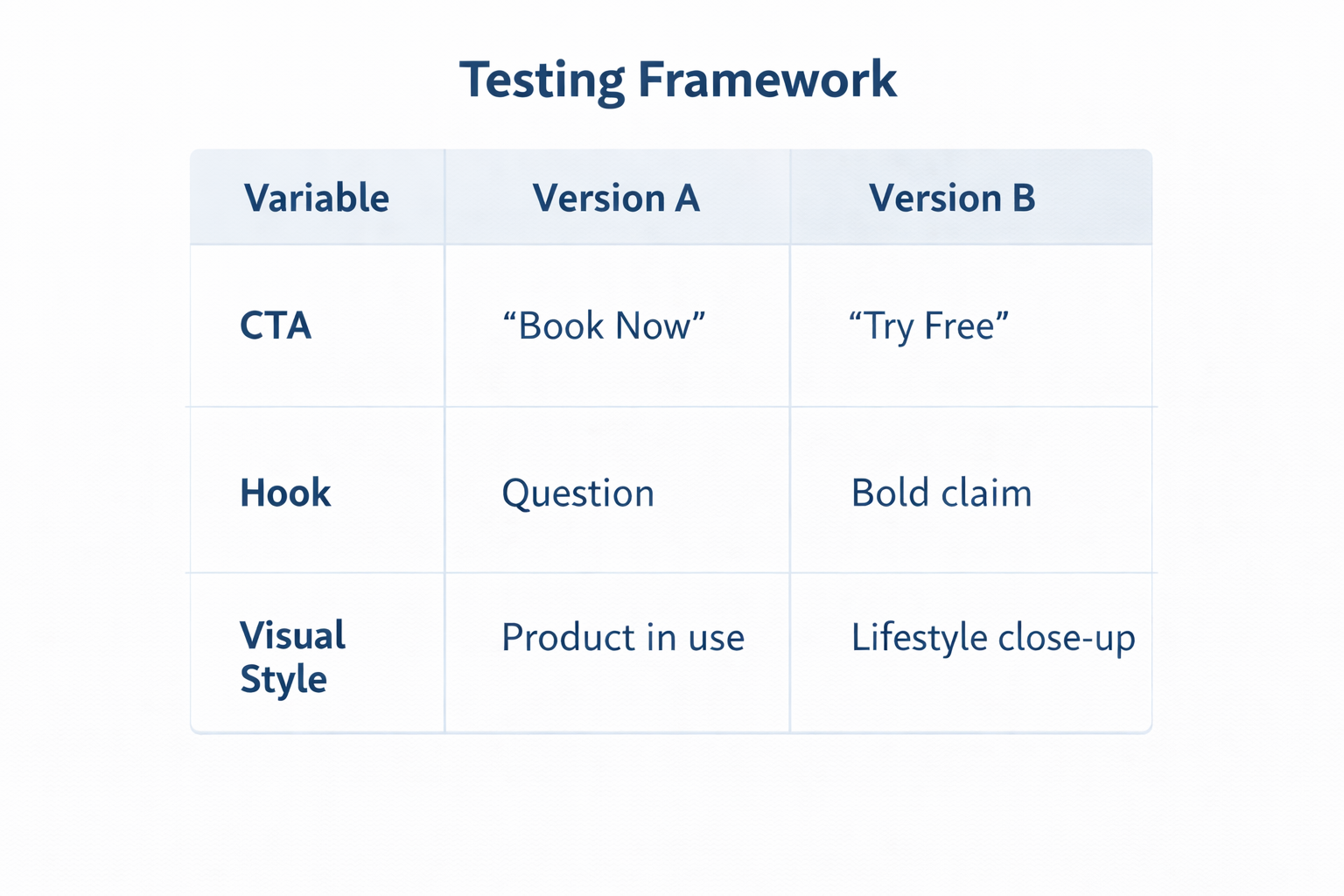
What the Top 1% of Advertisers Regularly Test:
-
Call to Action (CTA): Try “Start Free Trial” vs. “Book My Spot” vs. “See How It Works.” Each can attract different intent levels.
-
Caption openers: One version starts with a stat (“85% of marketers...”), the other with a story (“When I launched my first course...”).
-
Offer positioning: For the same tool, frame it as “save time” in one ad and “cut costs” in another. The audience may respond very differently.
You don’t need to change everything — just change one thing at a time and track results closely.
Also, test placements. For example, your testimonial ad may do well in Feed but get skipped in Stories. Knowing this helps you optimize budgets.
Recognize — and Fix — Creative Fatigue
Ads don’t last forever. Even top-performing creatives decline in engagement after a few days or weeks.
If you wait too long to refresh, you’ll see higher CPMs and weaker results — even if the offer hasn’t changed.
A Simple System to Stay Ahead of Fatigue:
-
Launch 3–5 creative variations at once. Monitor which one builds early traction.
-
Track performance drop-offs. Look for falling CTR, rising cost-per-click, or decreased video watch times.
-
Refresh based on what worked. If a headline pulled attention, use the same structure with a different benefit. If a UGC-style video worked, shoot a new one in the same tone.
You don’t need to reinvent the wheel. Small changes — new background, new headline, new visual twist — are often enough to reset performance.
Final Takeaway: Engagement Fuels Results
High-performing social ads aren’t just about the offer. They’re about how you present that offer — to the right person, in the right format, with the right tone.
Improving engagement should be part of your weekly process, not an afterthought.
Here’s a recap of what expert media buyers focus on:
-
Match the message and format to the audience’s mindset and platform behavior.
-
Hook attention early with relevant, emotional, or curiosity-based openings.
-
Optimize your layout and visuals for mobile-first viewing.
-
Add social proof in natural ways — and scale what’s already working.
-
Go beyond visuals in your tests. Try new CTAs, narratives, and placements.
-
Refresh creatives before fatigue hits. Reuse the good parts, remix the rest.
Strong engagement drives lower costs, higher conversion rates, and better scaling potential across Facebook and Instagram.