Facebook and Instagram ads can deliver fast traffic. But without a real connection to your audience, they rarely lead to lasting results.
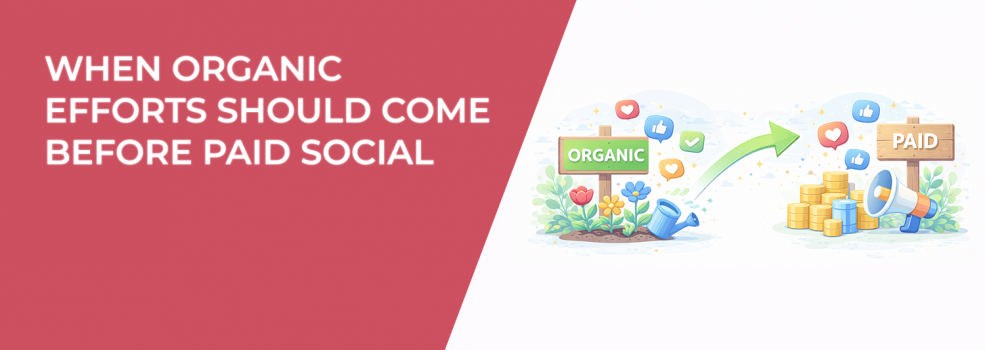
Organic content helps you build that connection first. It shows people who you are, how you think, and why they should care. This makes your paid ads more believable, more effective, and often, more profitable.
Let’s look at when you should slow down the paid push and double down on organic efforts instead.
When to Focus on Organic First
1. You’re Starting From Scratch
If your brand has no social presence, you need more than a logo and a product photo.
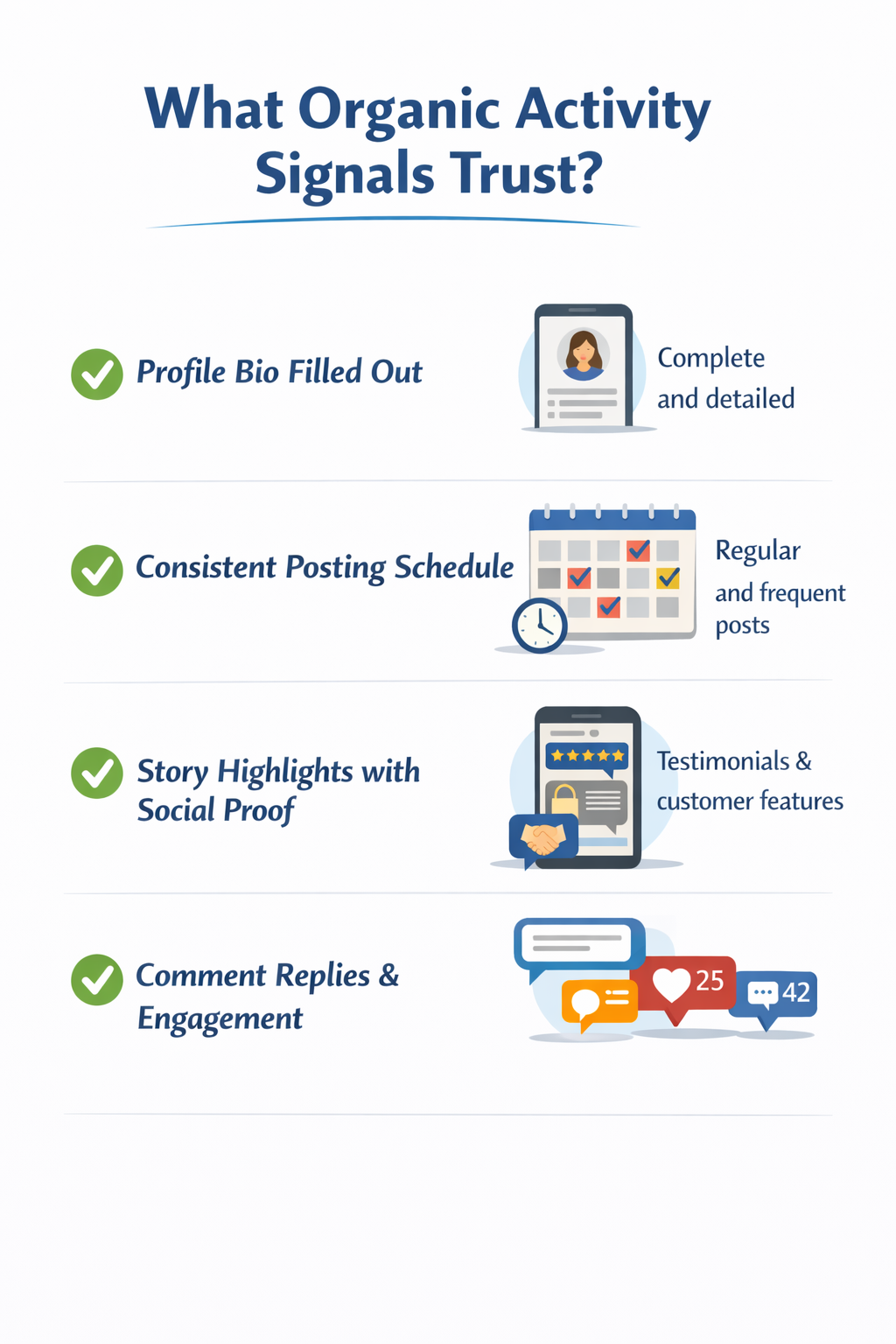
Before you launch any ads, spend time:
-
Posting real content: Show what you do, how you help, and what your product actually looks like in daily life.
-
Commenting and replying: Join conversations on relevant posts, respond to early followers, and make your profile feel alive.
-
Testing tone and topics: Try out different content formats (reels, carousels, stories) to see what people actually react to.
Organic gives you a chance to shape your voice and build early momentum without risking ad budget.
For a detailed walkthrough, check out How to Build ‘No-CPC’ Warm Audiences Through Organic Facebook Activity.
2. Your Sales Funnel Has Gaps
If visitors land on your site and leave without action, it’s not an ad problem. It’s a funnel problem.
Use organic content to test and fix weak links:
-
Try direct CTAs in stories: If no one clicks your “Learn More,” try different language. “See how it works” may get better results.
-
Watch drop-off points: Promote your landing page link in a post. Use Instagram’s in-app browser to see where people stop scrolling.
-
Preview the experience: Share a short walkthrough or a mini demo. If someone isn’t ready to click, give them a taste instead.
Organic content gives you space to figure out what people want before paying to bring them in.
You can also explore 5 Steps to Rescue Your Facebook Organic Reach to strengthen visibility before investing in traffic.
3. You’re In a Tight Niche or Need Trust to Sell
In some industries, people don’t just scroll, click, and buy. They research, watch, and ask around.
If your offer is specialized or high-consideration:
-
Post process-focused content: Instead of pushing benefits, show how your solution works in real-world cases.
-
Feature real people: Not polished UGC. Show the team, or actual users talking casually about their results.
-
Address objections up front: Create posts that answer questions your sales team hears. The kind that starts with “I like this, but…”
Organic content helps you create familiarity. It also gives your audience time to get comfortable before you start asking for a conversion.
4. Your Ads Aren’t Converting and You’re Guessing Why
Many advertisers keep switching ad creative, targeting, or offer — but skip the most useful (and free) source of insights: organic feedback.
Here’s how to use it:
-
Watch what gets saved or shared: These are strong signals that a post hit home. Use that hook or topic in your next ad.
-
Ask direct questions in captions: “Would you use this feature?” or “What’s your biggest problem with X?” can bring helpful answers.
-
Notice what people comment: You’ll often find objections, hesitations, or use cases you didn’t expect.
Think of organic as your lab. If a post gets ignored, you learned something. If it gets traction, you found direction for your next paid test.
Need help diagnosing the problem? Read Why Your Organic Social Media Marketing Isn’t Driving Sales for signs and fixes.
Organic Doesn’t Replace Paid — It Prepares You for It
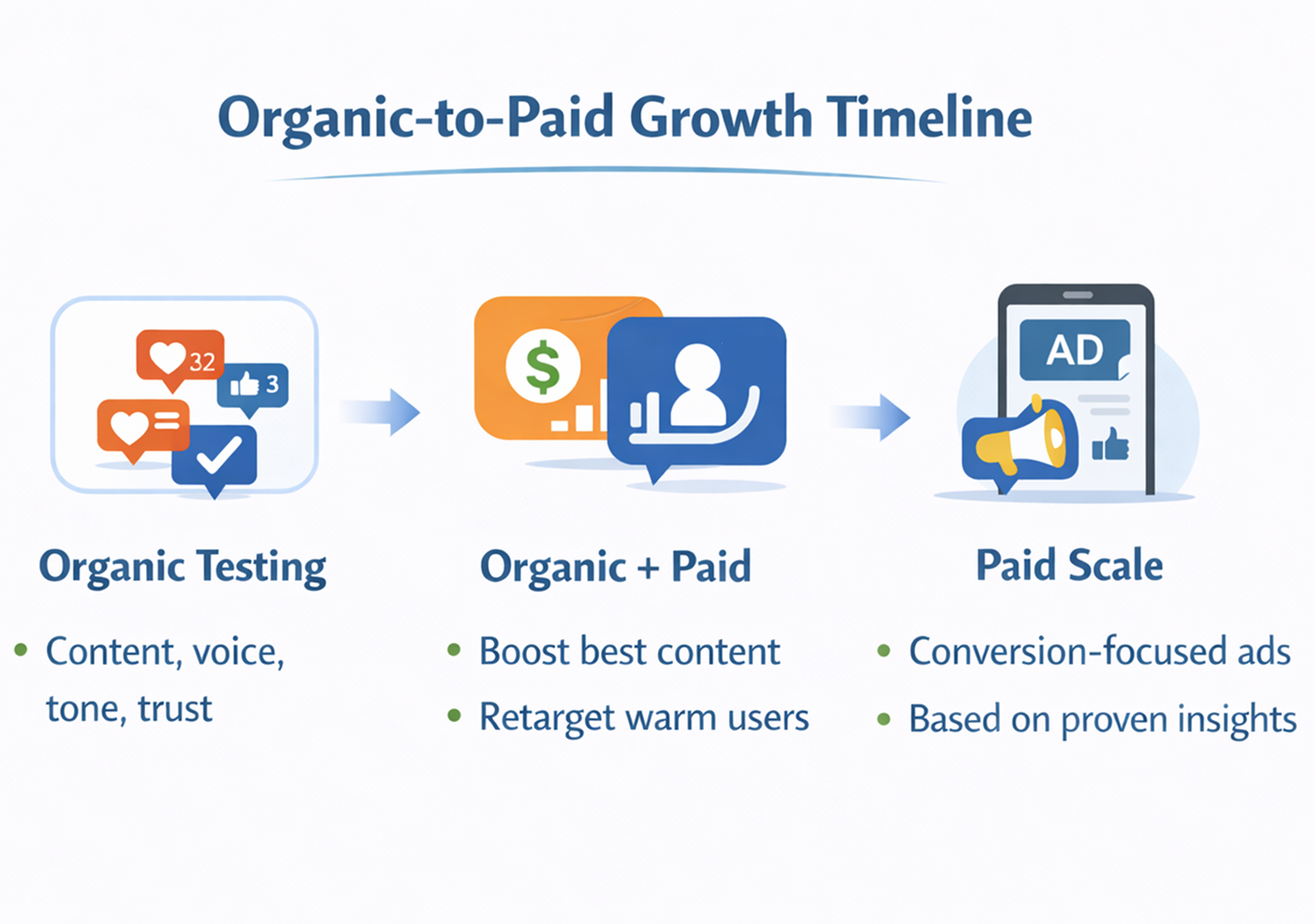
The goal isn’t to live off organic forever. It’s to use it to get your strategy in shape before scaling with ads.
Here’s what each one brings:
Organic Helps You:
-
Build a real voice and tone your audience recognizes.
-
Create proof that your product does what you say it does.
-
Learn which topics, angles, and visuals actually land.
Paid Helps You:
-
Reach more people than you ever could for free.
-
Test creative and messaging with precision and speed.
-
Scale what’s working without burning time on guesswork.
The best results come when paid ads are built on a solid organic foundation.
For more on this balance, check Why Organic and Paid Social Need to Work Together.
You’re Ready for Paid When...
Once you’ve put in the organic groundwork, paid ads become easier and more predictable.
You’re probably ready if:
-
Your content gets real engagement — not just likes from coworkers, but saves, replies, or DMs.
-
You know what visuals and headlines get attention. You’ve seen patterns in your organic posts.
-
Your landing page or funnel is tested. You've fixed friction points using organic traffic.
-
You’re ready to track and measure. Pixel is set up. Events are clear. Attribution makes sense.
Now your ads aren’t just noise in the feed. They connect, because they come from something real.
Final Thoughts: Organic as Strategy, Not Afterthought
Many brands treat organic as filler content, or something you “do when you have time.” That’s a mistake.
Used with intention, organic content helps you:
-
Understand your audience.
-
Fix weak parts of your funnel.
-
Build trust at a low cost.
-
Sharpen your creative before spending a cent.
So before your next paid push, ask: have I built anything worth promoting? If not, start with organic — then layer on paid once you're ready to scale.