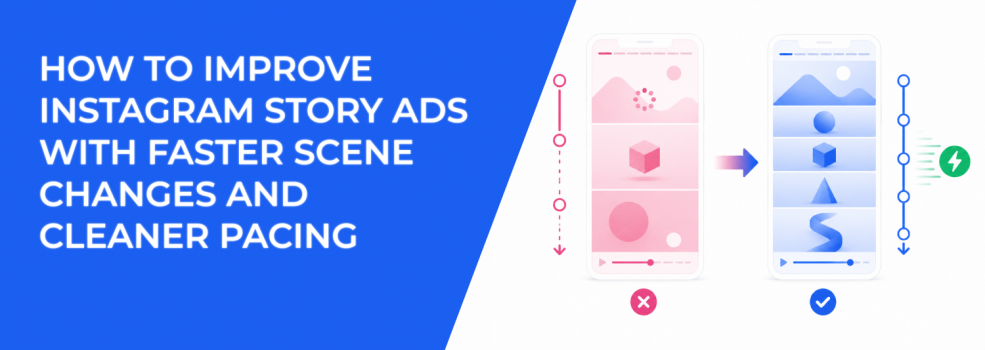
The core problem with many Instagram Story ads is pacing. The scenes move too slowly, so viewers lose interest before the ad delivers the message.
This usually happens when advertisers reuse feed-style videos inside Stories without changing the structure. Feed videos tolerate slower development because users scroll at their own pace. Story viewers behave differently. They expect continuous movement and fast information delivery.
When pacing feels slow, retention drops quickly.
Slow pacing creates invisible performance problems
Some Story ads still generate clicks even when pacing is weak. That makes the issue harder to diagnose.
The real damage appears deeper in campaign performance:
- Watch time declines.
- CPC gradually increases.
- Engagement quality drops.
- Meta reduces efficient delivery pockets.
A Story ad may technically function, but inefficient pacing reduces the system’s ability to hold attention consistently across larger audiences.
This becomes obvious during scaling. Ads with weak pacing often lose efficiency once spend increases because Meta expands delivery into colder audience segments with shorter attention spans.
Faster scene progression keeps viewers oriented
Good pacing is not about constant motion. The real goal is maintaining viewer orientation while continuing momentum.
Strong Story ads usually introduce visual change every one to two seconds. That does not mean every scene must contain heavy editing. Even small framing shifts or product movement help maintain attention.
Common pacing improvements include:
- Replacing long static shots with shorter visual sequences.
Instead of holding one product angle for four seconds, rotate through closer framing and usage shots. - Removing transition-heavy editing.
Slow fades and cinematic transitions reduce pacing momentum inside Stories. - Moving the key message earlier.
Do not wait until the middle of the ad to explain the value proposition.
These adjustments often improve retention without increasing production costs.
Why cleaner pacing improves CTR
Instagram users make fast decisions while tapping through Stories. When scene progression feels predictable or repetitive, the brain assumes the remaining content will also require effort. Users leave before the CTA appears.
Faster pacing reduces that friction because the ad continuously introduces new information. This does not require complicated editing. In fact, overproduced pacing often performs worse because the viewer struggles to process the message.
The strongest Story ads usually maintain one clear visual direction while changing scenes quickly enough to sustain attention.
This is related to choosing the right mobile ad flow because Story viewers consume content differently from feed users.
Solution: Story pacing should match the product complexity
Simple offers usually require faster pacing.
A clothing brand promoting a flash sale can move aggressively because the product requires minimal explanation. A B2B software demo may need slightly slower progression so viewers can understand the workflow.
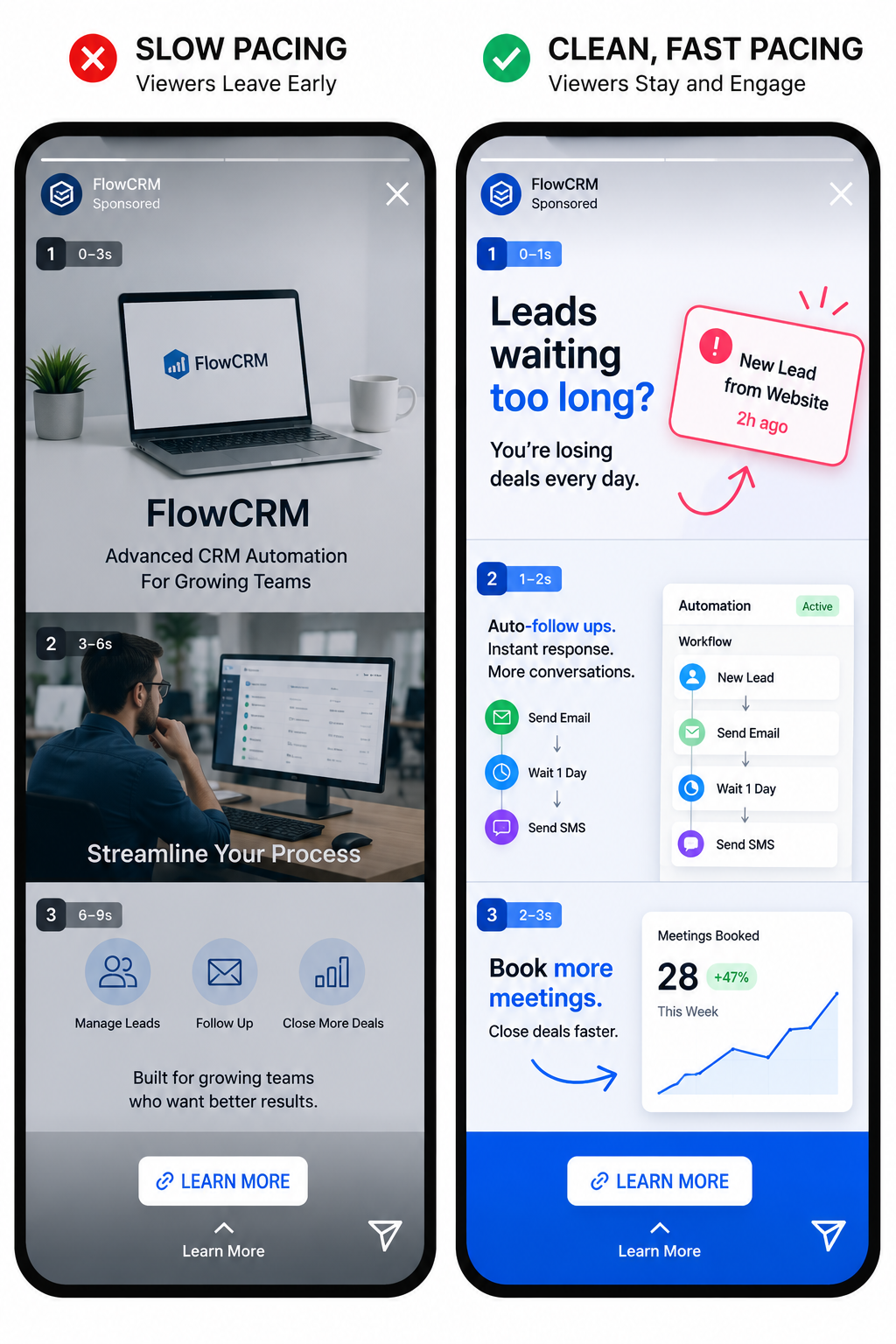
The mistake happens when advertisers slow every sequence equally. A common SaaS problem looks like this:
- Long animated intro.
- Slow dashboard walkthrough.
- Delayed product explanation.
- CTA appearing near the end.
Most viewers leave before reaching the important section.
A better version introduces the workflow immediately, then uses short scene progression to explain the benefit step by step.
Cleaner pacing improves post-click quality too
Better pacing does not only improve watch metrics. It often improves lead quality because viewers who continue watching usually understand the offer more clearly before clicking.
That creates stronger alignment between:
- The ad message.
- The landing page expectation.
- The conversion intent.
Campaigns targeting high-intent audiences benefit even more from this structure. LeadEnforce helps advertisers build those audiences through Instagram engagers, follower communities, and social interaction signals that already show category interest.
Faster pacing should simplify the experience, not complicate it
Many advertisers respond to weak retention by adding excessive cuts, effects, and transitions. That usually creates visual noise instead of momentum.
The better solution is cleaner sequencing. Each scene should introduce new information quickly while keeping the message easy to follow.
You can also study adapting creative structure for Stories and Instagram navigation behavior and ad pacing to improve Story-specific pacing systems further.