Most Meta advertisers focus on cost per lead. Fewer track what happens after the form submission. Lead-to-opportunity rate is where real revenue efficiency is defined.
If your CPL looks strong but sales complain, this is the metric to fix. The gap between lead and opportunity usually hides structural problems.
What Lead-to-Opportunity Conversion Actually Measures
A lead becomes an opportunity when it meets sales qualification criteria. That usually includes budget, authority, need, and timeline.
This metric shows whether your targeting and messaging attract real buyers. It also exposes friction in handoff between marketing and sales.
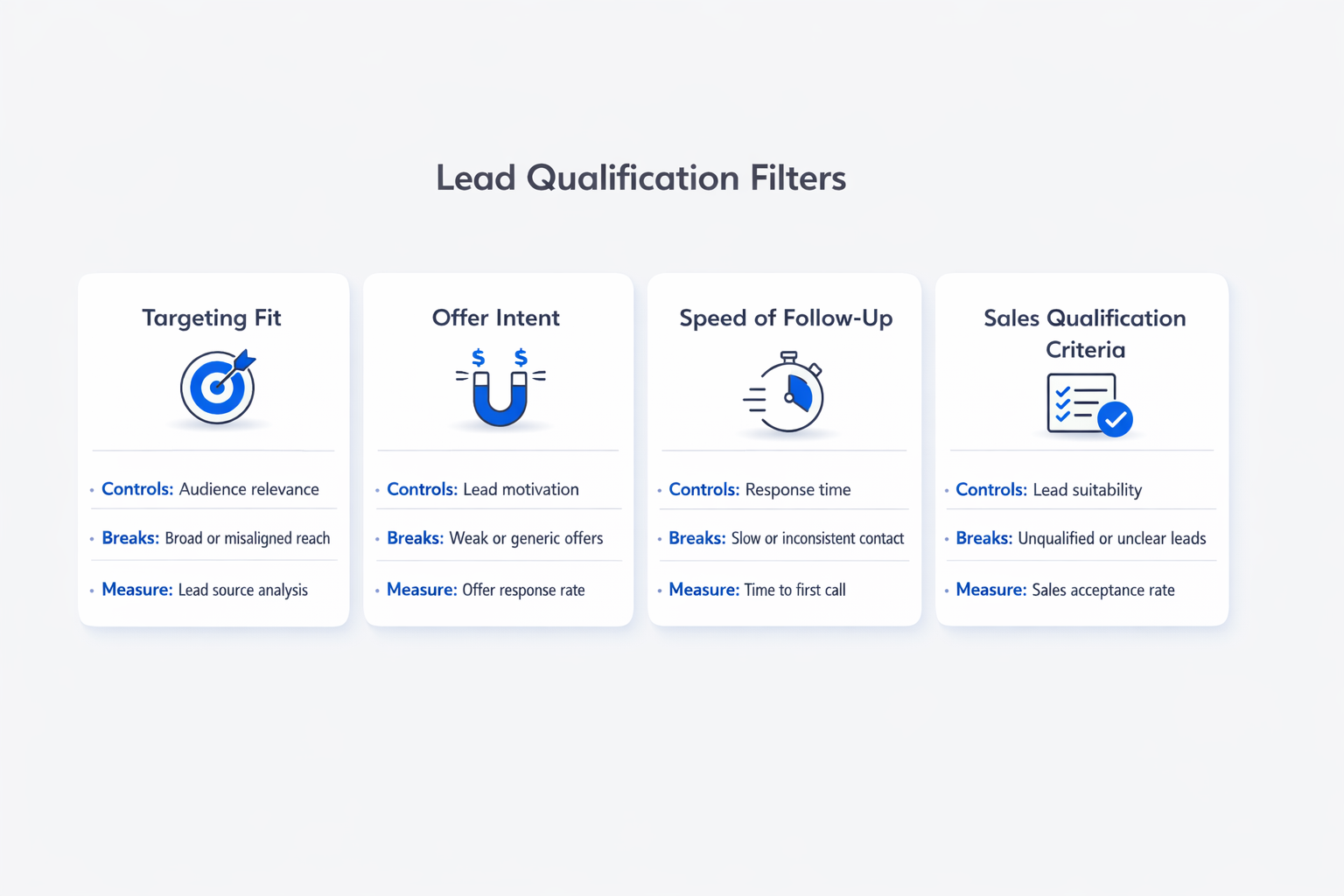
A low rate means one of three things:
-
Targeting pulls low-intent users; your ads reach people who like content but do not plan to buy.
-
Your lead magnet filters poorly; the offer attracts researchers rather than decision-makers.
-
Your follow-up system delays contact; response time kills intent.
Each cause requires a different fix. Guessing wastes months.
Diagnose the Breakdown Before Changing Campaigns
Many teams change creatives first. That is rarely the root issue.
If your campaigns already struggle with volume or quality, review common structural gaps in why most Facebook lead generation campaigns fail before touching ads.
Segment Leads by Source and Intent Signal
Break down leads by campaign, ad set, and creative. Then compare opportunity rates, not just CPL.
Look for patterns such as:
-
Broad targeting with high volume but weak qualification; this usually inflates CPL efficiency while hurting pipeline.
-
Niche interest stacks with lower volume but strong opportunity rate; these often hide scalable segments.
-
Retargeting audiences that convert to opportunities at double the rate; this signals high purchase intent.
Do not average everything together. Weighted averages hide your best audiences.
Compare Form Type Performance
Meta offers Instant Forms and website forms. They behave differently.
Instant Forms reduce friction, but also reduce commitment. Website forms create friction, but signal stronger intent.
Track:
-
Opportunity rate by form type; not just cost per lead.
-
Time to first sales contact; shorter response windows improve qualification.
-
Drop-off between lead submission and meeting booking; this shows whether your follow-up process leaks.
If you are unsure which format fits your funnel, review lead forms vs landing pages: which converts better and compare opportunity rates, not just submission rates.
You may find that website leads cost more yet generate higher pipeline value.
Fix Targeting to Improve Buyer Quality
Targeting affects qualification more than creative tweaks. Audience intent matters more than aesthetics.
If your ads generate clicks but no real pipeline, analyze the audience mismatch described in why your ads get clicks but no sales .
Move From Demographic Assumptions to Behavioral Proxies
Demographics rarely predict purchase intent. Behavioral signals perform better.
Use:
-
Engaged video viewers from bottom-funnel ads; they already consumed product-specific messaging.
-
Website visitors filtered by high-value page views; pricing and comparison pages indicate intent.
-
Lookalikes built from closed-won customers; not all leads.
Avoid building lookalikes from raw lead lists. That amplifies low-quality patterns.
Separate Prospecting From Retargeting Budgets
Mixed campaigns dilute optimization signals. Meta optimizes toward the cheapest conversions, not the most qualified ones.
Create:
-
Prospecting campaigns optimized for qualified leads; use offline conversion data when possible.
-
Retargeting campaigns focused on high-intent segments; exclude cold audiences.
-
Clear exclusions between stages; prevent audience overlap.
When optimization events match qualification goals, opportunity rates improve.
Align Lead Magnets With Buying Stage
Lead magnets often attract the wrong audience. Educational assets bring researchers, not buyers.
For a deeper breakdown of how funnel stages affect conversion quality, study how to build a Facebook lead generation funnel from cold traffic to customers and map your offers to intent depth.
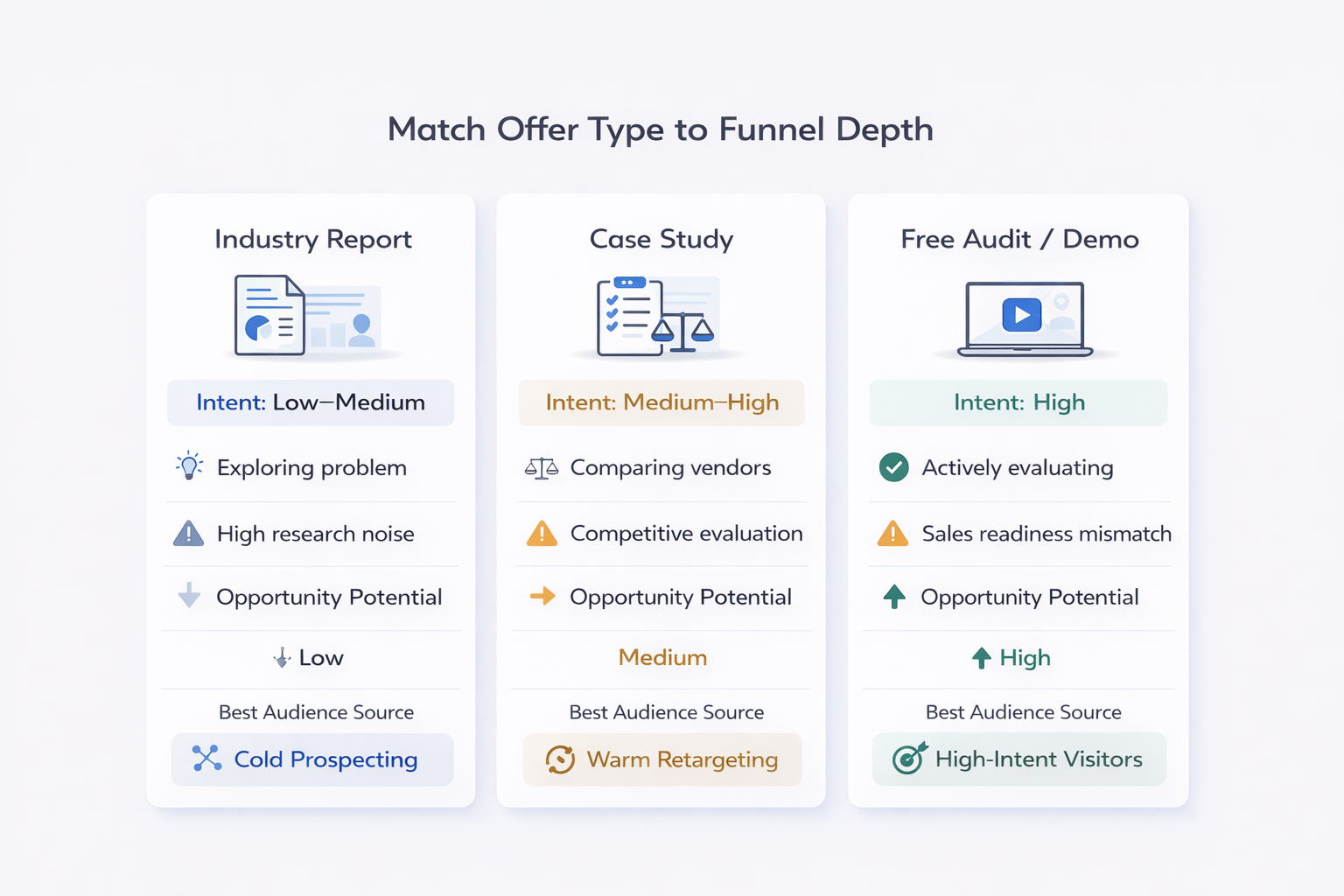
Match Offer Type to Funnel Depth
Different offers create different intent levels.
-
Industry reports; attract early-stage users gathering information.
-
Case studies; pull prospects evaluating vendors.
-
Free audits or demos; signal readiness to engage with sales.
If you run demo ads to cold traffic, expect weak opportunity rates. The audience is not ready.
Add Qualification Friction Intentionally
Friction is not always bad. Strategic friction filters noise.
Examples:
-
Include budget range fields; serious buyers respond.
-
Ask about implementation timeline; vague answers indicate low urgency.
-
Use open-text fields for goals; generic responses flag low engagement.
Short forms maximize volume. Structured forms maximize pipeline quality.
Improve Speed and Structure of Follow-Up
Lead quality is not only about targeting. Follow-up timing shifts opportunity rates dramatically.
Reduce Response Time to Minutes
Intent decays fast after submission. Contact within five minutes increases meeting rates significantly.
Operational fixes include:
-
Automatic CRM sync; avoid manual exports.
-
Instant email and SMS acknowledgment; confirm receipt.
-
Sales alerts through Slack or CRM notifications; trigger immediate action.
If contact happens hours later, qualification drops.
Standardize First Touch Scripts
Sales consistency matters. Early conversations shape opportunity status.
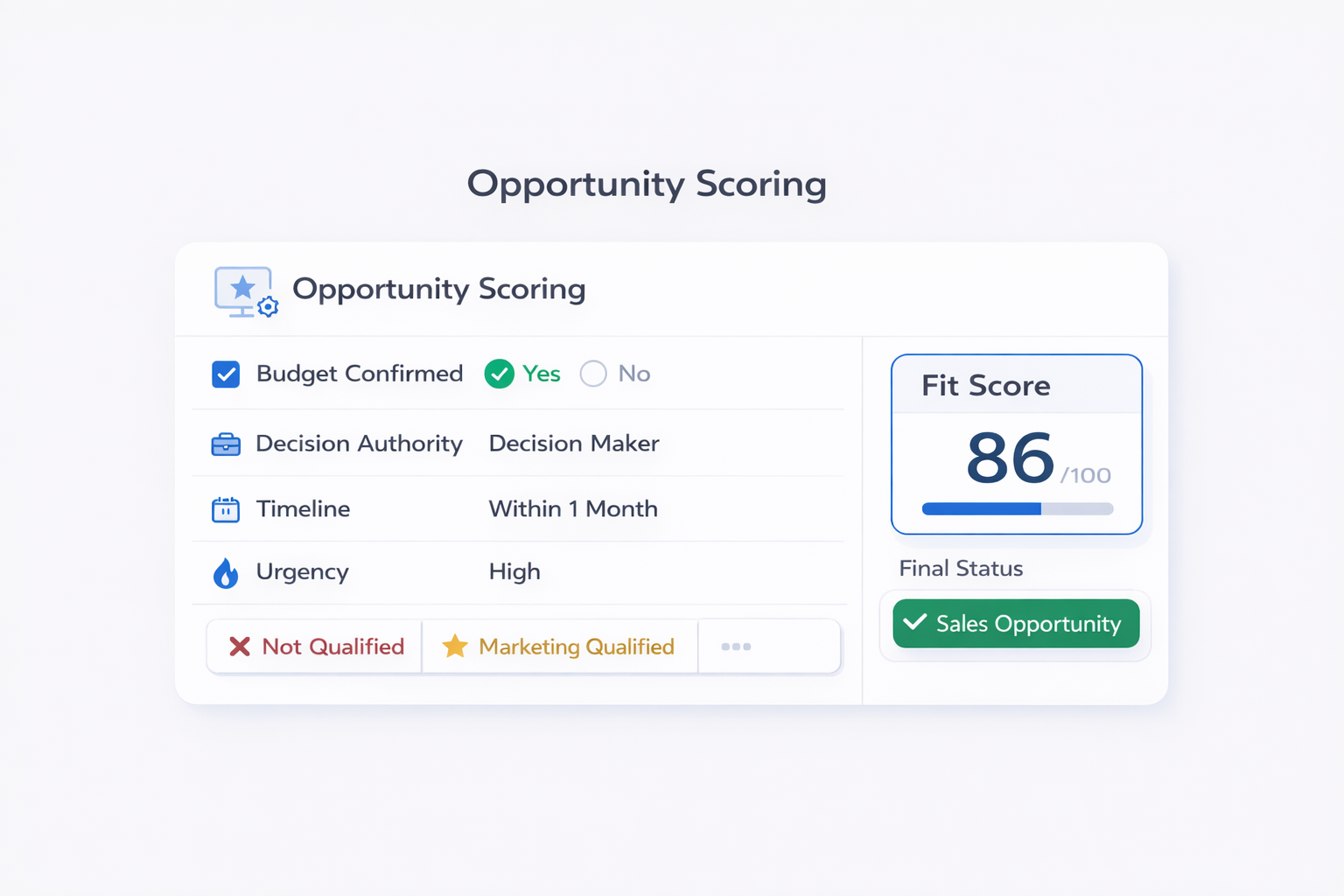
Define:
-
Clear discovery questions tied to qualification criteria; avoid casual chats.
-
A defined next step; meeting booking during the first call.
-
Disqualification rules; remove poor-fit leads quickly.
Ambiguous conversations produce bloated pipelines with weak close rates.
Feed Sales Outcomes Back Into Meta
Meta optimizes based on the event you choose. If you optimize for leads, it finds cheap leads.
Use Offline Conversions for Opportunity Events
Upload opportunity data to Meta through offline conversions. Map it to the original campaign.
Benefits include:
-
Optimization toward users similar to qualified prospects.
-
Reduced delivery to low-intent segments.
-
Clear visibility into cost per opportunity.
This step requires CRM hygiene. Without clean data, optimization degrades.
Compare Cost Per Opportunity, Not Cost Per Lead
Shift reporting dashboards toward opportunity metrics. CPL alone hides inefficiency.
Track:
-
Cost per opportunity by campaign.
-
Opportunity rate by audience.
-
Revenue per lead source.
When budgets move toward high-opportunity segments, total pipeline improves even if CPL rises.
Lead volume is easy to scale. Qualified pipeline is harder. Focus on opportunity conversion, and Meta campaigns become a revenue engine instead of a lead factory.