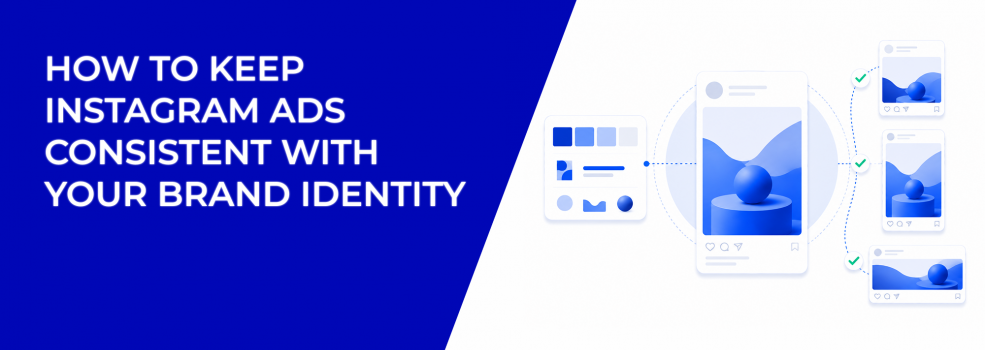
Many advertisers think brand consistency is mainly a design concern. The logo looks right, the colors match the website, and the Instagram profile feels professional.
The problem usually appears inside the ad account. Different creatives are produced by different people, often under pressure to launch new tests quickly. Over time, every campaign starts developing its own visual language. The result is an account full of ads that technically belong to the same company but feel like they come from different brands.
This creates a performance problem. Instagram users see multiple impressions from the same advertiser, yet those impressions fail to reinforce each other. Recognition stays weak, creative testing becomes harder to interpret, and the account loses some of the compounding effect that repeated exposure should create.
A visual identity system solves this. Instead of treating every new creative as a fresh design exercise, it gives the team a framework that keeps ads recognizable while still allowing new concepts and formats to be tested.
Why different creative styles make Instagram campaigns harder to scale
Many accounts become visually inconsistent without anyone noticing.
One campaign uses polished studio photography. Another relies on creator content. A third uses heavy graphic design. Individually, each creative may perform well. Together, they create confusion.
A user might see one ad on Monday and another on Thursday without realizing they came from the same company. The advertiser pays for both impressions, but the second impression gains very little benefit from the first.
This often becomes visible during scaling. New creatives enter the account, spend increases, and performance becomes less predictable. Teams start blaming audience quality, seasonality, or competition when the real issue is that the brand no longer has a recognizable visual identity.
Why most advertisers accidentally create this problem
The pressure to keep producing fresh creative is usually what causes brand drift.
Media buyers ask for new concepts. Designers experiment with new styles. UGC creators submit content in different formats. The account gradually accumulates dozens of visual approaches.
Nobody makes a conscious decision to abandon consistency. It happens because there are no clear rules defining what should remain stable.
Without those rules, every creative refresh introduces additional variation. Eventually, the account stops building recognition and starts behaving like a collection of unrelated ads.
This is why many advertisers struggle to maintain a consistent ad style across multiple campaigns. The issue is rarely a lack of creativity. It is a lack of structure.
Build a visual system before creating more ads
The solution is not stricter design approval or fewer creative tests. The solution is defining a small number of visual elements that every ad must follow.
For most brands, these elements include:
- Color palette,
- Typography treatment,
- Product presentation style,
- Visual hierarchy,
- Testimonial format,
- Brand markers.
These components should remain stable regardless of whether the ad appears as a Reel, Story, carousel, or static image.
Everything else can change. The opening hook can change. The offer can change. The creator can change. The format can change.
The visual identity remains intact. This gives users repeated exposure to the same brand signals while still giving advertisers room to test new ideas.
Keep ads recognizable even when formats change
Instagram placements encourage variation. A Story should not look identical to a Feed ad. A Reel should not feel identical to a carousel.
Many advertisers interpret this correctly but apply it too aggressively. The format changes, then the editing style changes, then the design system changes, and eventually the entire brand identity changes as well.
A better approach is adaptation rather than reinvention.
The ad should feel native to the placement while preserving the visual cues users already associate with the brand. This is the same challenge discussed in how to make your ads look native without losing brand identity.
Users should immediately recognize the advertiser, regardless of whether they encounter the ad in Stories, Reels, Explore, or Feed.
Refresh creative without resetting recognition
One reason advertisers abandon consistency is fear of creative fatigue. They worry that if ads continue looking similar, performance will decline.
The opposite is often true. Most campaigns do not need a new visual identity. They need a new angle, a new hook, or a new way of presenting the same offer.
A skincare brand can test founder-led videos, customer testimonials, and product demonstrations while maintaining the same visual system. A B2B software company can test different pain points while keeping interface treatments and design patterns consistent.
The strongest accounts rarely reinvent themselves every month. Instead, they refresh ad creatives without losing consistency. That approach preserves recognition while still giving Meta new creative inputs.
Final takeaway
The core problem is not a lack of creative ideas. It is the absence of a visual system that connects those ideas together.
When Instagram ads follow different visual rules, recognition weakens and campaign performance becomes harder to interpret. A consistent visual identity allows users to connect impressions across time while giving advertisers cleaner testing data.
The goal is not to make every ad look the same. The goal is to make every ad unmistakably belong to the same brand.