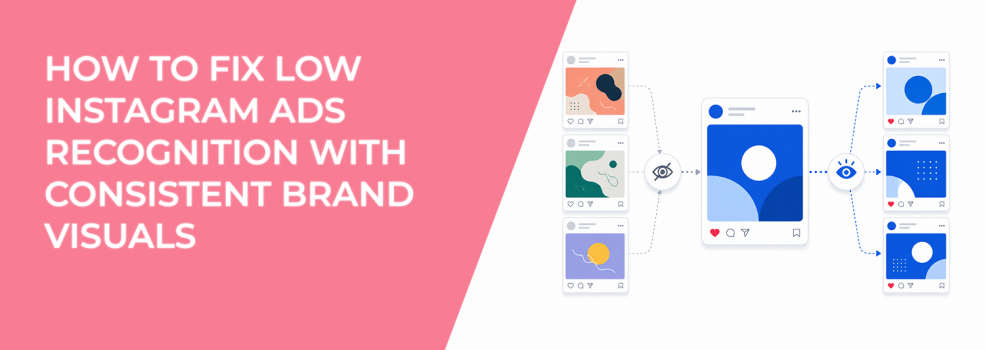
A surprising number of Instagram ads succeed at attracting attention but fail at building recognition.
Users remember a product, a creator, a promotion, or a visual concept. A few days later, they can recall seeing the ad but cannot remember which company showed it to them.
This creates a hidden performance problem. The advertiser keeps paying for impressions, but those impressions do not accumulate as effectively as they should. Every new exposure has to rebuild familiarity because the previous exposure did not leave a strong enough brand memory.
Consistent visual cues solve this problem. They help users connect separate impressions together and gradually build recognition over time.
Users remember the creative but forget the brand
This problem becomes easier to see when you think about your own Instagram behavior. Most people can remember seeing certain ads. Fewer can remember the company behind them.
That distinction matters.
If users remember the ad but not the advertiser, the campaign creates attention without creating familiarity. When the next impression arrives, the brand receives little benefit from the previous interaction.
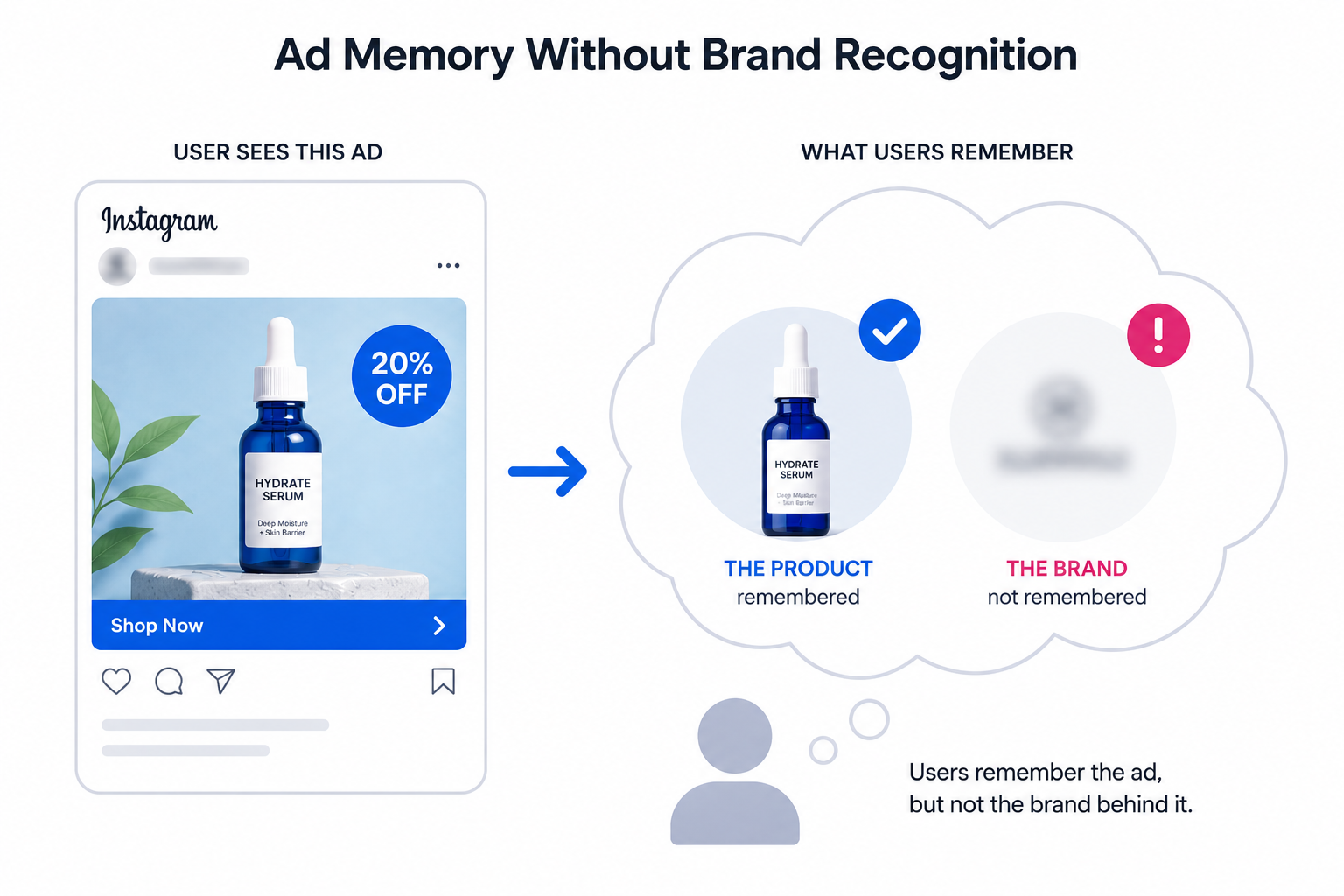
For advertisers running high-frequency campaigns, this can become expensive. Multiple impressions are purchased, but the audience does not become meaningfully more familiar with the brand after each one.
Why weak recognition makes campaigns less efficient
Brand recognition influences how users react to future impressions.
When a user recognizes the advertiser immediately, they can focus on the offer, proof, or CTA. When they do not recognize the advertiser, part of their attention goes toward understanding who is speaking to them.
That extra friction often appears later in the funnel. Retargeting campaigns become less effective. Profile visits stay lower than expected. Users engage with content but fail to develop trust in the company behind it.
This is one reason brand recall is a key marketing metric, even for performance-focused advertisers. Recognition influences the efficiency of future impressions, not just current ones.
The mistake that causes low ad recognition
Most recognition problems are not caused by low reach. They are caused by inconsistent visual cues.
A company runs one style of ad this month and another style next month. New campaigns use different colors, different layouts, different editing approaches, and different ways of presenting the product.
The audience sees impressions, but there is no consistent visual pattern connecting them. Over time, users learn to recognize individual ads rather than the advertiser itself.
This often happens unintentionally. Teams focus on keeping creative fresh and forget that recognition depends on repetition.
Use the same visual cues across every campaign
The simplest solution is identifying a handful of visual elements that appear repeatedly throughout the account.
These do not need to be large or obvious.
A consistent product presentation style can work. A recognizable color treatment can work. A recurring typography pattern can work. Some brands achieve strong recognition simply by presenting proof and testimonials in the same way across every campaign.
The important part is consistency.
When users repeatedly encounter the same visual cues, recognition develops naturally. They begin identifying the advertiser before fully processing the content of the ad.
That makes future impressions more efficient because familiarity already exists.
Make every impression reinforce the previous one
Recognition becomes much stronger when campaigns are designed to build on previous exposures. This is why ad sequencing builds brand recall.
The first impression introduces the brand. The second reinforces it. The third adds proof. The fourth presents a stronger conversion opportunity.
When the same visual cues remain present throughout the sequence, each impression strengthens memory instead of starting from zero.
Many advertisers focus entirely on individual creative performance. Recognition improves when you start thinking about how impressions work together.
How to tell if recognition is improving
Recognition rarely appears as a single metric inside Ads Manager. Instead, it influences a collection of downstream signals.
Advertisers often notice:
- Higher profile visit rates,
- Stronger retargeting engagement,
- Better branded search activity,
- More efficient repeat exposure performance,
- Lower resistance in later funnel stages.
These indicators suggest that users are becoming familiar with the advertiser rather than simply reacting to isolated ads. Looking at brand recall metrics can provide additional context, especially for accounts spending enough to generate meaningful reach.
Final takeaway
Low Instagram ad recognition is often caused by inconsistent visual presentation rather than weak targeting or weak offers.
When users repeatedly encounter the same visual cues, impressions begin reinforcing each other instead of operating independently. Recognition grows, future impressions become more efficient, and campaigns gain more value from the attention they already buy.
The goal is not maximum creative variation. The goal is making sure users know exactly who they are seeing every time your ad appears.