Some products generate consistent sales but offer little room for error. Profit margins are slim. Advertising costs are rising. And every click must justify its expense.
Promoting low-margin products through paid channels can still be profitable — but only if you approach it with precision and strategy.
Below is a practical, ROI-driven guide to help you maintain — and even improve — your return on ad spend (ROAS), despite tight margins.
1. Prioritize Warm Audiences Over Cold Outreach
When margins are low, you can’t afford inefficiencies — and cold traffic is often where budgets vanish quickly. Prioritize audiences who have already shown interest or interacted with your brand.
These include:
-
Past purchasers,
-
Email subscribers,
-
Website visitors and cart abandoners,
-
Social media engagers.
These audiences are statistically more likely to convert at a lower cost. A well-structured retargeting campaign — especially using tools like Meta Pixel — can significantly improve ROAS. If you're new to this, review how to set up Facebook retargeting.
2. Increase Average Order Value (AOV)
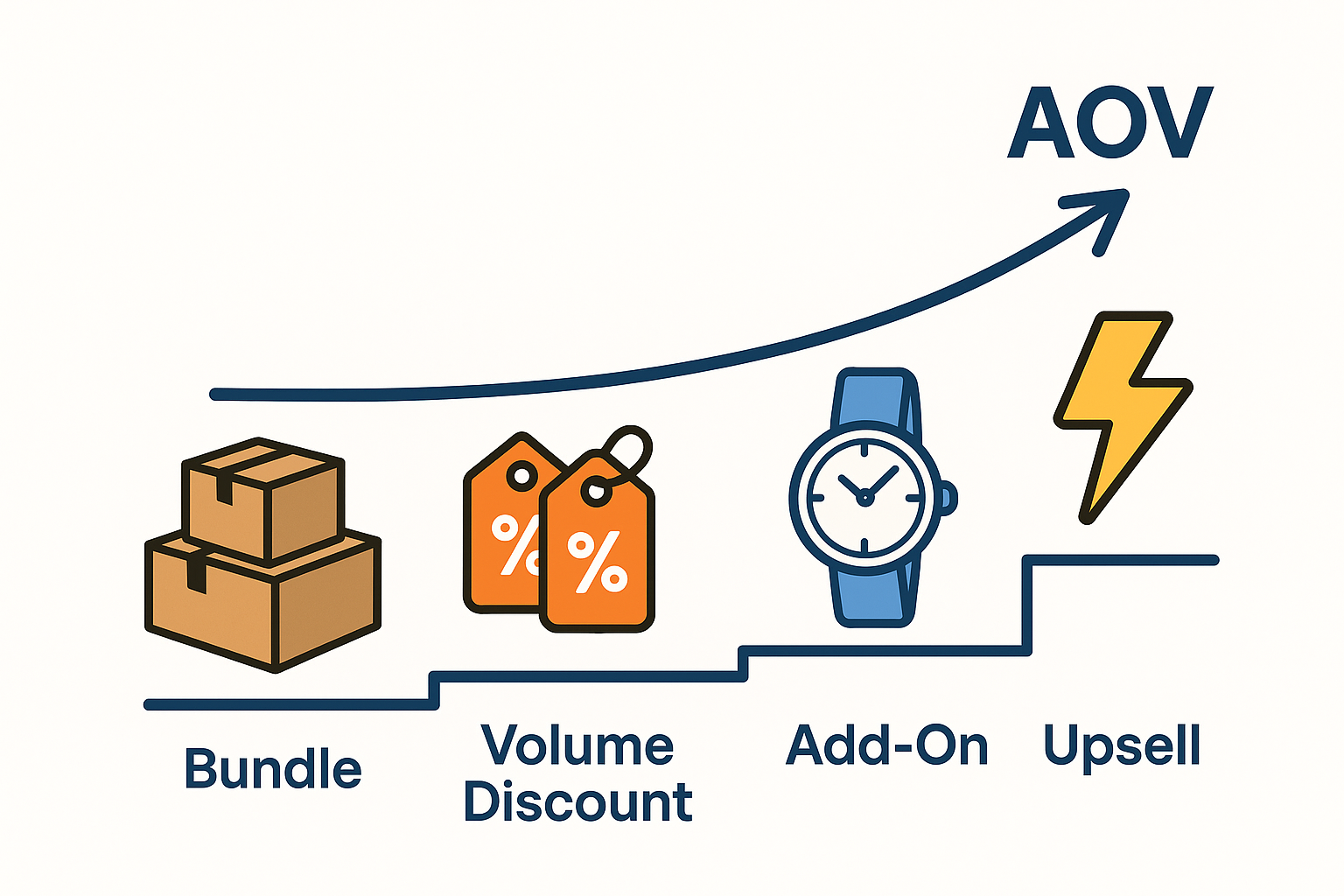
When the margin per product is low, increasing the average order value (AOV) is your best lever. You don’t need to increase prices — you need to increase how much people spend in one transaction.
Tactics include:
-
Bundling: Combine complementary items into one higher-value offer. This boosts perceived value while preserving efficiency.
-
Volume-based discounts: “Buy 3, get 15% off” encourages bigger carts.
-
Checkout add-ons: Offer inexpensive accessories during checkout (e.g., batteries with electronics, cases with bottles).
-
Post-purchase upsells: Use automation to offer related items immediately after checkout.
If bundling is part of your strategy, explore how to promote product bundles effectively on Facebook.
3. Sharpen Your Targeting Strategy
Broad interest targeting often leads to poor returns when promoting low-margin offers. Instead, define and segment your audience using behavioral signals and intent-based indicators.
Ask:
-
What pain point does this product solve?
-
Who actively seeks solutions in this category?
-
What online behaviors signal purchase readiness?
Refining audience criteria helps eliminate wasteful impressions and increase conversion rates. For guidance, see why your target audience might be too broad — even if it looks right.
4. Make Every Creative Element Serve a Purpose
When promoting low-margin products, every component of your ad must contribute to the conversion.

Key creative principles:
-
Clear value proposition: Focus on practical benefits, not vague slogans.
-
Precise visuals: Show product usage, benefits, or scale.
-
Competitive pricing display: If pricing is your advantage, highlight it.
-
Urgency and credibility: Add real reviews, delivery times, or limited-stock notices.
Need help crafting ad copy that converts? Study this guide on how to structure a high-converting Facebook ad.
5. Use Entry-Level Products to Acquire Customers Profitably
Low-margin products can serve as acquisition tools when tied to longer-term value. If your business model includes repeat purchases or cross-sells, this approach is viable.
Look at metrics like:
-
Customer lifetime value (CLTV),
-
Email open and engagement rates,
-
Return purchase frequency.
Even a break-even front-end can yield profitable ROAS over time if retention is strong. For context, read why AOV is your secret lever for better ROAS.
6. Invest in Owned Channels to Reduce CPA
Email lists, SMS subscribers, and social followers provide zero-cost remarketing channels. For brands with tight margins, this is essential.
Strengthen your owned channels:
-
Use email to promote bundles or clearance stock.
-
Run SMS campaigns for flash sales or cart recovery.
-
Deploy educational content (e.g., how-to videos or guides) to create demand for low-margin products before retargeting.
These efforts lower acquisition costs and increase customer loyalty.
7. Use Proven Behavioral Triggers to Drive Conversions
When the product's profit margin is limited, you need conversion velocity. Leverage behavioral triggers such as:
-
Urgency: “Ends at midnight” increases purchase immediacy.
-
Scarcity: “Only 4 left” adds pressure.
-
Exclusivity: “Only for newsletter subscribers” makes the offer feel premium.
These techniques are not gimmicks — they’re rooted in behavioral psychology and can improve ad performance substantially. To implement them effectively, align with ad formats that convert best.
8. Know When a Product Should Not Be Promoted with Paid Media
Not every product is suitable for paid ads — especially if:
-
CPC is rising and margins are flat.
-
You’re stuck in the Facebook learning phase.
-
The product is undifferentiated in a saturated market.
In these cases, switch to organic promotion, influencer partnerships, or SEO until you validate demand. If you're seeing no impressions, check why your ad set may get zero.
9. Benchmark and Segment ROAS by Funnel Stage
ROAS is not static. It shifts based on funnel position:
-
Top-of-funnel: Expect lower ROAS. These campaigns are focused on awareness and lead gen.
-
Mid-funnel: Aim for improved efficiency by retargeting engaged users.
-
Bottom-of-funnel: ROAS should peak here — you're reaching high-intent users.
If you’re experiencing a drop in ROAS and don’t know where to start, review this diagnostic guide.
Final Thoughts
Advertising low-margin products is not a lost cause — but it is an operational challenge. You need to think in systems: acquisition cost, average order value, upsell strategy, creative optimization, and funnel-specific targeting.
Those who succeed are the ones who stop chasing vanity metrics and start designing campaigns that account for real-world economics.
Refine your funnel. Be disciplined with spend. Track meaningful metrics.
That’s how you protect — and grow — ROAS.