Running Facebook or Instagram ads used to be more forgiving. But when CPMs (cost per 1,000 impressions) rise, even a small mistake can destroy your profit margin.
Advertisers who keep winning don’t just increase spend or cut campaigns. They adjust their strategies — fast.
Let’s break down how to protect your return on ad spend (ROAS) when reach gets expensive.
Why CPMs go up — and what that means for you
Rising CPMs are often outside your control. But understanding why they happen helps you respond the right way.
The most common reasons include:
-
Seasonal spikes — holidays, promotions, and launches increase advertiser competition;
-
Audience expansion — broad targeting includes more users but lowers precision;
-
Creative fatigue — ad engagement drops when people keep seeing the same thing;
-
Low relevance — Meta’s system penalizes ads that don’t drive engagement or conversions.
Learn more in Why Facebook Ads Are Getting More Expensive.
Tip: Check Meta’s Ad Relevance Diagnostics. If you see low quality or engagement rankings, that’s a signal to act.
Fix creative issues before touching your budget
When CPMs rise, it’s tempting to cut spend. But first, fix what’s under your control — your creative.
Your hook needs to do the heavy lifting
The first 3 seconds decide whether your ad gets skipped or watched.
Use proven hooks:
-
Unexpected motion — zooms, swipes, fast cuts catch attention;
-
Direct callouts — “Still struggling with [problem]?”;
-
Instant visual value — show before/after results or key benefits.
Not sure if your hooks are strong? Read The Psychology of Scroll Behavior.
Tip: Design static image ads like billboards. Big text, high contrast, minimal clutter.
Match your message to funnel stage
Too many campaigns fail because every ad tries to do everything. Break your creative into clear layers.
| Funnel stage | Message focus | Example |
|---|---|---|
| Cold | Problem awareness, curiosity | “Still wasting hours doing X?” |
| Warm | Product benefits, proof | “Rated 4.9 stars by 10,000+ users” |
| Hot | Urgency, offer | “Only 12 left. 20% off today only.” |
This approach is covered in detail in How to Improve Funnel Efficiency by Segmenting Creatives.
Get more out of your targeting — without spending more
When every impression costs more, who sees your ad becomes more important than ever.
Use custom audiences to focus spend
High-intent custom audiences often deliver 2–3x better ROAS than broad targeting.
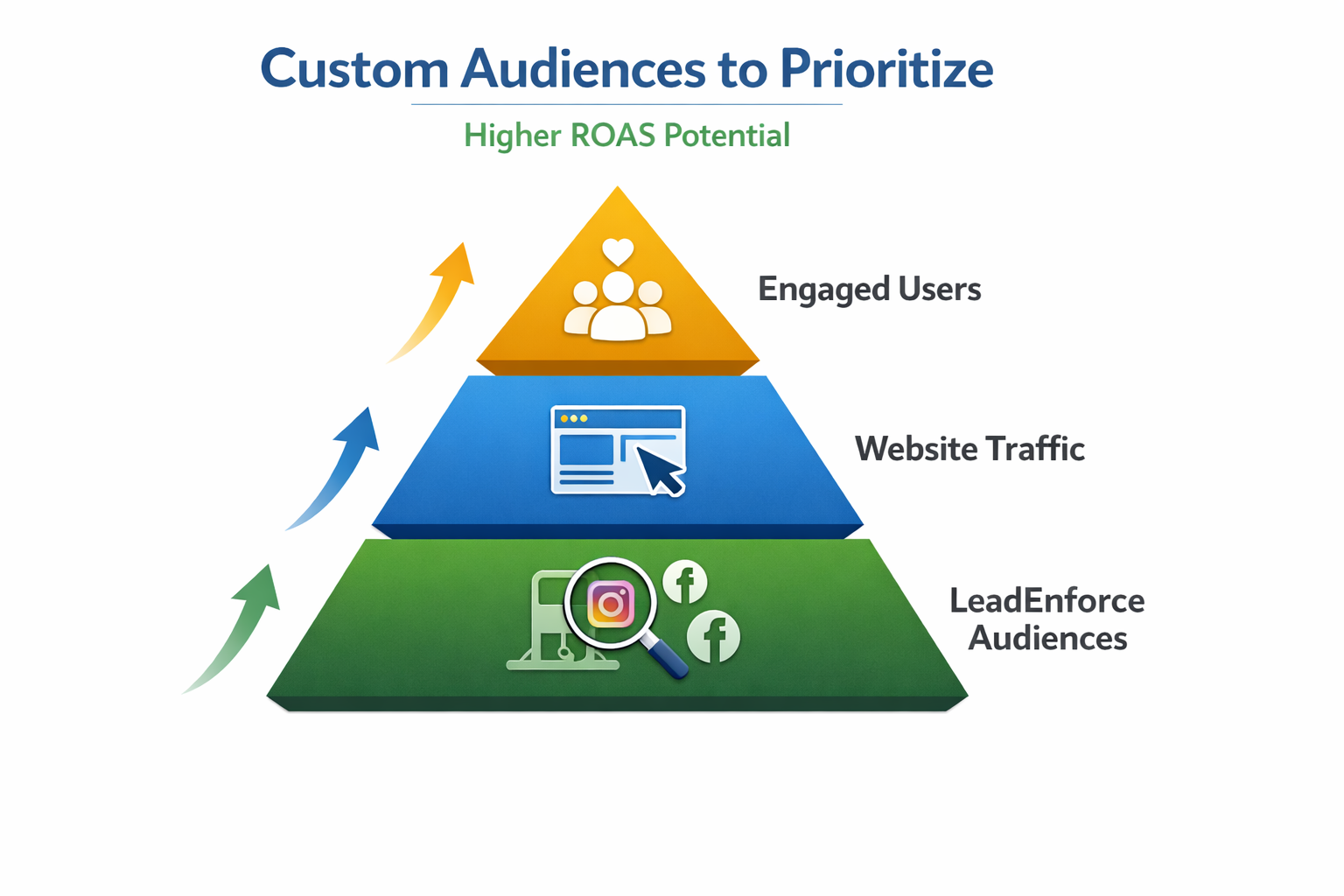
Build and test:
-
Engaged users — people who watched videos or saved posts;
-
Website traffic — product page or checkout visitors (past 7–30 days);
-
LeadEnforce audiences — based on Instagram accounts or Facebook groups your target buyers already follow.
Want a deeper dive? See How LeadEnforce Simplifies Audience Segmentation.
Tip: Layer warm audiences with tight exclusions to avoid overlap and wasted impressions.
Exclude low-converting groups
Don’t waste budget on people who don’t buy. Exclude:
-
Past purchasers (unless you're upselling);
-
Low-quality traffic sources (e.g., placement or country reports);
-
Users who clicked but never converted (based on funnel data).
Adjust how you measure ROAS
Don’t judge campaigns on day 1 results
If you’re only using 1-day click attribution, you’re likely undercounting sales.
Switch to:
-
7-day click, 1-day view — This gives Meta more time to connect results to your ads.
Also:
-
Use Meta’s Conversions API (CAPI) to recover lost post-iOS data;
-
Compare attribution windows to see how much value appears over time.
For setup help, check Server-Side Tracking for Facebook Ads.
Tip: Some high-AOV or subscription products convert slower. Don’t kill winners too early.
Increase revenue per customer
If each click costs more, make each buyer worth more.
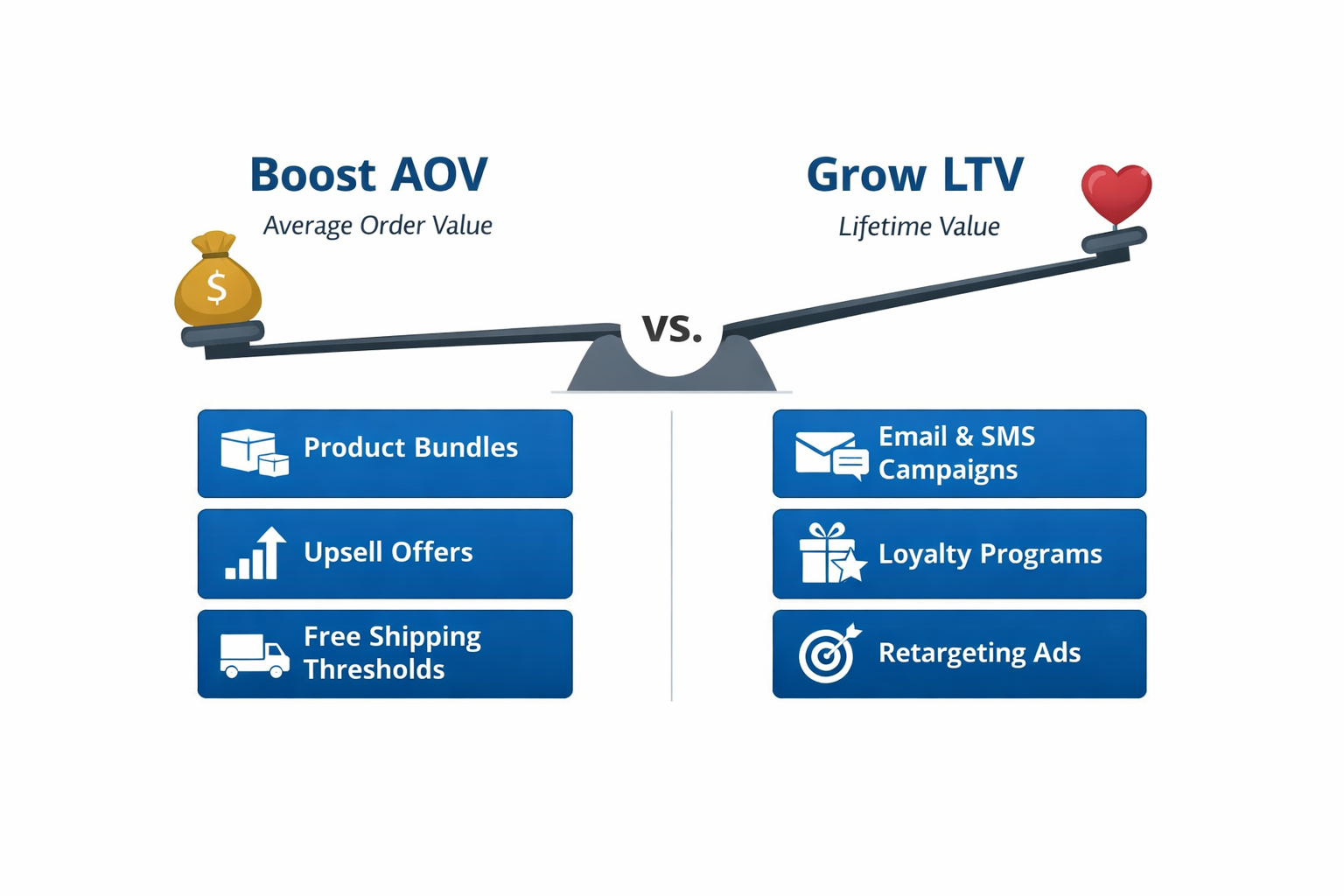
Boost AOV (average order value)
Instead of cutting CPMs, increase what each customer spends:
-
Offer bundles — like 2-for-1 sets or “complete the look” kits;
-
Add upsells — e.g., “Add a carry case for just $5 more”;
-
Use shipping thresholds — “Free shipping on $50+ orders.”
Grow LTV (lifetime value)
Long-term ROAS > first-purchase ROAS. Drive repeat purchases with:
-
Email or SMS flows;
-
Loyalty offers or refill reminders;
-
Retargeting past customers with complementary items.
Related reading: Why You Should Pair ROAS With Customer Lifetime Value.
Stick to a regular testing and optimization rhythm
Testing gets harder when CPMs are high — but also more important.
Weekly testing cadence
Build simple routines. Example:
-
Monday — launch 1–2 new creative variants;
-
Wednesday — check audience performance and CTR drop-offs;
-
Friday — pause underperformers, scale top ads, log learnings.
Monthly deep dive
Review:
-
Which hooks worked best by funnel stage;
-
Where frequency is creeping up (leading to fatigue);
-
Which segments are getting more expensive.
Tip: Use naming conventions to track learnings across ad sets and time periods.
Don’t panic. Tune your system.
Rising CPMs don’t mean your ads stopped working. They just mean your system needs fine-tuning.
Here’s what works:
-
Better hooks and clearer creative layers;
-
Smarter audience segmentation and exclusions;
-
Realistic attribution windows;
-
Stronger offers and higher customer value;
-
A steady rhythm of testing, fixing, and scaling.
CPMs will keep rising. Your performance doesn’t have to drop.