
Instagram is one of the most powerful platforms for performance advertising. But many marketers overlook one of its highest-quality audiences: people who already follow their competitors.
These users have shown clear interest in your category. They know the language. They engage with similar content. And with the right tools, you can reach them — even though Meta doesn’t allow it by default.
Why This Audience Deserves Your Focus
When you target people who follow brands similar to yours, you gain key strategic advantages. These users are:
-
Category-aware. You don’t need to waste budget explaining what your product does or why it matters;
-
Active on the platform. They’re used to engaging with similar content and brands;
-
More likely to convert. Their behavior signals intent, not just passive interest.
This type of targeting also helps avoid two common pitfalls: wasting spend on broad interest groups and relying too heavily on lookalikes that may no longer reflect your actual buyers.
To understand how lookalike and custom audiences differ — and when each works best — check out Custom vs Lookalike Audiences: What Works Best for Facebook Campaigns.
Why Instagram’s Native Tools Aren’t Enough
Instagram's built-in ad tools offer basic segmentation — interest targeting, lookalikes, and behavioral filters. But they fall short when you want precision.
The platform doesn’t let you target followers of specific accounts. That means:
-
You can’t focus on users who already follow competitors or related brands;
-
You’re limited to Meta’s definition of interests, which is often too broad;
-
Your audience data becomes less reliable the further you get from your core base.
For advertisers looking to scale efficiently, these limitations create a real gap between strategy and execution.
How to Target Competitor Followers on Instagram
The Missing Link: LeadEnforce
LeadEnforce bridges this gap. It lets you create custom audiences built from real Instagram followers of any public account — competitors, creators, or complementary brands.
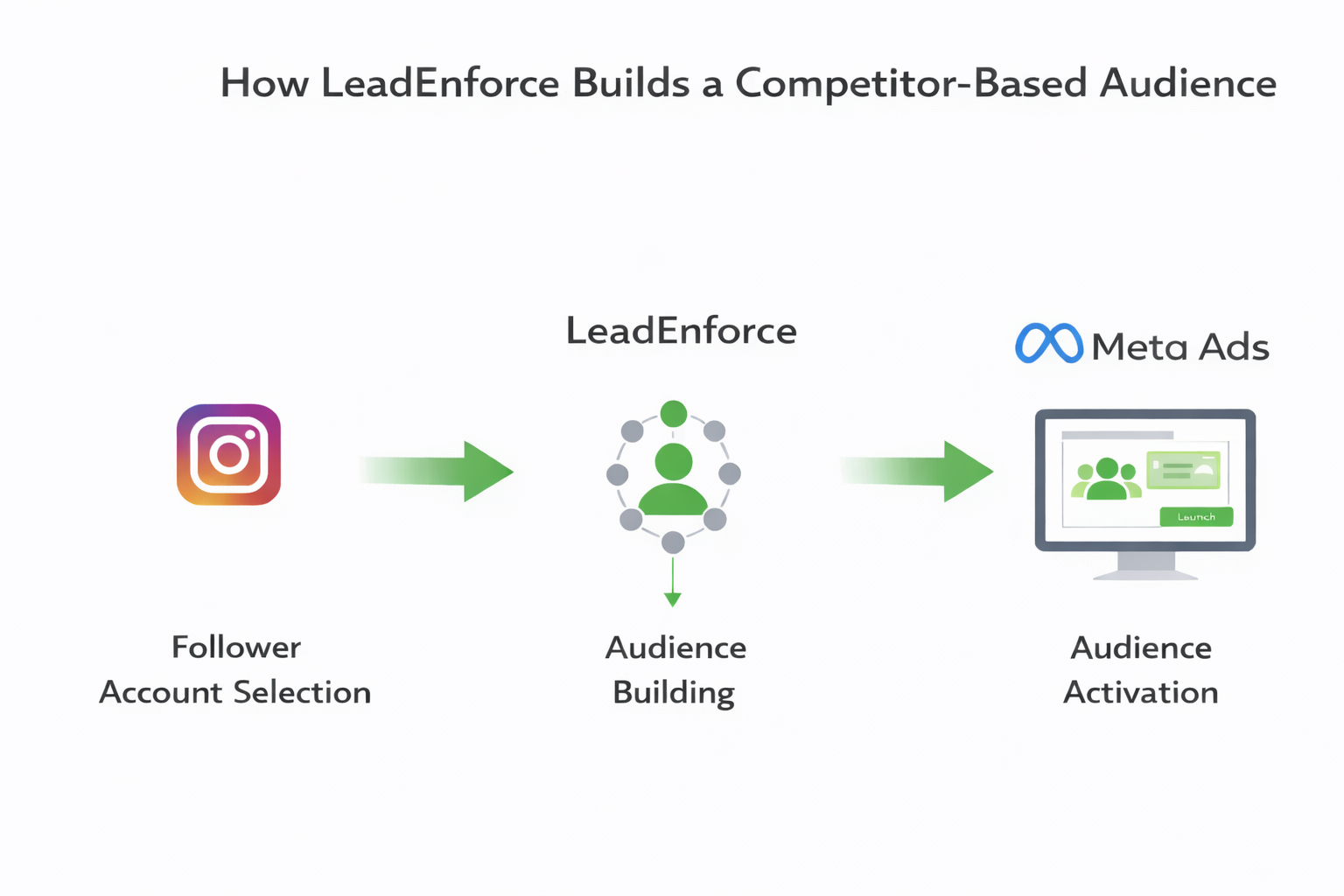
Here’s how advanced advertisers are using it:
1. Identify Strategic Accounts
Start by finding public Instagram accounts with a follower base that aligns closely with your ideal customer. These could include:
-
Direct competitors with similar products and pricing;
-
Niche creators or micro-influencers with loyal, relevant followings;
-
Adjacent brands that serve the same audience in a different way.
Need help choosing the right sources? This guide will walk you through it: How to Select Facebook and Instagram Sources for Targeting with LeadEnforce.
2. Build Custom Audiences with LeadEnforce
Once you’ve selected the right accounts, use LeadEnforce to create a custom audience of their followers. The platform uses publicly available data to match these users to Meta profiles, allowing you to run campaigns through your existing Ads Manager.
3. Launch Instagram Campaigns That Speak Directly to These Users
After syncing your custom audience to Meta, you can begin crafting campaigns designed specifically for this group. The goal isn’t just to run a generic ad. It’s to speak to a user who already knows the landscape.
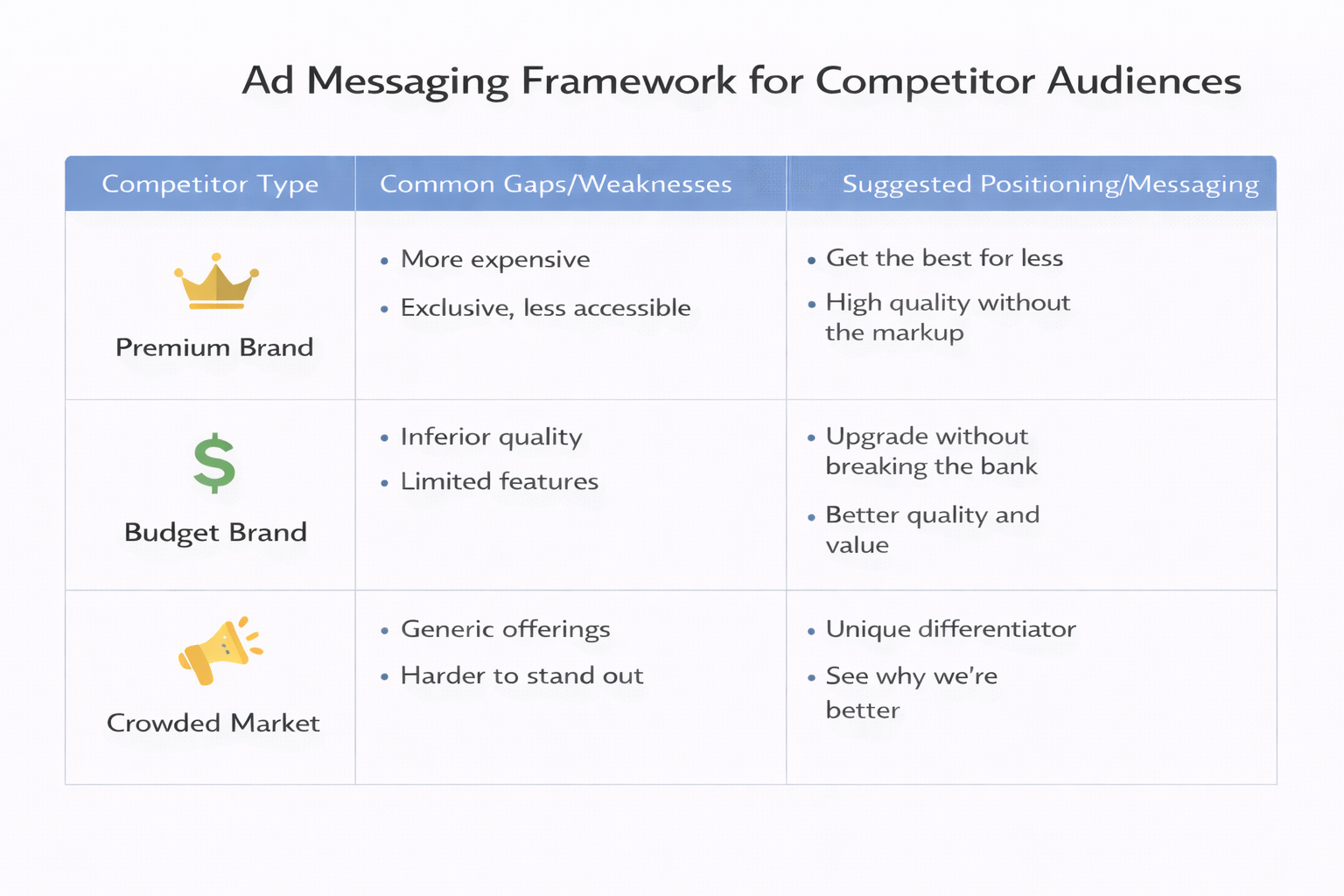
Some tested approaches include:
-
Highlighting the gap your competitor leaves open — for example, slower delivery or lack of product variety;
-
Offering a direct switch incentive — like a trial, bonus product, or early access;
-
Mirroring your competitor’s tone or aesthetic — but with a clearer or more user-friendly message.
Each campaign should assume the user is familiar with products like yours. That’s your edge — don’t waste it repeating the basics.
Strategic Use Cases: When This Approach Works Best
This targeting method works across many scenarios, but it’s especially effective in situations where timing and context matter.
Product Launches with Existing Market Demand
If you’re entering a competitive space — say, a new fitness supplement or clean skincare line — the fastest way to test traction is by going straight to users who already engage with similar products.
For more context, see this practical article on competitor targeting strategies: Should You Target Competitor Audiences on Facebook?
Customer Acquisition in Saturated Markets
When broad targeting produces diminishing returns, narrowing your audience to competitor followers gives you more efficient spend. You’re removing noise and going straight to users with demonstrated interest.
Brand Positioning and Differentiation
This strategy works well when your offer improves on something existing. For instance:
-
If your competitor has poor mobile UX, promote your fast, intuitive app experience;
-
If they charge for features you include for free, highlight that contrast;
-
If they use generic stock visuals, lean into real customer stories or behind-the-scenes content.
Here, your audience already knows the competitor. You don’t need to introduce the category — you just need to explain what makes you better.
A Few Expert Tips to Maximize Results
Advanced advertisers don’t just use targeting tools — they refine how these tools fit into their broader strategy. Some proven practices include:
-
Audience layering. Combine LeadEnforce audiences with other filters like device type or recent ad engagement;
-
Creative mapping. Align each creative to a specific audience segment. Generic demos rarely outperform tailored messaging;
-
Segmentation testing. Not all competitor audiences behave the same — small adjustments in source account can lead to large differences in CTR and ROAS.
Want to go deeper on segmentation mistakes to avoid? Read: 5 Audience Segmentation Mistakes That Waste Ad Budget.
Final Thoughts
You can’t reach your competitors’ Instagram followers through Meta alone. But with LeadEnforce, you can build precise custom audiences from public Instagram accounts — and target them inside your existing ad workflows.
It’s a simple but powerful shift. You stop casting a wide net and instead speak directly to people who are already in the market, already curious, and already one step closer to choosing your brand.
