Every marketing channel produces data at different speeds. Short-term results are often noisy and reactive to recent changes, while long-term results reveal patterns that are statistically and strategically reliable. Interpreting these correctly prevents wasted budget, premature optimization, and false conclusions.
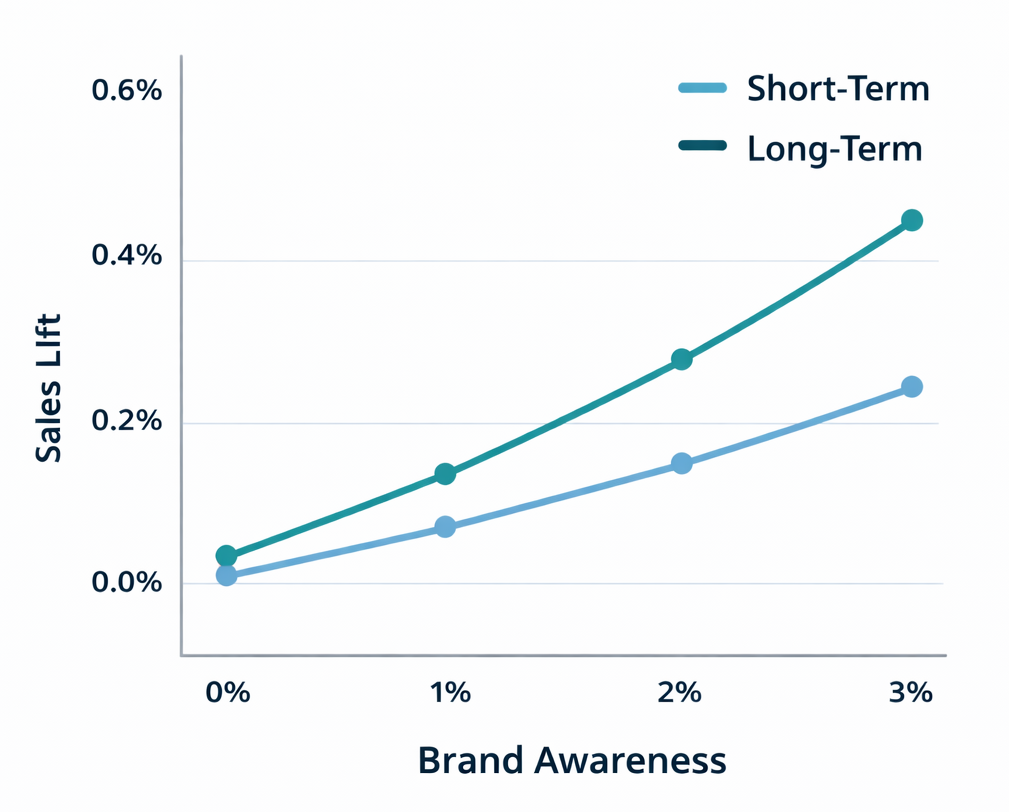
Sales lift from incremental increases in brand awareness, illustrating stronger long-term effects
A common mistake is judging success or failure too early. In digital advertising, early performance is heavily influenced by learning phases, limited sample sizes, and audience volatility. Long-term data, on the other hand, smooths out randomness and reflects true performance drivers.
What Short-Term Results Are Good For
Short-term results typically cover periods ranging from a few days to two weeks. They are best used as diagnostic indicators, not final verdicts.
Short-term data helps you:
-
Detect technical issues such as tracking errors or broken funnels
-
Identify extreme performance problems (e.g., zero conversions)
-
Validate that new campaigns are delivering impressions and clicks
-
Spot early creative fatigue or delivery limitations
However, short-term metrics are highly sensitive to randomness. Industry benchmarks show that campaigns with fewer than 30–50 conversions can experience performance swings of over 30% without any underlying change in efficiency.
Limitations of Short-Term Metrics
Short-term data often exaggerates both wins and losses. A few high-value conversions can make results look exceptional, while a brief dry spell can falsely signal failure.
Key limitations include:
-
Small sample sizes that lack statistical confidence
-
Algorithm learning phases that temporarily inflate CPA
-
Day-of-week and time-of-day volatility
-
Delayed conversion attribution in longer sales cycles
Studies in performance marketing consistently show that results observed within the first 7 days can differ by 20–40% from stabilized performance measured over 30 days.
When Long-Term Results Become Reliable
Long-term analysis typically begins once campaigns have exited learning phases and accumulated sufficient conversion volume. For most paid media platforms, this means evaluating performance over 30–90 days, depending on traffic volume.
Long-term data is essential for:
-
Budget scaling decisions
-
Channel and audience comparisons
-
Lifetime value (LTV) analysis
-
Strategic forecasting and planning
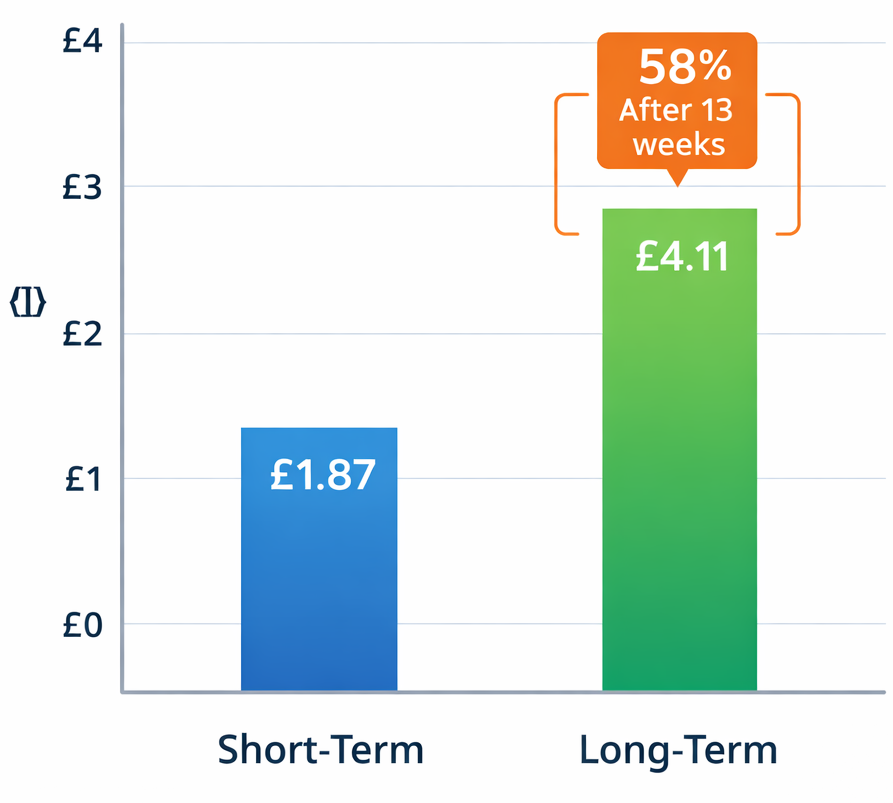
Comparison of short-term vs long-term advertising returns per £1 invested and the share of total profit realized after 13 weeks
Research across large ad accounts indicates that campaigns reaching at least 100–150 conversions show significantly lower volatility and produce more reliable cost-per-conversion benchmarks.
How to Balance Short-Term and Long-Term Signals
Effective decision-making combines both perspectives. Short-term data should guide monitoring, while long-term data should drive optimization.
A practical framework:
-
Monitor daily, decide monthly – Track performance frequently, but avoid structural changes until enough data accumulates.
-
Set minimum data thresholds – Define conversion or spend thresholds before judging results.
-
Compare like with like – Evaluate long-term performance across consistent time windows and conditions.
-
Document changes – Track optimizations so short-term fluctuations are not misattributed.
Advertisers who delay major optimizations until after statistically meaningful data is available report up to 25% more stable performance over time compared to those who optimize aggressively in the first two weeks.
Common Misinterpretations to Avoid
-
Pausing campaigns after a few bad days
-
Declaring success based on one strong week
-
Comparing short-term results to long-term averages
-
Ignoring seasonality and external factors
Performance data must always be interpreted in context. Without sufficient time, numbers reflect volatility rather than strategy.
Building a Long-Term Measurement Mindset
The most sustainable growth comes from systems that prioritize consistency over quick wins. Long-term measurement allows you to understand true audience behavior, creative effectiveness, and funnel performance.
Organizations that adopt longer evaluation windows are more likely to scale profitably, reduce wasted spend, and make data-backed decisions that hold up over time.
Suggested Reading
To deepen your understanding of performance analysis and optimization, consider these related articles:
Final Thoughts
Short-term results tell you what is happening right now. Long-term results tell you what actually works. Knowing the difference—and using each appropriately—is one of the most valuable skills in performance marketing.