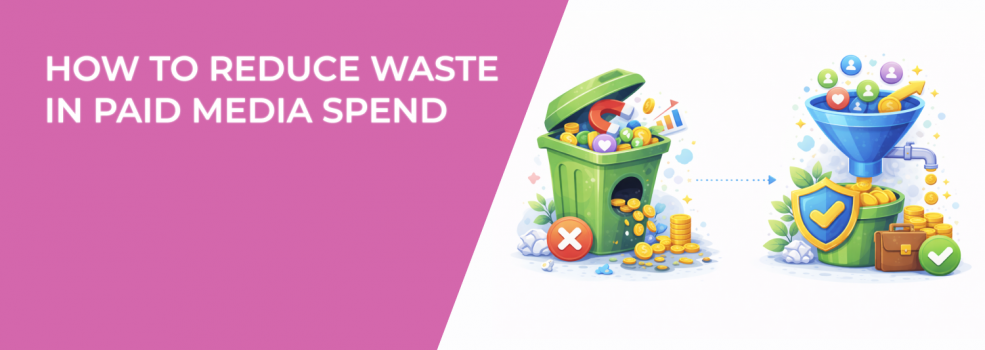
Many advertisers lose money not through bad offers or targeting, but through systemic inefficiencies. Poor signal quality, algorithmic confusion, and misaligned funnel structures bleed budgets slowly but significantly.
As Meta shifts toward broader targeting and AI-led delivery, advertisers need a different playbook. Reducing waste now means optimizing for system alignment, creative signaling, and data volume.
This guide offers advanced tactics to improve efficiency without limiting scale or complexity.
1. Stop Optimizing for the Wrong Signal
CPL Isn’t Your North Star — Signal Strength Is
Optimizing for the lowest cost per lead often creates a feedback loop of poor quality. Meta learns to find cheap, unqualified users who convert easily but don’t buy or engage long-term.
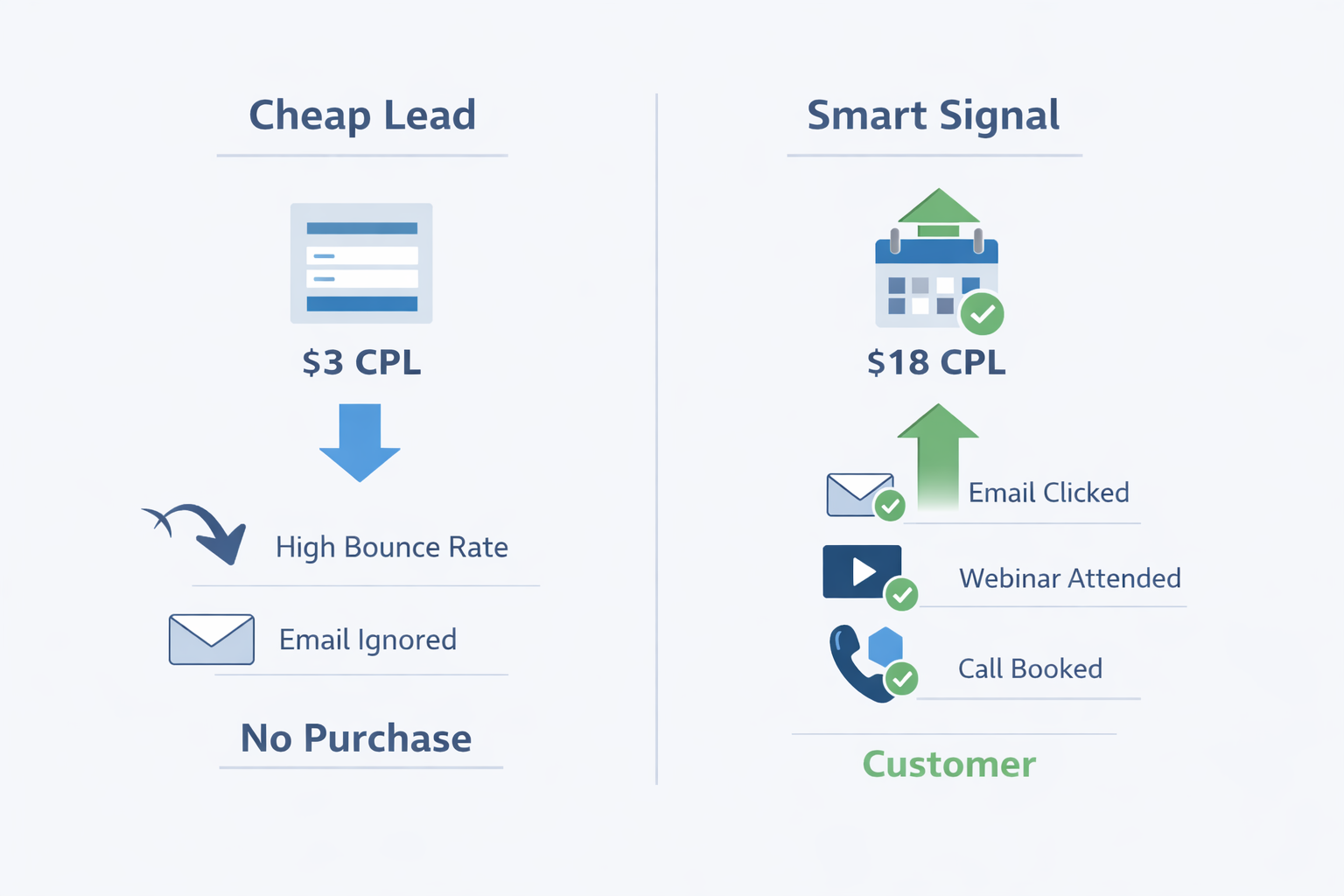
Fix it by improving your signal architecture:
-
Choose event goals that correlate with revenue, not just conversions (e.g., “Qualified Lead” or “Book Call” instead of “Lead”).
-
Use aggregated custom conversions built from CRM or backend events to feed better signals.
-
Avoid premature optimization. Let early campaigns run on higher-funnel signals, then shift as data improves.
Most advertisers focus on surface-level metrics, but Meta’s algorithm performs best when the data matches true business outcomes. You’ll waste less when your campaign goals reflect high-quality actions.
Learn how to refine your goal selection and build campaigns that scale efficiently in Take Control of Your Facebook Ad Spend with Smart Strategies.
2. Stop Slicing Audiences — Start Scaling Algorithms
Over-Segmentation Limits Delivery Intelligence
Small, tightly defined ad sets dilute learnings and trap campaigns in the “learning limited” phase. This makes your spend inefficient and reduces Meta’s ability to identify high-converting patterns.
Professional alternatives to slicing audiences:
-
Use larger, behavior-based segments instead of demographic guesses.
-
Combine high-intent signals (e.g., video viewers, form openers) into single warm audiences.
-
Build lookalikes from value-based conversions, not just traffic or leads.
These tactics allow Meta’s AI to optimize at scale. When the algorithm has more data to learn from, it becomes significantly better at identifying buyer behaviors across broader segments.
For more targeting techniques that align with Meta’s optimization system, check out How Meta Advantage Can Help You Control Your Ad Spend Across Campaigns.
3. Build a Signal-Rich Testing Environment
Most “Creative Testing” Is Actually Noise
Throwing 5–10 creatives into a test campaign without structure doesn’t produce usable insights. It floods Meta with conflicting data and wastes spend on underpowered combinations.
Advanced creative testing setup:
-
Launch a dedicated testing campaign with 1–2 ad sets and clear hypotheses.
-
Limit to 2–3 variations per test.
-
Use consistent benchmarks (e.g., cut any ad below 0.5% CTR after 1,500 impressions).
-
Promote winners to scaling campaigns. Never leave them in test mode.
A properly structured testing process reduces wasted impressions and speeds up insight gathering. This allows you to scale only the most effective creative while minimizing spend on unproven concepts.
4. Address Ad Fatigue with Creative Pre-Fill, Not Just Rotation
Frequent Swapping Isn’t a Strategy
Rotating creatives only after performance drops is reactive and inefficient. Instead, preload campaigns with creative clusters mapped to the funnel.
-
Use diverse hooks, visuals, and CTAs in each cluster.
-
Rotate proactively based on frequency-to-CTR ratios, not just spend.
-
Monitor decay across placements using Meta's breakdown and Inspect tools.
This proactive rotation model allows for smoother delivery and more consistent performance. By pre-filling campaigns with varied creatives, you reduce the risk of overexposure and extend campaign lifespan.
5. Rebuild Retargeting Based on Intent Signals, Not Recency
“All Site Visitors” Retargeting Is Obsolete
Blanket retargeting wastes budget on passive users and burns high-CPM inventory.
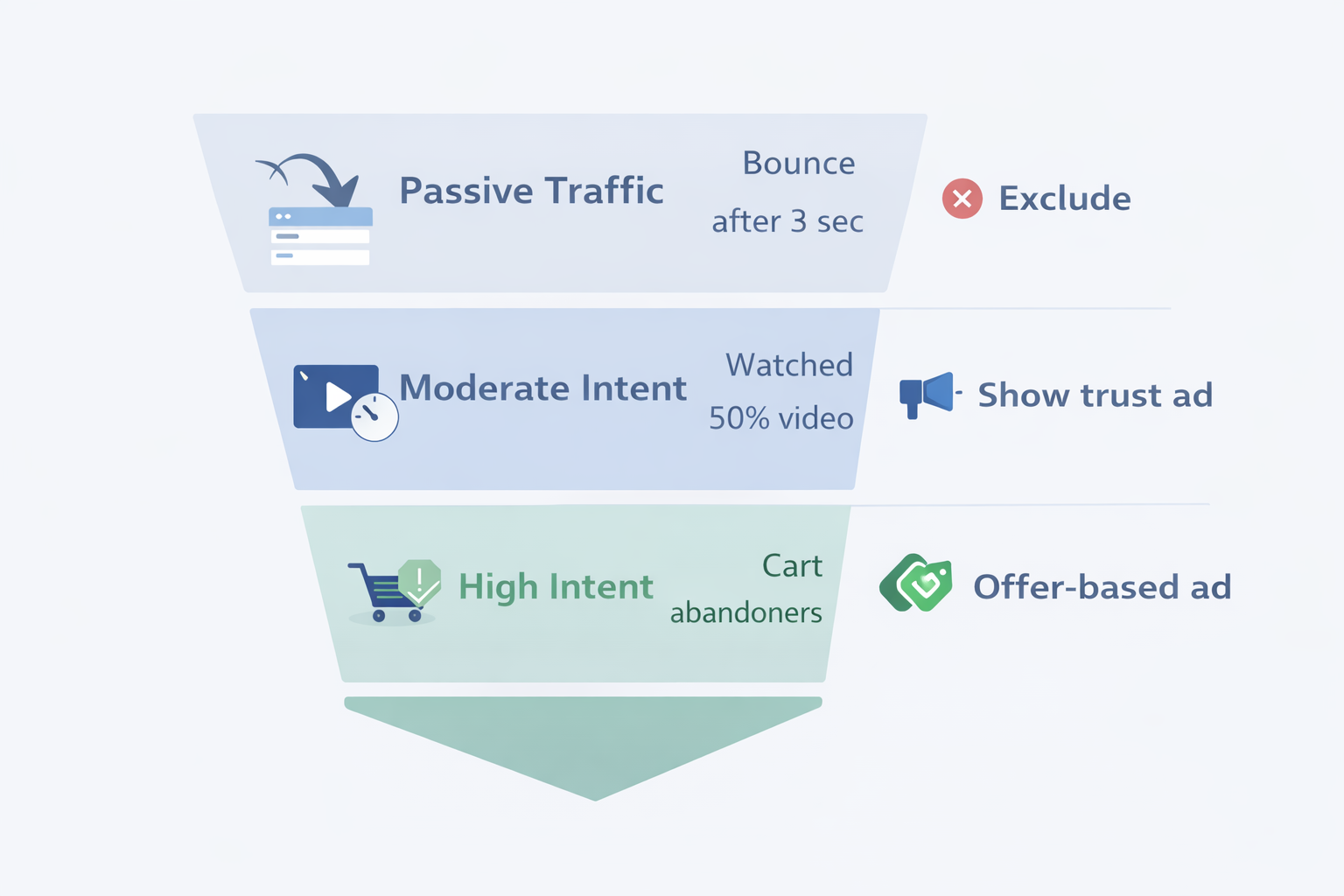
Fix it with behavioral segmentation:
-
Retarget based on engagement depth (e.g., 75% video views or 2+ page visits).
-
Segment by action type (e.g., quiz starters vs. cart abandoners).
-
Use tailored follow-up messaging for each group, not generic reminder ads.
Refining your retargeting pools ensures your highest-cost impressions are served to users with real buying intent. It also increases the relevance of your messaging — a key driver of conversion rates.
6. Audit Your Funnel for Metric Misalignment
Disconnects Create Invisible Waste
Your ads, landing pages, and follow-up sequences must reinforce each other. Even strong creatives underperform when funnel architecture is broken.
Advanced funnel diagnostics:
-
Track post-click actions (scroll depth, time on page).
-
Review first follow-up interactions from each lead source.
-
Perform cohort analysis by ad ID to find top-value segments.
This kind of deep funnel review often reveals that your strongest-performing ads are not always the ones generating the highest short-term CTR. Real optimization happens after the click.
7. Enforce Spend Controls with Rules, Not Manual Edits
Manual Budget Tweaks Break Delivery
Frequent edits reset learning and introduce instability. Rules allow you to enforce efficiency without disrupting performance.
Tactical controls to implement:
-
Use ad set spend limits when testing new segments.
-
Create kill-switch rules based on blended CPA or ROAS thresholds.
-
Adjust budgets at low-volume times to reduce algorithm shock.
Using automated rules gives you the flexibility to run multiple experiments at once without risking budget overspend. It’s a scalable way to control spend without throttling performance.
For deeper budget control strategies, see Budgeting for Success: How to Allocate Your Instagram Ad Spend Efficiently.
8. Feed the Algorithm Clean, Enriched Data
Meta Can't Optimize What It Can't See
If your pixel data is incomplete or inaccurate, Meta’s delivery system makes inefficient decisions.
Steps to improve your data quality:
-
Set up server-side tracking (Conversions API) to bypass browser loss.
-
Use custom conversions with quality filters (e.g., form + 60s session).
-
Track value-based events and connect CRM data for deeper insights.
When your event tracking is enriched and accurate, Meta can identify better user patterns and optimize delivery accordingly. This leads to lower acquisition costs and more qualified traffic.
Pro tip: Use offline conversion tracking to close the loop between ad engagement and actual revenue.
Final Thoughts
Campaign waste isn’t solved by changing headlines or shrinking audiences. It’s solved by building systems that reflect actual buyer behavior, feed clean data to Meta, and allow the algorithm to learn efficiently.
When you align:
-
Your goals with business outcomes;
-
Your creatives with funnel stages;
-
Your testing process with clean feedback loops;
-
Your data signals with conversion value;
You create campaigns that scale without waste.