Affiliate marketing on Facebook seems like a dream setup — access to billions of users, precision targeting, and the ability to scale fast. But if you’re not playing by the rules? Your ad account might vanish overnight.
Staying compliant isn’t just a best practice. It’s how you survive (and thrive) in the Facebook ad ecosystem.
In this guide, we’ll break down exactly how to run affiliate ads on Facebook without getting flagged, banned, or wasting ad spend. No vague advice — just actionable steps and insights that work in 2025.
Why Facebook Ads for Affiliate Marketing?
Because Facebook knows people. It tracks what they love, what they buy, and what keeps them scrolling. That level of data is gold for performance marketers — if you know how to use it.
But Facebook also watches advertisers like a hawk. Promote sketchy offers or use misleading copy? You’re out. This makes compliance a non-negotiable.
So how do you get the benefits without crossing the line?
Let’s dig in.
1. Understand Facebook’s Ad Policies — And Actually Read Them
It may sound basic, but this is the most overlooked step.
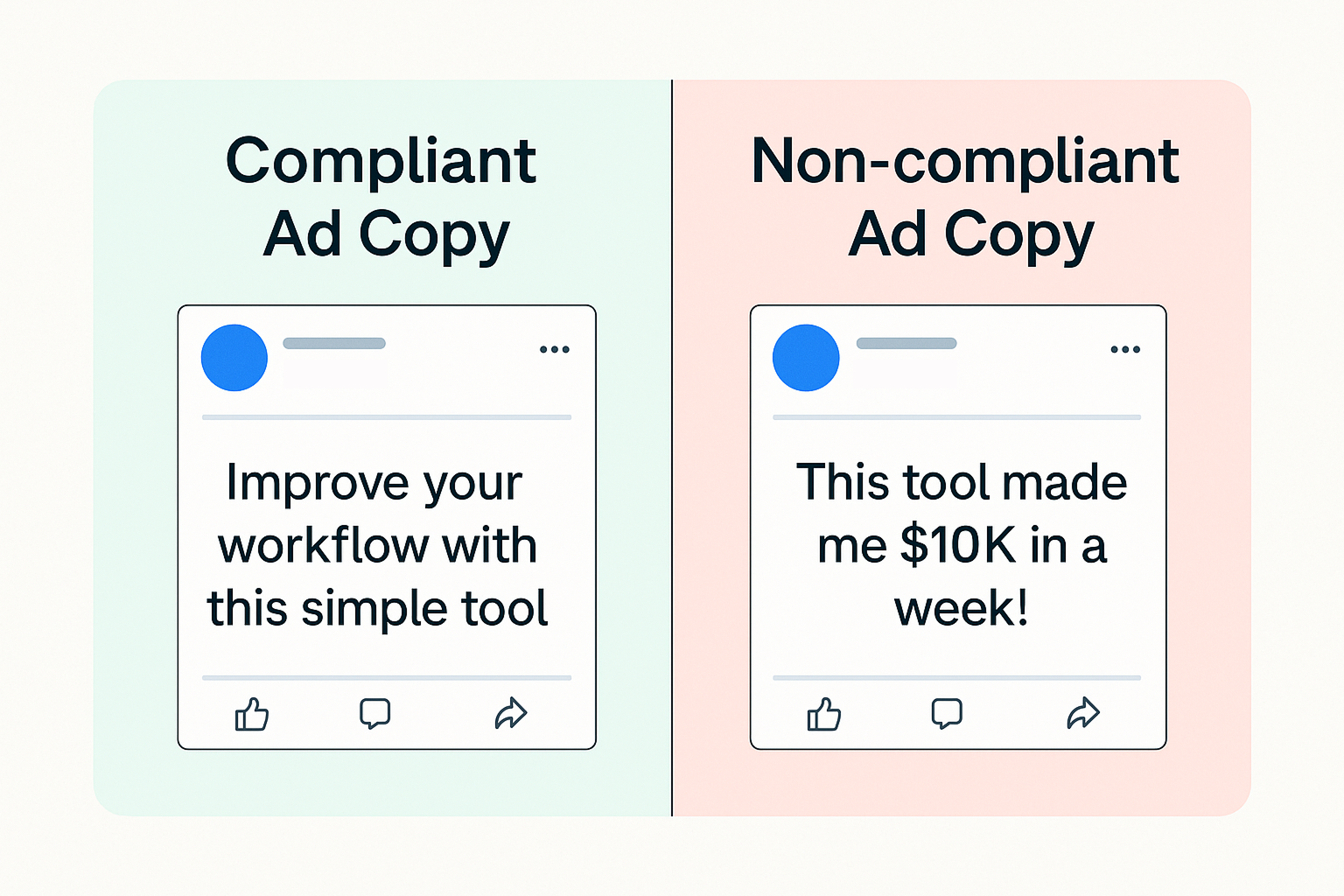
Facebook’s Advertising Policies are very specific about what’s allowed and what isn’t. Here are some key points to understand:
-
Misleading claims — Avoid overpromising results (e.g., “Make $5,000 a week doing nothing!”).
-
False urgency — Don’t create fake scarcity, like fake countdown timers or false "limited stock" messages.
-
Before-and-after images — These are banned in most health, beauty, and fitness-related ads, even if they're authentic.
-
Targeting personal attributes — Don’t make users feel “called out” (e.g., “Are you tired of being overweight?” or “Struggling with depression?”).
Facebook’s internal review team will scan your copy, creative, and landing page for violations. Even borderline language can get flagged.
Pro tip: Bookmark Facebook’s Ad Policy Hub and check every time you launch a new campaign — especially for unfamiliar offers or industries.
Want a deeper dive into policy mistakes to avoid? Read this: How to Avoid Ad Rejection on Facebook: Meta Ad Policies Explained.
2. Don’t Link Directly to the Affiliate Offer
Sending Facebook traffic straight to an affiliate link — or a generic bridge page — is risky. Facebook prioritizes trust and user experience, and affiliate links often don’t provide enough value or clarity.
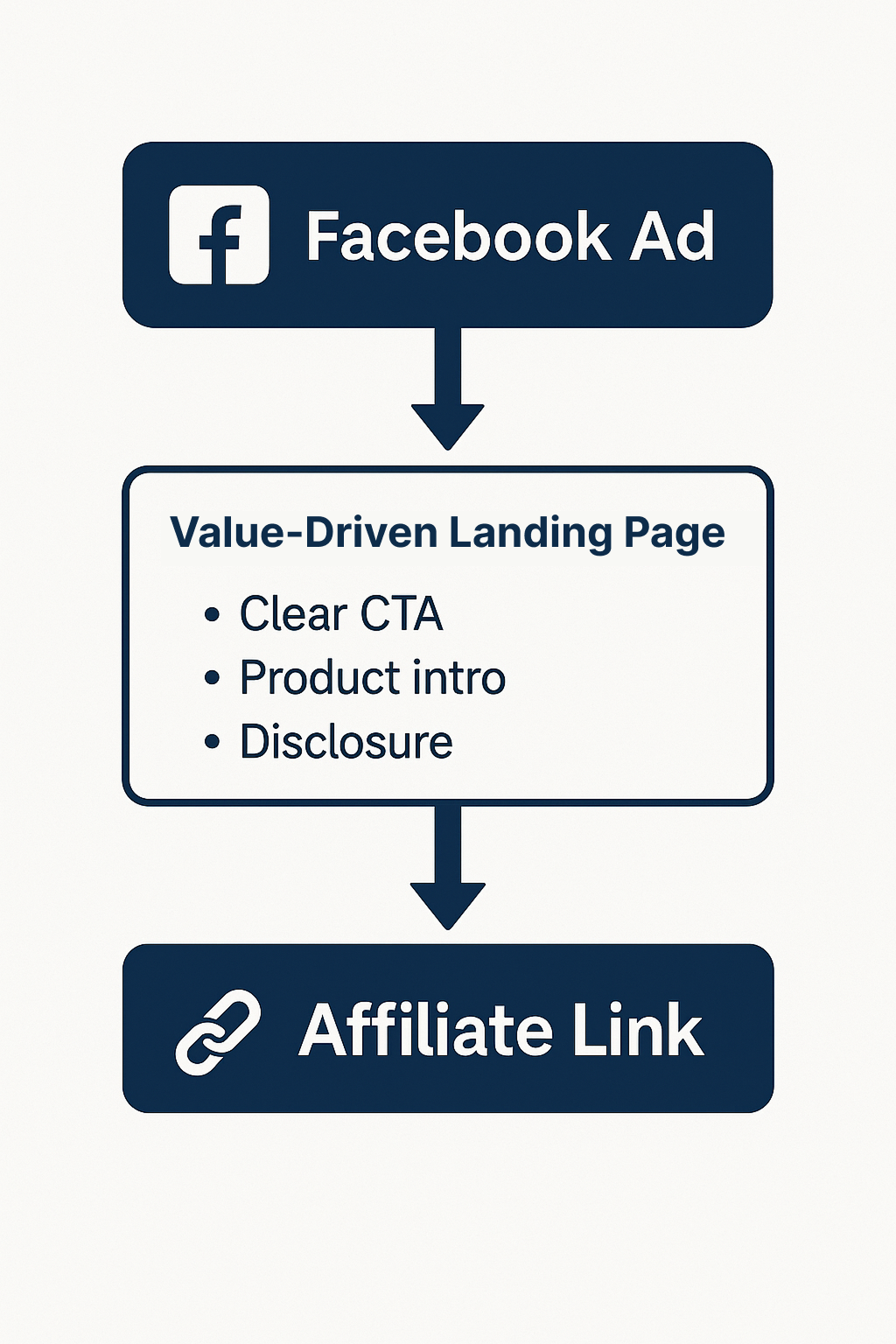
Instead, do this:
-
Create a landing page on your own domain — This puts you in control and builds brand credibility.
-
Include useful content — Even a short paragraph that explains what the product is, who it’s for, and why it matters helps.
-
Add a clear affiliate disclosure — Let visitors know you may earn a commission if they click or buy. It builds transparency and trust.
-
Use clean design — Avoid popups, aggressive CTAs, or redirects. Your page should feel like a helpful introduction, not a hard sell.
This structure improves ad approval chances — and boosts conversions by warming up your audience.
3. Be Transparent in Your Ad Copy
Don't try to “sneak” a promotion past Facebook’s review process. Transparency always wins.
Here’s how to make your copy more trustworthy:
-
Set realistic expectations — Avoid superlatives and hype. Say what the product does, not what it might do.
-
Use social proof carefully — Don’t fabricate testimonials or imply endorsement unless it's verified.
-
Be specific but subtle — Mention the category of the product without making medical or financial claims.
-
Tell the user what they’ll see after clicking — If they’re going to a review or demo page, say so.
A good example might be:
“Explore how this simple tool helps small teams generate leads — without hiring an agency.”
That’s informative, honest, and compliant.
4. Focus on Value, Not Hype
Hype is one of the fastest ways to get flagged. Instead, lead with value. Show people how the product improves their life, workflow, or results.
When writing your ad:
-
Highlight benefits over features — Instead of saying “Advanced analytics dashboard,” try “See what’s working in seconds with visual reports.”
-
Use use-case scenarios — Describe what the product helps the user achieve, such as “Track all your leads in one place — even while on the go.”
-
Avoid exaggerated income or result claims — Even if true for you, Facebook doesn’t like ads that suggest guaranteed results.
If your message feels useful, practical, and focused on helping, your ad will resonate and stay live.
5. Track Your Funnel and Stay Clean All the Way
Facebook doesn’t just scan your ad creative. It looks at your entire funnel — from ad to landing page to checkout.
Make sure your user journey follows best practices:
-
Fast-loading pages — Slow pages create poor user experience and get penalized in Facebook’s algorithm.
-
Mobile optimization — Most users are on mobile. Make sure your layout, buttons, and CTAs work on small screens.
-
Clear, relevant copy — Your landing page should reflect the ad’s promise. No bait-and-switch tactics.
-
No unnecessary redirects — Too many redirect layers raise red flags and damage trust.
-
Data transparency — If you’re collecting emails or personal info, clearly state why and how it’s used.
Also: skip the cloaking tools. Facebook knows, and it’s not worth the risk.
6. Use Facebook’s Feedback Metrics to Stay Ahead
Even if your ad gets approved, bad user feedback can kill it.
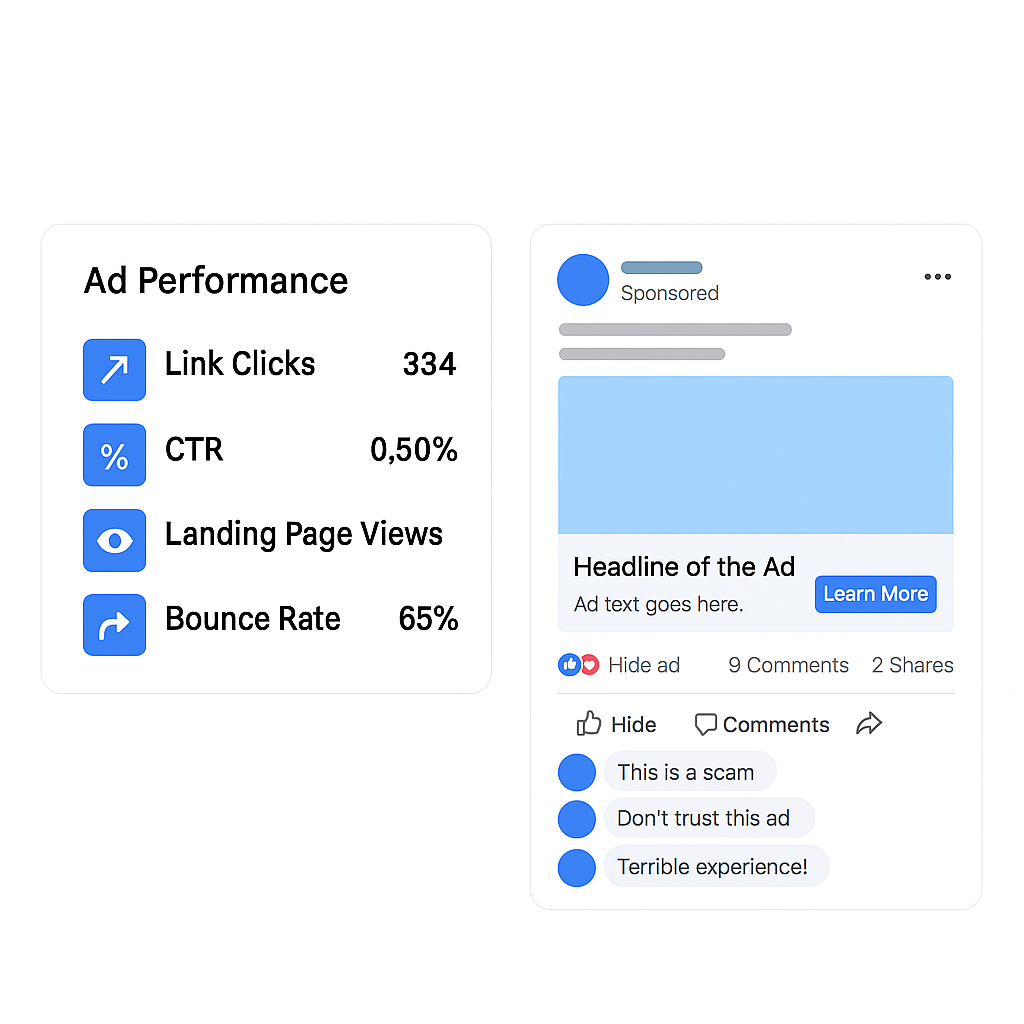
Ad performance issues like low CTR, high bounce rate, and negative feedback can hurt your Facebook ad results.
Here’s what to watch closely:
-
Post-click bounce rate — If people leave your site immediately, your ad may be misleading or irrelevant.
-
Ad relevance diagnostics — Facebook scores your ads on quality, engagement, and conversion. Low scores affect reach and cost.
-
Comment sentiment — Too many “scam” or “spam” comments? That hurts your credibility — and Facebook pays attention.
-
CTR and engagement rate — Low numbers suggest your targeting or creative needs work.
If engagement is negative or weak, test new headlines, images, or audience segments. And always monitor comments — hide or report the ones that could harm your trust signals.
7. Retarget Warm Audiences — Without Overdoing It
Retargeting is powerful, but it needs finesse.
Here’s how to do it right:
-
Use frequency caps — Don’t hit the same person with the same ad 15 times in one week. That gets annoying fast.
-
Segment your audience — Retarget those who visited a landing page but didn’t click through, not just anyone who saw an ad.
-
Educate before selling — Use retargeting to answer questions, offer free value, or explain the product in more detail.
-
Rotate creative — Show different angles of the offer (case studies, benefits, comparisons) instead of repeating the same pitch.
A well-planned retargeting strategy feels like helpful reminders — not a sales stalker.
8. Use Tools Like LeadEnforce to Target Better
Generic interest-based targeting can be expensive and unreliable. With LeadEnforce, you can build custom audiences based on followers of specific Facebook groups or Instagram pages.
This lets you reach people already interested in your niche — without wasting budget guessing.
Here’s how marketers are using it:
-
SaaS or productivity tools — Target members of Notion, Asana, or remote work groups.
-
Wellness and supplements — Reach fans of clean living, fitness influencers, or biohacking communities.
-
B2B services — Target followers of competitor brands, industry influencers, or niche business communities.
Want to see how this works in action? Our article How to Build Your Target Audience from a Facebook Group will help you.
Final Thoughts
Running compliant affiliate ads on Facebook takes more than a good headline and a budget. It takes structure, transparency, and smart targeting.
Treat your ads like customer conversations — not clickbait. Focus on helping, not hyping. And use tools like LeadEnforce to reach the right audience, without overspending.
Stay sharp, stay compliant — and you’ll be rewarded with scale, trust, and long-term results.