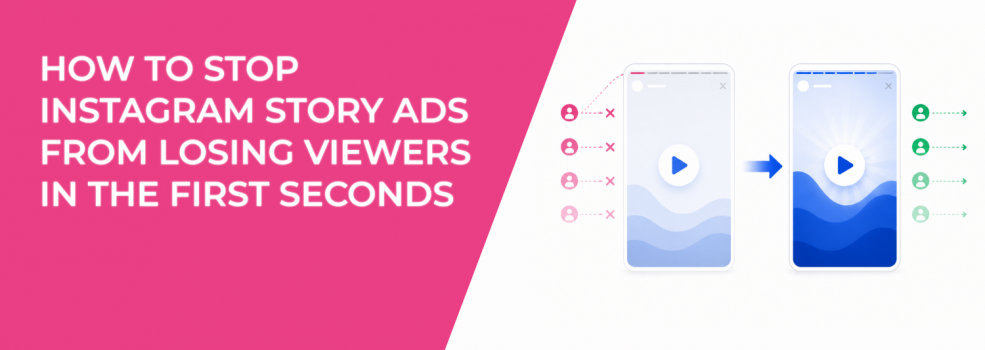
The core problem with many Instagram Story ads is simple. The ad starts too slowly, so users leave before the message appears.
This usually happens when advertisers treat Stories like mini brand videos instead of mobile interruption placements. A slow intro screen, delayed product reveal, or soft-paced opening may look polished during editing, but it performs poorly once the ad enters a fast-scrolling Story environment.
The result is wasted spend. Meta pays to distribute the ad, but the user exits before the campaign creates intent.
Why Story viewers leave almost immediately
Instagram Story behavior is aggressive. Users tap through content quickly because Stories were designed for rapid consumption.
That changes how attention works. In feed placements, users sometimes pause naturally while scrolling. In Stories, users actively decide whether to continue watching every second.
A slow opening creates friction immediately.
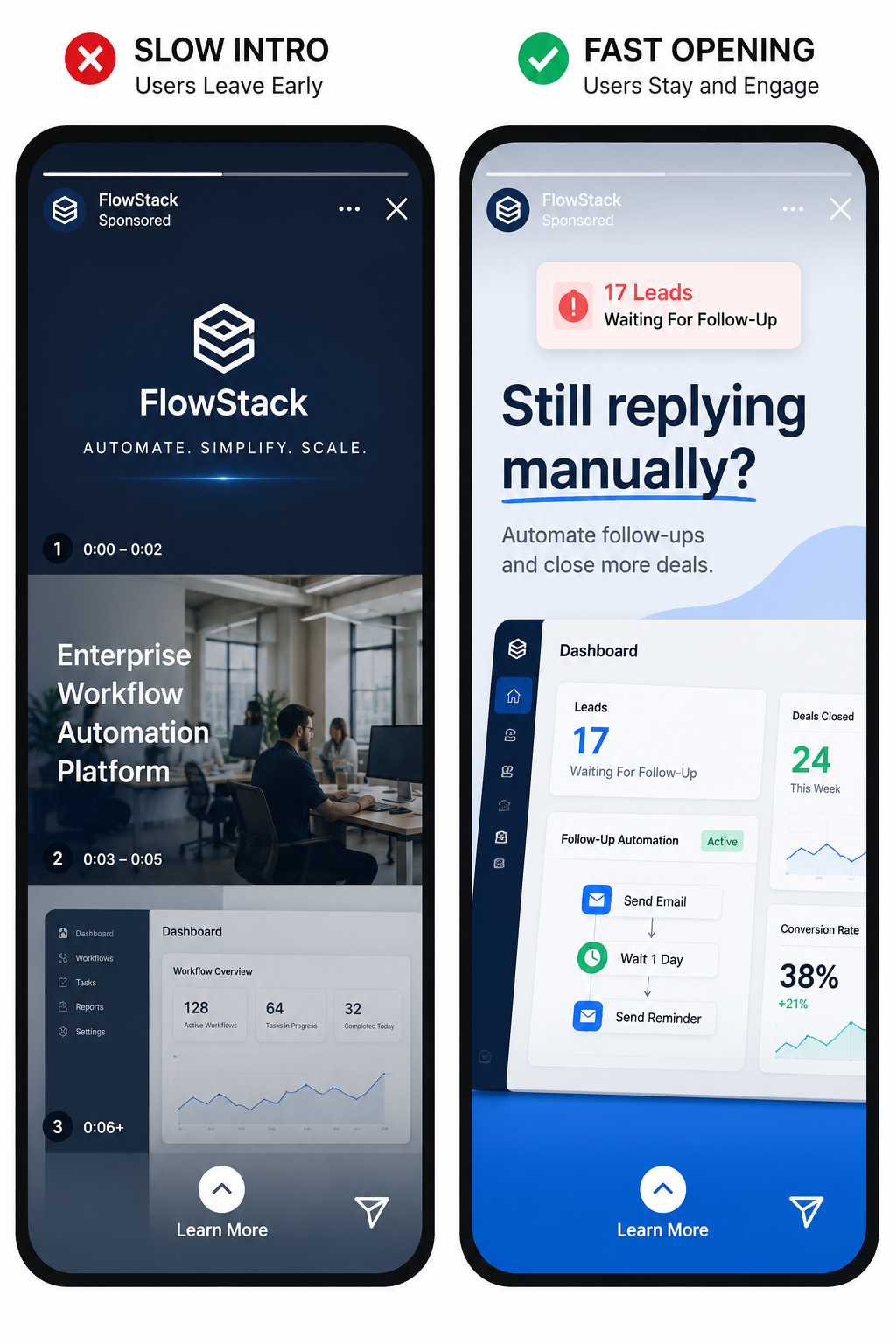
Common examples include:
- Animated logos before the offer appears.
- Long establishing shots.
- Text-heavy intro screens.
- Slow fades between scenes.
- Branding sequences without movement or payoff.
These elements reduce retention because the viewer still does not understand why the ad matters.
You can often identify this problem inside Ads Manager through high impressions combined with weak outbound CTR or low Story completion metrics. The ad gets distribution, but the engagement signals collapse early.
Solution: The first second must communicate the outcome fast
Strong Story ads usually show the result before they explain the process.
A fitness app ad performs better when the first frame shows the workout transformation immediately. A SaaS ad performs better when the dashboard or automation appears instantly instead of waiting five seconds to introduce the product.
The goal is not speed for the sake of speed. The goal is clarity. That difference matters because chaotic edits often fail too. Fast cuts without a clear message still confuse viewers.
The better approach is structured immediacy:
- Show the product or result instantly.
Users should understand the category within the first second. - Use movement early.
Motion helps the ad separate itself from surrounding Stories. - Delay secondary branding.
The user needs a reason to care before the brand identity matters.
This is closely connected to earning attention in the first seconds of an ad because Story ads depend heavily on immediate visual clarity.
Why weak openings increase CPC over time
Many advertisers think slow openings only hurt engagement metrics.
The bigger issue is auction efficiency.
When viewers skip quickly, Meta receives weak behavioral signals. That lowers the system’s confidence in the ad’s ability to generate interaction. As a result, delivery becomes less efficient and CPC often increases after the learning period.
The ad may still spend budget, but performance quality drops gradually:
- Lower CTR.
- More accidental clicks.
- Weak lead intent.
- Higher CPA.
- Less stable scaling performance.
This becomes especially visible during competitive periods when Story inventory costs rise.
An ad with strong early engagement signals usually maintains cheaper delivery longer because Meta sees evidence that users want to continue watching.
Faster openings work especially well for B2B advertisers
B2B advertisers often assume Story placements require formal brand storytelling. That approach usually underperforms on mobile because decision-makers still behave like regular Story users. They skip unclear or slow content quickly, even when the offer itself is valuable.
A cybersecurity company might open with: “Enterprise-grade infrastructure protection solutions.”
That sounds professional, but it delays understanding.
A stronger Story opening would show: “Still checking security alerts manually?”
The second version creates immediate context. The viewer instantly understands the problem being discussed.
This is part of how users decide whether to keep watching an ad because users react to recognizable problems faster than abstract positioning language.
Cleaner hooks improve more than retention
Strong Story openings affect the entire campaign system. Better early retention often improves:
- Click quality.
- Landing page engagement.
- Lead intent.
- Conversion consistency during scaling.
This is one reason many advertisers lower CPA without changing targeting or budgets. The improvement comes from stronger attention signals entering the auction system earlier.
Advertisers using high-intent targeting can strengthen this effect further. LeadEnforce supports this by helping brands build audiences from Instagram engagers, follower communities, and social activity instead of relying entirely on broad targeting pools.
Recap
Most Story ads do not fail because the product is weak. They fail because the viewer leaves before the offer becomes clear.
The solution is usually structural, not creative. Faster communication, earlier payoff, and cleaner openings consistently outperform slow brand-building intros inside Story placements.
You can also study designing creatives for fast-scrolling users to improve Story retention patterns further.