Promoting an Instagram post is easy. Choosing the right post to promote is where many campaigns break.
A post can look polished, on-brand, and visually strong while still giving Meta weak signals. If the content has not already earned meaningful engagement, paid spend may only amplify a weak pattern. That can push CPC up, lower conversion rates, and send the campaign into the wrong pocket of users.
The fix is not to promote more content. It is to check which content already attracts the right behavior before turning it into an ad.
Why attractive Instagram content can still fail as an ad
A good-looking post does not always create buying intent. Many Instagram posts earn passive likes because they are visually pleasing, familiar, or easy to react to. That does not mean the audience is ready to click, submit a form, book a call, or buy.
This matters because Meta learns from early interactions. If a promoted post attracts people who only like lifestyle visuals, the system may find more users with the same behavior. The campaign can then generate cheap engagement while CPA and lead quality move in the wrong direction.
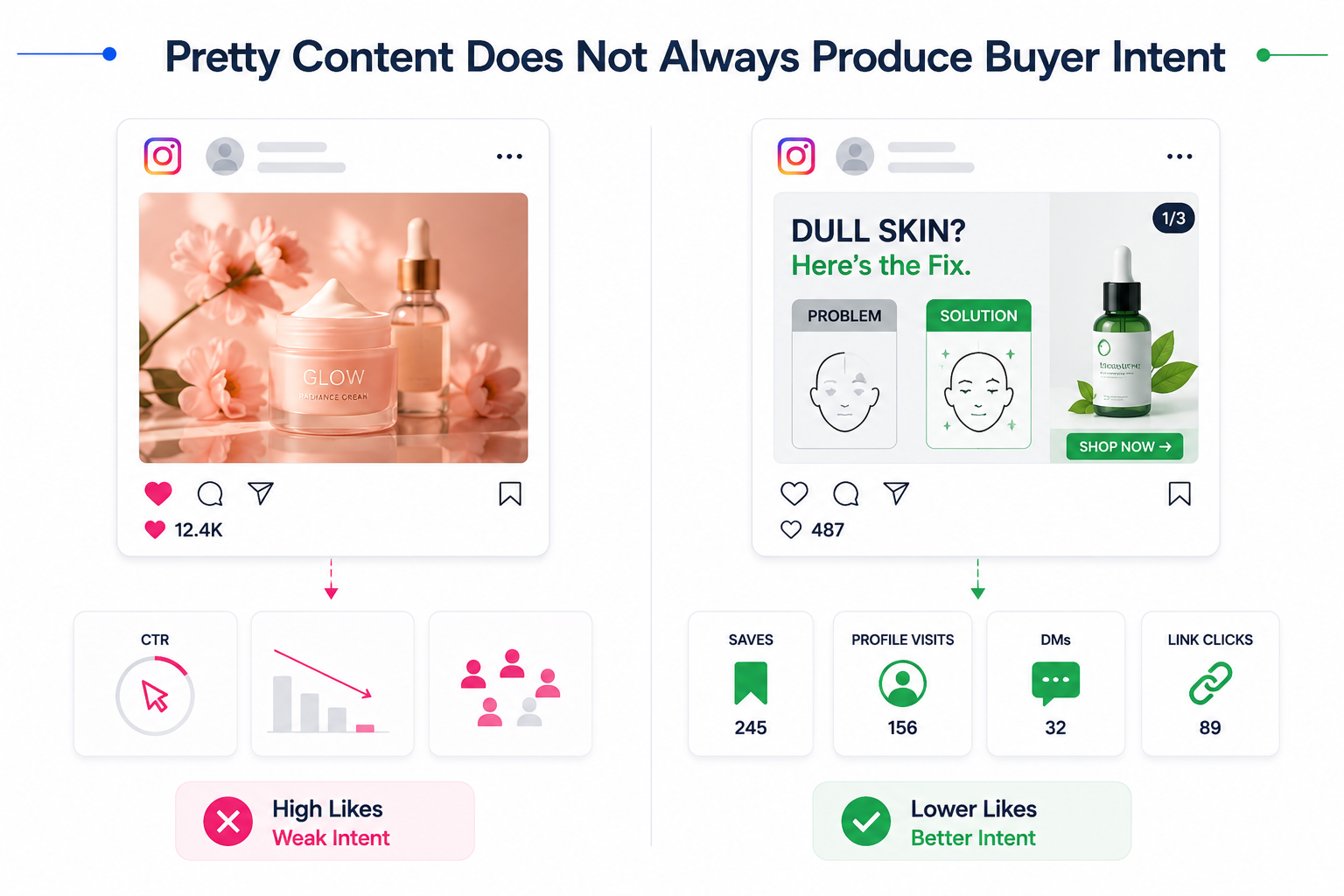
For example, a skincare brand may boost a beautiful product photo because it received many likes. After promotion, CTR stays weak and add-to-cart volume barely moves. The issue is not always the product. The post may have attracted admiration, not purchase intent.
Before spending, advertisers should use organic post learnings to guide ad creative.
The performance signals that matter before promotion
Organic performance gives you a preview of how people respond without paid pressure. The goal is not to find the post with the most likes. The goal is to find the post that creates behavior closest to your campaign objective.
Check these signals before promoting:
- Saves. Saves often show that users found the post useful, relevant, or worth revisiting. For service businesses, tutorials, comparison posts, and checklists can outperform pretty visuals because they signal problem awareness.
- Shares. Shares suggest the content speaks to a specific audience identity or pain point. A shared post usually has stronger relevance than a post that only collects passive likes.
- Profile visits. Profile visits show curiosity beyond the post itself. If a post drives profile taps, users may be checking credibility, services, reviews, or product range.
- Link clicks or DM starts. These are closer to commercial action. Even low volume can be more valuable than high engagement from users who never leave the feed.
A post with 400 likes and no profile visits can be weaker than a post with 80 likes, 20 saves, and 15 profile taps. Media buyers should read engagement metrics like a media buyer, not like a social media manager chasing surface engagement.
How promoting the wrong post affects CPC, CPA, and ROAS
Weak content selection creates a chain reaction inside the campaign. The first problem is usually poor click intent. Users may stop, like, or watch, but they do not take the next action.
That hurts CPC because Meta must work harder to find users willing to click. It also hurts CPA because the users who do click may not match the offer. The campaign then spends on traffic that looks active inside Instagram but weak inside the funnel.
For lead generation, this often shows up as cheap form fills with poor sales feedback. For e-commerce, it shows up as product page views without add-to-cart events. For agencies, it can create a reporting trap: engagement metrics look healthy while client revenue does not move.
The promoted post becomes the wrong training input.
A simple workflow for choosing Instagram posts to promote
Do not start with the post you personally like. Start with posts that already produced useful behavior.
Review the last 30–90 days of Instagram content and group posts by intent signal. Educational posts may drive saves. Product-use posts may drive profile visits. Offer-led posts may drive clicks or DMs. Each group tells you what the audience is willing to do.
Then match the post to the campaign objective. If the goal is awareness, high reach and shares can be enough. If the goal is leads, profile visits, DMs, comments with buying questions, and link clicks matter more.
A practical review should answer three questions:
- Did this post attract attention from the right audience, or just broad engagement?
- Did users take a second action after seeing it?
- Does the post’s message match the landing page, lead form, or offer?
If the answer is unclear, test the post with a small budget before scaling. A small paid test can confirm whether organic engagement turns into paid intent.
When organic engagement is not enough
Some posts perform well organically because they appeal to existing followers. Paid traffic is different. Cold users need faster context, clearer value, and stronger reason to act.
This is where advertisers often overestimate organic winners. A behind-the-scenes Reel may work for loyal followers because they already know the brand. Cold users may see the same creative and feel no reason to click.
Before promoting, adjust the content for paid distribution. Add a clearer hook, sharpen the offer, and remove details that only make sense to current followers. The goal is not to ruin the native feel. The goal is to make the intent obvious within the first few seconds.
You can also refine targeting with engagement signals instead of relying entirely on broad delivery.
Final takeaway
Do not promote Instagram content because it looks good. Promote content because it has already shown the right behavioral signals.
Likes can mislead. Saves, shares, profile visits, DMs, and clicks give a cleaner read on intent. When those signals match the campaign objective, paid promotion has better inputs, cleaner learning, and a stronger chance of improving CPA, CAC, and ROAS.