Modern digital advertising has moved far beyond basic demographic and interest-based targeting. Today, the most effective campaigns are built on engagement signals—real actions users take that reveal intent, interest, and readiness to convert. By analyzing and activating these signals, marketers can create audiences that are more precise, responsive, and scalable.
This article explains what engagement signals are, why they matter, and how to use them to refine targeting strategies for better performance.
What Are Engagement Signals?
Engagement signals are behavioral data points generated when users interact with digital content or ads. Unlike static attributes such as age or location, engagement signals reflect real-time intent and relevance.
Common engagement signals include:
-
Video views (especially 50%, 75%, or 95% completion)
-
Post reactions, comments, and shares
-
Ad clicks and landing page visits
-
Time spent on page or scroll depth
-
Form interactions without submission
These signals indicate varying levels of awareness and intent, allowing advertisers to segment audiences more intelligently.
Why Engagement-Based Targeting Outperforms Traditional Methods
Interest-based targeting often relies on inferred data, which can be outdated or inaccurate. Engagement-based targeting, on the other hand, is grounded in observed behavior.
Industry benchmarks consistently show:
-
Retargeted users convert 2–3× more often than cold audiences
-
Campaigns optimized around high-intent engagement signals can reduce cost per acquisition by 30–50%
-
Video viewers who watch more than 75% of a video are up to 4× more likely to convert than those who watch less than 25%
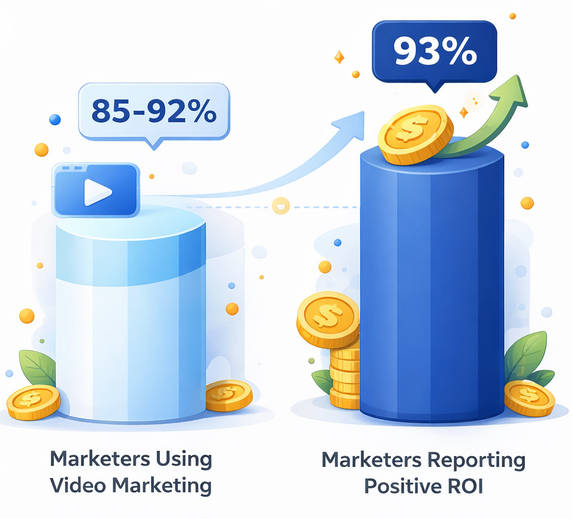
Video marketing is widely adopted by marketers and delivers some of the highest engagement-driven ROI
By focusing on users who have already demonstrated interest, advertisers reduce wasted impressions and improve overall efficiency.
Key Engagement Signals to Prioritize
Not all engagement signals carry the same weight. Prioritizing high-intent actions is critical for refining targeting.
1. High-Completion Video Views
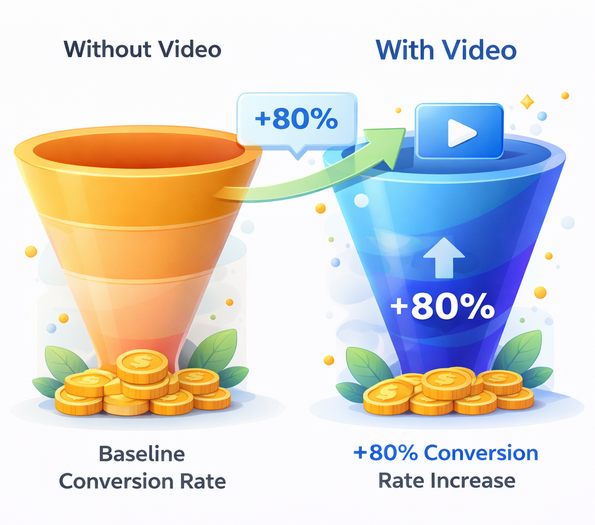
Adding video content to landing pages can boost conversion rates by up to 80%
Users who watch most of a video have already invested attention. These audiences often perform well in mid- and bottom-funnel campaigns.
2. Website Interactions
Visitors who view multiple pages, spend longer on site, or return within a short time window are strong candidates for retargeting and lookalike expansion.
3. Social Interactions
Comments and shares signal deeper interest than likes alone. These users are more likely to engage again when reactivated.
4. Partial Conversions
Actions such as starting but not completing a form or adding items to a cart indicate high intent and should be segmented separately from general site visitors.
How to Structure Engagement-Based Audiences
Effective engagement-based targeting depends on thoughtful audience structuring.
Best practices include:
-
Separating low-, medium-, and high-intent engagement signals into distinct audiences
-
Using shorter time windows for high-intent actions to maintain relevance
-
Excluding recent converters to avoid wasted spend
-
Refreshing engagement-based audiences regularly to reflect current behavior
This layered approach allows messaging and budgets to align more closely with user intent.
Scaling With Engagement Signals
Engagement signals are not only useful for retargeting; they are also powerful inputs for audience expansion.
Lookalike audiences built from high-quality engagement sources often outperform those based on broad customer lists. Advertisers commonly see:
-
20–40% higher conversion rates compared to interest-based targeting
-
More stable performance at scale due to better signal quality
The key is to start with the most meaningful engagement actions rather than volume alone.
Measuring Success
When using engagement signals to refine targeting, success should be measured beyond clicks.
Recommended metrics include:
-
Cost per qualified engagement
-
Conversion rate by engagement segment
-
Time to conversion after first engagement
-
Frequency and saturation within engagement audiences
These metrics provide a clearer picture of how engagement-driven audiences contribute to overall performance.
Conclusion
Engagement signals offer a more accurate, intent-driven foundation for audience targeting. By prioritizing real user actions, advertisers can refine their targeting strategies, improve efficiency, and scale with greater confidence.
As platforms continue to limit third-party data, engagement-based targeting will become not just an advantage, but a necessity.