High-ticket products behave very differently inside Meta’s ad system. When the price increases, purchase frequency drops, decision cycles become longer, and the algorithm receives fewer optimization signals.
Many advertisers unknowingly run expensive product campaigns using structures designed for low-cost ecommerce. The result is unstable delivery, inconsistent cost per purchase, and campaigns that stop scaling after the first wave of buyers.
A more reliable structure accounts for signal density, buyer intent stages, and controlled audience expansion. When these elements align with how Meta’s auction system evaluates ads, campaigns become significantly more stable.
Sparse Conversion Signals Can Destabilize High-Ticket Campaigns
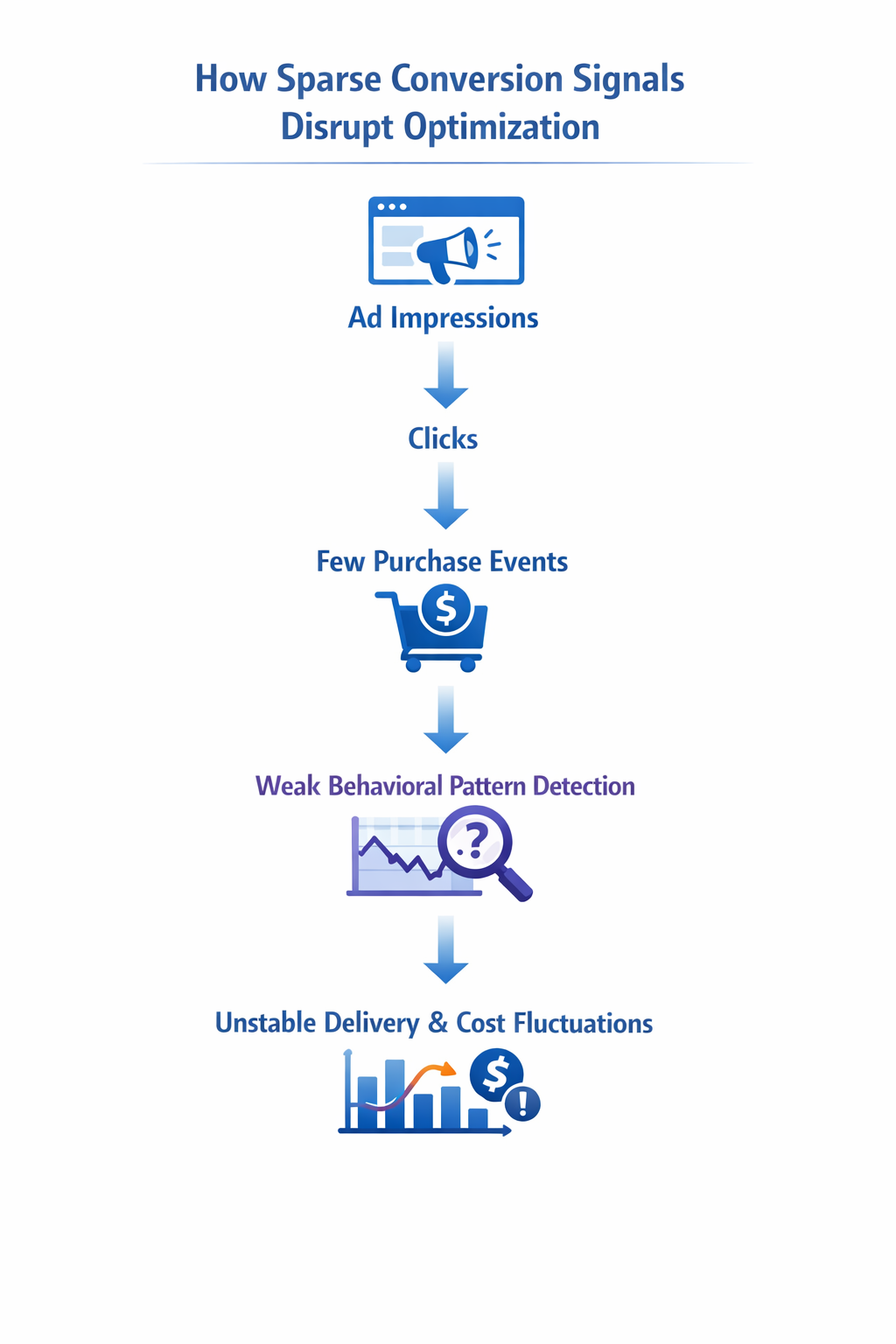
Meta’s delivery system relies heavily on recent conversion events to estimate which users are likely to complete the optimization action. High-AOV products naturally generate fewer purchases, which limits the amount of data the algorithm can use for prediction.
In Ads Manager, this situation often looks like the following:
-
The campaign spends consistently and enters auctions normally.
-
Click-through rate remains stable.
-
Purchases appear irregularly, sometimes arriving in clusters rather than a steady flow.
From the algorithm’s perspective, there are simply not enough conversion signals to reliably identify the behavioral patterns that lead to purchases.
Two structural adjustments typically stabilize delivery.
Introduce a higher-volume optimization event
Instead of optimizing immediately for purchases, campaigns can temporarily optimize for a more frequent action, such as:
-
Initiate Checkout, which signals strong purchase intent for ecommerce products.
-
Lead submissions, common in service-based or B2B funnels where a sales process follows.
-
Add-to-cart events, particularly when buyers require more time to complete the transaction.
These events occur more frequently and give the algorithm enough behavioral data to identify potential buyers.
Switch back to purchase optimization once signal density improves
Many media buyers aim for roughly 30–50 purchase events per week per ad set before relying exclusively on purchase optimization. Below that threshold, delivery often becomes erratic because the system cannot confidently predict buyer behavior.
Campaign stability improves significantly once the algorithm receives enough purchase signals to refine targeting.
Cold Traffic Campaigns Should Focus on Education
Users rarely buy expensive products after a single ad exposure. High-ticket buyers usually compare alternatives, research features, and evaluate credibility before committing.
Despite this, many campaigns send cold audiences directly to aggressive conversion ads.
Inside Ads Manager, the pattern usually appears like this:
-
Click-through rate looks healthy.
-
Landing page visits occur consistently.
-
Purchase conversion rates remain extremely low.
The issue is rarely the audience itself. The problem is that the message does not match the buyer’s decision stage.
Cold campaigns perform better when they introduce the product and explain its value before pushing for a purchase.
Effective top-of-funnel creatives often include:
-
Product walkthrough videos, which demonstrate how the product functions in real scenarios.
-
Problem–solution explanations, clarifying the specific issue the product addresses.
-
Comparison-style ads, showing how the product differs from competing options.
These formats generate meaningful engagement signals that help Meta identify genuinely interested users.
Once engagement signals accumulate, retargeting campaigns can focus on conversion.
Understanding how Meta classifies different audience types is useful at this stage. The article The Complete Guide to Warm, Cold, and Custom Audiences in Meta Ads explains how these segments behave across the funnel and why their performance patterns differ.
Retargeting Should Reflect Different Levels of Intent
High-ticket conversions typically require multiple touchpoints. Retargeting therefore becomes one of the most important structural layers of the campaign.
A common mistake is placing all website visitors into a single retargeting audience. This mixes users with drastically different levels of intent.
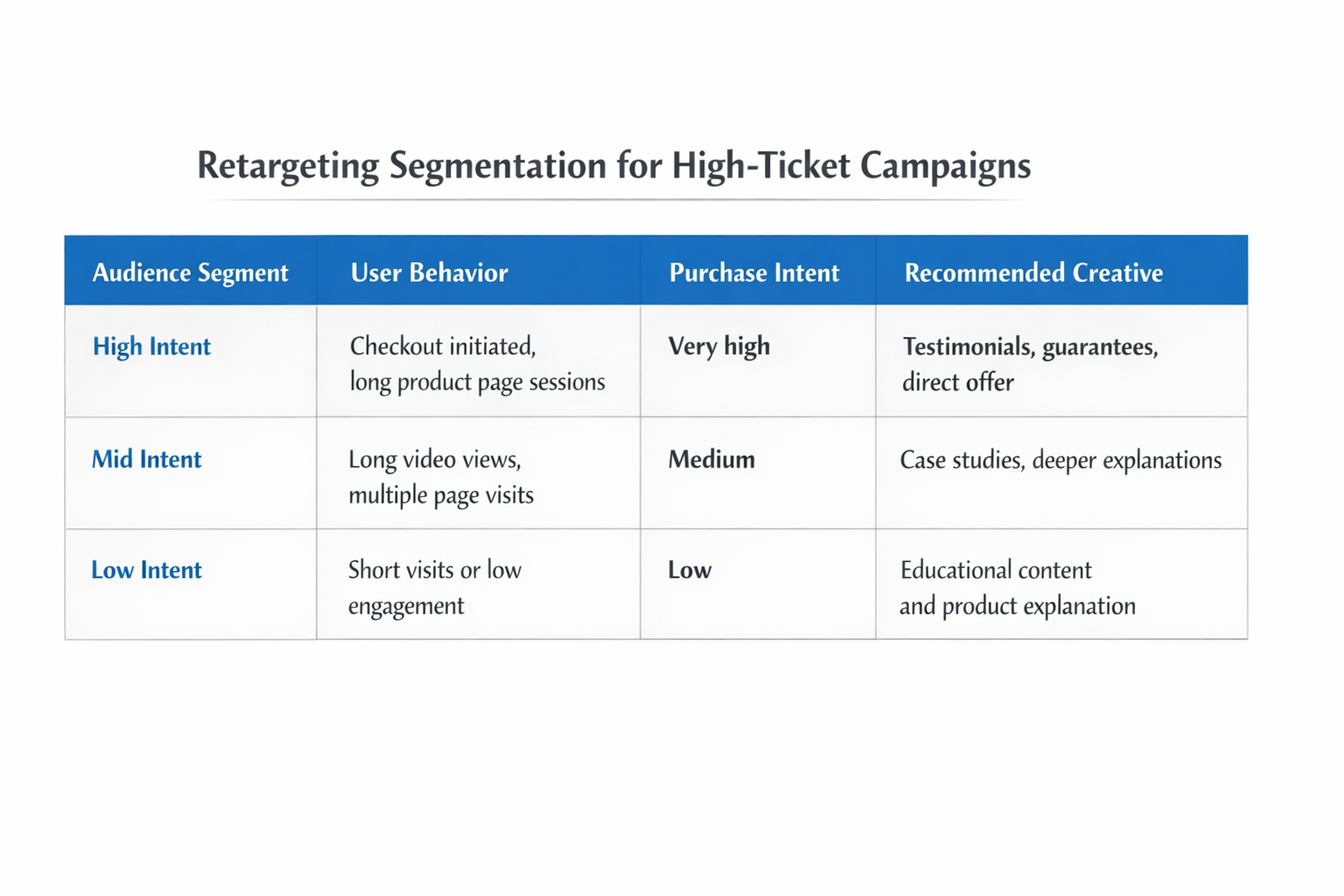
For example, someone who watched 75% of a product demonstration is far closer to purchasing than a visitor who briefly opened the homepage.
Separating these signals improves conversion rates.
High-intent audiences
Typical examples include:
-
Users who initiated checkout but did not complete the purchase.
-
Visitors who spent significant time on product pages.
-
Webinar or demo registrants evaluating the product.
These audiences respond well to:
-
strong direct-response ads,
-
verified customer testimonials,
-
clear purchase incentives or guarantees.
Mid-intent audiences
Common signals include:
-
video viewers above 50–75% completion,
-
visitors who explored multiple pages on the website,
-
users who downloaded educational resources.
These users often need credibility reinforcement, such as:
-
detailed product demonstrations,
-
case studies explaining real outcomes,
-
feature comparisons with competing products.
Low-intent audiences
These groups typically include:
-
brief site visitors,
-
users who clicked an ad but did not explore further,
-
short video viewers.
Rather than pushing direct sales messaging, these audiences perform better with:
-
educational content,
-
deeper product explanations,
-
examples showing how the product solves a specific problem.
Segmentation ensures conversion ads are shown primarily to users who are already evaluating a purchase.
If you want to build stronger retargeting pools, Using Facebook Engagement Custom Audiences to Find Your Best Leads explains how engagement signals from videos and page activity can form high-intent audiences.
Scaling Requires Careful Audience Expansion
Scaling high-ticket campaigns too aggressively can quickly damage performance.
When advertisers duplicate ad sets or open targeting too broadly, the algorithm begins exploring less relevant behavioral clusters. For expensive products, this exploration often produces traffic that is curious but unlikely to purchase.
Typical diagnostic signals include:
-
CPM rising after audience expansion.
-
Click-through rates remaining stable.
-
Conversion rates dropping sharply.
The system is reaching users who may find the ad interesting but lack the purchase intent required for high-commitment products.
A safer scaling approach includes several safeguards.
Increase budgets gradually
Large budget jumps can destabilize campaigns because the system must immediately compete in more auctions while maintaining prediction accuracy. In practice, budget increases of 20–30% at a time allow delivery to adapt without resetting learning.
Expand lookalike audiences incrementally
Rather than jumping from a narrow audience to a very broad one, gradual expansion helps maintain behavioral similarity.
For example:
-
1% lookalike audience based on purchase data.
-
2–3% expansion layer targeting similar users.
-
4–5% expansion for broader discovery.
The guide Lookalike Audiences: How to Seed, Train, and Scale explains how the quality of the seed audience affects how well these expansions perform.
Refresh creatives before expanding targeting
High-ticket campaigns often experience creative fatigue earlier than audience saturation. Updating creatives can restore performance without immediately increasing audience size.
Creative Strategy Must Reduce Purchase Risk
The price of a product strongly affects how users interpret advertising.
Low-cost items rely heavily on impulse behavior. Expensive products trigger a much more analytical decision process.
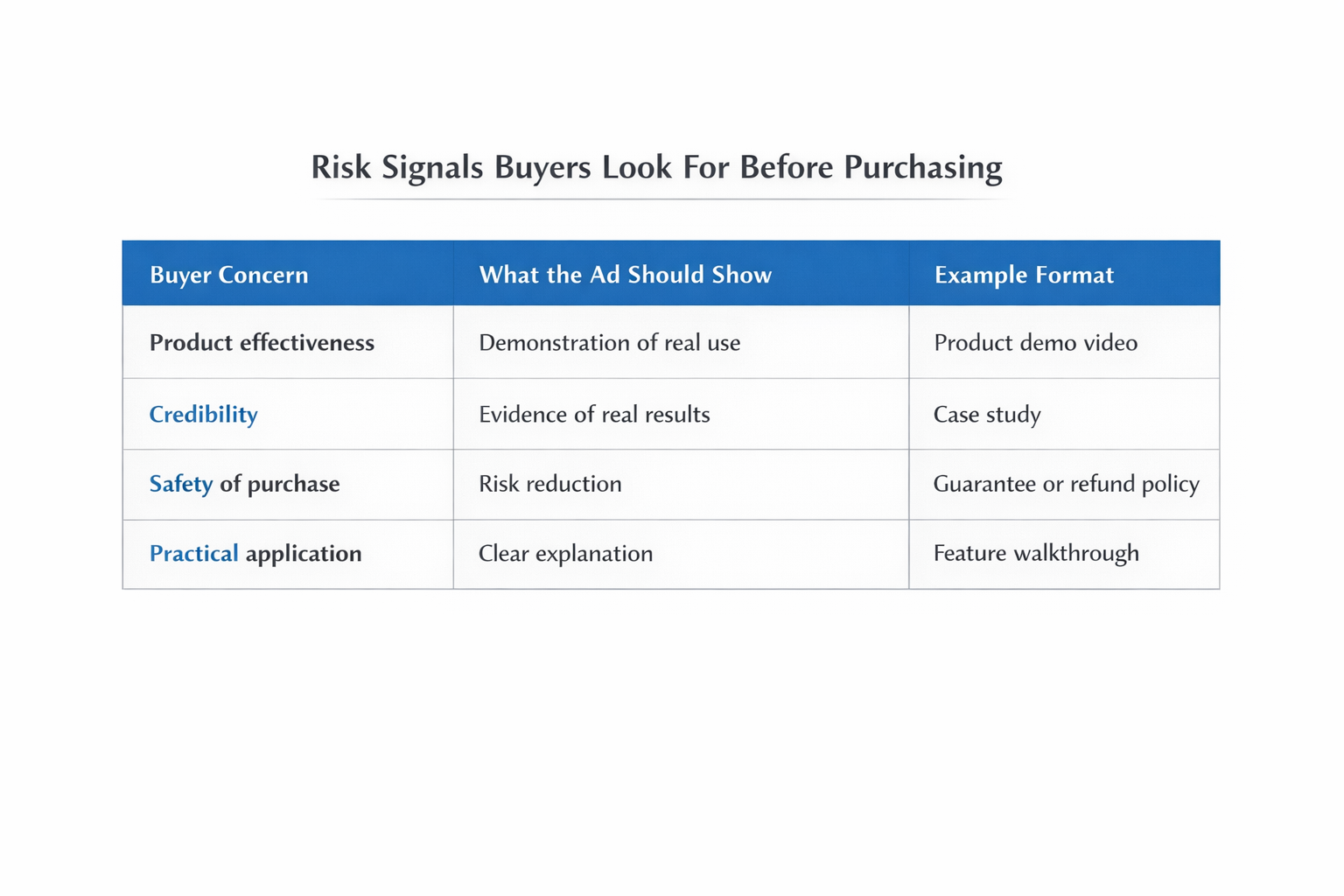
Buyers typically evaluate questions such as:
-
Does the product actually solve my problem?
-
Is the company credible?
-
What happens if the product does not work?
Ads that directly address these concerns usually outperform purely emotional messaging.
Effective creative elements for high-ticket campaigns include:
-
Detailed product demonstrations, which reveal how the product works in practice.
-
Customer proof, including verified testimonials or case studies.
-
Transparent explanations, showing the mechanism behind the product rather than only describing benefits.
These elements reduce uncertainty and increase trust.
Landing Pages Must Support Research Behavior
Even strong ad campaigns struggle when the landing page does not match the buyer’s research process.
High-ticket visitors typically scan pages for validation signals before making a decision. These signals often include:
-
a detailed explanation of how the product works,
-
technical specifications or process breakdowns,
-
verified customer results,
-
guarantees or refund policies that reduce perceived risk.
When landing pages provide only brief marketing copy and a purchase button, visitors frequently leave to continue researching elsewhere.
Inside Ads Manager, this issue appears as:
-
strong click-through rate,
-
acceptable cost per click,
-
but extremely low purchase conversion rate.
The ads generate interest, but the landing page fails to support the evaluation process required for expensive products.
A Practical Campaign Structure for High-AOV Products
Many performance marketers structure campaigns for expensive products using three layers.
Discovery campaigns
Purpose: identify users interested in the problem the product solves.
Typical characteristics include:
-
broader targeting audiences,
-
educational or explanatory creatives,
-
optimization for engagement signals such as video views or landing page visits.
Consideration campaigns
Purpose: engage users who already showed meaningful interest.
These campaigns often include:
-
retargeting audiences based on video engagement or site activity,
-
case studies explaining results achieved by customers,
-
deeper product explanations.
Conversion campaigns
Purpose: capture final purchase intent.
Key characteristics include:
-
narrow retargeting audiences,
-
strong social proof and credibility signals,
-
purchase optimization once the campaign generates enough conversion data.
This layered structure mirrors the actual decision process of high-value buyers.
Final Takeaway
High-ticket Facebook Ads campaigns rarely fail because of targeting alone. Most performance problems originate from campaign structures designed for impulse purchases.
Campaign stability improves when the structure reflects how expensive buying decisions actually occur.
In practice, this means:
-
increasing signal density early in the funnel,
-
segmenting retargeting audiences by intent level,
-
expanding audiences gradually,
-
reducing perceived risk through creatives and landing page design.
When campaigns align with the buyer’s evaluation process, Meta receives clearer optimization signals and delivery becomes far more predictable.