If you're running B2B ad campaigns on Facebook or Instagram, one thing matters more than reach — timing.
You can have the right message and the perfect audience, but if you reach them too early — or too late — you’ll waste your budget. In B2B, people don’t just see an ad and buy. They think, compare, and talk it over with their team before making a move.
That’s why the best marketers pay attention to data signals. These small actions — a click, a follow, a repeat visit — can tell you who’s warming up and when they’re most likely to act.
This guide breaks down how to spot those signals and use them to show up at exactly the right moment.
Why timing matters so much in B2B campaigns
Selling B2B products isn’t a one-click process. Your leads usually need multiple touches over a few weeks before they’re ready to convert.
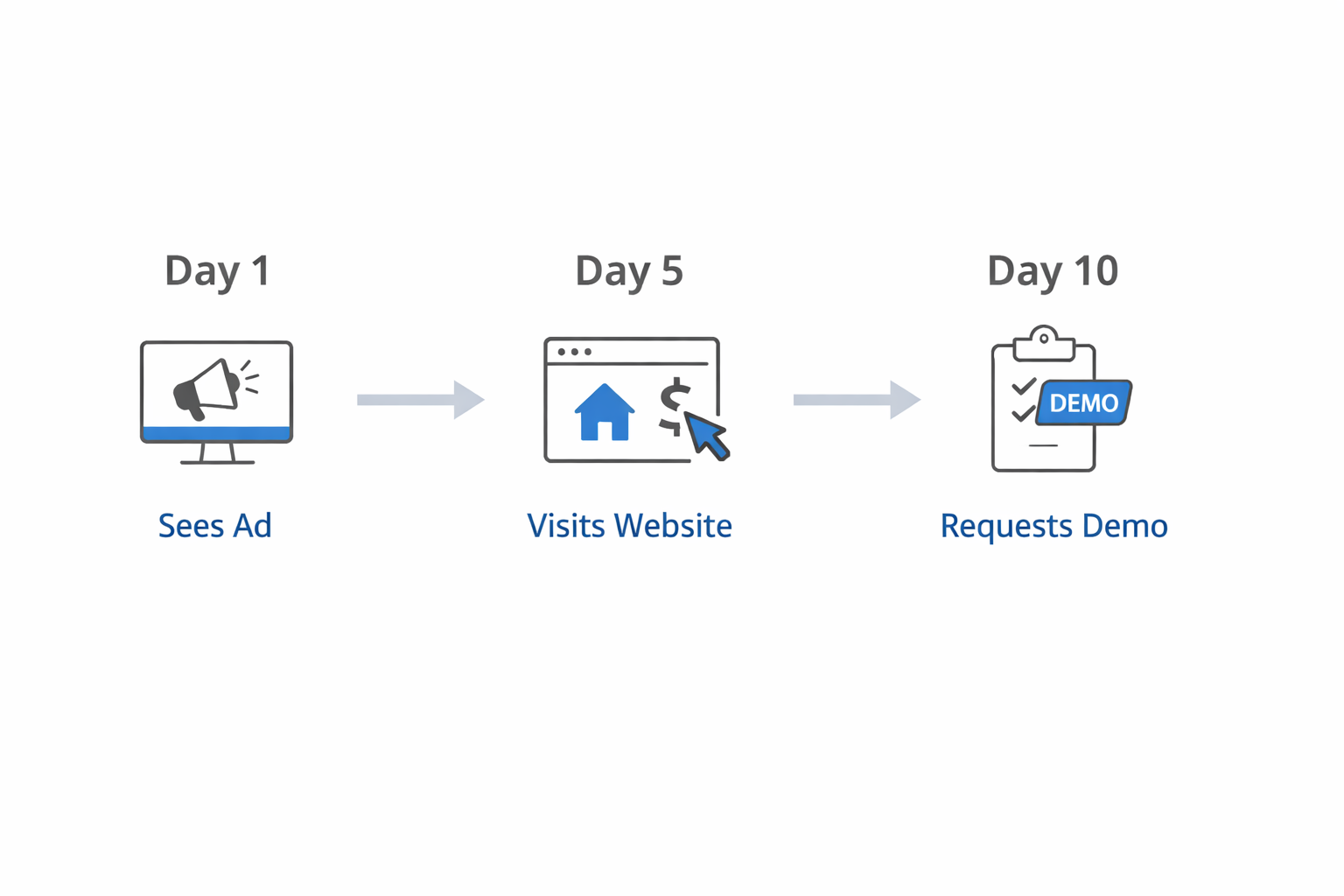
Here’s a typical journey:
Example: You’re running ads for a CRM tool.
-
March 3: A marketing manager sees your ad and scrolls past.
-
March 7: She follows your Instagram after seeing a post comparing CRMs.
-
March 12: She clicks a retargeting ad and downloads your case study.
-
March 15: She signs up for a demo.
If you only ran ads on March 3, you missed your shot. But if you kept showing up — especially after the case study — you stayed top of mind when it counted.
Timing isn’t just about saving money. It’s about being there when people are actually ready to act.
What are data signals — and why should you care?
A data signal is any small action that hints someone is thinking about making a purchase.
This could be:
-
Watching your video to the end;
-
Clicking multiple ads in a week;
-
Visiting your pricing page twice in one day.
These signals help you figure out where someone is in their journey — not just who they are, but when to reach them.
Even one or two of these actions can help you narrow down who’s worth retargeting right now. It’s how you move from guesswork to smart timing.
1. Engagement signals from Facebook and Instagram
These are actions people take directly on the Meta platforms.
Watch for things like:
-
Multiple ad clicks close together — shows curiosity.
-
75%+ video views — shows they’re paying attention.
-
Comments or DMs — shows they’re asking questions and leaning in.
If you notice these signs stacking up in a short window, it’s usually a green light to move them to the next step. That could be showing them a stronger CTA, offering a demo, or nudging them with urgency. Don’t waste this moment — these leads are active and close to converting.
For practical tips on how to read and use these signals, explore How to identify high-intent audiences using Facebook insights.
2. Page-following behavior
People often follow competitors or industry pages before they buy.
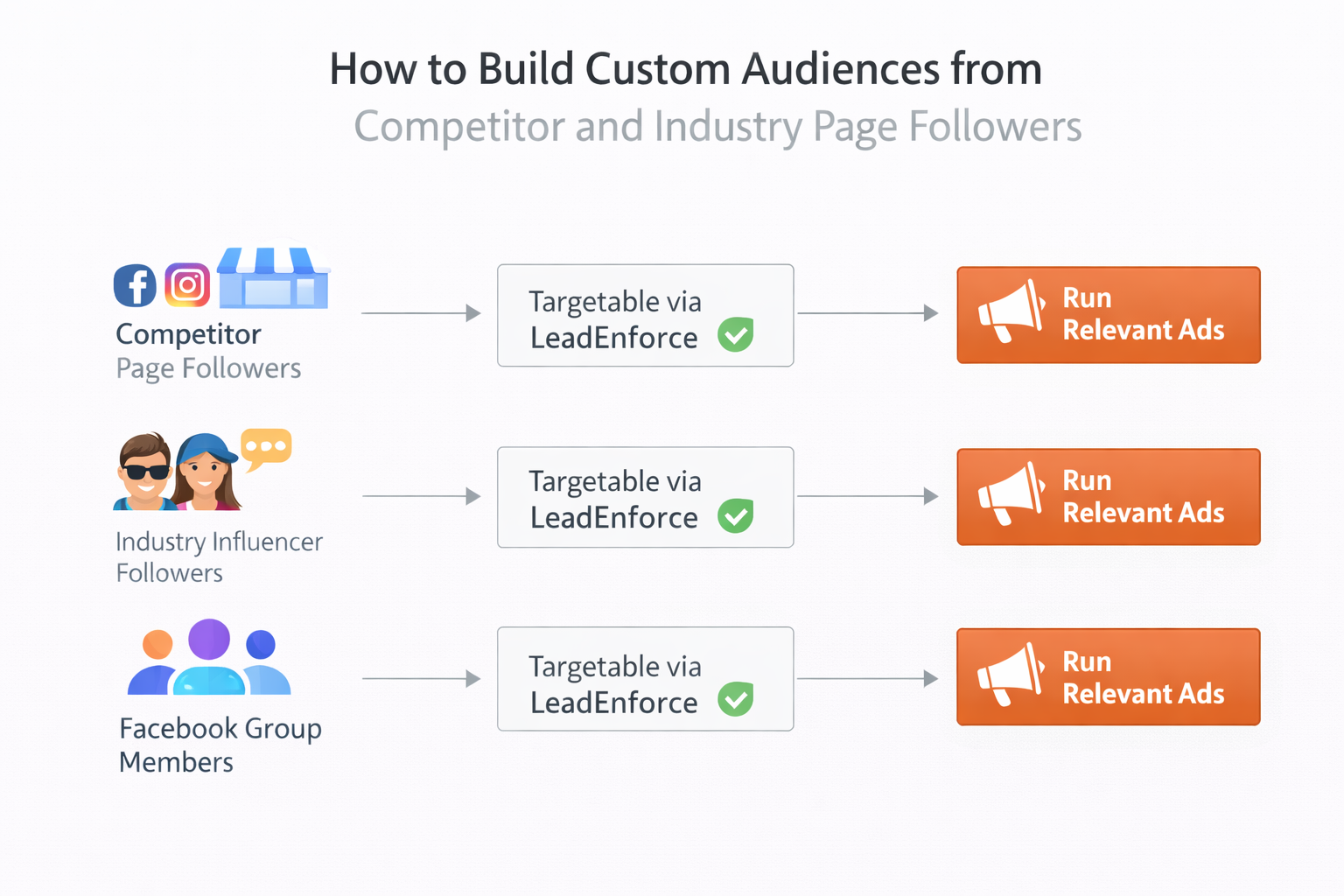
With LeadEnforce, you can target people who:
-
Just followed a competing tool;
-
Follow industry influencers or event pages;
-
Joined Facebook groups related to your niche.
These behaviors are more than just “interest” — they suggest the person is exploring, researching, or shopping around. If someone just followed one of your competitors, they’re probably looking for a better solution. That’s your opening to speak directly to their needs.
To see how LeadEnforce builds precise audiences using this behavior, check out How LeadEnforce simplifies audience segmentation for better ad results.
3. Website behavior that signals intent
Once people visit your site, what they do there matters even more.
Key signals include:
-
Visiting pricing or demo pages;
-
Coming back to the site within a few days;
-
Spending 2+ minutes reading a case study.
These aren’t random clicks — they’re intentional visits to high-value content. If a user returns to your pricing page or watches a demo, they’re likely doing side-by-side comparisons. That’s your cue to move them toward conversion with more urgency or a personal touch.
One-off clicks aren’t enough — look for patterns
If someone clicks once and disappears, it doesn’t mean much.
But if you see several actions in a short window, it’s a real sign they’re considering:
-
Clicking your ad and returning to your site the next day;
-
Watching a video and then following your Instagram;
-
Commenting on a post after reading your case study.
Patterns like these show momentum. They're a clear signal to take the lead more seriously — whether it’s increasing ad frequency or personalizing follow-up messages.
Pay attention to order, not just volume
Ten actions spread out over three months? Not helpful.
Three high-intent actions in three days? That’s gold.
-
A site visit before a demo ad usually means they’re just browsing;
-
A demo video view after checking pricing is a stronger sign of intent.
Understanding this flow lets you sync your messaging to the right step in the decision-making process. Don’t treat every lead the same — where they are in the journey should shape what you say next.
Layer signals for stronger targeting
You don’t need to rely on just one type of signal. The best campaigns stack timing cues together.
-
A user who follows a competitor (via LeadEnforce);
-
Then downloads your guide from a carousel ad;
-
And watches a video explainer 48 hours later.
Together, these show real engagement, not just surface-level interest. That’s your high-probability lead. Use this combined behavior to justify allocating more ad spend, showing exclusive offers, or pushing toward your highest-converting CTA.
Match your ads to their timing stage
Different leads need different messages. Here’s how to line it up:
Early stage — just starting to look
-
Use helpful, educational content: blog posts, checklists, industry stats.
-
CTA: “Learn more” or “Get the free guide”.
-
Example ad: “Still relying on cold lists? Here’s how top teams find warm leads faster.”
This is where trust is built. Focus on giving value, not pushing for the sale. Keep things light and informative.
| Timing Stage | Common Behaviors | Best Ad Formats | Best Messaging/CTAs |
|---|---|---|---|
| Early Stage | Just started researching - Visits blog or video post | Checklist Ad - Infographic Ad | “Learn more” or “Get the guide” Still relying on cold lists? Here’s how top teams find warm leads faster. |
| Middle Stage | Compares solutions - Multiple site visits | Case Study Ad - Demo Video Ad | “Watch demo” See why companies switch Why 7 agencies left [Competitor] for our real-time tracking tool. |
| Late Stage | Returns to pricing page - Watches demo | Calendar Ad - Free Trial Ad | “Book your demo” or “Start your trial” Your leads are waiting. We’ll help you close them. Book a 15-min call this week. |
Middle stage — comparing options
-
Show proof: case studies, testimonials, competitor comparisons.
-
CTA: “Watch demo” or “See why companies switch”.
-
Example ad: “Why 7 agencies left [Competitor] for our real-time tracking tool.”
This is where your content should remove doubt. Your job is to prove you're the better choice.
Late stage — ready to act
-
Use urgency and make the next step obvious.
-
CTA: “Book your demo” or “Start your trial”.
-
Example ad: “Your leads are waiting. We’ll help you close them. Book a 15-min call this week.”
At this point, don’t hold back. Go in with clear CTAs, bold copy, and a reason to act now.
Keep a simple weekly workflow
You don’t need a huge team or fancy dashboards to do this well. Just be consistent.
Example workflow:
| Day | Task |
|---|---|
| Monday | Launch new audience using recent actions (last 7–14 days). |
| Wednesday | Check what patterns are leading to conversions. |
| Friday | Pause weak ads, scale strong ones, log what you learn. |
Over time, this rhythm builds insights — not just into who converts, but when they do. It makes your campaigns smarter every week.
Final checklist
Ask yourself:
-
Am I targeting based on recent behavior — not just job titles or interests?
-
Did I build audiences using tools like LeadEnforce to spot recent follower activity?
-
Do my creatives match where the lead is in their journey?
-
Am I logging what’s working and adjusting each week?
If yes — you’re not just running ads. You’re building a system that shows up when it matters.