In a world where users scroll at an average speed of more than 1.7 seconds per piece of content, traditional ad creatives simply don’t command enough attention. That’s where visual friction comes in—an intentional use of interruption, asymmetry, and unexpected elements that forces the eye to pause. When used strategically, visual friction transforms a skip‑worthy ad into one that stops the scroll.
What Is Visual Friction?
Visual friction is a creative technique that disrupts the viewer’s pattern recognition. Instead of blending seamlessly into a feed, the ad stands out by breaking visual expectations. This disruption increases cognitive processing time, boosting both brand recall and engagement.
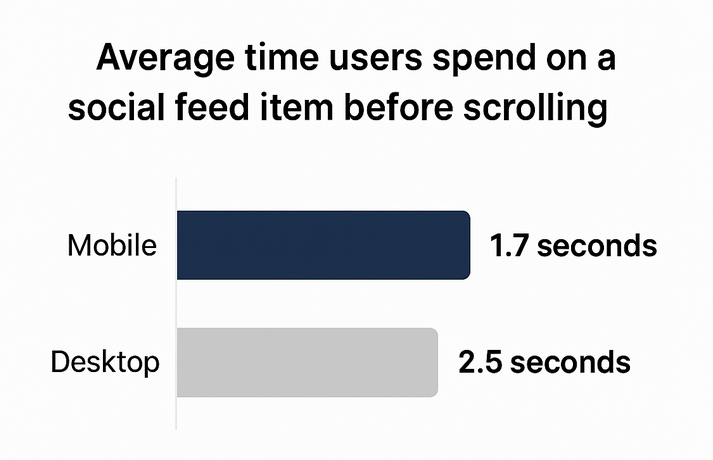
Average time users spend on a social feed item before scrolling (mobile vs. desktop)
Even small adjustments—like uneven spacing, contrasting colors, or imperfect shapes—can cause the viewer to pause long enough for your message to register.
Why Visual Friction Works in Busy Feeds
A busy feed encourages automatic scrolling, so the goal of any ad is to interrupt that autopilot behavior. Research shows that:
-
Bright color contrasts can increase attention by up to 60%, especially when competing with uniform feed colors.
-
Irregular shapes and atypical layouts can boost recall by 20–30% because they activate deeper visual processing.
-
Ads that induce micro‑pauses (under one second) can raise engagement by 8–12%, even when the overall creative remains simple.
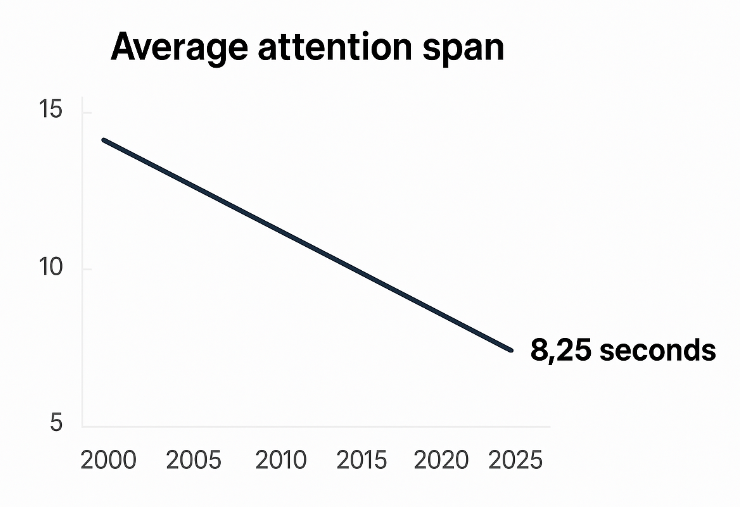
Line chart showing decrease in average attention span over recent years down to 8.25 seconds in 2025
By injecting visual friction, you’re breaking the pattern of sameness that defines most ads.
Techniques to Add Visual Friction Without Hurting Performance
Visual friction doesn’t mean chaos. The key is intentionality—just enough disruption to catch attention, not so much that it confuses the viewer.
1. Use Asymmetry Strategically
Asymmetry draws the eye naturally because it has built‑in tension. Slight imbalances in layout create focal points that encourage exploration.
2. Introduce Imperfections
Elements such as hand‑drawn outlines, rough textures, or irregular borders add personality and stop visuals from appearing too polished. Imperfection is inherently pattern‑breaking.
3. Add Color Contrast and Noise
High‑contrast color blocking or a grain overlay can lift visibility instantly. These micro‑disruptions help anchor the eye when surrounded by smooth, homogeneous feed content.
4. Break the Grid
Social feeds rely on grid consistency. Tilted elements, overlapping shapes, or off‑center placements introduce visual tension without hurting clarity.
5. Use Motion as Controlled Disruption
In video ads, quick direction changes or sudden zoom‑ins provide visual friction that boosts retention. Even a 0.3‑second motion interruption can increase watch time.
Visual Friction and Conversion Performance
While visual friction excels at securing attention, it also contributes to outcomes further down the funnel. Studies show that:
-
Ads that disrupt scrolling patterns see up to 24% higher recall.
-
Creatives with intentional friction can reduce skip rates by 12–17%.
-
When paired with clear messaging, friction‑enhanced ads produce conversion lifts of 6–9%.
These results underline an important point: friction is effective only when balanced. The goal is clarity wrapped in disruption.
When Not to Use Visual Friction
Overusing visual disruption can create confusion rather than curiosity. It’s best to avoid friction when:
-
The message requires detailed reading.
-
The audience expects a polished, premium aesthetic.
-
The campaign objective prioritizes efficiency over discovery.
Use friction purposefully—never as decoration.
Conclusion
Visual friction is one of the most underrated tools for improving ad performance in dense social environments. By breaking the feed’s visual monotony, brands can reclaim attention that would otherwise slip away. When used with intention, friction not only stops the scroll but also enhances recall, engagement, and performance across the funnel.