If you sell clothing on Instagram and your ad only shows the product — you're playing a small game.
People don’t just want a jacket. They want to feel confident. Relaxed, admired, edgy. Whatever suits their moment.
Instagram is built for visual culture, and that makes it the ideal space to sell the feeling around a product, not just the item itself.
Let’s look at how fashion brands can run smarter, sharper campaigns that go beyond the basics.
1. Make the Ad About the Moment, Not the Model
Instead of thinking, "How do I display this outfit?", start asking:
-
Who would wear this? Be specific. Not just "millennial women" — think: a graphic designer in her 30s who bikes to work and likes natural fabrics.
-
What are they doing when they wear it? Running errands? Packing for a weekend trip? Sitting at brunch with someone they're still not sure about?
-
What kind of mood should it create? Empowered, soft, unbothered, energetic?
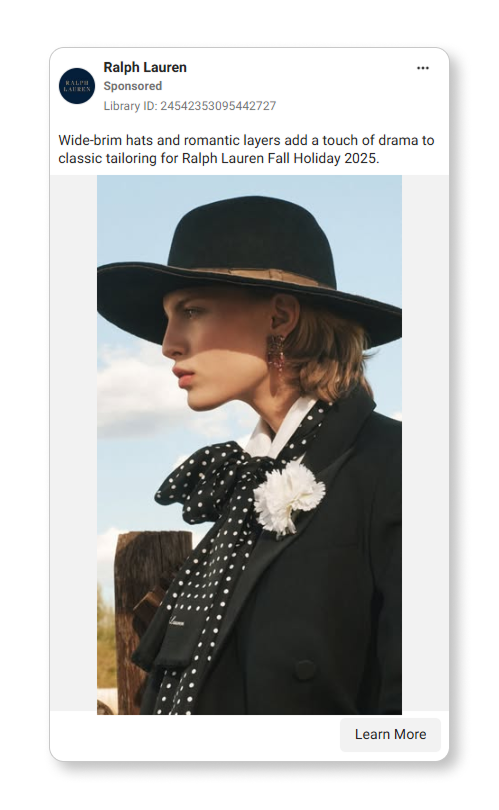 Ralph Lauren shows how fashion can feel like a scene, not just an outfit — stylish, dramatic, and full of mood.
Good Instagram fashion ads do more than just show clothes. They place them in real-world, relatable situations.
-
A linen jumpsuit at a quiet beach house breakfast.
-
Chunky boots in a messy but beautiful bedroom.
-
A blazer casually thrown on over bike shorts for coffee down the block.
You're not selling cotton. You're giving someone a glimpse into a version of their life they'd like to believe in.
Related: How to Use Instagram Ads for Small Business Growth in 2025.
2. Choose the Right Format for the Story You Want to Tell
Instagram has multiple placements.
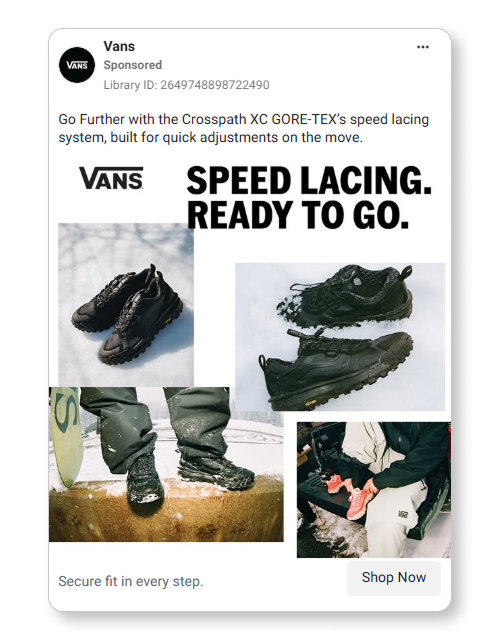 Vans uses a collage-style layout and bold text to quickly show what the product does — perfect for fast-scrolling feeds.
You should be using each differently:
-
Feed ads are good for static images or stylized scenes. Use them to build familiarity with your aesthetic. For example, show an outfit in a setting that matches your brand tone — like minimalist architecture, messy bedroom floors, or casual city life.
-
Stories should be fast and personal. Use polls, stickers, limited-time offers, or drop countdowns. These ads should feel like something your friend would post, not a brand.
-
Reels need motion. Quick outfit changes, texture reveals, or behind-the-scenes clips do well. Pair them with trending audio — or a low-key voiceover explaining why someone wears what they wear.
Not sure what format fits your campaign? Check out Instagram Feed vs Story Ads: What Performs Better for Each Funnel Stage?
3. Your Targeting Should Reflect Personality, Not Just Age or Gender
Basic targeting isn't enough anymore. If you're selecting "fashion lovers" or "online shoppers" and calling it a day — you're blending into the noise.
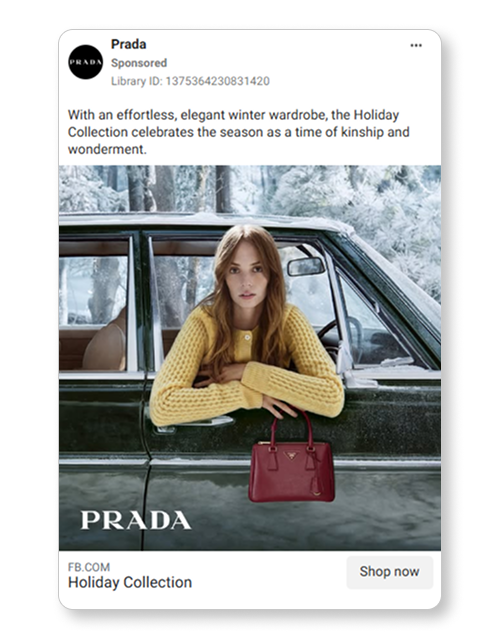 Prada keeps it simple and emotional, focusing on winter style and connection — not just the bag.
Here’s how to sharpen your segments:
-
Look at what people do, not just what they say they like. Prioritize behavioral data: who saves posts, adds items to cart, or watches product Reels to the end.
-
Use value-based lookalikes. If you're selling a $200 dress, don’t target everyone who clicked on your site. Target people who are actually likely to buy — see How to Implement Facebook’s Value-Based Lookalike Audiences.
-
Segment by tone. Create different ads for customers drawn to different aesthetics: muted, bold, romantic, practical. Use visuals and copy that speak to each group.
Also helpful: The 5 Silent Killers of Instagram Ad Performance (and How to Spot Them).
4. Test the Parts of the Ad Most Brands Ignore
Most marketers test image A vs image B and call it a day.
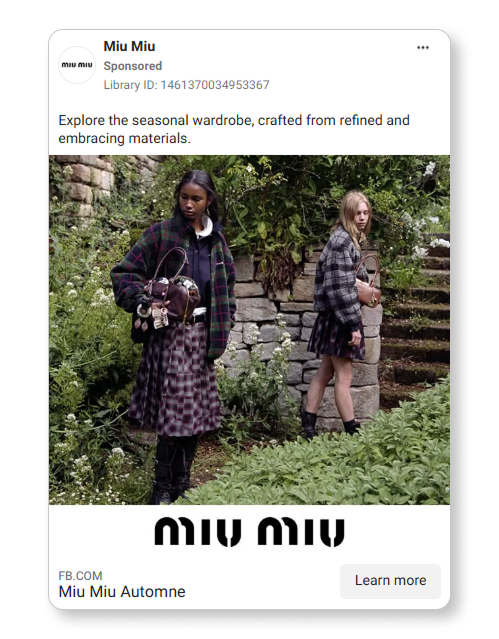
Miu Miu places the clothes in a real, detailed setting — a smart way to test if the styling and mood feel right.
But smart brands go deeper:
-
Storyline: Test a linear story ("getting ready for a first date") vs. a vibe-focused collage ("Sunday morning mood").
-
Camera type: Try mixing formats — a front-facing phone clip vs. a moody DSLR shot. See which your audience finds more believable.
-
Pacing and cuts: One version could be snappy and edited to a beat. Another might hold longer on details or textures. Pay attention to how long people watch.
If you're serious about improving your returns, read this next: How to Boost Creative Testing With Instagram Campaigns.
5. Use Automation to Support Your Strategy — Not Replace It
Automation is useful. But it's not a strategy on its own.
Here’s what helps:
-
Test first, automate later. Identify your best-performing assets before putting them into an Advantage+ or automated setup.
-
Label your ads with logic. Use naming conventions like "WoolCoat_FallStory_V3_AudienceB" so you can track what’s working.
-
Limit low performers. Don’t throw 12 ads into a set and hope the algorithm finds your winner. Start with a few strong options.
Need to troubleshoot campaign performance? Use this: How to Analyze Instagram Ads Performance and Turn Insights into Action.
Closing Thoughts
Instagram is more than a product showcase — it’s where people shape how they want to be seen.
Your ad should match that energy. Show a mood or moment that feels familiar to your audience, not a trend you’re chasing.
The best ads don’t just display products. They hint at lifestyle and identity, and they do it in a way that feels at home in the feed.
When your creative feels intentional and relevant, it doesn’t get skipped. It stands out.