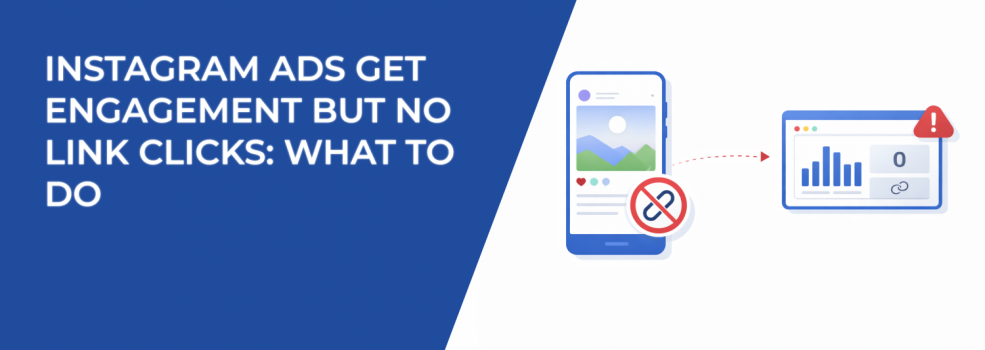
This pattern shows up often: your Instagram ad gets likes, comments, even saves — but link clicks stay low.
At a glance, it looks like the creative is working. But once you check link CTR and landing page views, it becomes clear that the ad is attracting attention without creating intent.
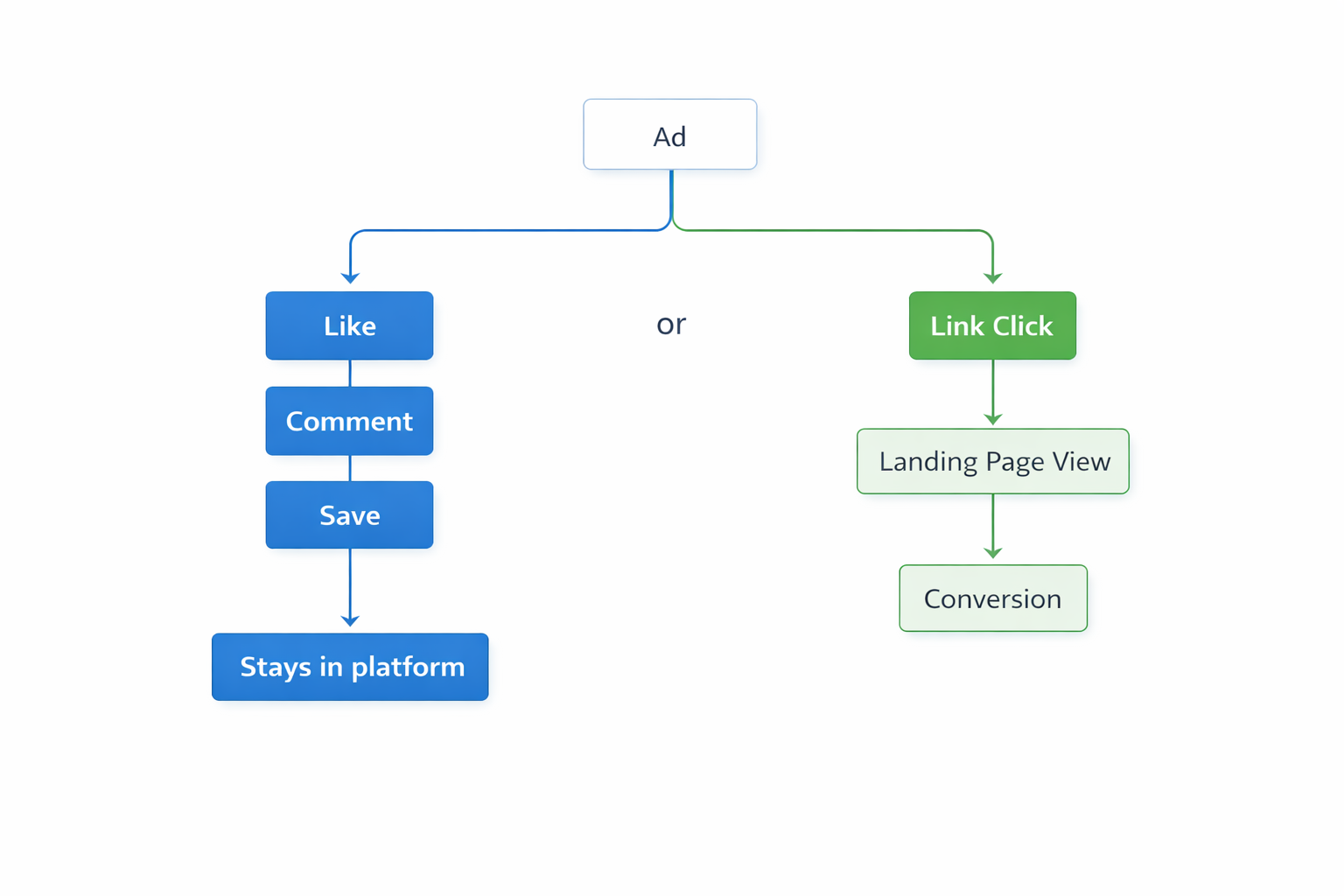
If you’ve seen this before, it’s usually not a targeting issue or a budget issue. It’s how the ad is shaping user behavior.
What to Check First
Before changing anything, confirm that this is actually the problem.
In Ads Manager, you’ll usually see:
-
Engagement rate holding at 3–5%+, while link CTR stays below ~0.7%.
-
“All clicks” looking decent, but “link clicks” much lower.
-
A visible drop-off between link clicks and landing page views.
-
Comments like “this is accurate” or “we’ve seen this,” rather than questions.
When these show up together, the ad is being consumed as content, not used as a step toward action.
If you want a broader way to evaluate this kind of mismatch, it helps to look at how metrics connect to real outcomes in how to analyze Facebook ad performance beyond CTR and CPC.
Why This Happens
In most cases, the issue comes from how the message is structured.
The ad often delivers a complete idea — especially in educational or insight-driven formats. The user understands the problem and the reasoning behind it, so there’s no reason to click further.
At the same time, Instagram makes engagement easy. Liking or commenting requires almost no effort, while clicking a link is a stronger commitment. If your ad invites reaction, that’s what people will do.
CTA placement makes this worse. When the action is only mentioned at the end of a caption, a large share of users never even see it.
What to Change
You don’t need to rebuild the campaign. Most of the time, a few adjustments are enough to shift behavior.
1. Stop the explanation earlier
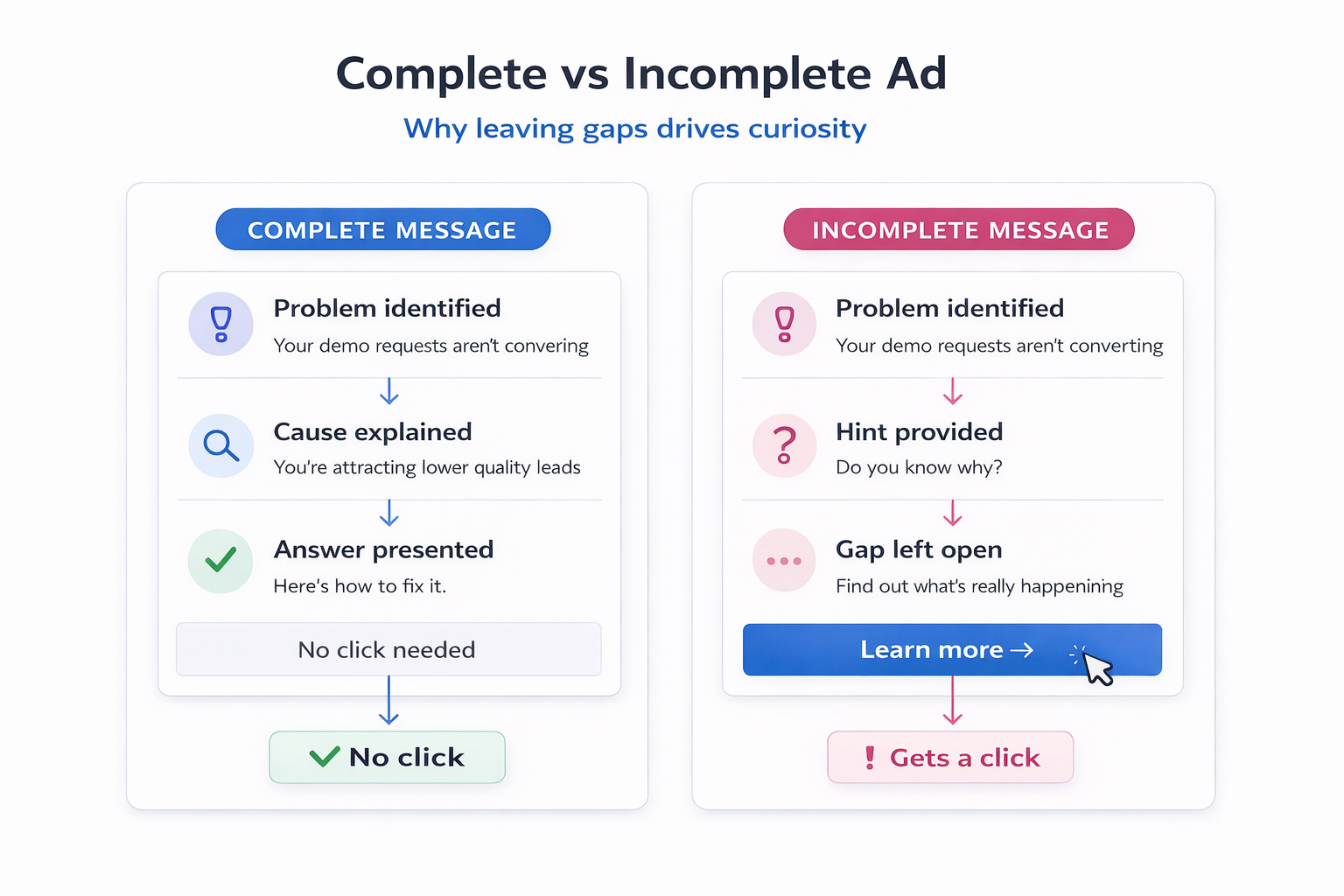
If the ad currently walks through the full logic, cut it one step earlier.
In practice:
-
Remove the final explanation or takeaway.
-
Keep the problem clear, but leave the cause unresolved.
-
Make the next step feel necessary, not optional.
An ad that fully explains why something happens tends to get saves. One that points to a specific cause without unpacking it tends to generate clicks.
2. Make the next step visible in the creative
Don’t rely on the caption to carry the CTA.
Instead:
-
Place a short action cue inside the visual itself.
-
Position it where attention naturally lands (center or upper area).
-
Use clear, direct wording (“see the breakdown,” “view the full analysis”).
This is especially important on Instagram, where most decisions happen before the caption is expanded. Visual hierarchy plays a direct role in whether users even register the next step — see visual hierarchy in Facebook ads: what people notice first (and why it matters).
3. Narrow the message to filter engagement
Broad messaging attracts broad interaction, which usually includes people with no intent.
Tightening the message helps filter that out:
-
Reference a specific metric or situation.
-
Describe a recognizable campaign scenario.
-
Call out a narrower audience, even if reach drops.
For example, “low lead quality” will get more engagement than “SQL rate dropped after switching to lead forms,” but the second will usually drive better clicks.
4. Align optimization with actual intent
If you optimize for cheap clicks or engagement, that’s exactly what the system will deliver.
Instead, shift toward signals that require commitment:
-
Use landing page views instead of link clicks.
-
Move to conversion optimization when volume allows.
-
Monitor the ratio between clicks and landing page views.
If you’re unsure how objective choice affects delivery, review Meta ad campaign objectives explained: how to choose the right one.
5. Use retargeting to capture missed clicks
Not everyone who engages is low intent. Some users just need a second interaction.
Build retargeting audiences from:
-
post engagement,
-
video views,
-
profile visits.
Then show a more direct version of the ad — clearer outcome, stronger CTA, less explanation.
Final Takeaway
When Instagram ads generate engagement but not clicks, the issue isn’t performance — it’s direction.
The ad is doing its job, just not the job you need.
If it behaves like content, people will engage and move on. If it creates a clear next step and leaves something unresolved, clicks follow naturally.
Most of the fix comes down to restraint: say a bit less, show the next step earlier, and make the action obvious.