High-ticket B2B buyers move through long evaluation cycles. They review details, assess options, and involve several team members. Intent-based marketing helps companies focus on prospects who show meaningful signals instead of relying on broad assumptions. This improves timing, messaging, and overall funnel efficiency.
What Intent Means in B2B Funnels
Intent appears through observable actions. These actions reveal how buyers research, compare, and narrow their choices. When examined in context, they create a clear picture of readiness and motivation. Strong intent signals help marketers guide prospects more effectively.
Common intent signals include:
-
Visits to pricing, technical, or comparison pages.
-
Longer engagement with in-depth product content.
-
Repeated interaction with webinars, whitepapers, or case studies.
-
Form starts or partial submissions.
-
Activity from multiple users within the same company domain.
These behaviors align with what detailed behavioral analysis shows across channels. For deeper context on how behavioral signals shape segmentation, see How to Use Behavioral Targeting to Understand Your Audience.
Why Intent Matters for High-Ticket Offers
High-ticket buyers need focused guidance at every stage. They do not respond well to mismatched messaging, and they only move forward when the information meets their evaluation needs. Intent-based marketing improves accuracy across all touchpoints and reduces wasted effort.
This approach also strengthens coordination between marketing and sales teams. When intent signals rise, sales receives clearer indicators of which accounts are gaining momentum. This supports better forecasting and more efficient follow-up workflows.
Core Intent Stages in B2B Marketing
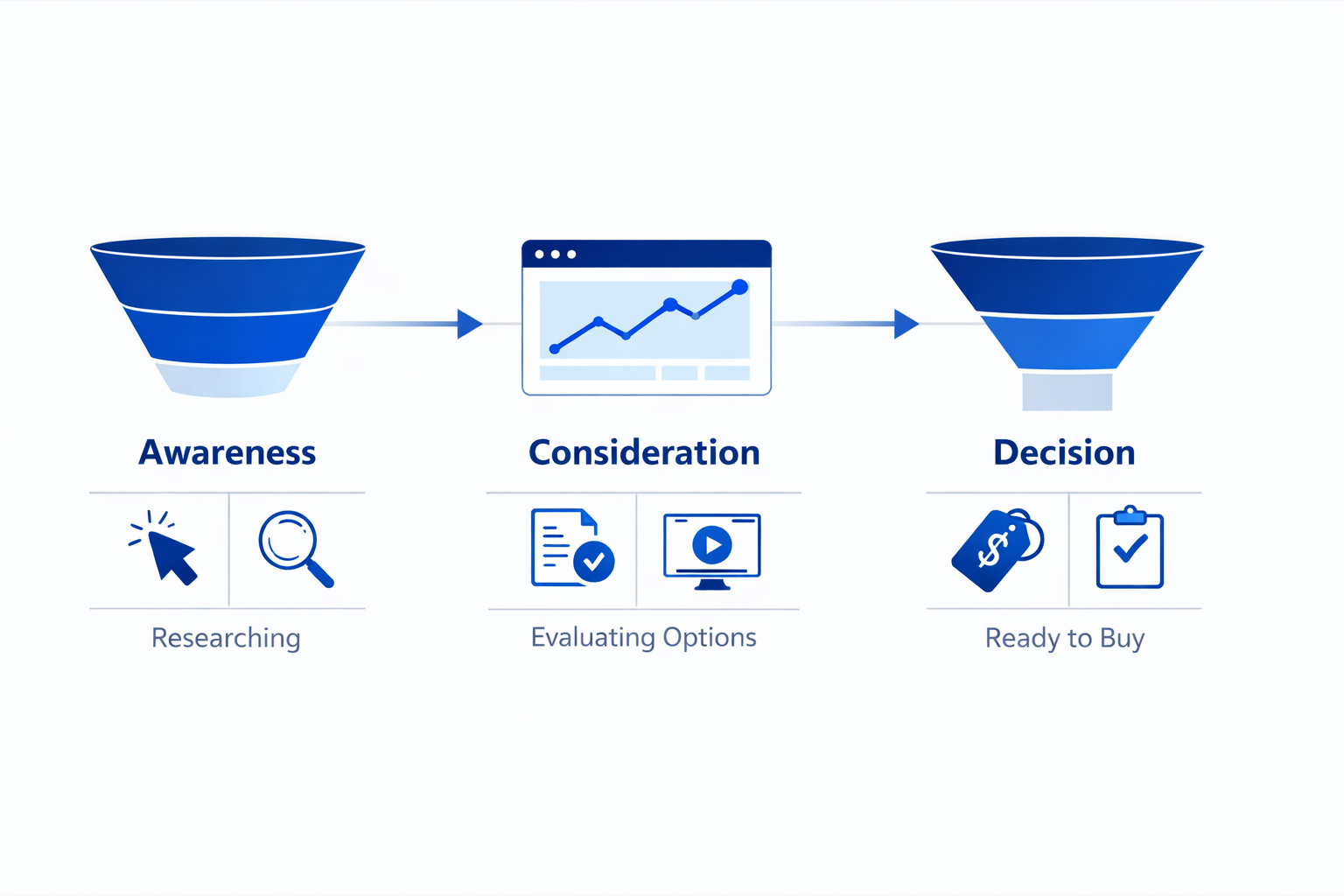
High-ticket journeys include several stages. Intent signals help determine where prospects stand and what information they need next.
Awareness Intent
Prospects explore broad information and confirm that a problem is worth solving. Their actions remain light and introductory.
Signals include:
-
Short visits to overview pages.
-
Interaction with introductory content.
-
Interest in general industry topics.
Messaging at this stage should clarify problems and outline potential outcomes.
Consideration Intent
When prospects begin real evaluation, their behavior becomes more focused. They compare options and gather evidence that supports their decision process.
Signals include:
-
Visits to comparison, integration, or product detail pages.
-
Interaction with case studies.
-
Engagement with reports or webinars.
This stage benefits from detailed proof and practical examples. For a broader view of how users move through these stages, see Understanding Customer Journeys in Digital Marketing.
Decision Intent
Prospects validate cost, process, and value. Their actions reflect readiness for a clear next step.
Signals include:
-
Pricing page activity.
-
Demo or consultation form starts.
-
Downloads focused on ROI or implementation.
These users require simple next steps and clear reassurance.
Building Intent-Based Segments
Segmentation based on intent improves delivery across all channels. Behavioral signals reveal which prospects are progressing and which require more education. Marketers should group users by meaningful actions rather than broad demographics.
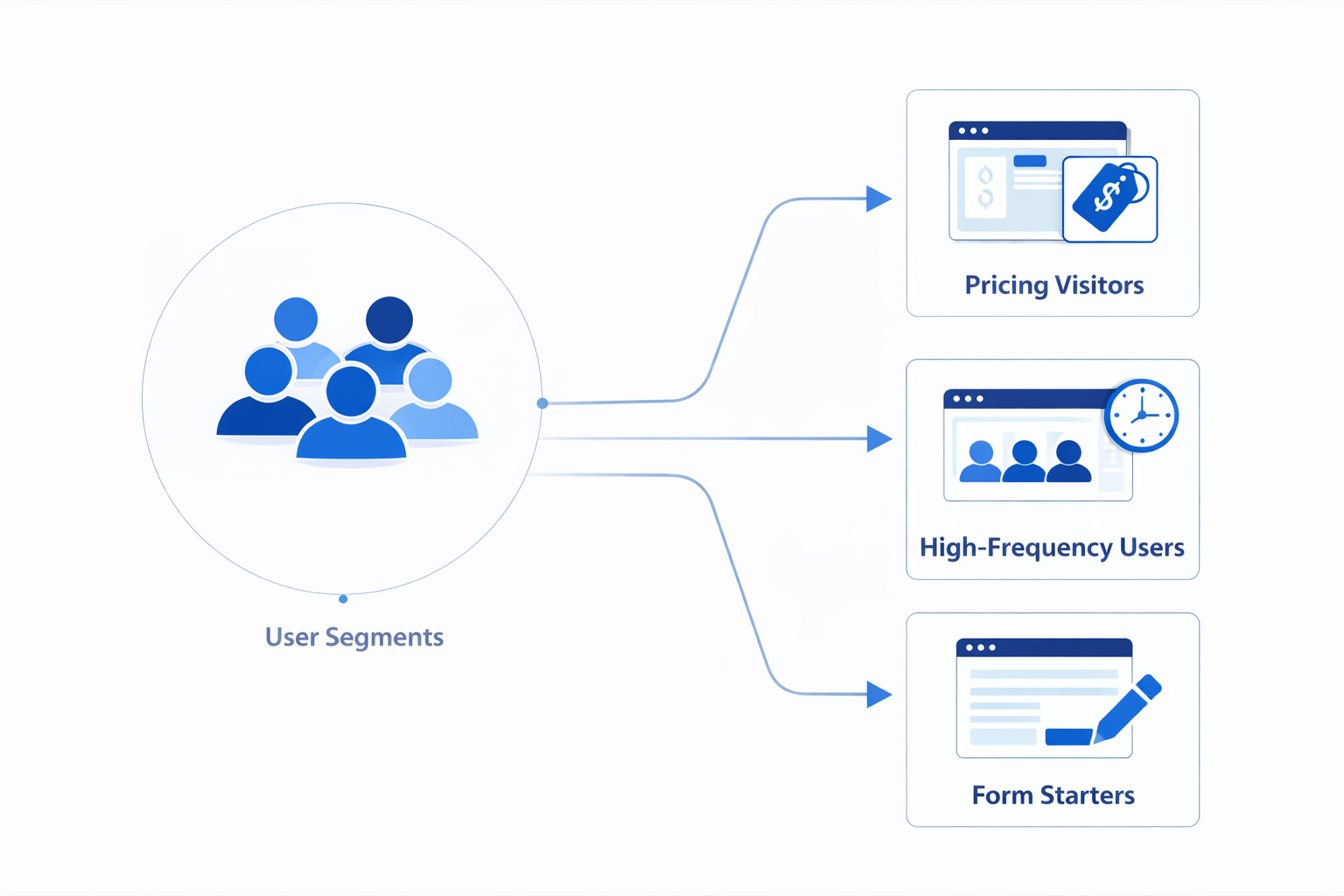
Useful segments include:
-
Visitors to pricing or ROI-related pages.
-
Users who follow a sequence of high-value pages.
-
High-frequency return visitors within short time windows.
-
Prospects who start forms or request advanced resources.
These segments must refresh often. Recency strengthens accuracy and prevents outdated assumptions from guiding campaign decisions.
Mapping Content and Offers to Intent
Intent-based marketing works when content matches buyer needs at each stage. This prevents message overload and reduces friction throughout the journey.
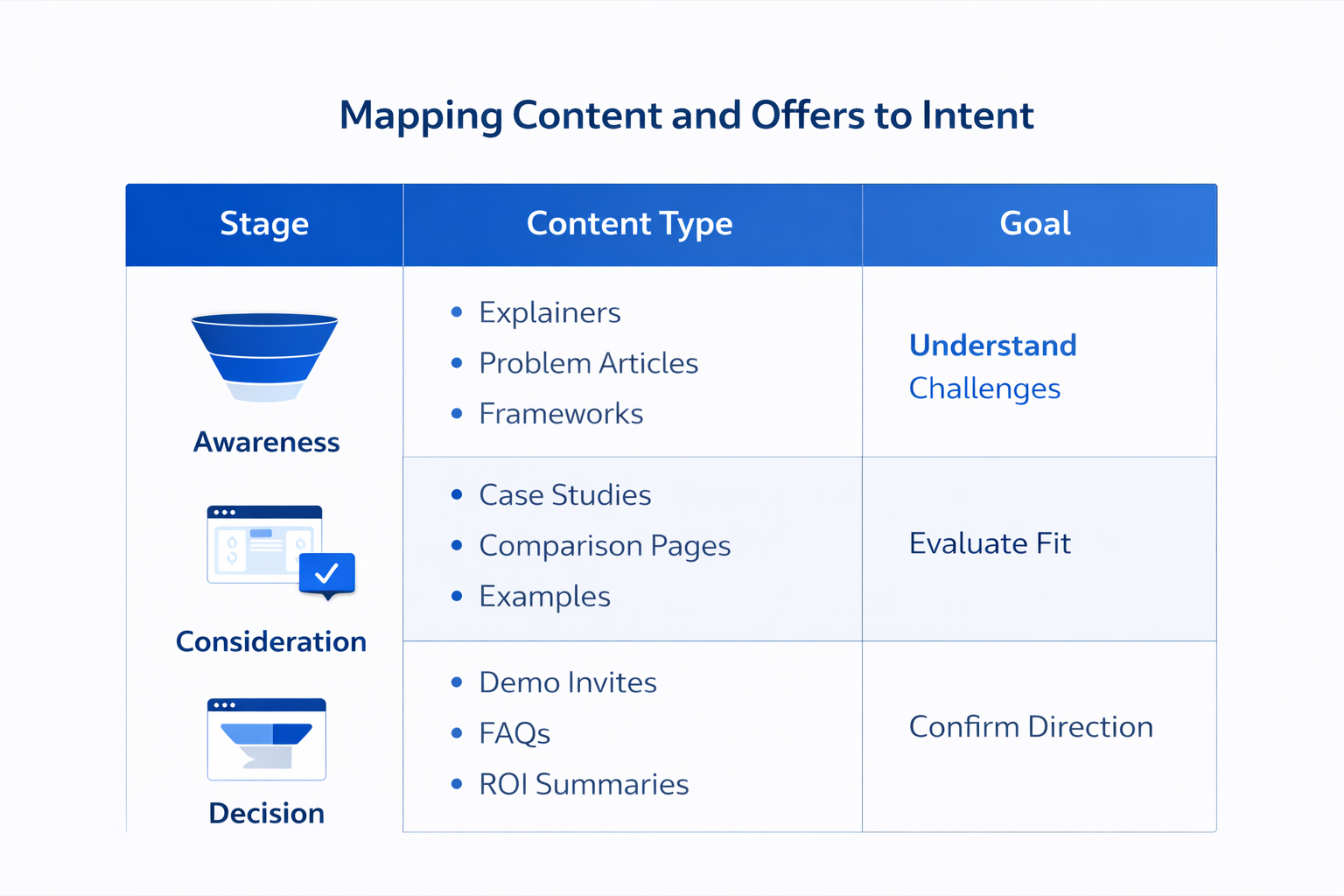
Awareness Content
Prospects need clarity about their challenges and the stakes involved. Content should be simple and educational, with no pressure to act.
Effective assets include:
-
Short explainers.
-
Articles that outline industry problems.
-
High-level frameworks.
Consideration Content
Buyers want to understand performance, validation, and fit. They look for specifics and examples that help confirm their direction.
Effective assets include:
-
Case studies with measurable results.
-
Comparison pages.
-
Industry-focused examples.
Decision Content
Prospects want predictable next steps and reassurance. They expect quick access to details and a clear path forward.
Effective assets include:
-
Demo invitations.
-
Short FAQs.
-
ROI and implementation summaries.
For additional guidance on aligning message and intent, see How to Align Your Ads with Buyer Intent for Better Results.
Using Behavioral Signals to Refine Intent
Behavioral data gives deeper insight into buyer motivation. When combined with on-site analytics, it reveals clear progression and highlights which prospects are gaining momentum. This helps teams refine outreach and prioritize follow-ups.
Useful signals include:
-
Repeat engagement with deeper content.
-
Rising session depth over time.
-
Frequent return visits from the same company domain.
-
Completion of evaluative tools or calculators.
Patterns matter more than isolated actions, and strong patterns provide reliable direction.
Measuring Intent Progression
Marketers should track whether prospects move between stages, not just whether they interact with content. Progression shows that messaging and format choices support buyer needs.
Important indicators include:
-
Growth in visits to decision-level content.
-
Increases in form starts from returning users.
-
Higher conversion rates within focused intent segments.
-
Shorter time gaps between repeat visits.
These signals help refine strategy and allocate resources more effectively.
Reducing Waste Across High-Ticket Campaigns
Intent-based structures help marketing teams avoid mismatched communication. They ensure that awareness content reaches early-stage users while advanced prospects receive precise, decision-ready material. This reduces noise and strengthens relevance.
Key steps include:
-
Lower frequency for early-intent groups.
-
Prioritized follow-up for recent, high-intent users.
-
Stage-based exclusions that prevent overlap.
-
Regular updates to advanced-stage content.
Advanced Tactics for High-Intent Prospects
High-intent prospects benefit from methods that maintain momentum and relevance. When communication is structured around observed patterns, conversion improves without relying on aggressive tactics.
Effective approaches include:
-
Sequential content paths based on behavior.
-
Role-specific or industry-specific landing pages.
-
Time-decay scoring that highlights recent engagement.
-
Coordinated outreach between marketing and sales teams.
These methods support smoother progression toward sales conversations.
Conclusion
Intent-based marketing gives high-ticket B2B teams a practical way to support long evaluation cycles. By using clear behavioral signals, marketers improve timing, reduce waste, and deliver content that helps prospects advance.
This approach brings structure and clarity to complex journeys and strengthens the impact of every interaction.