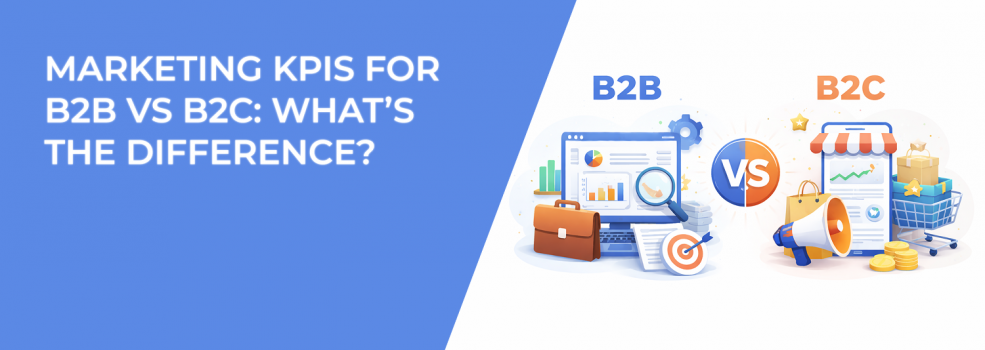
Many advertisers use the same KPIs for every campaign — regardless of the business model. That’s a mistake. B2B and B2C campaigns have different goals, timelines, and buyer behaviors. If you’re measuring both by the same benchmarks, you’re likely misreading your results.
To optimize your Meta ads — whether on Facebook or Instagram — you need to know which KPIs reflect real progress for your type of business. This guide breaks it down in clear terms.
How B2B and B2C Campaigns Work Differently
B2B: Longer Funnels, Higher Friction
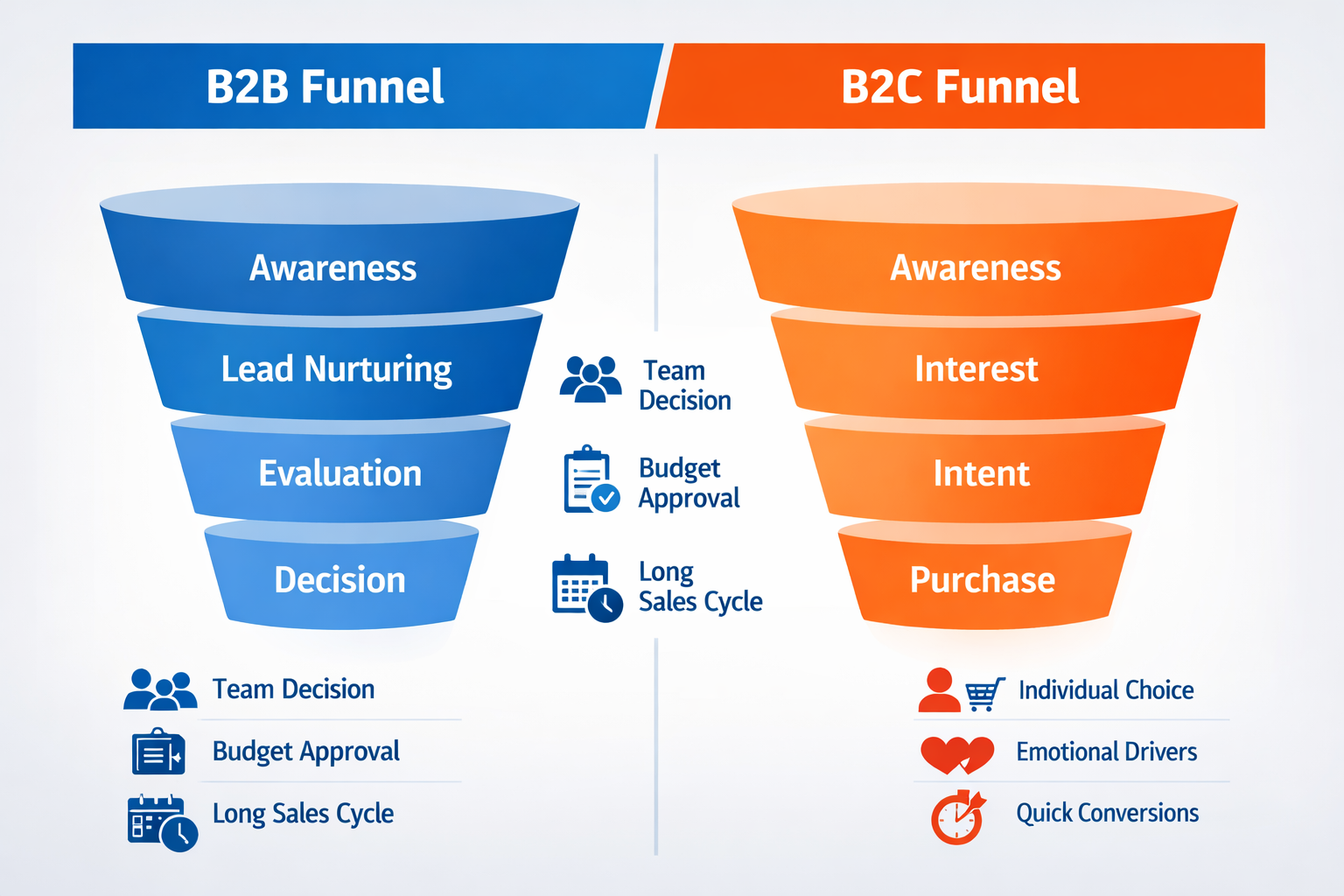
B2B marketing is about relationship-building. Most buyers are part of a team. They need to justify purchases, align budgets, and often go through procurement. That takes time. Your job as a marketer is to help them stay engaged during that decision cycle.
Here’s what defines the B2B environment:
-
Longer decision cycles — often weeks or months;
-
Multiple stakeholders — approvals needed from finance, ops, and tech;
-
High consideration — deals tend to involve custom solutions, demos, or multi-step onboarding.
B2C: Faster Decisions, Higher Volume
B2C purchases are usually personal. The funnel is shorter, and emotion often drives the decision. That makes it easier to scale but also easier to lose attention.
Key characteristics of B2C funnels include:
-
Shorter timelines — from ad to purchase in minutes or hours;
-
Single decision-makers — no internal approvals or custom quotes;
-
Impulse triggers — creative and offer timing play a bigger role.
KPIs That Matter for B2B Campaigns
Your Facebook or Instagram ads may not generate instant revenue in B2B — and that’s normal. The metrics you track should reflect pipeline growth and lead quality.
1. Cost Per Lead (CPL)
CPL helps you understand efficiency at the top of the funnel. But the focus shouldn’t just be on lowering cost — it should be on acquiring leads that are actually useful for sales.
For example: Spending $1,500 to get 60 leads = $25 CPL. But if only 3 of those leads qualify, you’ve paid $500 per useful contact.
If your CPL is rising without an increase in quality, check this troubleshooting guide.
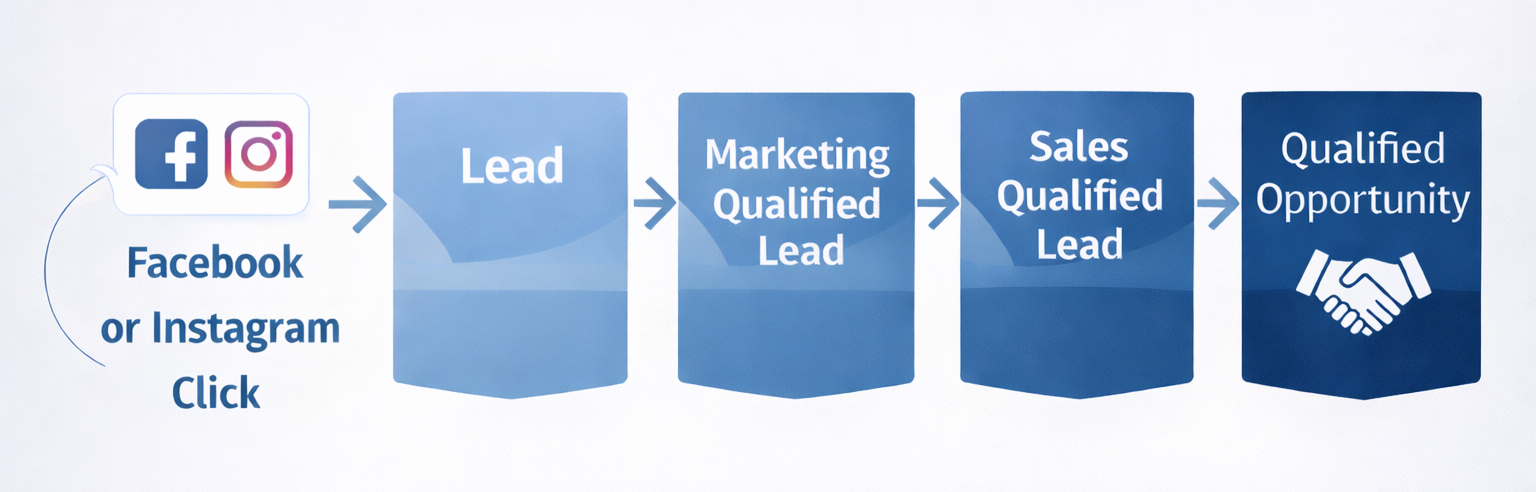
2. Qualified Lead Rate
Once leads enter your funnel, you need to know how many of them are actually a fit.
You can track this through:
-
Sales-qualified leads (SQLs) — people who meet your buying criteria and express intent;
-
Lead-to-meeting conversion rate — the percentage of leads that book a demo or sales call;
-
Pipeline contribution — leads that eventually move into active opportunities in your CRM.
Without this layer of measurement, it’s easy to scale lead volume while quietly weakening your sales pipeline.
3. Retargeting Efficiency
B2B buying journeys involve multiple sessions. Retargeting becomes a critical part of campaign structure. Instead of looking at frequency alone, evaluate:
-
Click-through rate (CTR) on retargeting ads — high CTR signals continued interest;
-
Engagement depth — time spent on landing pages, resource downloads, or replayed videos;
-
Assisted conversions — cases where retargeting ads influenced the final decision, even if they didn’t close the sale directly.
See this guide on smarter Facebook retargeting for more insights.
KPIs That Matter for B2C Campaigns
In B2C, performance hinges on speed, scale, and efficiency. Your metrics should help you quickly identify winning creatives and profitable audiences.
1. Return on Ad Spend (ROAS)
ROAS is essential for ecommerce and app-based campaigns. But don’t look at it in isolation. A high ROAS might look good, but it may come from a small pool of one-time buyers. Pair it with retention metrics to get the full picture.
Example: A $100 ad spend yields $400 in sales = 4.0 ROAS. But if those customers never return, your profit margin may suffer long-term.
Learn how to track full-funnel ROAS in ecommerce.
2. Cost Per Purchase (CPP)
This tells you how much it costs to generate one sale. It’s especially useful when combined with average order value (AOV).
-
High AOV + low CPP = potential to scale;
-
Low AOV + high CPP = margin issues to fix;
-
Stable AOV + rising CPP = ad fatigue or targeting problems.
Track these relationships using conversion funnel strategies like this.
3. Conversion Rate (CVR)
This is often overlooked, but crucial. CVR helps you identify weak points in your funnel.
Split it into:
-
Landing page CVR — percent of ad clicks that turn into purchases or signups;
-
Checkout CVR — percent of initiated checkouts that complete;
-
Mobile vs. desktop CVR — many B2C brands see major differences here.
Shared KPIs, Interpreted Differently
Some KPIs apply to both B2B and B2C, but the meaning behind the numbers changes.
Click-Through Rate (CTR)
CTR helps you measure creative relevance. But it doesn’t always connect to business outcomes.
-
In B2C, high CTR usually translates to more sales — especially if your product is low-friction.
-
In B2B, a high CTR might just mean people are curious. Use CTR as a signal, not a goal.
If CTR is misleading your decision-making, this guide on how to analyze ad performance beyond CTR will help.
Cost Per Mille (CPM)
CPM shows how expensive it is to get your ad seen. But not all impressions are equal.
-
In B2C, a low CPM helps scale reach and discover new audiences.
-
In B2B, it’s okay to pay more for narrow, senior-level targeting — as long as lead quality holds.
What to Track on Meta Ads — Side by Side
| KPI | B2B Focus | B2C Focus |
|---|---|---|
| Cost per Lead | Emphasize quality over volume | Rarely used |
| Return on Ad Spend | Only relevant with full-funnel attribution | Core metric for daily optimization |
| Conversion Rate | Used after retargeting stages | Used for every step of funnel |
| Cost per Purchase | Not applicable | Critical for profit control |
| Retargeting CTR | Signals interest level in long funnels | Helps recover abandoned carts |
| CPM | Tolerate higher for niche roles | Optimize for efficient reach |
Common Pitfalls and How to Avoid Them
1. Over-Relying on ROAS in B2B
If you sell a $10,000 solution, Facebook won’t show the sale inside Ads Manager. ROAS will look like zero. You’ll miss the impact unless you connect ad data with CRM outcomes. Focus on pipeline growth instead.
See this article on filling the sales pipeline with Meta ads.
2. Ignoring Customer Quality in B2C
A 5.0 ROAS doesn’t mean much if you’re acquiring refund-prone or one-time buyers. Use retention, churn rate, and LTV to make sure you’re attracting the right audience.
3. Measuring All Campaigns by the Same KPIs
What matters in prospecting is different from what matters in retargeting. Don’t compare cost per result across funnel stages. Instead, define success benchmarks for each campaign type and optimize accordingly.
Try this campaign optimization framework to align metrics with goals.
Wrapping Up
You can’t manage what you don’t measure — but only if you’re tracking the right things. B2B and B2C advertisers need different KPIs because their campaigns serve different purposes.
If you’re running Meta ads, structure your campaigns with a clear measurement plan. Avoid chasing surface metrics. Align your KPIs with funnel stages, business goals, and customer behavior.
When in doubt, choose depth over volume. Fewer high-quality leads or loyal customers are worth more than low-cost, low-return activity.