Running B2B ads on Facebook or Instagram? The key to success isn’t just great creative or targeting — it’s knowing what to measure.
Tracking the wrong marketing KPIs leads to wasted budget, confusing results, and poor decisions. This guide walks you through which metrics really matter for B2B campaigns, and which ones you can stop worrying about.
Let’s break it down.
Why B2B Ads Need Different KPIs
B2B buyers don’t act like everyday shoppers. They usually take longer to make decisions, have more people involved in the process, and care more about long-term value than impulse deals.
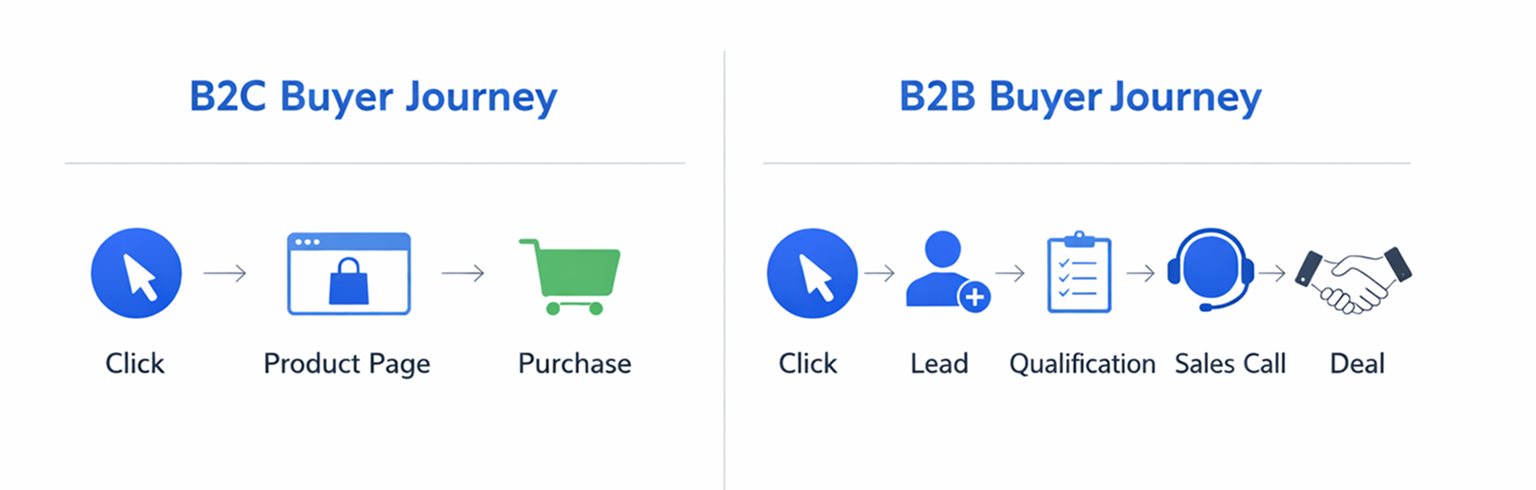
Because of that, standard ad metrics — like clicks, impressions, or likes — don’t tell you much. Just because someone clicked doesn’t mean they’re ready to talk to sales.
Instead, you need to track actions that show interest, fit, and potential to turn into real business. If you're still measuring success based on surface stats, this guide to analyzing performance beyond CTR and CPC will help you shift your focus.
Qualified Lead Volume (QLV): Focus on the Right People
It’s easy to collect leads. But are they the right leads?
Qualified Lead Volume means tracking how many of your leads actually match your ideal customer. In B2B, that’s way more important than just counting form fills.
For example, let’s say you’re running a campaign for a project management tool made for 100+ person teams. If your leads are mostly freelancers or small startups, they’re probably not a good fit — even if your ads look like they’re performing.
To measure QLV, filter your leads by things like:
-
Job title (e.g., "Operations Director" vs "Intern").
-
Company size (e.g., 100+ employees).
-
Industry or region (e.g., SaaS companies in North America).
This gives you a clear picture of whether your ads are attracting the people who matter. You can also explore the difference between lead quality and lead volume here.
Cost per Qualified Lead (CPQL): Know What You’re Really Paying For
Once you know which leads are qualified, the next step is finding out how much they cost. That’s where Cost per Qualified Lead (CPQL) comes in.
Let’s say two ad campaigns are bringing in leads for $40 each. At first glance, they seem equal. But if one campaign is bringing in mostly high-quality leads, and the other is full of poor fits, CPQL shows the truth.
This helps you:
-
Avoid wasting money on low-value leads.
-
Spot which campaigns or ads bring in the best-fit users.
-
Decide where to scale or cut budget.
In short: CPQL helps you focus on what actually brings results, not just activity.
Pipeline Contribution: Tie Ads to Sales Outcomes
A lead is great. A deal in the pipeline is better.
Pipeline Contribution measures how far your ad-driven leads make it through the sales process — not just whether they fill out a form.
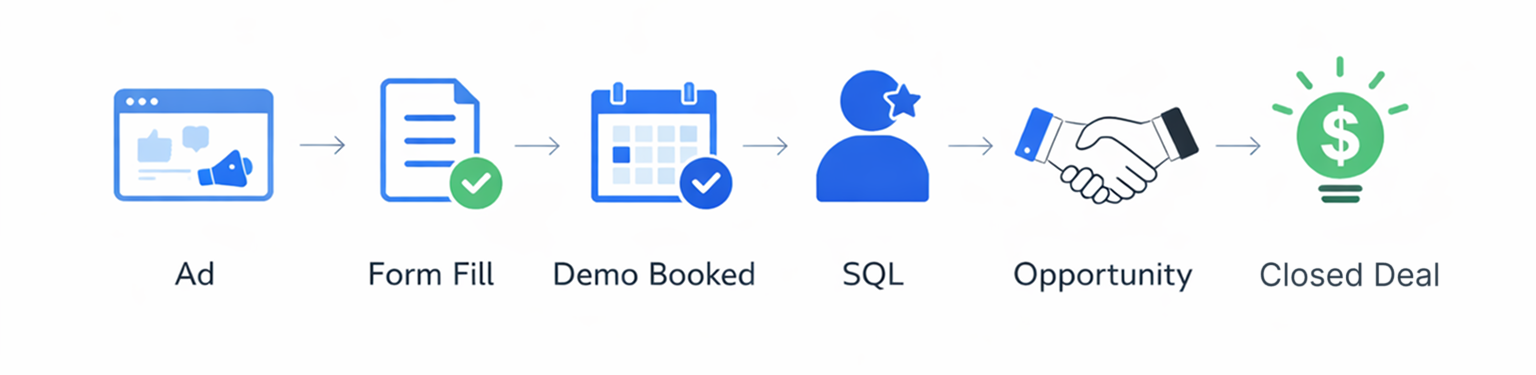
For example, you might run an Instagram campaign offering a free product demo. You get 80 leads. But only 10 of them book a call, and just 2 turn into real sales opportunities.
That’s your pipeline contribution. And it’s a much better way to see if your campaign is working.
To track it, connect your ad platform to your CRM (like HubSpot or Salesforce). This lets you follow the full journey — from click to closed deal. You can read more on how to use Facebook ads to build a sales pipeline — not just generate leads.
Click-to-Conversion Rate: Find What’s Blocking Results
Clicks don’t pay the bills — conversions do.
Click-to-Conversion Rate shows how many people took real action after clicking your ad. That could mean signing up for a call, downloading a guide, or requesting a quote.
If people are clicking your ad but not converting, something’s off. It might be:
-
A landing page that doesn’t match the ad.
-
A confusing offer or weak call to action.
-
A form that’s too long or slow to load.
For example, imagine an ad that says “Try our software free,” but the landing page just says “Contact Us.” Users might bounce — and your conversion rate drops.
Tracking this metric helps you catch those disconnects and fix them fast. Here’s how to improve your lead conversion rates from Facebook ads if that’s where you’re stuck.
Target Account Engagement: Who’s Interacting Matters
In B2B, it’s not about how many people see your ad. It’s about which people see and engage with it.
That’s why Target Account Engagement is such a valuable metric — especially if you’re running account-based campaigns or targeting specific industries.
Let’s say your sales team is focused on healthcare tech companies. If your ads are getting clicks from students or retail employees, that’s not helpful. But if buyers from top healthcare brands are visiting your site, you’re on the right track — even if they haven’t converted yet.
You can track engagement by:
-
Company name (with tools like Clearbit or LinkedIn insights).
-
Job role or seniority (e.g., manager vs entry-level).
-
Whether they’re already on your target account list.
This tells you if you’re building interest in the right places — even if deals take time to close.
What to Stop Obsessing Over
Not every metric is worth your attention. These common KPIs can lead you in the wrong direction if you rely on them too much.
Click-Through Rate (CTR)
High CTR doesn’t always mean success. You might get lots of clicks from the wrong people. Focus more on what happens after the click.
Time on Page
More time doesn’t mean more interest. Someone might read for 3 minutes and still not convert. Prioritize real actions.
Likes, Comments, Shares
Social engagement can feel good, but in B2B, it rarely drives sales. Don’t confuse popularity with performance.
To learn how to stop focusing on surface-level KPIs, check out this breakdown of vanity metrics and what to track instead.
Match Metrics to Campaign Goals
Every campaign has a different job. Your KPIs should match your goal.
If your campaign is about awareness, track engagement from relevant companies or job roles. See if people start searching for your brand more often.
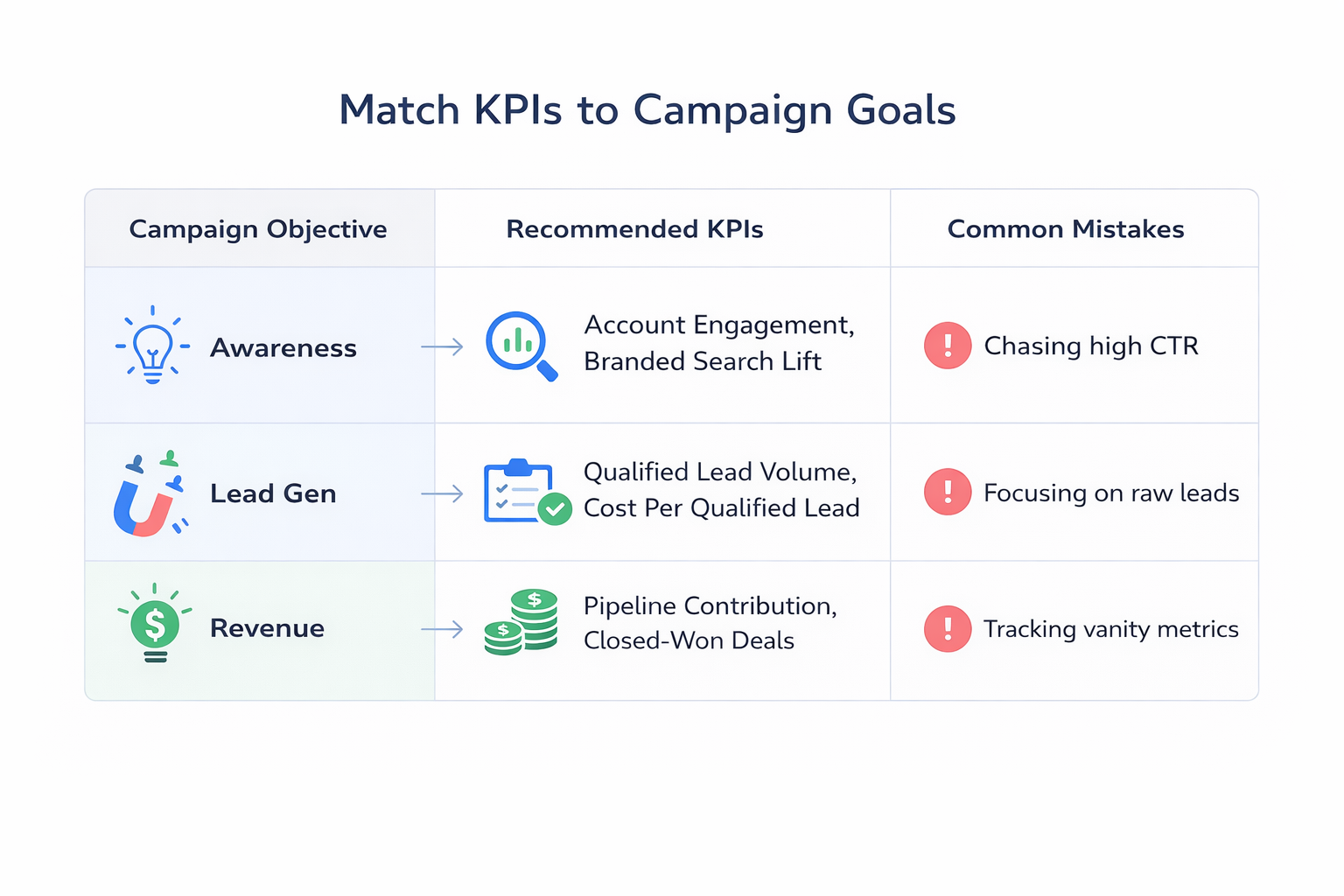
If it’s built to generate leads, focus on qualified lead volume, cost per qualified lead, and conversion rates.
If your goal is revenue, track how leads move through your pipeline. Look at deal value, sales-stage progression, and closed-won opportunities.
The clearer your goal, the clearer your KPIs should be.
Final Thoughts: Keep Your Focus on What Matters
There are hundreds of ways to measure ad performance. But only a handful of KPIs actually help B2B marketers make better decisions.
Don’t get caught up in surface-level stats. Focus on metrics that show fit, intent, and sales potential.
And make sure you have the right tools and tracking in place — CRM connections, lead scoring, custom conversions — so your numbers tell the full story. Need help? Check out custom metrics for Facebook ad optimization to build smarter dashboards that reflect real business value.
Because at the end of the day, good marketing isn’t just about reach or clicks. It’s about bringing in the right people and helping your business grow.