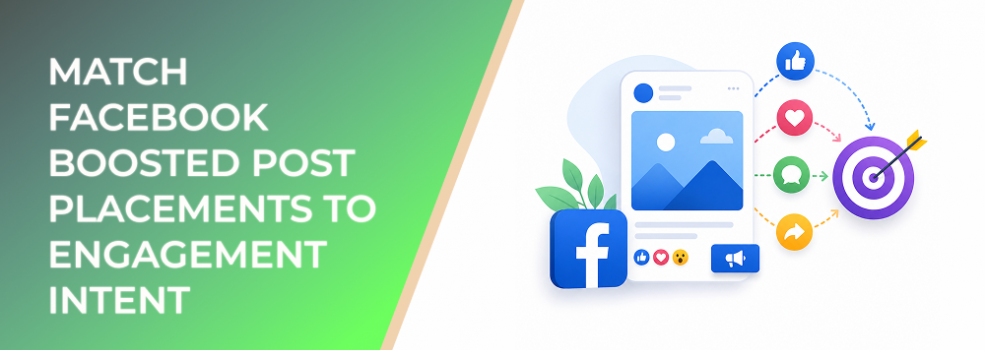
A boosted post can generate engagement and still disappoint.
Likes increase. Comments appear. CPC looks acceptable. But the engagement does not create useful traffic, qualified leads, retargeting value, or meaningful demand.
That usually happens when the placement, audience, and engagement intent are not aligned.
Meta’s placement system can deliver ads across multiple environments, and Meta’s Advantage+ placement approach is designed to find cost-effective opportunities across Meta technologies and placements.
For marketers, the question is not only “Can this post get engagement?” It is “What kind of engagement does this placement encourage?”
The Problem
The problem is treating all engagement as equal.
A comment from a high-intent prospect is not the same as a casual emoji reaction from someone who will never buy. A Story tap is not the same as a Feed comment. A video view is not the same as a product-page visit.
When boosted posts are judged only by total engagement, marketers may reward the cheapest interaction instead of the most useful signal.
Why This Problem Hurts Performance
Weak engagement intent damages performance in several ways.
It can create low-quality retargeting audiences. If the boost attracts casual engagers, follow-up campaigns may waste budget chasing people who were never close to the offer.
It can distort creative decisions. A post that attracts cheap reactions may look like a winner even if it does not move users toward the next step.
It can increase CPA later. If the campaign warms the wrong people, conversion campaigns start with a weaker audience pool.
For agencies, this creates client confusion. The report shows engagement, but the client sees no pipeline, bookings, or sales.
Common Scenarios Where This Happens
A SaaS company boosts an educational post and gets reactions from marketers outside its ICP, but few demo-ready prospects.
An ecommerce brand boosts a lifestyle Reel and gets strong engagement, but the audience is reacting to the aesthetic rather than product intent.
A local business boosts a community announcement and gets comments, but many users are outside the service area.
An affiliate marketer boosts a product comparison post and gets clicks from curiosity-driven users who do not convert.
Why the Problem Happens
This happens because boosted-post setup often encourages speed over intent.
The advertiser chooses a post that performed well organically, adds budget, and hopes the same engagement will scale. But organic engagement may come from existing followers who already understand the brand. Paid engagement may come from people with less context.
Placement also changes intent. Feed placements may support more reading and commenting. Stories and Reels-style placements reward fast reactions. Instagram placements may favor visual interest. Message-related placements only work well when the next step is conversation.
Audience fit is the third issue. Even the right placement cannot produce meaningful engagement if the audience has no reason to care.
The Solution
The solution is to define the engagement intent before boosting.
Start by naming the action you actually want.
Do you want comments that reveal buyer questions?
Do you want saves or shares that indicate content value?
Do you want profile visits?
Do you want traffic to a post-click destination?
Do you want warm users for retargeting?
Then match the placement environment to that intent.
Use Feed-style delivery for posts that need context, discussion, proof, or a thoughtful CTA.
Use Stories or Reels-style delivery for simple, visual, fast-recognition content.
Use Instagram-oriented placements when the post is visually strong and does not rely on long explanation.
Use message-oriented flows only when conversation is the desired outcome and the business can respond quickly.
Finally, evaluate engagement quality, not just engagement quantity.
How LeadEnforce Helps
LeadEnforce helps on the audience side of the problem.
It does not choose placements for boosted posts, and it does not make weak creative persuasive. Its value is in improving who sees the promoted content when audience relevance matters.
Advertisers can build audiences from Facebook groups, Instagram profiles and followers, LinkedIn professional data, and custom social-profile sources. LeadEnforce’s own feature pages describe Facebook group targeting for pre-engaged audiences and Instagram follower targeting for high-intent followers.
That matters because engagement is only useful when it comes from people close enough to the offer.
A B2B team can build audience inputs around relevant professional communities or LinkedIn-derived criteria. An ecommerce advertiser can focus on followers of niche Instagram profiles. A local business can use community-based sources that better match its service area or buyer context.
Risks and Considerations
Better audience inputs do not remove the need for clear creative, a relevant offer, or proper campaign objectives.
Audience size also matters. If the source audience is too small, delivery may be limited. If the source audience is too broad, the campaign may still attract low-intent engagement.
Do not use LeadEnforce as a substitute for reading placement reports or checking post-click behavior. It supports audience relevance; it does not solve attribution, landing page quality, or placement reporting.
Prerequisites and Dependencies
You need a clear ICP, relevant source communities or profiles, and a post that matches the audience’s interest.
You also need an active Meta ad setup, enough audience size, a clear engagement KPI, and a retargeting plan if the boosted post is intended to support a larger funnel.
If the goal is commercial engagement, make sure the post contains a visible offer, CTA, or next step.
Practical Recommendations
Before boosting, write down the engagement signal you want.
Choose placements based on how users behave in that environment.
Build or select an audience that is likely to care about the post before Meta starts spending.
Review engagement quality after launch. Look at comments, profile visits, landing page views, lead quality, and retargeting usefulness.
Use boosted posts for engagement validation. Use structured campaigns when the goal becomes qualified leads, purchases, or predictable CPA.
Final Takeaway
Weak boosted-post results often come from mismatched engagement intent.
The fix is to align the placement, creative, audience, and KPI before launch. Engagement only helps performance when it comes from people who understand the offer and are likely to take the next step.
To build more relevant audience inputs before your next engagement-focused Meta test, join the free 7-day LeadEnforce trial period.
Related LeadEnforce Articles
- How to Boost a Post or Reel in Meta Business Suite Desktop Without Paying for Weak Engagement — Explains how weak engagement can come from generic audience delivery.
- Meta Platforms by Objective: Choose the Right Channel Mix Before Launch — Helps connect platform mix to campaign intent.
- How LeadEnforce Lets You Target Instagram Followers — Shows how follower-based audience building can support more relevant Meta campaigns.
- What to Do When Your Facebook Ads Aren’t Reaching the Right Audience — Useful for diagnosing audience mismatch before blaming creative or budget.