Many advertisers notice the same pattern after privacy updates or browser restrictions: Meta Ads Manager starts showing fewer conversions than the business actually receives.
Leads still come in. Purchases still happen. But attribution becomes inconsistent, and campaign optimization gets weaker over time.
That is the problem Meta Conversions API is designed to solve.
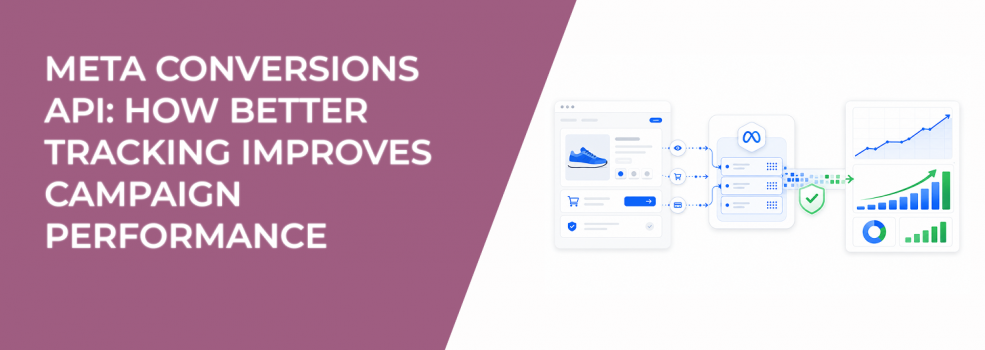
The Conversions API creates a direct connection between your business data and Meta’s advertising systems. Instead of relying only on browser-based Pixel tracking, Meta can receive data from your server, CRM, app, offline systems, or messaging platforms.
For advertisers focused on CPA, ROAS, and lead quality, that extra reliability matters.
Why Pixel Tracking Alone Sometimes Fails
The Meta Pixel depends heavily on browser activity. If the browser blocks scripts, loads slowly, or loses connection, some events never reach Meta.
This creates gaps in reporting and optimization. You may see purchases inside Shopify or your CRM that never appear inside Ads Manager.
Campaign performance usually becomes unstable when this happens. Common signs include:
- CPA rising suddenly after stable performance.
- Lower attributed purchases inside Ads Manager.
- Retargeting audiences shrinking unexpectedly.
- Conversion reporting delays after campaign launches.
The algorithm loses part of the feedback it needs to optimize delivery correctly.
How Conversions API Improves Optimization
Conversions API sends event data directly from your systems to Meta. That makes the connection more reliable than browser-only tracking.
Meta can receive data from:
- Websites.
- Mobile apps.
- CRM systems.
- Physical stores.
- Business chats.
- Phone sales.
- Offline conversions.
This helps the system understand the full customer journey instead of only the website visit.
For example, a lead generation company can send qualified lead scores from its CRM instead of optimizing only for form submissions. An e-commerce brand can send subscription or repeat-purchase events after checkout.
That gives Meta stronger optimization signals tied to actual business value.
Why Many Advertisers Use Pixel and CAPI Together
Meta recommends using Conversions API alongside the Pixel, not as a replacement.
The Pixel still provides useful browser-side activity data. Conversions API adds server-side reliability. Together, they create a stronger event system with better coverage.
When both are connected properly:
- Meta receives more complete event data.
- Event match quality usually improves.
- Attribution becomes more stable.
- Cost per result may decrease over time.
This is especially important for advertisers scaling campaigns aggressively. Missing conversion signals can cause the algorithm to leave profitable audience segments too early.
If you want a deeper comparison, this article on Pixel vs CAPI tracking differences explains how both systems work together.
Better Event Matching Usually Lowers CPA
One of the biggest benefits of Conversions API is improved event matching.
Matched events are actions Meta can connect back to real user accounts. The more accurate the matching, the better Meta understands who converts and what patterns those users share.
Conversions API allows advertisers to send additional customer information parameters. That helps Meta improve event match quality and optimize campaigns more accurately.
In practical terms, stronger event matching often leads to:
- More stable lead costs.
- Better retargeting accuracy.
- Improved Lookalike Audience quality.
- Stronger ROAS consistency during scaling.
You can usually monitor this inside Events Manager by reviewing event match quality metrics.
Offline Events and CRM Data Are Becoming More Important
Meta increasingly pushes advertisers toward broader business datasets instead of website-only tracking.
Offline conversions can now support optimization inside Sales campaigns using “Website and in store” conversion locations. Businesses can also create audiences based on offline purchases and in-store behavior.
This matters for businesses with longer sales cycles or offline revenue.
For example:
- A car dealership may upload showroom purchases.
- A B2B company may send qualified pipeline stages from its CRM.
- A retail brand may connect in-store sales to ad exposure.
Without these signals, Meta only sees part of the customer journey.
The Offline Conversions API will also be discontinued in May 2025. Meta recommends moving those events into datasets through Conversions API integrations instead.
Messaging Events Create New Optimization Signals
Conversions API can also send messaging events from Messenger, Instagram, or WhatsApp conversations.
This gives advertisers more visibility into customer behavior after the click. Businesses running click-to-Messenger campaigns can measure actions happening inside chats instead of treating conversations like black boxes.
That becomes useful for service businesses, local brands, and sales teams that close leads through messaging instead of websites.
Meta currently allows optimization for Messenger purchase events, but measurement support across messaging channels continues expanding.
What Advertisers Should Check Before Launching CAPI
Conversions API improves data quality, but setup mistakes can still damage reporting.
Before scaling campaigns, review these areas carefully:
- Confirm event deduplication between Pixel and CAPI. Duplicate events inflate results.
- Check event match quality inside Events Manager regularly.
- Compare Meta conversion data against CRM or backend systems weekly.
- Test server events before changing campaign optimization goals.
Poor integrations often create misleading ROAS numbers that look profitable until backend revenue gets reviewed.
For troubleshooting common tracking issues, this article on API connection errors in Facebook Ads reporting explains what advertisers should watch for.
How LeadEnforce Helps Improve Signal Quality
Conversions API improves what Meta learns after someone interacts with your business. It does not solve weak targeting before the click happens.
LeadEnforce helps advertisers build higher-intent audiences using Facebook groups, Instagram followers, engagers, and social profile data. That often creates stronger conversion behavior from the start.
When high-intent audiences combine with stronger tracking signals, Meta’s optimization system usually becomes more efficient. Advertisers often see more stable CPA and better lead quality during scaling.
If you are new to server-side setups, this guide to server-side tracking for Facebook Ads explains the basics in simpler terms.
Final Takeaway
Conversions API gives Meta a more reliable way to receive conversion data from your business. That improves optimization, attribution, and audience matching across websites, apps, offline sales, and messaging channels.
The biggest advantage is not just better reporting. It is better optimization stability when browser tracking becomes unreliable.
Advertisers who combine clean server-side tracking with strong audience quality usually see the best long-term performance.