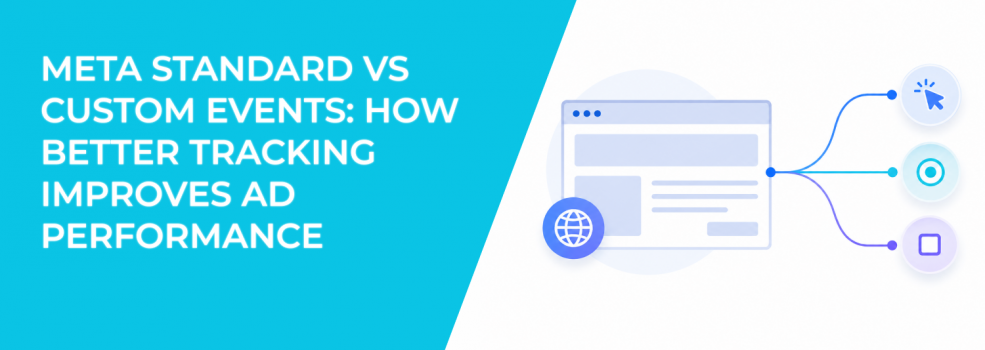
Meta’s algorithm depends heavily on event data. Every time someone views a product, starts checkout, books a call, or makes a purchase, Meta uses that information to improve targeting and optimization.
The problem is that many advertisers track events incorrectly. Some send too many weak signals, while others only track purchases and ignore the steps leading to conversion.
That usually creates unstable optimization and inconsistent campaign performance. The article on Facebook Pixel setup and optimization explains why structured tracking matters long before scaling budgets.
What Website Events Actually Do
Website events are actions people take on your website. Meta receives those actions through tools like the Meta Pixel and Conversions API.
The algorithm uses those signals to:
- Find users more likely to convert based on previous customer behavior. Meta studies patterns between converters and future auction participants.
- Build Custom Audiences from people who completed specific actions. This allows advertisers to retarget users with stronger purchase intent.
- Create Lookalike Audiences based on high-value customer activity. Better source events usually create better expansion audiences.
- Optimize delivery toward actions tied to business outcomes. Meta prioritizes users likely to repeat the conversion behavior it receives.
This is why event quality matters so much.
If Meta learns from weak actions, campaigns often generate cheap clicks but poor customers. If Meta receives stronger signals, optimization usually becomes more stable over time.
What Standard Events Are
Standard events are predefined actions Meta already recognizes across its advertising systems.
These include actions like:
- Purchase, which tells Meta someone completed a transaction and allows the system to optimize toward buyers instead of casual visitors.
- AddToCart, which signals strong buying intent before checkout and often helps smaller accounts generate enough learning data.
- Lead, which supports lead generation campaigns by identifying users likely to submit forms or inquiries.
- CompleteRegistration, which tracks account signups, onboarding flows, or membership creation.
- InitiateCheckout, which shows Meta that a user moved deeper into the purchase process.
Because Meta already understands these event names, the platform can optimize around them faster and use them across more ad products.
This usually improves audience building and conversion optimization compared to loosely structured tracking.
Many advertisers start with standard events because setup is easier through:
- Event Setup Tool.
- Partner integrations.
- Pixel code.
- Conversions API integrations.
The article about Pixel vs CAPI tracking differences explains why many advertisers now use both systems together for stronger event reliability.
What Custom Events Are
Custom events track actions that standard events do not cover.
Advertisers create their own event names to represent unique business actions. This is useful when businesses need to track behavior specific to their funnel or sales process.
For example:
- A SaaS company may track “DemoBooked” to identify high-value sales conversations.
- A publisher may track “ArticleRead75Percent” to measure deeper engagement quality.
- A coaching business may track “CallScheduled” because consultations matter more than form submissions.
- A marketplace may track “SellerApplicationSubmitted” to separate seller onboarding from buyer activity.
Custom events help Meta understand important actions deeper inside the customer journey.
They are especially useful for businesses with longer funnels where purchases happen much later than the first interaction.
Why Event Structure Changes Campaign Performance
Meta’s algorithm does not understand business value automatically. It learns from the signals advertisers send.
Poor event structure usually creates poor optimization.
You can often spot this inside Ads Manager when:
- CPC stays low but lead quality collapses because Meta optimized toward low-intent traffic.
- Retargeting audiences become too broad after weak events inflate audience pools.
- CPA rises after scaling despite stable CTR because conversion quality weakens.
- Campaigns optimize toward users who browse instead of users who purchase.
A common mistake is optimizing too early in the funnel.
For example, optimizing for “PageView” instead of “Lead” often trains Meta to find people who browse rather than convert. Optimizing for “AddToCart” may scale faster than optimizing directly for “Purchase” in lower-volume accounts, but it can also reduce purchase quality if used too long.
The event hierarchy should reflect real business value.
This becomes especially important during audience testing. The article on Facebook metrics that matter when testing audiences explains how weak optimization signals often distort campaign decisions.
Why Advertisers Should Use Pixel and Conversions API Together
Meta recommends sending the same website events through both the Pixel and Conversions API.
The Pixel captures browser-side behavior, while Conversions API sends server-side data more reliably. Together, they improve attribution and optimization quality.
Using both systems helps reduce problems caused by:
- Browser tracking restrictions that block some Pixel activity.
- Ad blockers that prevent browser events from firing correctly.
- Connection interruptions during page loading.
- iOS privacy limitations that reduce browser tracking visibility.
- Delayed browser event firing that creates attribution gaps.
This usually improves event match quality and helps Meta receive more complete customer journey data.
Why Mid-Funnel Events Matter More Than Many Advertisers Think
Many advertisers focus only on purchases or leads. That often leaves Meta with too little learning data, especially in smaller accounts.
Mid-funnel events help Meta understand buying intent earlier.
Useful mid-funnel events may include:
- Product page views that signal strong interest before checkout.
- Pricing page visits that often predict future sales conversations.
- Quiz completions that reveal deeper engagement and product consideration.
- Booking form starts that show stronger intent than basic landing page traffic.
These signals help campaigns stabilize faster during the learning phase.
The key is choosing events connected to real business outcomes instead of vanity engagement.
Why Event Reviews Inside Events Manager Matter
Every new custom event should be reviewed inside Events Manager.
This helps advertisers confirm:
- The event fires correctly across all pages and devices.
- The event belongs to the business and not an external integration error.
- Naming conventions remain consistent across campaigns and teams.
- No prohibited or sensitive customer information gets shared accidentally.
Messy event naming becomes a major problem as accounts scale. One team may use “LeadComplete” while another uses “QualifiedLead,” creating fragmented reporting and weaker optimization signals.
How LeadEnforce Helps Improve Event Quality
Events improve optimization after users interact with your website. They do not improve the quality of the audience entering the funnel.
LeadEnforce helps advertisers solve that earlier stage by building high-intent audiences from Facebook groups, Instagram followers, engagers, and social profile data.
That often produces cleaner event behavior because campaigns start with users already connected to the niche or product category.
When stronger audiences combine with better event structure, Meta usually receives clearer optimization signals tied to actual customer value.
Final Takeaway
Standard and custom events help Meta understand how users interact with your business. The structure of those events directly affects optimization quality, audience building, attribution, and campaign stability.
Standard events work best for common conversion actions Meta already recognizes. Custom events help businesses track unique actions deeper inside the customer journey.
Advertisers who organize events around real business outcomes usually scale campaigns more efficiently than advertisers tracking broad or low-intent actions.