Cookie restrictions didn’t just reduce tracking accuracy — they changed how ad platforms interpret user behavior and how campaigns scale.
If you’re still judging performance using pre-cookie assumptions, you’re likely misreading both results and signals.
This article explains what actually changed, how it shows up in campaigns, and what to adjust.
Why Cookie Restrictions Changed More Than Tracking
A drop in reported conversions rarely happens alone.
In most accounts, it comes with higher CPA, unstable delivery, and longer learning phases. That combination points to something deeper than reporting.
Ad platforms don’t just report conversions — they use them to train delivery.
When cookies are restricted, three things happen:
-
Fewer conversions are attributed back to ads, which reduces visible data.
-
User behavior becomes fragmented across devices and sessions.
-
Optimization models receive fewer confirmed outcomes.
The third point drives most performance issues.
With less data, the algorithm loses confidence. It starts exploring more, widening targeting, and delaying decisions.
You can see this directly in Ads Manager:
-
Learning phases take longer or reset more often.
-
Spend fluctuates without clear input changes.
-
CPA becomes inconsistent even when nothing obvious changed.
This is not randomness — it is a response to weaker signals.
Attribution Loss vs. Optimization Loss
Most teams assume this is just a reporting issue. That leads to the wrong fixes.
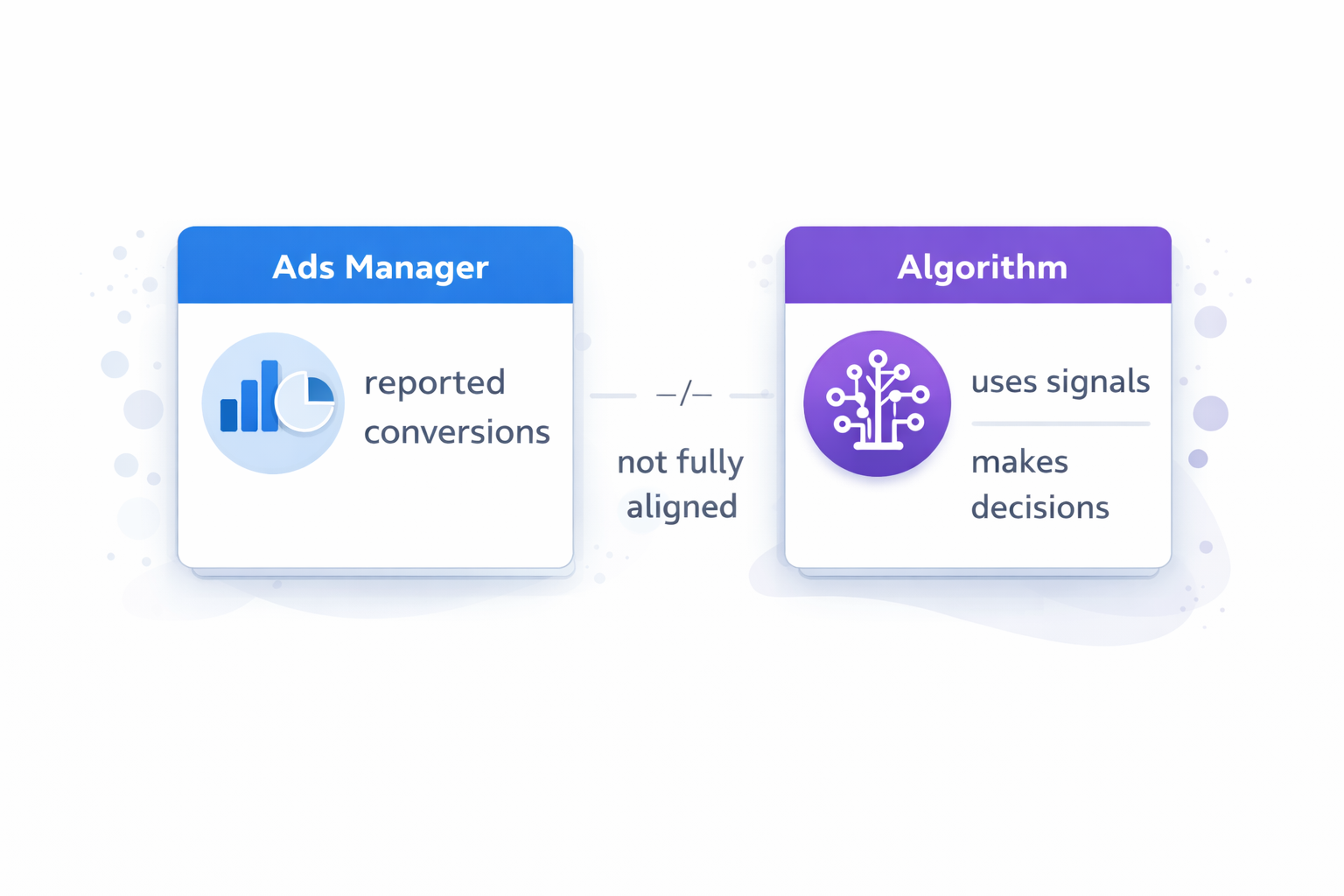
There are two separate problems, and they behave differently.
-
Attribution loss — what you see
Conversions drop in Ads Manager. ROAS looks worse. Platform data no longer matches backend systems.
To understand how attribution actually works now, read Facebook Attribution Window Explained: How It Impacts Your Results. -
Optimization loss — what the system uses
The algorithm receives fewer confirmed conversions. Event matching weakens. Bid decisions become less accurate.
This directly impacts CPA and lead quality. -
How to tell the difference
If CRM performance is stable but platform numbers drop, it’s mostly attribution.
If lead quality drops and CPA rises, optimization is affected.
If performance becomes volatile without changes, signal quality is unstable.
Most accounts experience both at once.
How Platforms Compensate for Missing Data
Ad platforms adapted quickly, but the fixes come with tradeoffs.
Modeled conversions replace part of the missing data. This makes reporting less stable. Conversions may appear later, and numbers can shift after the fact.
This is why platform data often diverges from real outcomes. A deeper breakdown is covered in Why Facebook Ads Manager Data Never Matches Shopify or GA4.
Event tracking also changed. Platforms now prioritize fewer events, which reduces flexibility and forces tradeoffs between optimization goals.
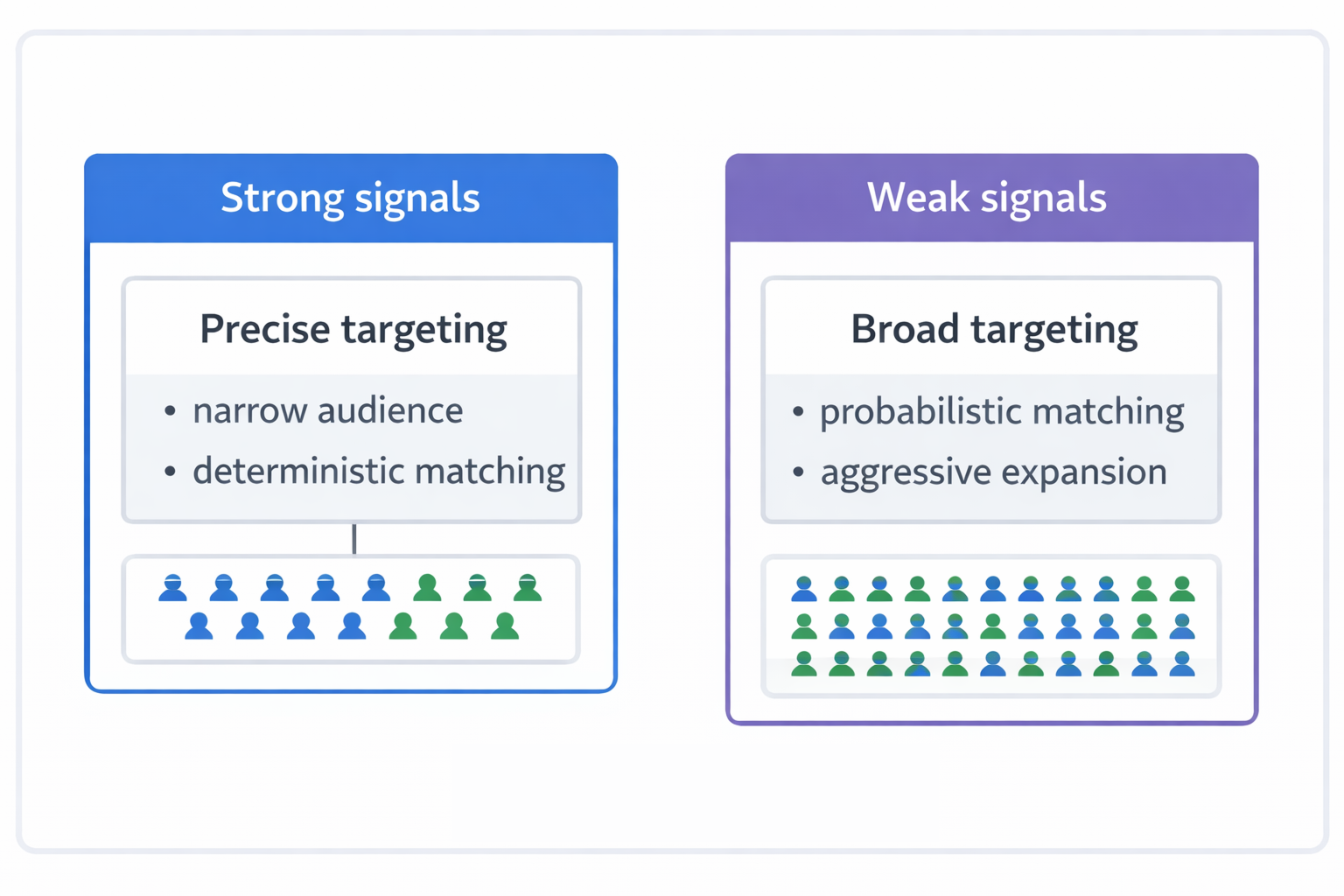
Targeting behavior shifted as well. With weaker signals, platforms rely more on probabilities. Audience expansion becomes more aggressive, and interest targeting becomes less precise.
This connects to broader changes explained in Facebook Ads Targeting Updates: How To Adapt in 2026 and Beyond.
Why Creative and Offer Now Drive More Performance
When tracking weakens, the algorithm focuses on what happens immediately after the click.
It evaluates engagement, interaction depth, and conversion speed instead of relying heavily on past user behavior.
This creates three dependencies:
-
Message clarity
Ads must clearly signal who they are for. Vague messaging creates mixed signals and weakens optimization. -
Offer specificity
Strong offers filter users. Lower volume, but better intent and cleaner data. -
Conversion speed
Faster conversions improve learning. Delays reduce signal quality and slow optimization.
This shift toward real-time signals aligns with privacy-first strategies described in How to Build Privacy-Safe Facebook Audiences Without Cookies.
Structural Adjustments That Actually Work
Improving tracking alone won’t fix performance.
You need to improve the signals going into the system.
Start with conversion events. Focus on actions that reflect real intent, such as qualified leads or booked calls. Avoid optimizing for weak signals like page views.
Speed matters just as much. The shorter the time between click and conversion, the stronger the signal.
Campaign structure also matters. Fragmentation reduces signal density. Consolidating campaigns helps the algorithm stabilize faster.
Finally, align CRM outcomes with platform data. If the system cannot distinguish good leads from bad ones, it will optimize for volume instead of quality.
Common Mistakes After Cookie Restrictions
These mistakes make performance worse:
-
Relying only on platform ROAS
Modeled data reduces accuracy. Without CRM validation, decisions become unreliable. -
Expanding targeting too quickly
Broad targeting without strong signals lowers lead quality and increases CPA. -
Chasing volume
The system finds easier conversions, which are often low intent. Volume increases, but results worsen downstream.
These patterns are often mistaken for scaling success when they are actually signal degradation.
A More Accurate Way to Think About Performance Now
Cookie restrictions didn’t remove performance — they changed how it works.
Campaigns now run on partial data. Decisions are based on probabilities, not complete tracking.
This shifts your role.
You are no longer just managing campaigns — you are shaping the quality of the signals the system relies on.
Practical Takeaway
If performance dropped, don’t treat it as a tracking issue alone.
Focus on:
-
Strong conversion events.
-
Fast feedback loops.
-
Clear messaging.
-
Consolidated campaign structure.
When signal quality improves, performance stabilizes — even with limited tracking.