Long buying cycles stretch across weeks or months. Prospects revisit decisions only when timing, budget, or internal demands align. Short delivery bursts cannot support that extended evaluation path.
Balanced frequency keeps your message present across those shifts. Low frequency weakens recall during long gaps. High frequency exhausts attention and raises costs. These issues often mirror the problems described in How Frequency Capping Helps Beat Facebook Ad Fatigue, where even strong campaigns stall when impressions accumulate too quickly.
Why frequency behaves differently in long cycles
People gather information slowly across many touchpoints. They research, pause, review options, and return when new constraints appear. Your ads must align with that pattern.
Each impression builds familiarity rather than urgency. Steady repetition helps prospects carry your message across long breaks. This continuity supports memory during complex decisions and prevents the performance drops highlighted in The Hidden Costs of Poor Ad Frequency Management.
Building a frequency blueprint for Meta campaigns
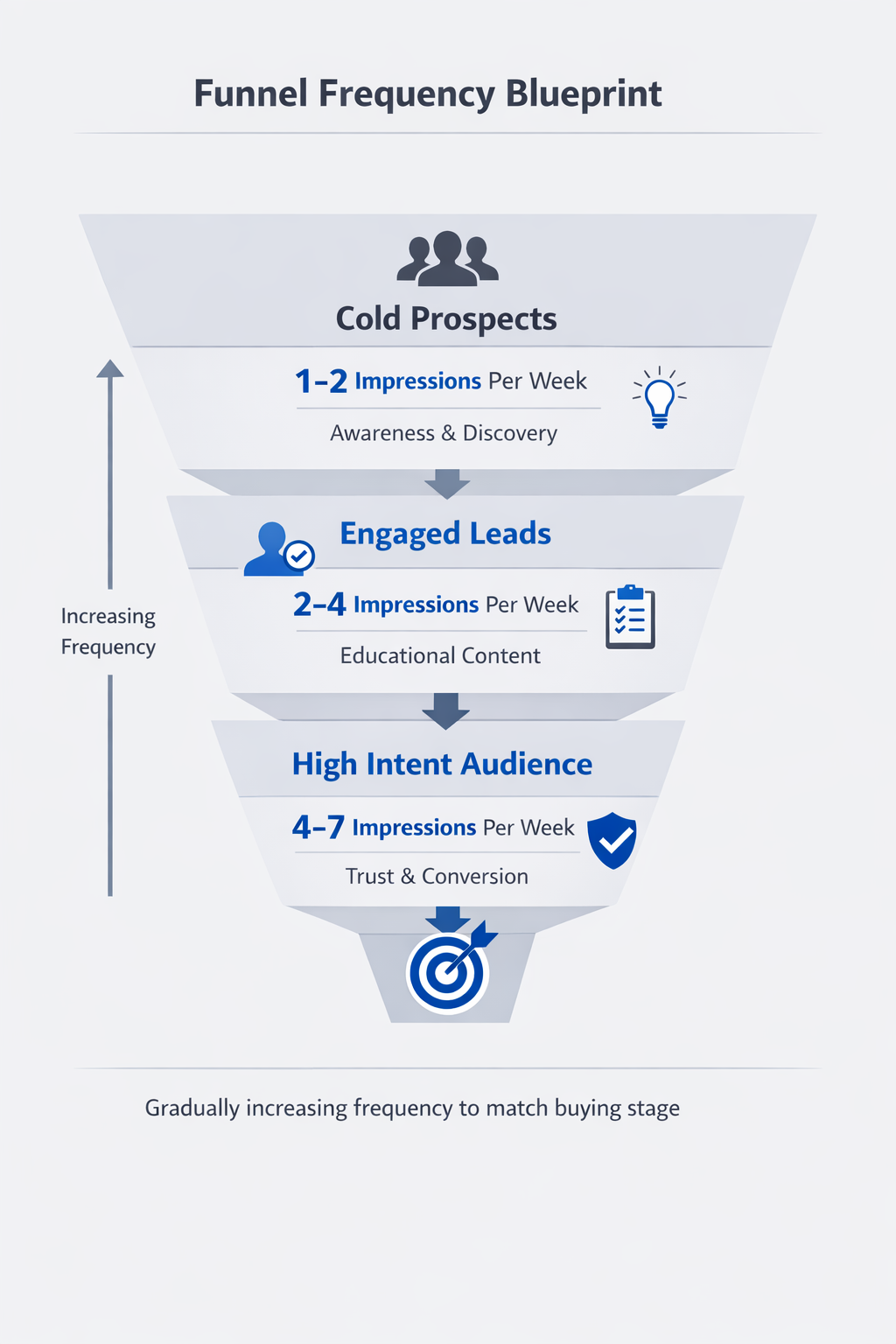
A frequency blueprint lets you control exposure with intent. Weekly frequency targets work well because people process messages across weeks. Structure, bidding, and creative sequencing deliver those targets with stability.
Map exposure to your buying cycle
Estimate the time from first touch to conversion. Many long cycles range from four to twenty four weeks. That span guides your total impression goals.
Use a simple planning approach:
-
Buying cycle length: calculate expected duration in weeks, because weekly planning aligns with recall.
-
Total impression target: select a realistic number of impressions that support memory across that window.
-
Weekly frequency target: divide total impressions by weeks to find sustainable weekly repetition.
-
Stage adjustments: raise or lower weekly repetition based on audience intent and engagement signals.
Revisit this framework as performance data refines your assumptions. The concepts mirror the sequencing principles found in The Best Retargeting Sequence for Long Sales Cycles, which also relies on phase-specific repetition.
Plan frequency by audience depth
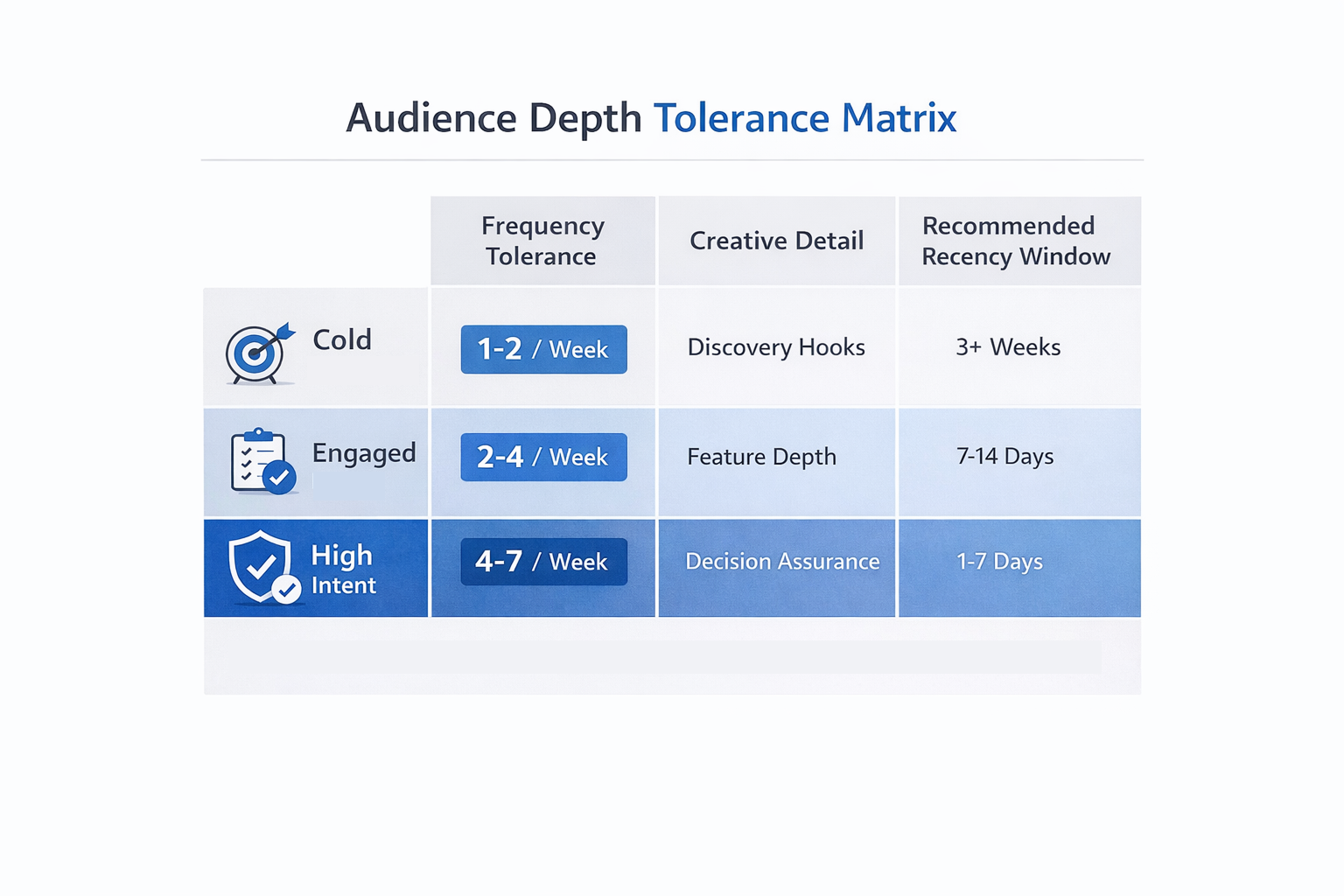
Audience depth signals how many impressions users can process without fatigue. Early stage users need lighter contact. High intent users benefit from focused repetition.
Cold prospecting audiences
Cold users need relevance, not pressure. A weekly frequency of one to two impressions works well. Creative variation provides freshness without heavy repetition.
Reliable actions include:
-
Format rotation: vary visuals and hooks to support discovery across wide audiences.
-
Audience expansion: broaden segments to reduce repeated impressions within small pools.
-
Reach tracking: confirm that new users enter the segment each week for stable performance.
These early-stage steps align with warm-up tactics used in The Warm-Up Campaign: Prepping Cold Audiences for Better ROAS.
Engaged audiences
Engaged users want clarity and proof. A weekly frequency of two to four impressions fits that need. These impressions should help them compare solutions with confidence.
Useful enhancements include:
-
Case detail: highlight outcomes and examples that address typical evaluation concerns.
-
Feature depth: present focused explanations connected to earlier interactions or viewed pages.
-
Objection support: deliver messages that answer known questions within similar evaluations.
High intent and remarketing audiences
High intent users evaluate final details. A weekly frequency of four to seven impressions offers strong support. These impressions help prospects confirm value and reduce risk.
Effective steps include:
-
Short recency windows: target users who acted recently to avoid stale segments.
-
Sequential messaging: address final doubts with concise, targeted messages across repeated touchpoints.
-
Decision exit rules: pause ads once users exceed defined recency thresholds to limit saturation.
Existing customers and renewals
Renewal paths follow their own timing. A weekly frequency of one to three impressions avoids unnecessary repetition outside renewal periods. Increase exposure only near decision points.
Helpful practices include:
-
Renewal timing: raise frequency before expected renewal discussions to reinforce value.
-
Feature updates: highlight improvements connected to recent product use or success events.
-
Expansion cues: send targeted impressions when usage patterns signal relevant upgrade needs.
Detecting overexposure and underexposure
Frequency numbers need context. Behavior and performance reveal whether exposure supports or harms decisions. Long cycles produce clear patterns when frequency drifts.
Signs of underexposure
Underexposure appears when users forget your offer between research sessions. Look for:
-
Flat assisted conversions: conversions remain low even as weekly reach grows across prospecting.
-
Weak branded search: branded queries stay limited despite consistent spending and impressions.
-
Small remarketing pools: engaged segments remain small compared to total reach over many weeks.
-
Low awareness in sales: new leads enter conversations with limited recall of your value.
These signals indicate insufficient weekly repetition across long cycles.
Signs of overexposure
Overexposure appears when impressions cluster inside narrow audiences. Watch for:
-
Rising frequency with flat reach: impressions concentrate on the same users instead of broadening.
-
Declining click rates: engagement drops as repeated messages lose strength during delivery.
-
Higher costs: cost per result rises inside remarketing or high intent groups over time.
-
Repetition reports: internal teams or customers mention seeing the same ads many times.
These signals call for reduced repetition or fresh creative.
Practical tools inside Meta Ads Manager
Meta provides several controls that shape frequency. Structure, rules, and pacing guide impression distribution across long cycles. These tools maintain the targets defined in your blueprint.
Structure campaigns to maintain control
Clear structure isolates frequency patterns by stage. Separate campaigns or ad sets prevent mixed signals. This helps you manage exposure with precision.
Useful structural splits include:
-
Prospecting groups: broad audiences for reach and early stage familiarity across large pools.
-
Engagement groups: visitors and viewers who want additional depth before evaluation.
-
High intent groups: cart events or pricing visits that require strong, focused messaging.
-
Customer groups: renewal segments aligned with lifecycle milestones.
This structure delivers predictable frequency ranges for each group.
Apply frequency controls and rules
Some Meta objectives support direct frequency caps. Others rely on automation rules. Both approaches help preserve healthy repetition.
Effective controls include:
-
Awareness caps: reach campaigns allow defined impression limits that stabilize repetition.
-
Automation rules: rules pause ads when frequency and costs rise together in narrow segments.
-
Creative triggers: rules rotate ads when impressions reach defined thresholds within an ad set.
These controls limit saturation without disrupting delivery.
Refresh creative instead of increasing repetition
Creative fatigue worsens when users see identical messages repeatedly. Fresh creative extends the value of each impression. Sequenced messaging supports deeper evaluation across long cycles.
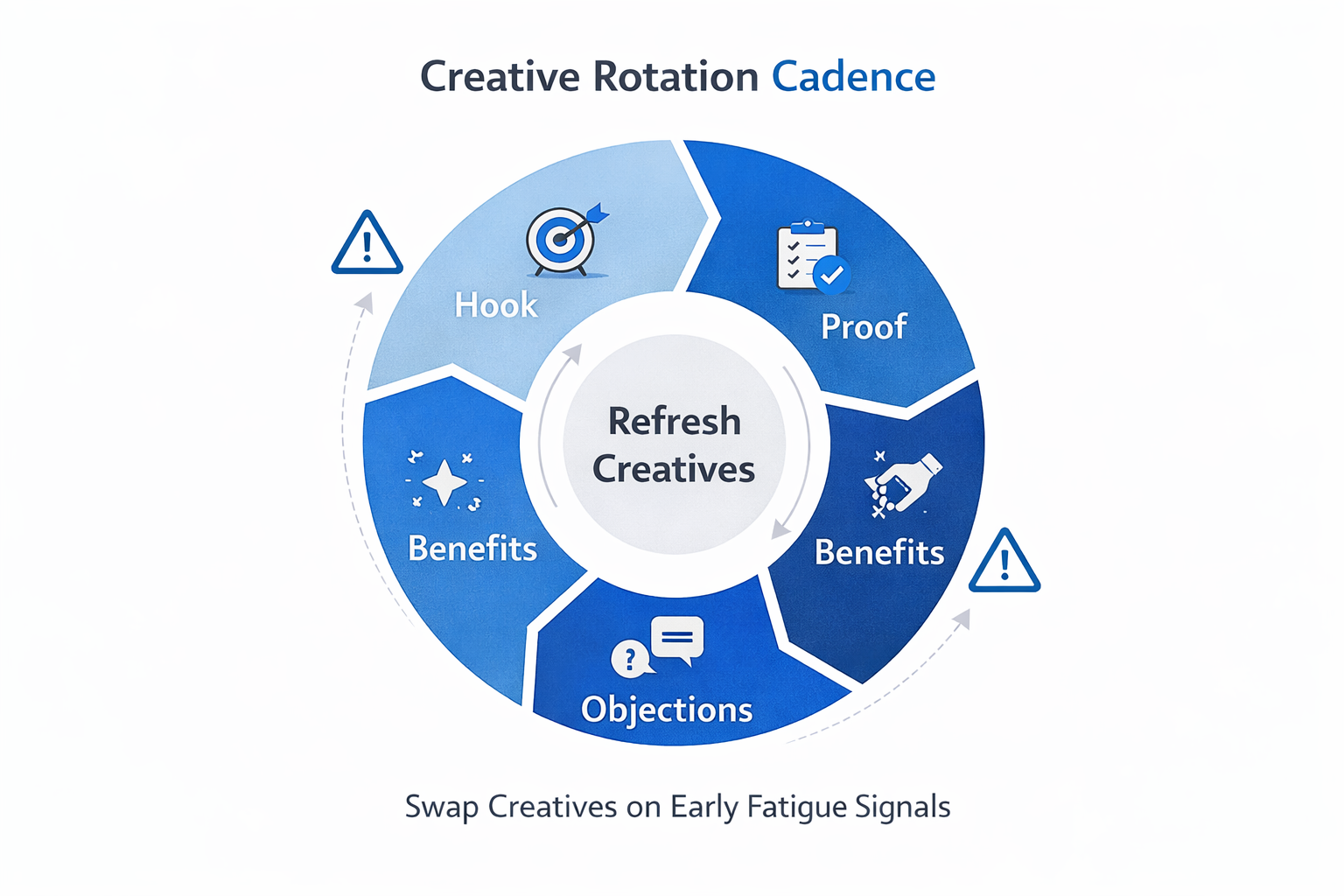
Reliable creative practices include:
-
Modular builds: swap headlines or visuals without rebuilding entire ads for each variation.
-
Format diversity: mix static, carousel, and video to maintain attention across repeated touches.
-
Objection themes: use variations that address known concerns within similar buyer profiles.
Pace budgets to match the decision window
Budget pacing influences weekly frequency more than many advertisers expect. Heavy spikes create short periods of excessive repetition. Steady pacing preserves recall and reduces waste.
Effective pacing includes:
-
Even weekly spend: maintain consistent delivery that aligns with evaluation timing.
-
Intent alignment: raise spend before known planning cycles that drive higher interest.
-
Low intent reductions: reduce exposure during off seasons to protect budget while keeping presence.
Stable pacing supports predictable weekly frequency.
Awareness and reach campaigns
Awareness and reach campaigns maintain broad, low frequency coverage. They help anchor your message across large markets during long cycles.
Useful scenarios include:
-
Broad coverage: ensure all relevant users receive light, steady impressions each week.
-
Frequency protection: limit repetition while pursuing maximum unique reach.
-
Layered strategy: support performance campaigns with a controlled awareness base.
Auction campaigns and automated rules
Auction campaigns require indirect controls. Without strict caps, impressions concentrate on responsive users. Automation and audience management prevent unwanted clustering.
Effective methods include:
-
Audience expansion: broaden segments when frequency rises faster than expected.
-
Recency splits: divide high intent users into short windows for precise control.
-
Rotation schedules: refresh creative once impression counts reach defined limits.
Measuring and refining frequency over time
Long cycles demand ongoing refinement. External shifts change behavior across the journey. Weekly reviews and controlled tests keep your plan aligned with real user responses.
Run a weekly frequency review
A weekly review highlights movement early. Focus on trend direction rather than isolated numbers. Adjustments stay small but meaningful.
Review items include:
-
Weekly frequency: confirm repetition aligns with defined targets for each audience.
-
Reach stability: ensure new users enter each segment at a consistent rate.
-
Cost patterns: track cost per result alongside frequency changes across segments.
-
Fatigue signs: identify early drops in engagement that signal message fatigue.
Test frequency changes with controlled experiments
Small tests reveal how repetition influences conversion behavior. Keep tests simple and isolate frequency variables.
Useful experiments include:
-
Recency comparisons: evaluate two recency windows to find healthier repetition patterns.
-
Rule thresholds: test different pause points when frequency and costs rise together.
-
Awareness caps: compare capped and uncapped reach campaigns to evaluate recall benefits.
These experiments refine your blueprint with evidence.
Key takeaways for long buying cycles
Long buying cycles demand intentional frequency planning. Cold audiences benefit from light, steady exposure. High intent users respond well to structured repetition with evolving messages.
Weekly reviews and controlled tests maintain alignment between frequency and actual behavior. When you design frequency as part of the journey, Meta campaigns support decisions across the full cycle.