Zero-party data is reshaping how brands build personalized advertising. It gives companies information that people share directly, not information gathered in the background. This makes campaigns clearer, more accurate, and easier to improve.
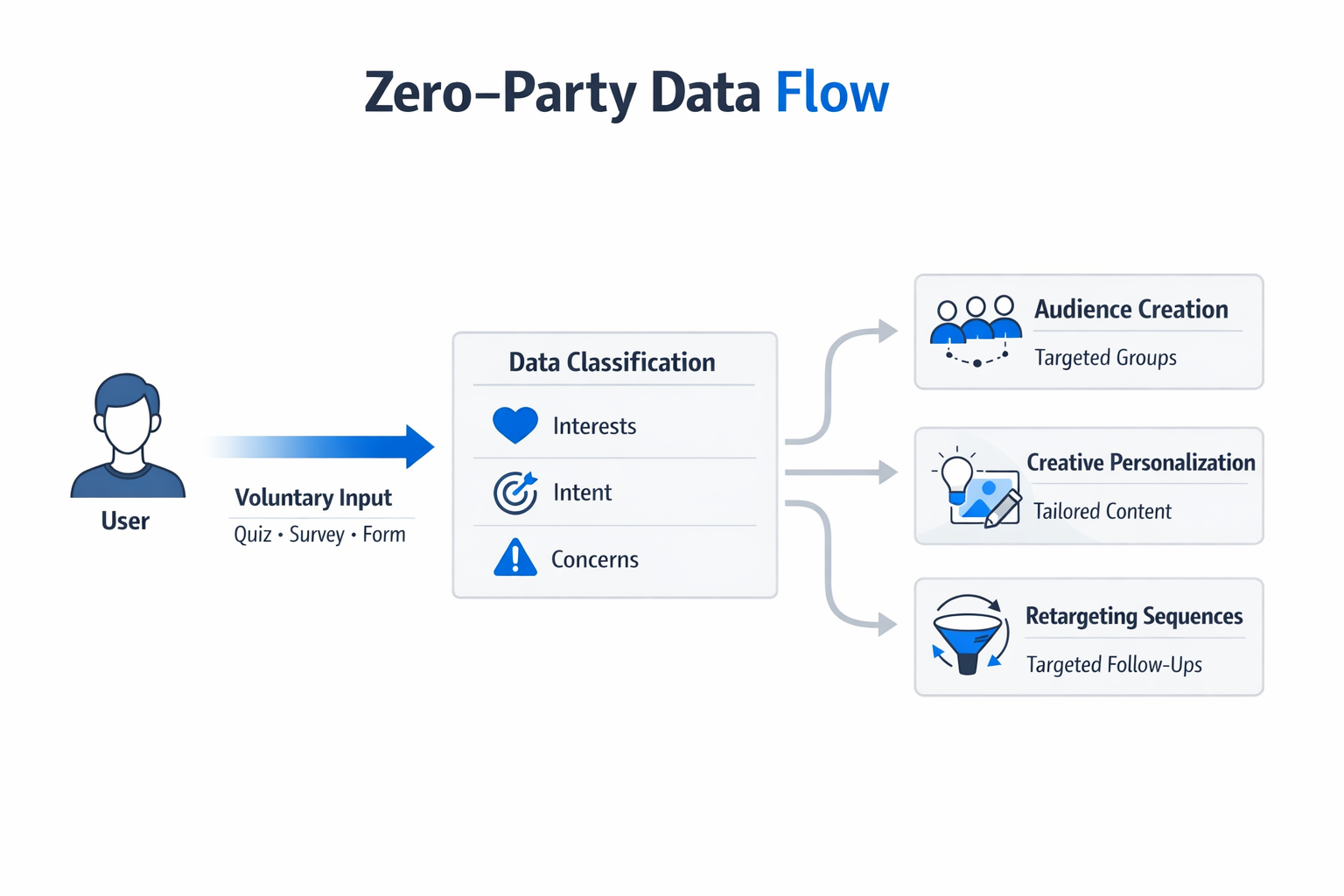
Zero-party data comes from quizzes, surveys, forms, and other tools where users choose to share details. These inputs reveal what people want, what they prefer, and what motivates them.
Why zero-party data matters for modern advertising
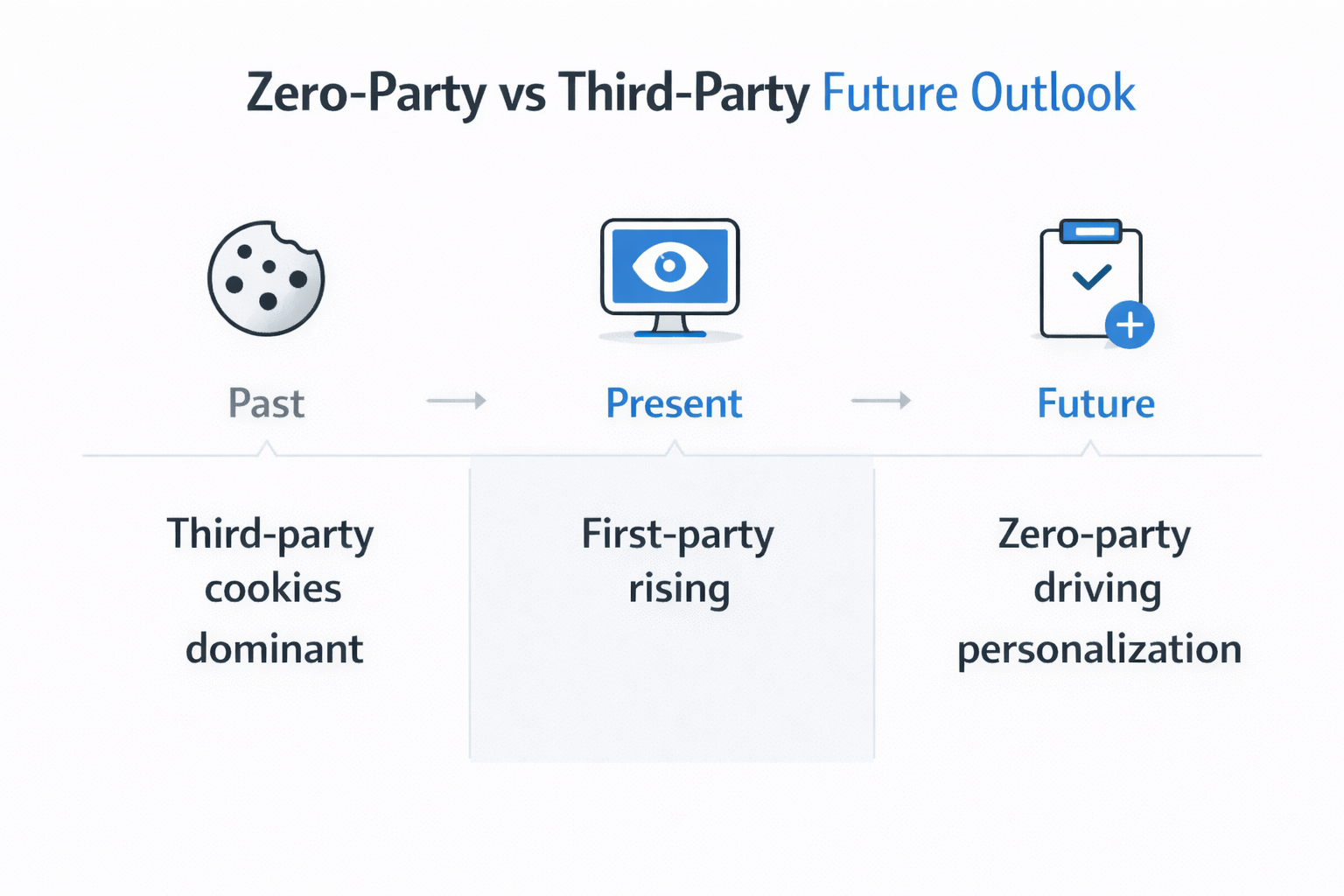
Advertising has become harder to personalize as tracking rules tighten. Zero-party data helps fill those gaps because users provide it willingly. It stays reliable across platforms, devices, and browsers. It also supports a privacy-safe approach that aligns with the shift toward first-party data. For a deeper look at this shift, see The Role of First-Party Data in Modern Advertising.
When people share their goals or concerns, advertisers understand them better. This improves targeting, creative planning, and follow-up messages across the customer journey.
Key benefits for advertisers
Zero-party data supports stronger decisions and removes guesswork.
| Category | Behavioral | First-Party | Zero-Party |
|---|---|---|---|
| Depth | 1/4 | 2/4 | 4/4 |
| Reliability | 1/4 | 3/4 | 4/4 |
| Privacy-Safety | 1/4 | 3/4 | 4/4 |
-
Higher match quality: Users explain their needs and preferences.
-
Better creative choices: Inputs guide messaging and visual direction.
-
Lower wasted spend: Targeting becomes more precise.
-
Stronger trust: Users understand how their data is used.
These benefits help advertisers keep campaigns aligned with real customer interests.
How advertisers collect zero-party data
Zero-party data works when the value to the user is clear. Simple interactions — such as a quiz or a short form — encourage people to participate. The goal is to gather insights without slowing them down.
When tools feel helpful instead of intrusive, users share more accurate information.
Common collection formats
These methods collect practical inputs while keeping the experience easy.
-
Preference quizzes: People choose what they like or need.
-
On-site widgets: Visitors pick product features or service options.
-
Lead forms with custom fields: Inputs guide follow-up communication.
-
Post-purchase surveys: Buyers explain what influenced their choice.
These formats give advertisers signals they can use right away.
What strong data inputs include
Good inputs reveal how users think and what motivates them, not just who they are.
-
Interests that guide targeting.
-
Intent signals that match buying stages.
-
Concerns that slow decisions.
-
Desired outcomes that shape offers.
These insights turn broad groups into clear segments.
Using zero-party data in advertising strategies
Zero-party data strengthens every stage of an advertising system. It improves first-touch experiences and makes follow-up messages more relevant. It also stays reliable when other tracking tools deliver weaker signals.
Many advertisers now combine zero-party and first-party signals to replace data that disappears as third-party cookies fade out. To see how this transition works, explore How to Build Audiences Without Third-Party Cookies.
Attracting new audiences with zero-party data
Attracting new users becomes easier when advertisers understand what motivates their best customers. Zero-party data reveals patterns that help shape audience targeting and early-stage creative.
This leads to stronger, more meaningful first impressions.
Helpful applications for reaching new audiences
-
Audiences built from quiz or form results.
-
Messaging shaped by user-stated priorities.
-
Offers matched to shared goals or needs.
These applications help brands connect with new users in a natural way.
Retargeting with zero-party data
Retargeting becomes more effective when follow-up ads respond to what users shared earlier. Instead of broad reminders, advertisers can speak to specific needs or concerns. This builds trust and reduces friction.
Zero-party data also gives advertisers more control over timing and sequencing.
Useful retargeting applications
-
Segments built around preferred features or services.
-
Ads matched to stated goals from quizzes or forms.
-
Messages that address concerns revealed in surveys.
These uses create retargeting flows that feel personal instead of generic.
Designing creative from zero-party insights
Creative decisions often involve guesswork when user motivations are unclear. Zero-party data removes that uncertainty. It gives teams direction for headlines, visuals, and offers.
When ads reflect user input, engagement improves and testing becomes more efficient.
| User Input Type | Headline Direction | Visual Direction | Offer Type |
|---|---|---|---|
| User Motivation | Goal-focused headlines (“Achieve results faster,” “Feel confident sooner”). | Imagery that shows progress or outcomes. | Offers that support momentum (quick-start, fast-track, upgrade). |
| User Preference | Preference-focused headlines (“Pick your style,” “Made for your taste”). | Visuals highlighting chosen features or formats. | Offers tailored to preferences (custom package, add-ons, personalized plan). |
What to adjust in creative
-
Headlines shaped around user priorities.
-
Visuals aligned with preferred styles or attributes.
-
Offers built around user motivations.
-
CTAs tied to the outcomes users want.
These adjustments make creative feel more relevant and easier to act on.
Creative formats that work well
-
Templates that switch smoothly between segments.
-
Short videos based on stated interests.
-
Carousels that highlight user-selected features.
These formats support personalization at scale.
Building a strong zero-party data system
A successful zero-party setup needs structure. Data must be tagged, stored, and updated in a way that keeps it usable. When systems stay organized, advertisers can activate insights quickly.
A simple, transparent process also encourages users to share more over time.
Essential components of a strong system
-
Tagging rules that keep data organized.
-
Automatic syncing with CRM or messaging tools.
-
Regular updates to active segments.
-
Clear explanations for why information is collected.
These components help maintain accuracy and trust.
Common mistakes to avoid
Advertisers often collect data but fail to apply it correctly.
-
Gathering data without a clear purpose.
-
Asking too many questions upfront.
-
Targeting with outdated information.
-
Ignoring feedback that challenges earlier assumptions.
Avoiding these issues keeps campaigns effective.
When zero-party data delivers the most value
Zero-party data helps most when users face many options or need help deciding. In these moments, they willingly share details that improve their experience.
It also helps with products and services that require more thought. Detailed inputs allow advertisers to shape messages step by step.
High-impact use cases
-
Products with several variations or features.
-
Services tied to personal goals or needs.
-
Offers that require deeper comparison.
-
Brands that depend on trust and clarity.
These situations produce strong signals that improve advertising performance quickly.
Final guidance for advertisers
Zero-party data gives advertisers a direct view of what people want. It strengthens targeting, creative choices, and retargeting flows without relying on background tracking.
As you build your system, remember that clean, meaningful inputs matter more than audience size. For more detail, review Why Audience Quality Matters More Than Size for Facebook Ads.
Brands that use zero-party data consistently build advertising that feels helpful, clear, and trustworthy.