Many advertisers treat all Meta campaigns the same. They expect every ad to generate leads right away. That approach usually leads to unstable results and rising costs.
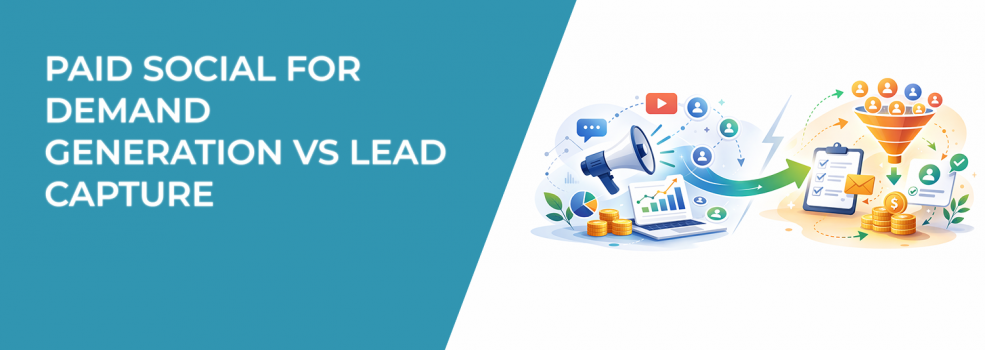
Paid social has two different jobs. One builds demand before people are ready to act. The other captures demand when people are ready to convert. When you separate them, performance becomes easier to manage.
What Demand Generation Means in Paid Social
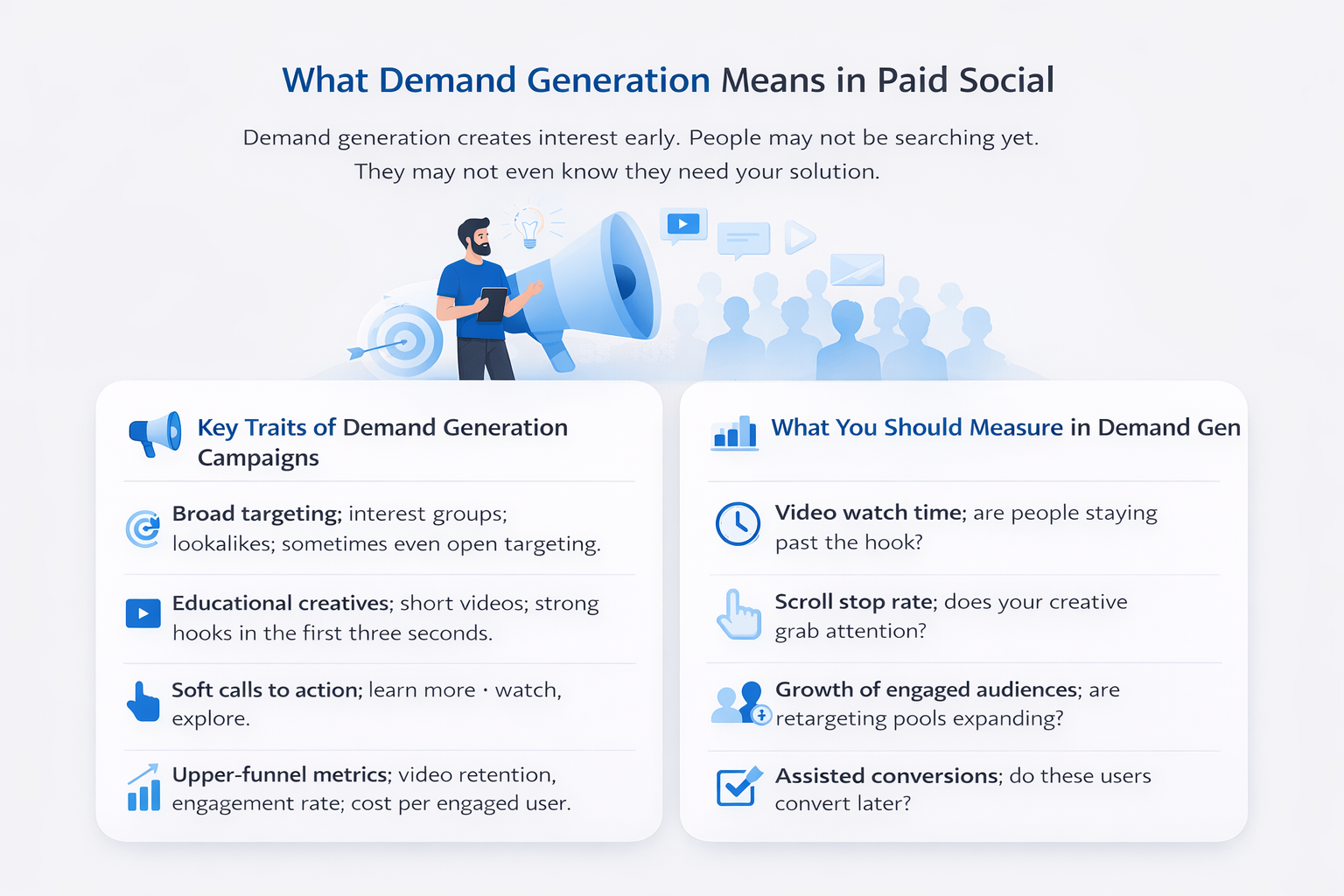
Demand generation creates interest early. People may not be searching yet. They may not even know they need your solution.
Your goal is to introduce a problem and position your brand as relevant. You are not pushing hard for a form fill. You are building awareness and trust.
On Meta, this often uses Video Views, Engagement, or broad Conversion campaigns. If you are unsure which objective fits each stage, review the best campaign objectives for each stage of the buyer journey . The focus is reach and attention, not immediate leads.
Key Traits of Demand Generation Campaigns
-
Broad targeting; interest groups; lookalikes; sometimes even open targeting.
-
Educational creatives; short videos; strong hooks in the first three seconds.
-
Soft calls to action; learn more; watch; explore.
-
Upper-funnel metrics; video retention; engagement rate; cost per engaged user.
These campaigns fill your retargeting pools. They make future conversion campaigns stronger.
What You Should Measure in Demand Gen
Do not judge demand gen by cost per lead alone. That metric misses the point.
Instead, look at:
-
Video watch time; are people staying past the hook?
-
Scroll stop rate; does your creative grab attention?
-
Growth of engaged audiences; are retargeting pools expanding?
-
Assisted conversions; do these users convert later?
If these numbers improve, the campaign works. Even if leads do not appear instantly.
What Lead Capture Means in Paid Social
Lead capture focuses on people who are ready. They understand the problem. They want a solution.
Your job is simple. Remove friction. Make it easy to take action.
On Meta, this usually runs under Lead or Conversion objectives. The system optimizes for form submissions or completed events. If you are deciding between formats, read Lead Forms vs Landing Pages: Which Converts? to understand trade-offs.
Key Traits of Lead Capture Campaigns
-
High-intent audiences; website visitors; video viewers; past engagers.
-
Direct response creatives; clear offer; strong value statement.
-
Clear call to action; book a demo; download a guide; request a quote.
-
Bottom-funnel metrics; cost per lead; conversion rate; lead quality.
These campaigns depend on strong retargeting pools. Without enough warm users, costs rise quickly. A solid setup often includes a clear Facebook lead generation funnel from cold traffic to paying customers .
What You Should Measure in Lead Capture
Cost per lead matters. But it is not enough.
Also track:
-
Lead quality; feedback from your sales team.
-
Landing page conversion rate; check for friction before blaming ads.
-
Cost per booked call or opportunity; connect ads to revenue.
-
Frequency; rising frequency often means audience saturation.
These metrics show whether your campaign drives real pipeline, not just cheap forms.
Why Mixing Both Goals Causes Problems
Many advertisers combine cold and warm audiences in one campaign. They run one creative that educates and sells at the same time.
This creates confusion for the algorithm. It also confuses users.
Common issues include:
-
Mixed intent; cold users see hard offers and ignore them.
-
Blurred data; upper-funnel traffic inflates CPL.
-
Delivery instability; Meta struggles to optimize clearly.
If this sounds familiar, review why most Facebook lead generation campaigns fail and how to fix yours . Often the root cause is unclear funnel structure.
When performance drops, advertisers start changing targeting daily. That resets learning and makes results worse.
How to Structure Campaigns the Right Way
Clear structure makes Meta work better. It also makes reporting easier.
Step 1: Separate Objectives
Create one campaign for demand generation. Create another for lead capture.
Keep prospecting and retargeting separate. Do not mix them in the same ad set.
Step 2: Match Creative to Intent
Cold users need context. Warm users need proof and urgency.
For demand generation:
-
Start with a clear pain point.
-
Use short video; 15 to 30 seconds works well.
-
Keep the call to action light.
For lead capture:
-
Present a clear offer; demo; audit; checklist.
-
Add proof; testimonials; short case results.
-
Reduce friction; short forms; simple landing pages.
When creative matches intent, conversion rates improve naturally.
Step 3: Allocate Budget Based on Funnel Reality
Demand generation rarely shows instant ROI. It supports future conversions.
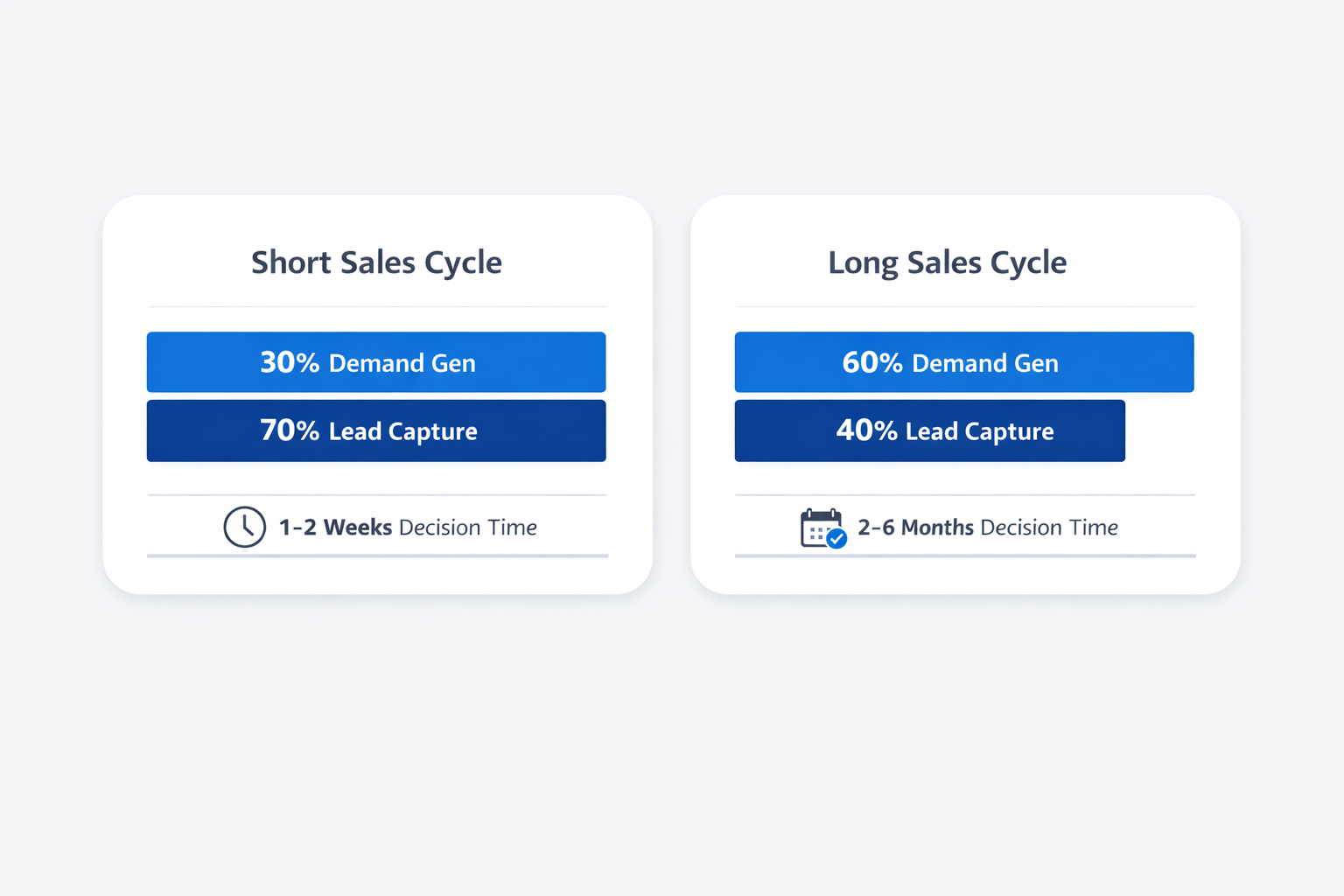
If your sales cycle is long, invest consistently in top-of-funnel. If it is short, you can lean more into capture. Always review assisted conversions before cutting awareness spend.
Advanced Insight: Signal Quality Drives Stability
Meta relies on event signals. Strong signals improve optimization. Weak signals increase volatility.
Demand generation helps here. It filters and warms users before they reach conversion campaigns.
When retargeting users already watched your videos or engaged with content, they convert at higher rates. That increases event density and stabilizes delivery.
If you skip demand gen, your retargeting pool shrinks. Lead capture campaigns then compete for a small group. CPM rises and frequency climbs fast.
When to Focus More on One
There is no fixed ratio. It depends on your situation.
Focus more on demand generation when:
-
You enter a new market.
-
Brand awareness is low.
-
Retargeting pools are small.
Focus more on lead capture when:
-
You already have strong traffic.
-
Retargeting audiences are large.
-
Sales teams close leads consistently.
Review performance monthly. Adjust gradually. Avoid reacting to short-term swings.
Final Thoughts
Demand generation builds future demand. Lead capture turns that demand into leads. They are different systems with different goals.
When you separate them, Meta receives clearer signals. Campaigns become more stable. Results become easier to predict and scale.