Running paid social ads isn’t what it used to be. Platforms have gotten smarter — and more automated. What used to work, like super-detailed targeting or tweaking bids every day, often slows things down now.
Social platforms learn best when you give them clear signals, solid creative, and enough room to figure things out. That means your focus should shift from micromanaging settings to building systems that make it easy for algorithms to find the right people and drive conversions.
Campaign structure makes or breaks performance
How your ads are set up directly affects how well the platform can learn and optimize. A messy structure leads to slow delivery, wasted spend, and unreliable results.
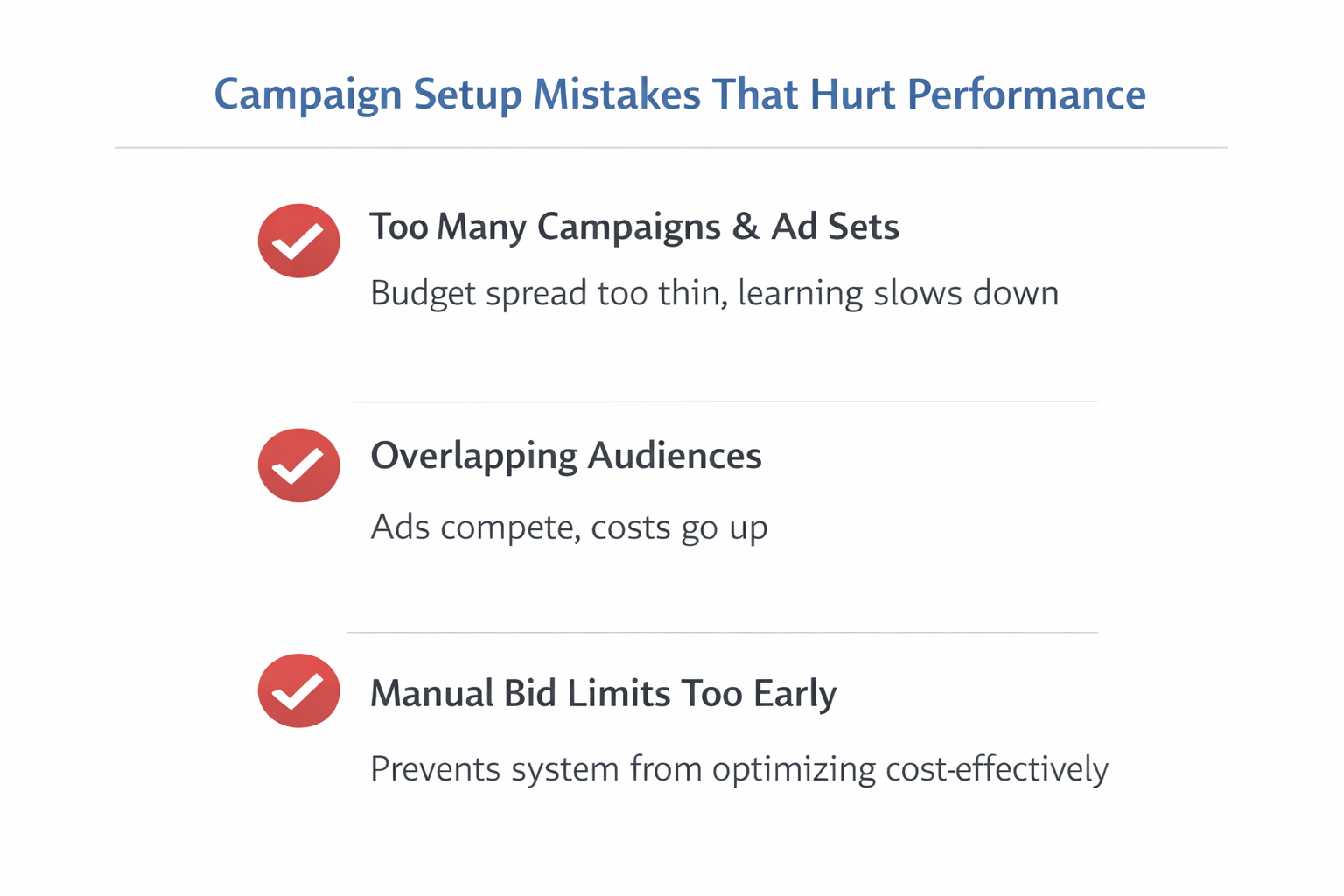
What to avoid:
-
Too many ad sets or campaigns — this spreads your budget thin and makes learning harder.
-
Overlapping audiences — your ads compete against each other, driving up costs.
-
Manual bid limits too early — this can block the system from finding lower-cost results.
What to do instead:
-
Keep your campaign structure simple and focused.
-
Group similar audiences together and let the platform explore who responds.
-
Give each ad set or campaign enough budget and time to learn before making changes.
Tip: Run a few well-structured campaigns, not dozens of fragmented ones. Simplicity helps you scale.
Don’t stop at the click — fix your funnel
Getting someone to click is only step one. If your landing page doesn’t match the ad, loads slowly, or makes it hard to convert, you're wasting money and confusing the algorithm.
Common problems:
-
Mismatch — the ad says “50% off,” but the landing page doesn’t mention it.
-
Slow page — especially on mobile, even a 2-second delay can hurt.
-
Missing tracking — if purchases or leads aren't tracked, the platform can't learn who converts.
Quick wins:
-
Make sure your page clearly delivers on your ad’s promise — headline, offer, and visuals.
-
Test your site on mobile and fix slow-loading images, scripts, or pop-ups.
-
Double-check that tracking is working for key events like purchases or sign-ups — both with browser-based and server-side tools.
For a deeper dive, read: Optimizing for post-click experience: what happens after.
Creative drives targeting now
Precise targeting tools are getting weaker. But your creative — what you say and show — has become the strongest way to attract the right people.
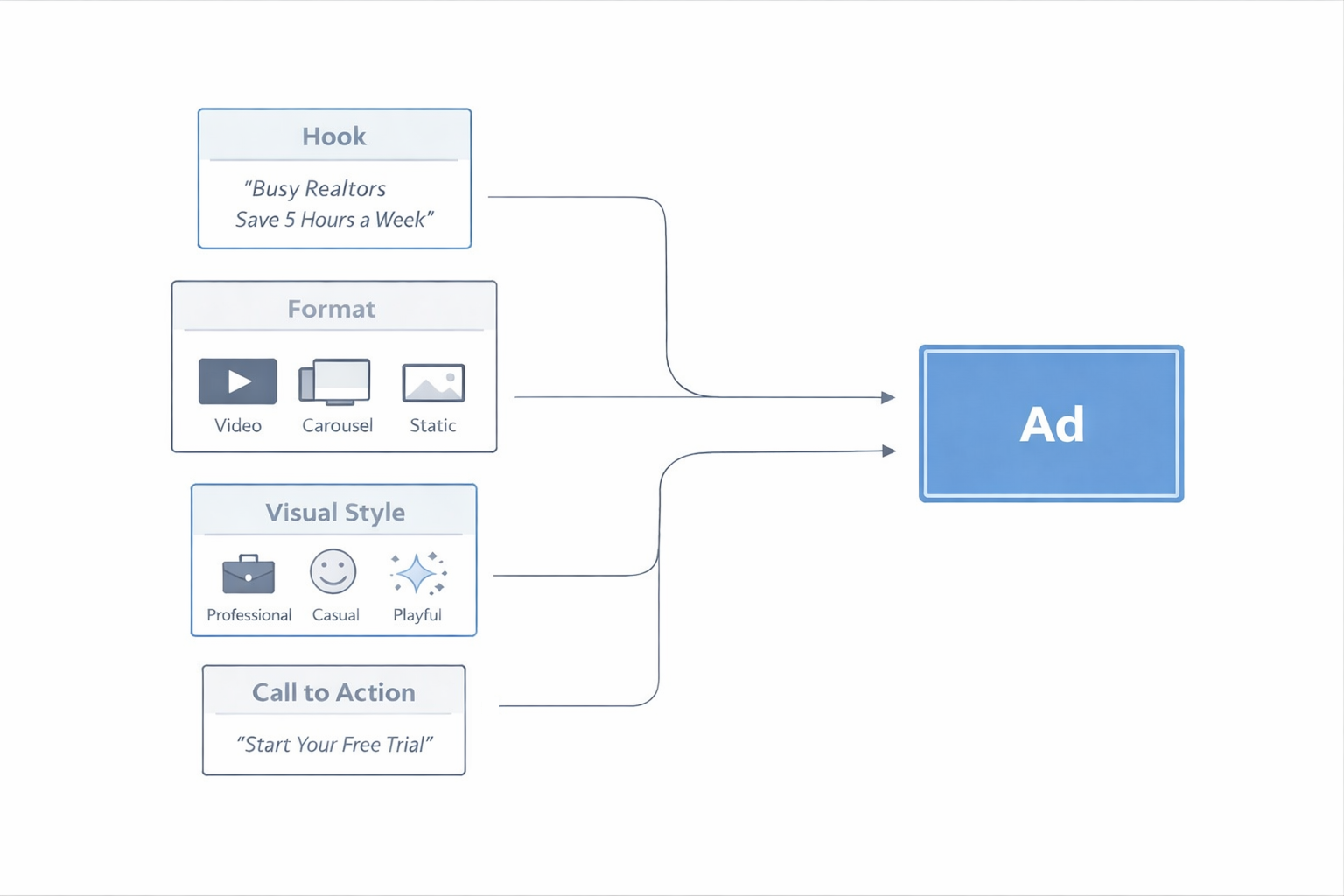
Instead of narrowing your audience, try this:
-
Write your ad to call out the user directly: “Busy realtors use this tool to save 5 hours a week.”
-
Use visuals and language that your target group will instantly relate to.
-
Test different angles to see which message grabs attention and converts best.
Tip: Let the algorithm go broad, and use the creative to filter for relevance.
Don’t just make more ads — make smarter ones
More creative isn’t always better. What works is building a system to test small changes and learn what consistently performs.
Break it down:
-
Hooks — the first 3 seconds: try questions, bold claims, or surprising stats.
-
Formats — experiment with short videos, carousels, or clean images.
-
Calls to action — soft asks like “Learn more” vs strong ones like “Start your free trial.”
Instead of launching 10 random ads, build a few using proven parts and test small variations.
Learn more in: Creative testing with limited budget: what’s worth prioritizing.
Feed the platform better signals
Every social platform depends on conversion data to learn who to show your ads to. If your tracking is off, performance drops — no matter how good your ad looks.
Make sure:
-
You’re optimizing for real results (not just clicks or views).
-
Your events fire properly — no duplicates, no missing data.
-
You’re passing actual value when possible (like order totals).
Tip: The better your signals, the better the algorithm can find people who convert.
Start with the highest-impact fixes
If your results are stuck, don’t start with new ad ideas or fancy tactics. Start with the foundations.
Focus on these five things first:
-
Check your tracking — no learning happens without it.
-
Clean up your structure — fewer, smarter campaigns beat many random ones.
-
Fix your landing pages — match the message, speed it up.
-
Test creative parts — learn what actually moves performance.
-
Go broader with targeting — and let your creative do the filtering.
These five steps solve most of the hidden issues holding your performance back. Nail the basics first — and scaling gets a whole lot easier.