Many advertisers make one big mistake: they treat every ad channel the same. But buyer intent — the mindset behind each click or scroll — changes drastically from platform to platform.
Someone browsing Instagram isn’t looking to buy. Someone searching on Google already knows what they want. When you understand these intent shifts, you can tailor your message and timing to match what buyers are really ready for.
The three levels of buyer intent
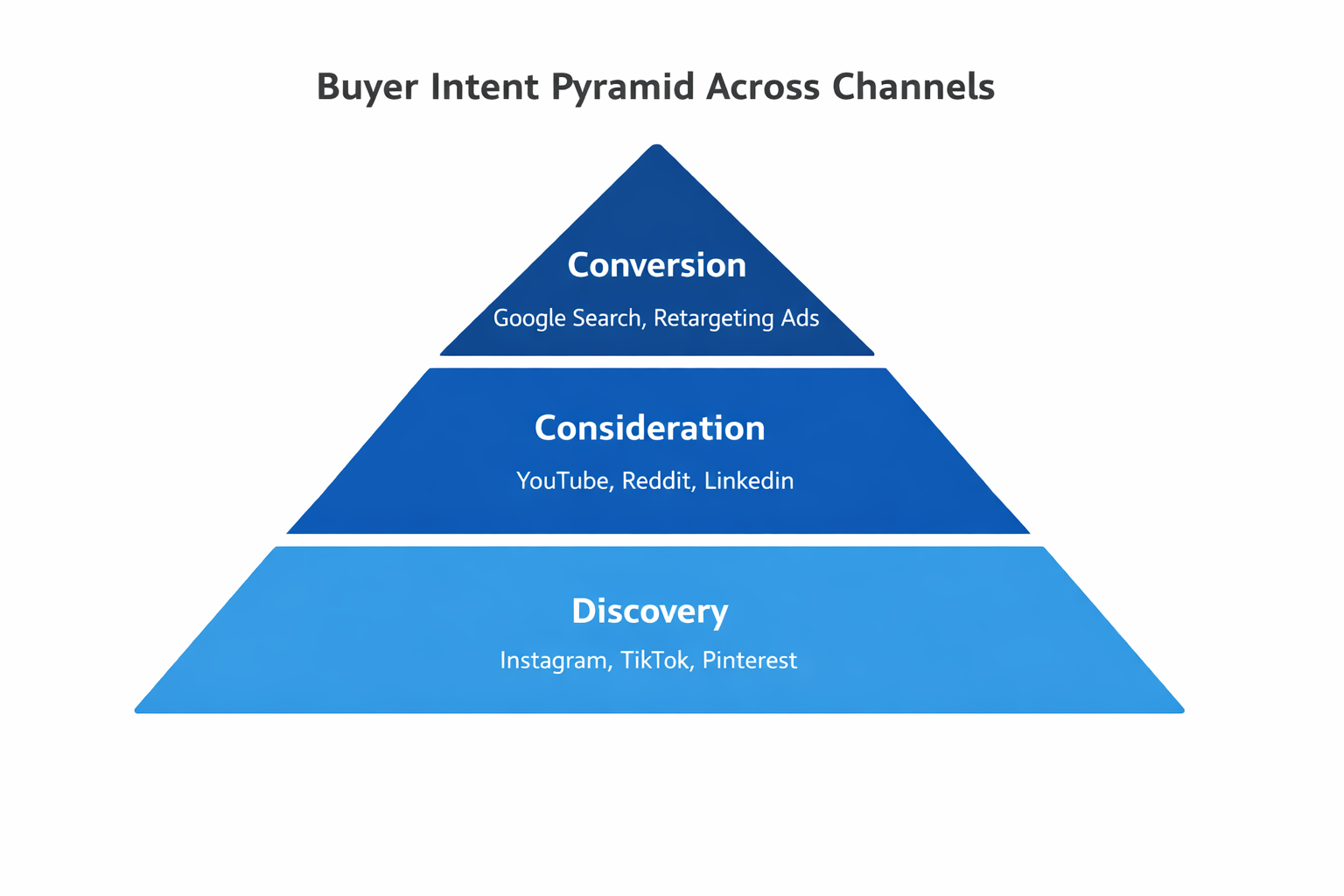
1. Low intent — Discovery
This is when users are simply exploring. Think Instagram Reels, TikTok, or Pinterest. People are looking for ideas, not solutions.
2. Mid intent — Consideration
Here, users are comparing options. They’re watching tutorials, reading reviews, or checking YouTube videos.
3. High intent — Conversion
These are your “ready to act” buyers — the ones searching Google or clicking on a retargeting ad.
When you mix these up — for example, pushing a hard-sell ad on Instagram — you lose engagement fast. Every stage needs a different ad type, creative, and landing experience.
To build a more effective funnel, start by learning how to map audiences to funnel stages and align your messaging with each level of intent.
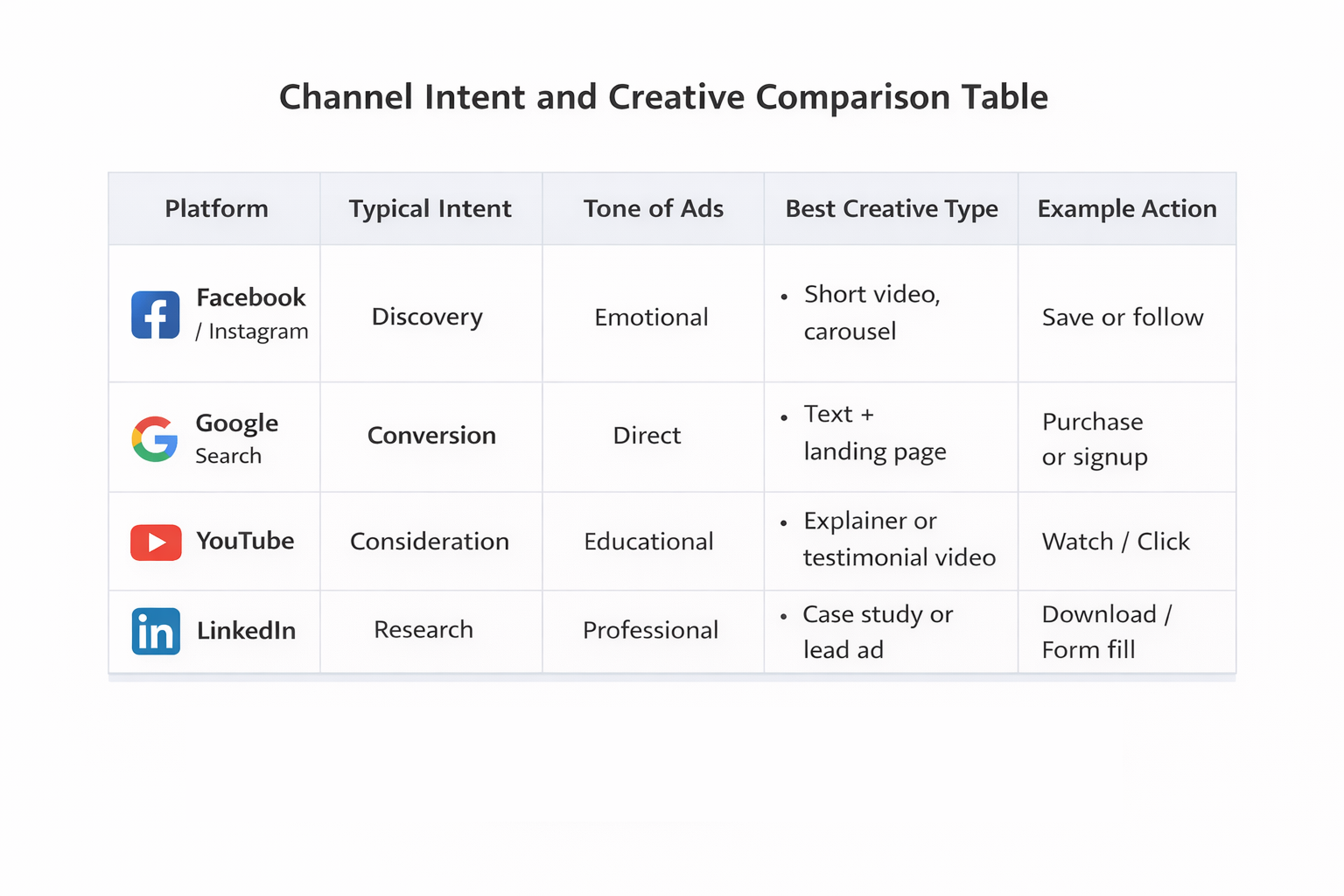
Facebook and Instagram: emotional discovery
People use Meta’s platforms to connect and explore, not to shop directly. That’s why emotional hooks work better here than direct offers.
What works:
-
Scroll-stopping visuals: contrast, motion, and close-ups that spark curiosity.
-
Relatable problems: “Your ad costs keep rising — here’s why.”
-
Light actions: saving, liking, or short video views that build soft engagement.
Success on Meta comes from sequencing, not one-off ads. Run awareness ads first, then retarget people who engage. This “intent ladder” builds interest gradually — a key principle explained in From awareness to conversion: full Facebook funnel strategy.
Google Search: active solution-seeking
Google captures the moment of urgent intent. When someone types “best retargeting software,” they’re signaling purchase readiness.
Best practices:
-
Match your ad copy directly to the search phrase.
-
Send users to pages that fit their query type — educational for “how to,” pricing for “buy now.”
-
Use qualifying terms like “for agencies” or “for small businesses” to filter out mismatched clicks.
Paid search isn’t about volume — it’s about precision and timing. For a deeper look at how search fits into the broader ad funnel, see Facebook Ads vs Google Ads: which delivers better leads?
YouTube: influence through education
YouTube is where intent grows. Users may not plan to buy, but they’re ready to learn — and that’s a huge opportunity.
Use your videos to teach, not pitch. Explain a common problem, show a quick solution, or demonstrate your product in action. Then, retarget viewers who watched at least half of your video — they’ve already shown interest.
To make YouTube campaigns feed your social and search performance, connect them using cross-platform remarketing. A great reference is The ultimate guide to cross-platform ad optimization.
LinkedIn: credibility and context
LinkedIn isn’t about flashy ads — it’s about trust. Professionals come here to learn from peers and benchmark their decisions.
Ads that work well here usually focus on clear business benefits: saving time, improving ROI, or outperforming competitors. For example:
-
“Cut your reporting time by 60%.”
-
“How 500 agencies improved campaign accuracy using automation.”
LinkedIn may convert slower, but its impact shows up later in Google searches and retargeting clicks — proof that top-of-funnel credibility builds bottom-of-funnel results.
Marketing strategies for each channel
Facebook & Instagram:
-
Test different emotional angles — aspiration, frustration, validation — instead of only demographics.
-
Use dynamic creative testing to quickly see which hooks perform best.
-
Retarget people who spent the most time on your ads or videos.
Want to refine your Facebook strategy even more? Check The psychology of Facebook ads: how to hook your target audience in seconds.
Google:
-
Group keywords by intent, not topic.
-
Adjust bids based on time and device — mobile searches at night often convert better.
-
Cut waste by excluding “free” or “template” keywords if you sell premium solutions.
YouTube:
-
Hook viewers in the first three seconds with curiosity or a question.
-
Make your ads understandable even with sound off.
-
Include clickable elements like end screens or cards that lead to a landing page.
LinkedIn:
-
Turn insights from your team into short, story-style posts that build authority.
-
Encourage employees to engage with or share campaign content.
-
Use conversational lead ads to qualify prospects before offering gated assets.
Each platform works best when it fits its native behavior. The goal isn’t to copy-paste creative — it’s to build momentum as buyers move from curiosity to decision.
Connecting intent across the full journey
A typical cross-channel path looks like this:
-
Instagram ad builds awareness.
-
User searches your brand on Google.
-
They watch your YouTube demo for validation.
-
A retargeting ad or email closes the deal.
Each touchpoint carries a different intent signal. Treating them equally can skew your results and waste spend. Learn to assign value to each step — especially assists — as covered in Why relying only on last-click attribution hurts ad strategy.
Key takeaway
Buyer intent isn’t static. It changes with context, timing, and attention. The same person can be passive on Instagram and decisive on Google within hours.
The brands that win are the ones that listen — adapting their creative, offer, and channel strategy to where the user actually is in the journey.
When your ads match real buyer intent, every click costs less, converts faster, and compounds your overall growth.