For marketers navigating search and social advertising, understanding how each channel performs is essential. This isn’t just about choosing the cheaper option or chasing the highest click-through rate. The goals, mechanics, and outcomes of PPC and paid social are fundamentally different — and so are the ways they should be measured.
Let’s break down the differences with a focus on performance, context, and practical outcomes.
How PPC and Paid Social Differ in User Intent
At the heart of the PPC vs paid social debate is one key distinction: user intent.
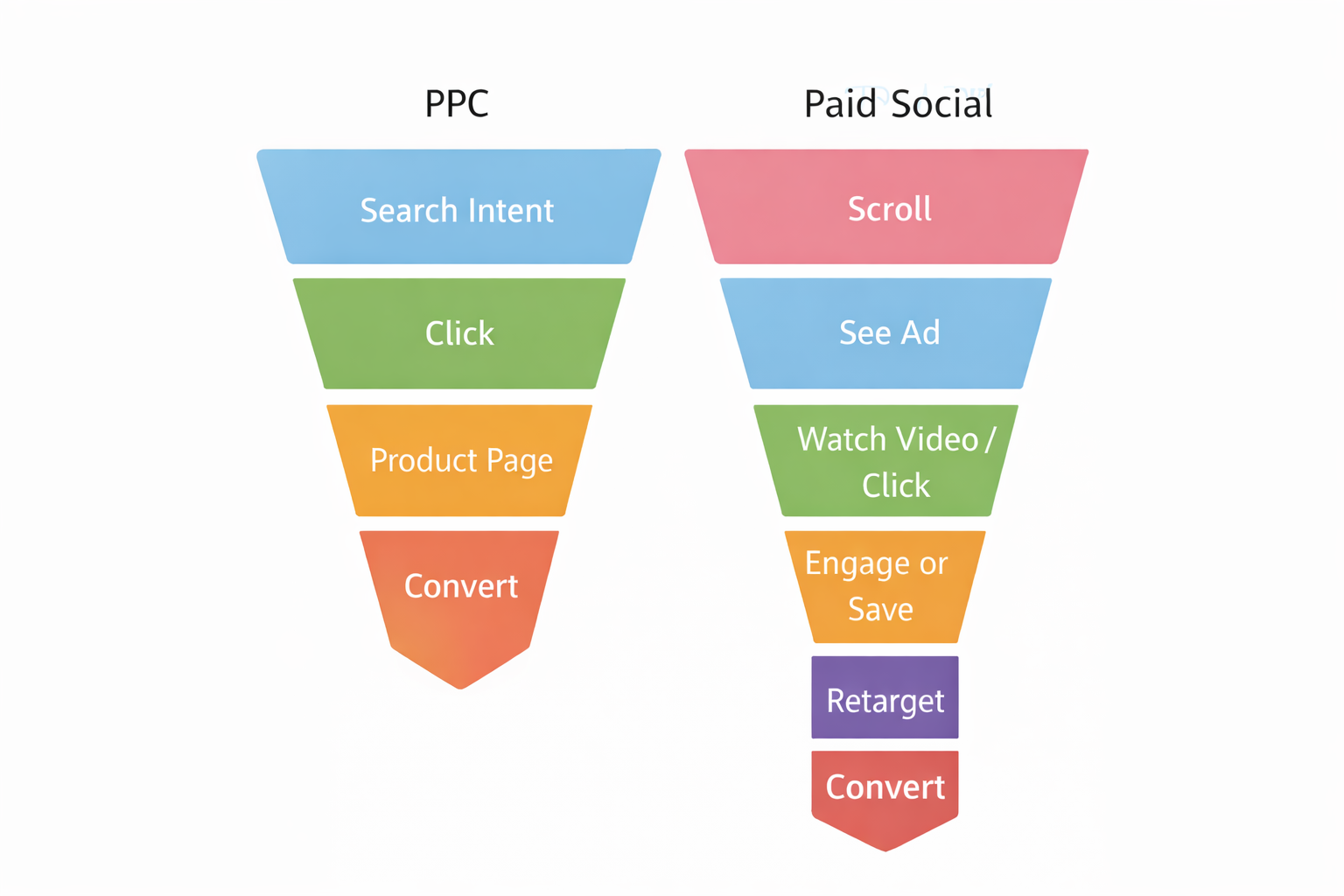
People who click on PPC ads are actively searching. They're looking for something specific — a product, a service, or a solution to a problem. This makes PPC a great tool for capturing demand that already exists.
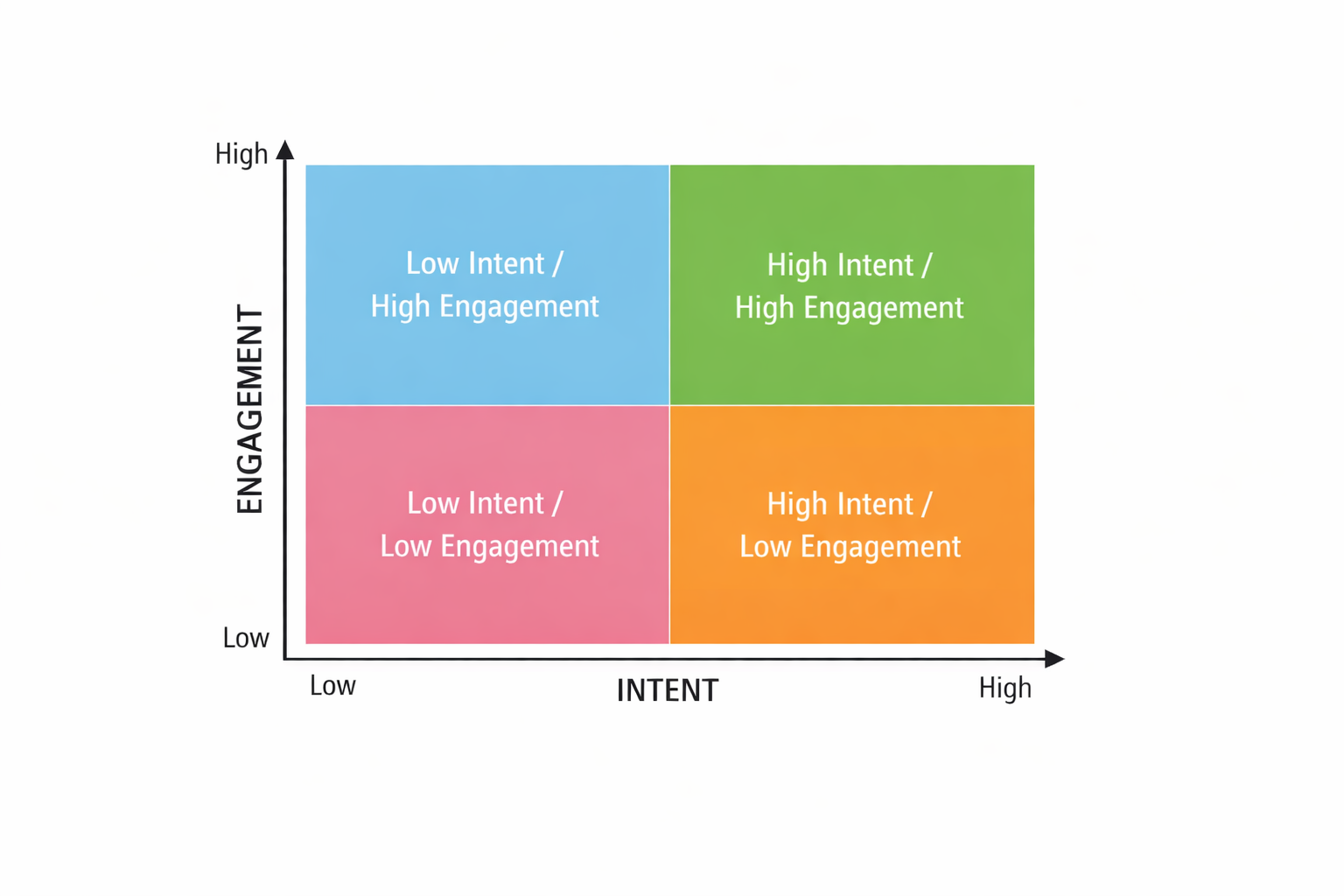
In contrast, social ads appear while people scroll through feeds. These users aren’t searching. They’re browsing, pausing, reacting. That doesn’t mean they won’t take action, but it does mean you’ll need to approach them differently.
This difference affects performance across the funnel, from impressions to conversions.
When PPC Performs Best
PPC campaigns, especially search ads on platforms like Google Ads, tend to work best when aligned with transactional or bottom-of-funnel goals.
Strengths of PPC:
-
High-intent traffic: People using search are often in buying mode. The ad appears in direct response to a query.
-
Strong alignment with keyword targeting: You can match ads precisely to commercial terms like “best CRM for small business” or “same-day flower delivery.”
-
Clear measurement paths: Conversions are easier to attribute, especially for direct purchases or lead submissions.
However, these benefits come with challenges:
-
Click costs can be prohibitively high, especially in competitive sectors like insurance or SaaS.
-
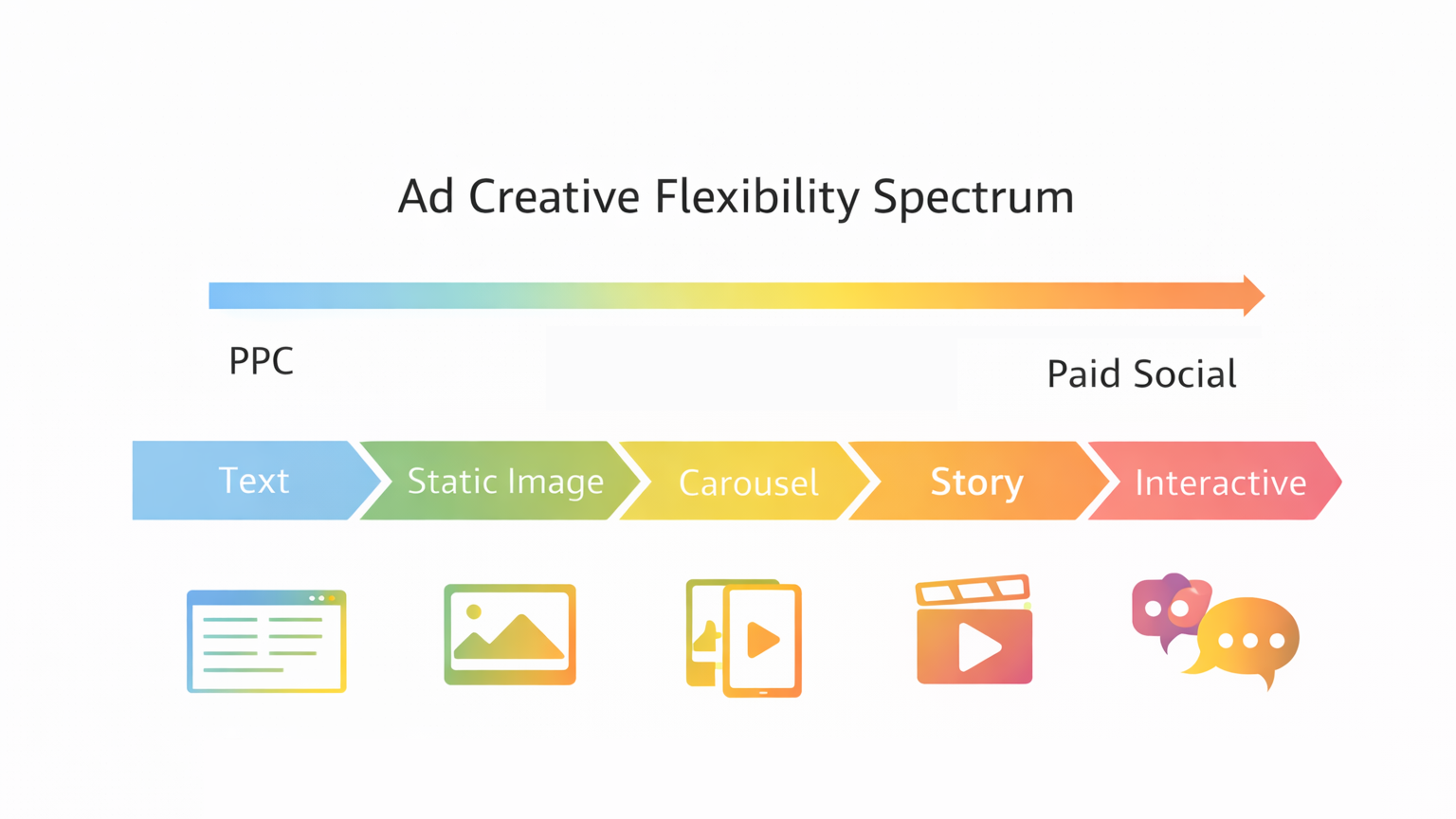
Text-focused ad formats limit creativity: There’s little room for emotional storytelling or brand-building.
-
Performance depends heavily on search volume: If no one is searching for your category, PPC won’t generate momentum.
PPC thrives on clarity: clear intent, clear offers, and clear next steps. But it’s not always the best tool for reaching new audiences or shaping preferences.
When Paid Social Excels
Paid social — across platforms like Instagram, Facebook, and TikTok — is a different kind of engine. Rather than capturing demand, it helps generate it.
This approach is especially effective for early-stage marketing or launching into new verticals.
Where paid social adds value:
-
Reach people before they search: Critical when launching new offers or entering untapped markets.
-
Creative formats allow for emotional connection and visual branding: Video, carousels, and stories drive awareness more effectively than plain text ads.
-
Audience targeting is flexible: You can target by behaviors, engagement, job roles, or competitor overlap.
That said, success with paid social requires strategic execution:
-
Users are not in buying mode: You’ll need more touchpoints, like lead magnets or retargeting sequences.
-
Ad performance is tied to creative quality: Underperforming visuals or messages will drag down results.
-
Attribution can be murky: Especially when campaigns contribute to long-term interest rather than instant conversions.
To succeed here, focus on building layered funnels and test messaging at each stage — from awareness to action. This article on full-funnel Facebook strategies offers a helpful blueprint.
How Metrics Compare Across Both Channels
PPC and paid social may use similar metrics — clicks, conversions, cost-per-click — but interpreting them correctly depends on context.
| Metric | PPC | Paid Social |
|---|---|---|
| User intent | High; query-driven | Low to moderate; browsing-based |
| CPC (Cost per click) | Higher; often several dollars per click | Lower; often under $1, depending on targeting |
| CTR (Click-through rate) | Moderate to high; depends on ad match and copy | Higher; strong visuals can drive clicks |
| Conversion rate | Often high; buyer-ready traffic | Lower; conversions often require nurturing |
| Creative flexibility | Low; limited to text ads | High; supports multimedia formats and storytelling |
For more details on how cost and value metrics differ across campaigns, see this breakdown of Facebook vs Google Ads performance.
How to Decide Which Channel to Prioritize
Your campaign goals should determine your channel mix. Neither PPC nor paid social is “better” — but each works best in specific scenarios.
Use PPC when:
-
You’re targeting people already looking for what you offer.
-
Your product is easily explained and compared via keywords.
-
You want immediate bottom-funnel conversions.
Use paid social when:
-
You need to create awareness or educate the market.
-
You’re launching a new product or brand.
-
You want to build segmented audiences based on behavior or interest.
If you’re unsure where to start, consider reviewing which platform suits your lead generation goals.
Final Thought: Strategic Integration Wins
Strong performance doesn't come from choosing between PPC and paid social — it comes from understanding how they work together.
Paid social helps you build brand familiarity and demand. PPC helps you capture that demand once it turns into a search.
If you’re only using one channel, you're leaving results on the table. Build a strategy that reflects how your audience actually behaves — exploring, scrolling, searching, and deciding.
Want to learn more about how user behavior shapes channel performance? This guide explains why Facebook ad effectiveness isn’t just about clicks and how to optimize across the funnel.