What if your next big revenue win isn’t about getting more customers — but getting smarter with the ones you already have?
Too many advertisers stay laser-focused on cold traffic. They pour budget into top-of-funnel campaigns, always chasing the next sale. But there's a quieter, more profitable group sitting right under your nose: repeat buyers. They've already converted, already trust your brand, and are far more likely to say yes again.
The key is smart segmentation. If you can identify who they are, how they behave, and what motivates them, you can turn existing customers into your most lucrative audience for upsells.
Let’s explore how to do it — and why it matters more than ever.
Why Repeat Customers Deserve a Different Strategy
Repeat customers often bring in the highest lifetime value. They click more often, respond better to offers, and — when approached the right way — tend to increase their average order value (AOV) over time. But there’s a catch: not all repeat buyers are created equal.
Some come back only when there’s a discount. Others are fiercely loyal to one product category. And a few become premium customers, spending significantly more than the average.
Lumping them all into one audience doesn’t just limit your results — it can lead to misfires in targeting, wasted spend, and missed opportunities. Smart segmentation allows you to tailor upsell strategies to the buyer, not just the product.
If you're not sure where to begin, this Facebook Ad Targeting 101 guide is a good place to revisit foundational targeting concepts.
The Core Segments to Focus On
You don’t need complex machine learning to start making smarter decisions. You just need to organize your existing customer data around behavior patterns and value indicators. Here are four segments worth building immediately.
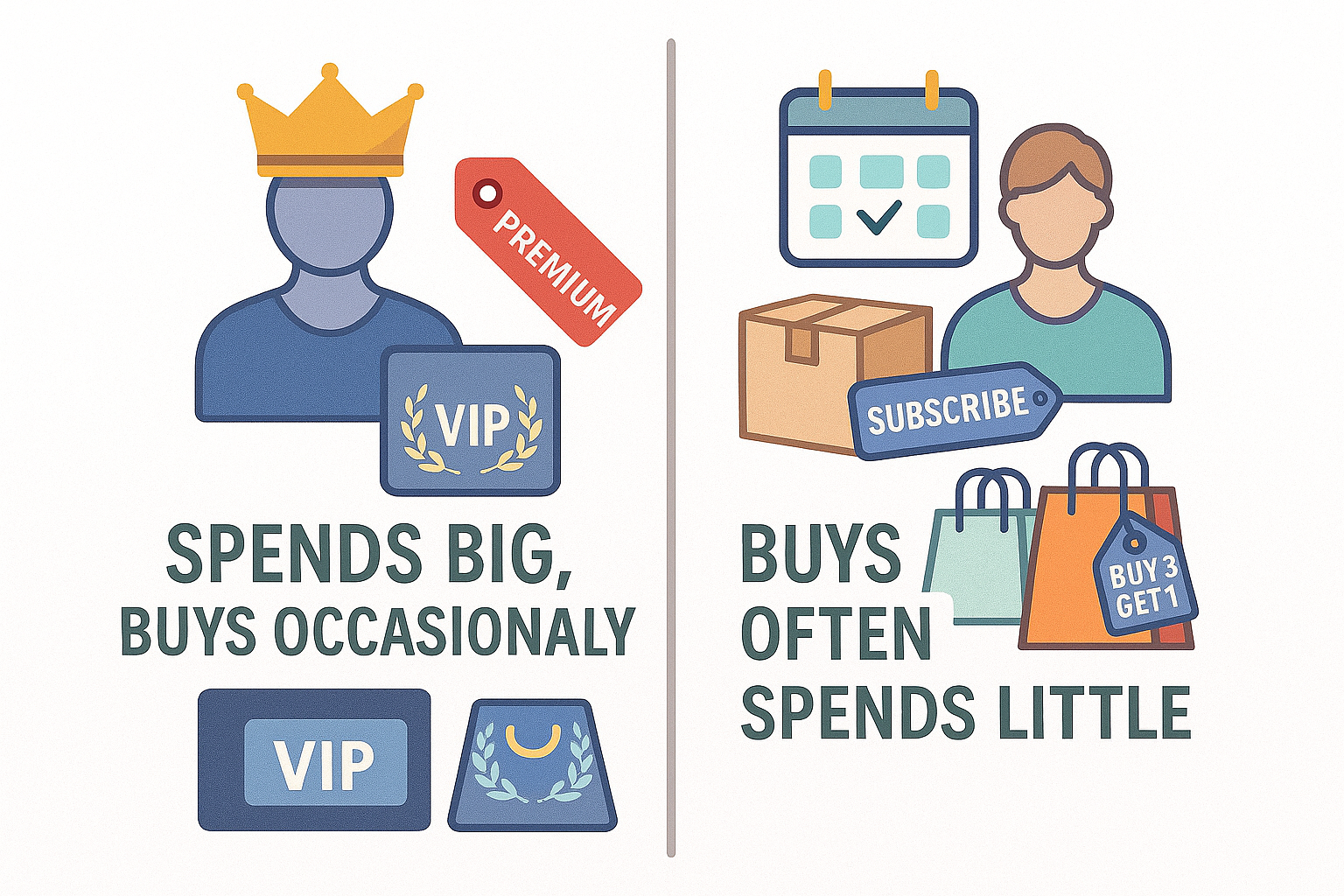
1. High-Value Repeat Buyers
These customers spend more than average and return frequently. They’re often the top 5 to 10 percent of your customer base.
Best upsell strategies include:
-
Premium product lines that offer more status or performance,
-
VIP-only bundles or early-access offers,
-
Personalized recommendations based on past high-ticket purchases.
This group doesn't just want more — they want better. Treat them accordingly.
2. Frequent Shoppers With Lower AOV
They buy often but spend less per order. They're consistent, reliable, and usually stick to practical, mid-range products.
Effective approaches here include:
-
Cross-sell bundles that combine their usual picks with a slight upgrade,
-
Subscription models that save time and offer better value,
-
“Buy more, save more” incentives that reward volume.
These buyers love convenience and small perks. Use that to your advantage.
3. Discount-Driven Loyalists
They only come back when there’s a deal. But they do come back — and that’s worth something.
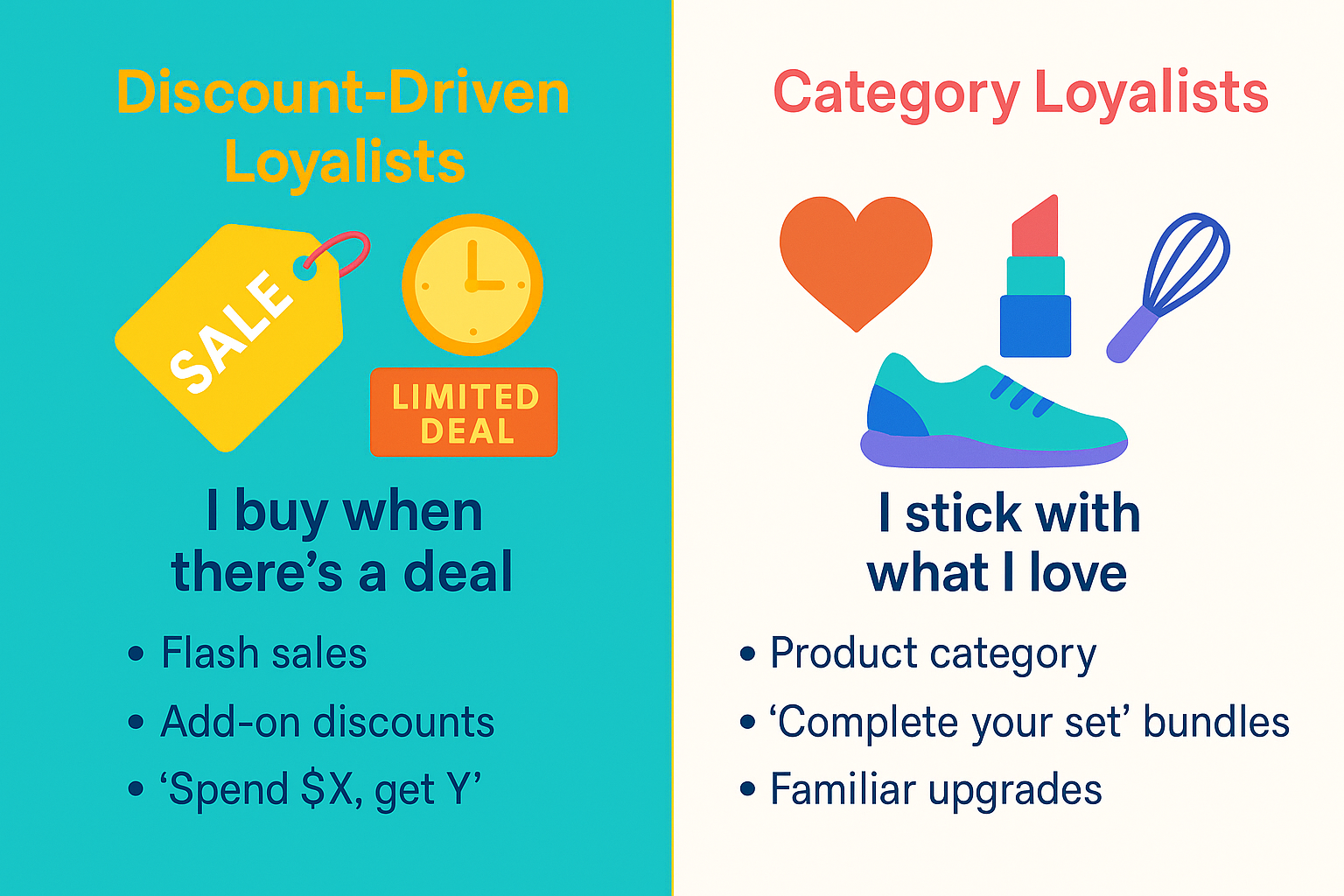
Upsell methods that work include:
-
Time-sensitive bundles that feel like a “steal”,
-
Product add-ons that come free or discounted after a minimum spend,
-
Loyalty-based rewards that feel earned, not just promotional.
Don’t try to shift their mindset. Instead, lean into what motivates them — urgency and perceived value.
4. Category Loyalists
They show repeated interest in a specific category or type of product. Maybe it’s skincare, athletic gear, or kitchen accessories — they stick to what they know and love.
Strong upsells include:
-
Related or upgraded items in the same category,
-
“Complete the routine” or “frequently bought together” bundles,
-
Limited-edition variants of products they already purchase.
Avoid cross-selling to unrelated categories — focus instead on reinforcing what’s already working.
Want to refine your audience targeting further? Explore how interest stacking can add another layer of granularity to your segmentation.
Targeting Tactics That Bring Segments to Life
Once you’ve identified the behavioral segments that matter, you need to map them to targeting strategies that work — both on and off Meta platforms.
Here are a few ways to activate those segments:
-
Build Custom Audiences in Facebook Ads Manager using historical data such as purchase value, frequency, or product categories.
-
Use Dynamic Product Ads (DPAs) to automatically showcase upsell options based on past browsing or purchase behavior.
-
Create Lookalike Audiences based on high-value segments to find cold traffic that mirrors your best repeat customers. If you're unsure whether to go broad or stick with known groups, this comparison of Custom vs Lookalike Audiences will help you decide.
-
Layer detailed targeting options like age, interests, and device usage to fine-tune performance. Learn how to layer your audience targeting without making segments too narrow.
And if you’re running into issues with delivery — like Facebook flagging your ad sets as too restrictive — here’s how to troubleshoot the common “Ad Set May Get Zero” warning.
Avoid These Common Mistakes
Segmenting repeat customers can unlock real profit, but only if executed correctly.
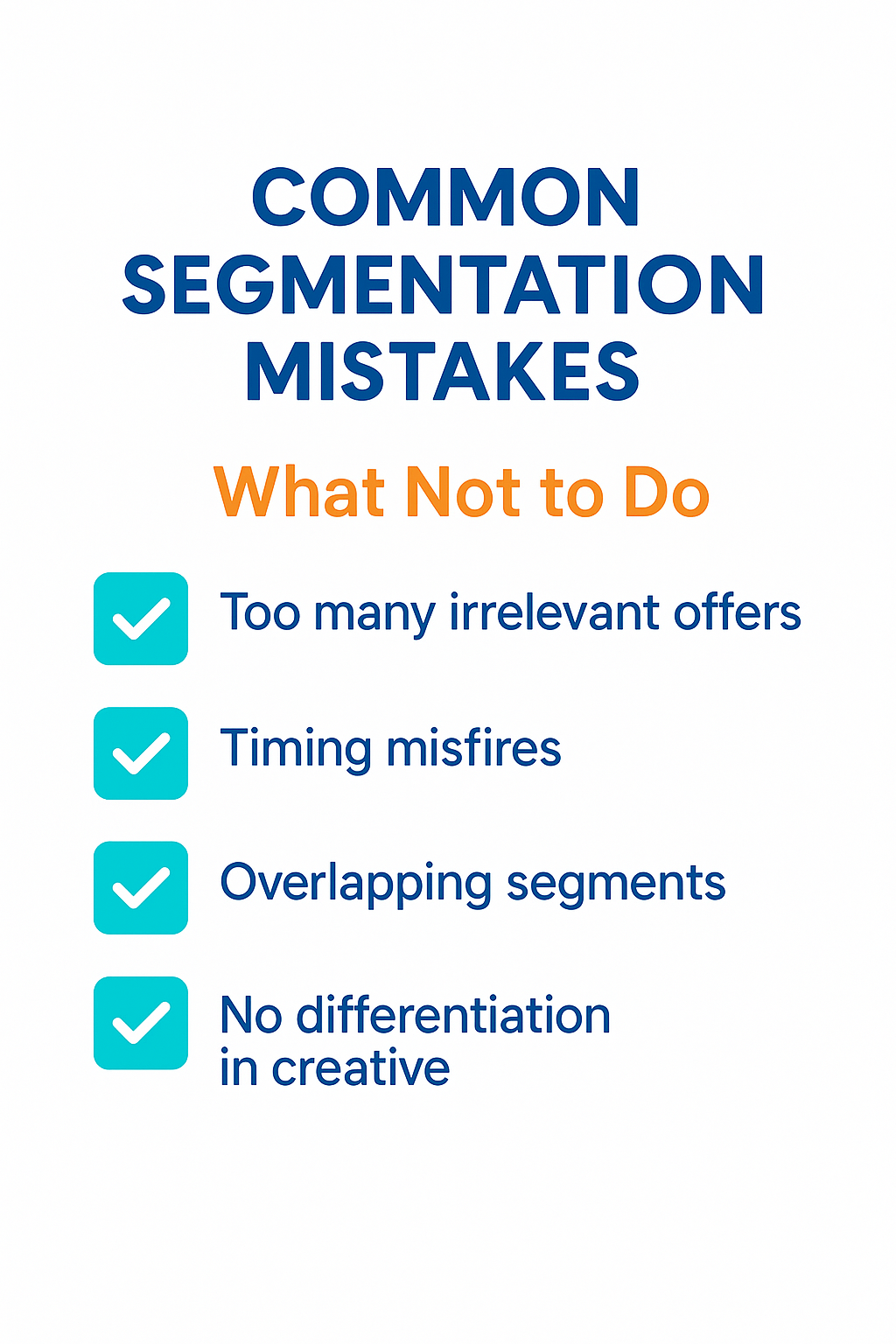
Here’s what to avoid:
-
Using one-size-fits-all offers: What appeals to a discount buyer won’t move a premium customer.
-
Segmenting by demographics only: Past behavior is a far better predictor of upsell success than age or location.
-
Oversaturating loyal customers with ads: Frequency fatigue can kill even the best offers. Monitor how often each segment sees your messaging.
-
Ignoring lifecycle timing: Don’t push an upsell too soon. Time your campaigns based on average repurchase cycles or post-purchase triggers.
Wrapping Up: Why This Matters More Than Ever
Smart segmentation isn’t about adding complexity. It’s about removing waste.
You can drive more profitable upsells by simply recognizing the different paths your customers take after the first purchase. Build your campaigns to reflect those differences, and you’ll see the numbers move — not just in sales volume, but in margin, AOV, and lifetime value.
To stay ahead of platform changes and evolving behavior, keep your strategies updated. The latest Meta ad targeting updates can impact how well your segments perform, especially with restrictions on audience size and interest targeting.
Upsells work best when they feel personalized. With smart segmentation, they are.