If you're running Facebook or Instagram ads and only thinking about the feed, you're missing the full picture.
People don’t just scroll — they tap, swipe, search, and explore. They jump between formats. They check profiles. They DM brands. That means your ad campaigns need to work across all these touchpoints — not just in a single post.
This article breaks down how attention really works on social media in 2024, and what smart advertisers are doing to win it.
Attention doesn’t live in one place anymore
Most users don’t open Instagram just to scroll the feed. They watch Stories during downtime, swipe Reels before bed, and check out brand profiles when something stands out.
Here’s where attention is focused now:
-
Stories and Reels — Vertical, full-screen videos that autoplay with sound. These formats reward quick, visual storytelling.
-
Profiles — Many users tap into your handle after seeing an ad. A strong profile builds trust and drives clicks.
-
Search and Explore — High-traffic discovery surfaces where users engage by topic, not by follower graph.
-
DMs and reactions — Users often message brands after seeing ads or Stories, which opens up a high-intent channel.
Your media plan should map to these behaviors, not just the feed.
Why feed-only ads no longer cut it
If your entire ad strategy depends on feed placements, you’re competing in the most crowded space — and limiting your results.
Here’s why feed-only ads often underperform:
-
Scrolling is passive — Most people aren’t stopping to click. It takes a lot more to get a tap.
-
It looks like everything else — Static feed posts blend in unless you intentionally disrupt the scroll.
-
Lower action intent — Feed users aren’t usually in “research” or “decision” mode.
For better performance, use formats that align with attention patterns — like Reels, Stories, or Explore placements. Each gives you a different level of user focus.
Follow the path — not the placement
Attention doesn’t live in one format. It moves. Your campaign should follow that path.
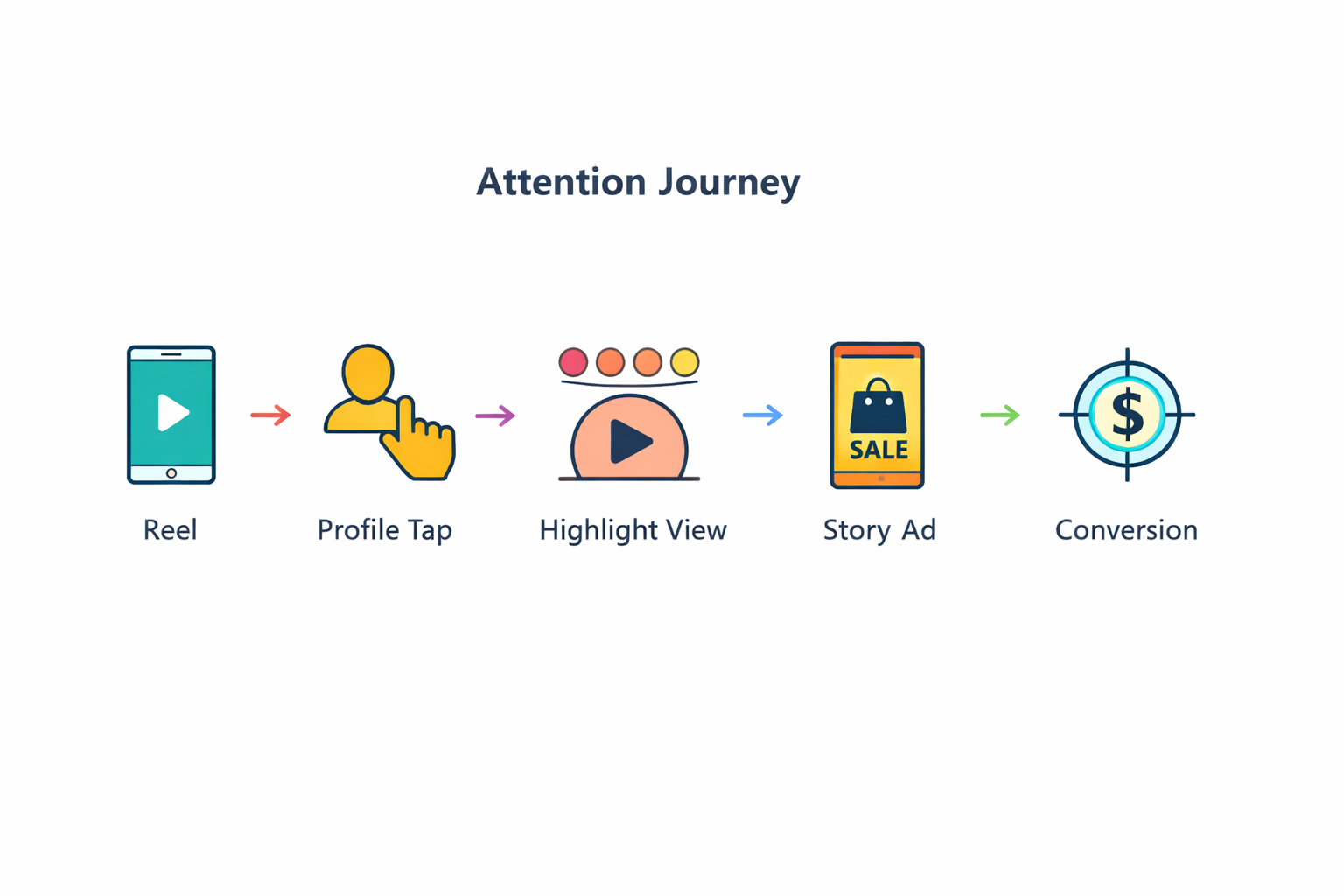
Here’s a real example:
-
A user sees your Reel and watches the first few seconds.
-
They click through to your profile.
-
They view your Highlights or scroll down your page.
-
They later see a retargeting Story ad with a time-limited offer — and finally convert.
Your strategy needs to support this flow:
-
Create Highlights that explain your product and build trust.
-
Mention your @handle in ads so people know where to tap.
-
Run retargeting based on profile views and Reel engagement.
-
Use storytelling to carry users from one touchpoint to the next.
This turns scattered impressions into structured momentum.
Retargeting in-platform behavior (not just website actions)
Most advertisers retarget based on pixel events — like abandoned carts or page views. That works, but it misses many potential buyers who never clicked to your site.
Here’s what else you should retarget:
-
Profile visitors — These users already showed interest inside Instagram or Facebook.
-
Video viewers — People who watched 50% or more of your video are showing real curiosity.
-
Engaged users — Those who liked, shared, commented, or messaged are signaling higher intent.
You can also use advanced strategies like retargeting people who follow or engage with competitors — especially with tools like LeadEnforce.
This gives you richer audiences that don’t rely solely on cookies or website data.
Make creative match the platform
Don’t stretch one piece of content across all placements. Instead, design for how people behave on each one.
| Creative Element | Reels | Stories | Feed | Explore |
|---|---|---|---|---|
| Format | 9:16 vertical video | 9:16 vertical video | Square, landscape | Bold photo, short video |
| Length | 5–10s, fast cuts | Under 8s, quick | Varies, test | Skimmable, sharp |
| Sound | Music or voiceover | Music or voiceover | Optional | Optional |
| CTA | See handle in caption | Swipe up; tap | Clear link in text | Bold text overlay |
For Stories:
-
Use fullscreen vertical video (9:16);
-
Add native elements like swipe-up prompts, stickers, or polls;
-
Keep it short and punchy — aim for under 8 seconds.
For Reels:
-
Grab attention in the first 0.5 seconds with movement or sound;
-
Include captions or talking head clips for storytelling;
-
Show product use in real life to build trust fast.
For Explore placements:
-
Bright, high-contrast thumbnails;
-
Keep visuals simple and bold;
-
Use minimal text overlays — let the image do the work.
Need more on how ad formats affect results? See Carousel vs Single Image vs Video: Choosing the Right Format.
Don’t forget your profile — it’s part of the funnel
Many advertisers forget that users often tap the brand handle instead of the CTA.
If your profile is unoptimized, they bounce — and your conversion rate drops.
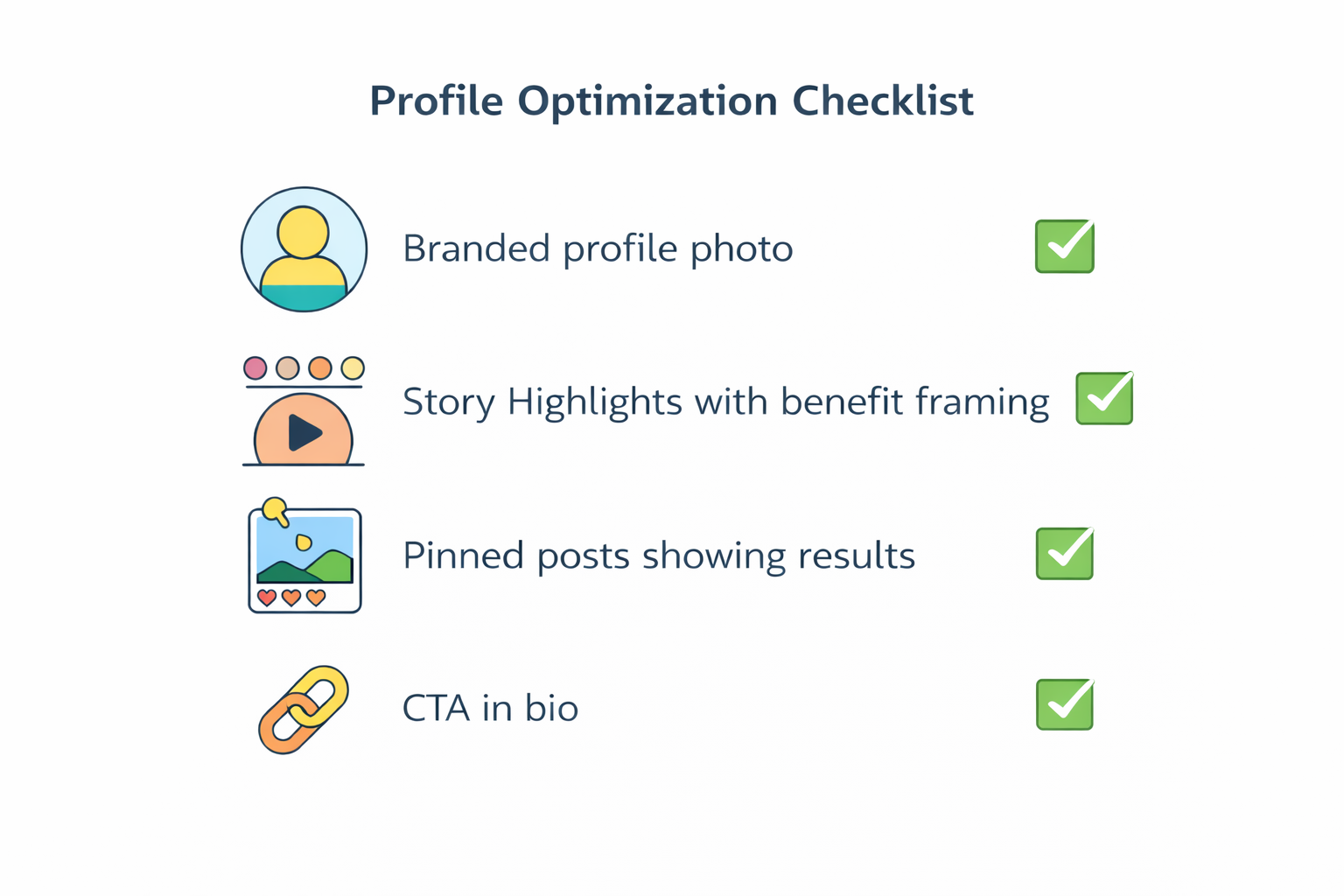
Here’s what to fix:
-
Use a recognizable profile photo (no cluttered logos).
-
Pin your best content — product explainer, customer wins, FAQs.
-
Highlight “Why us” stories to show credibility fast.
-
Link in bio should match the stage of your campaign — a landing page, sale, or opt-in form.
Treat your profile like a warm landing page. It’s where your traffic gets its first impression.
What to measure — and what to ignore
Click-through rate is helpful, but it doesn’t tell the full story.
Track:
-
Profile taps — A sign that users are actively curious;
-
Video view duration — The longer they stay, the more engaged they are;
-
Engagements on Reels or Stories — Reactions and replies are conversion clues;
-
Cross-platform attribution — Use Meta’s tools to track 1-day view and 7-day click.
Learn more in this guide: How to Analyze Facebook Ad Performance Beyond CTR and CPC.
Focus on actions that reveal buyer intent — not just vanity metrics.
Combine organic and paid for better reach
Paid ads get more efficient when they support what already works organically.
Ways to blend the two:
-
Boost your best Reels — not every post, just the top performers.
-
Use LeadEnforce to build audiences based on followers of relevant Instagram pages.
-
Drive traffic to your profile and let your pinned content do the selling.
-
Retarget people who watched, liked, or shared — even if they never clicked a link.
Organic and paid are two halves of the same attention engine.
Final thoughts: follow attention, not just impressions
Social ads aren’t dying — they’re just evolving. The advertisers who adapt win.
Here's how to stay ahead:
-
Design creatives that match the behavior on Reels, Stories, and Explore.
-
Build your funnel around attention flows, not feed placements.
-
Retarget in-platform actions, not just web visits.
-
Treat your profile as a conversion asset.
-
Measure what matters — intent, not just CTR.
Paid media still works. But only when you understand how — and where — your audience actually pays attention.