When it comes to paid social advertising, one question keeps coming up:
What matters more — targeting or creatives?
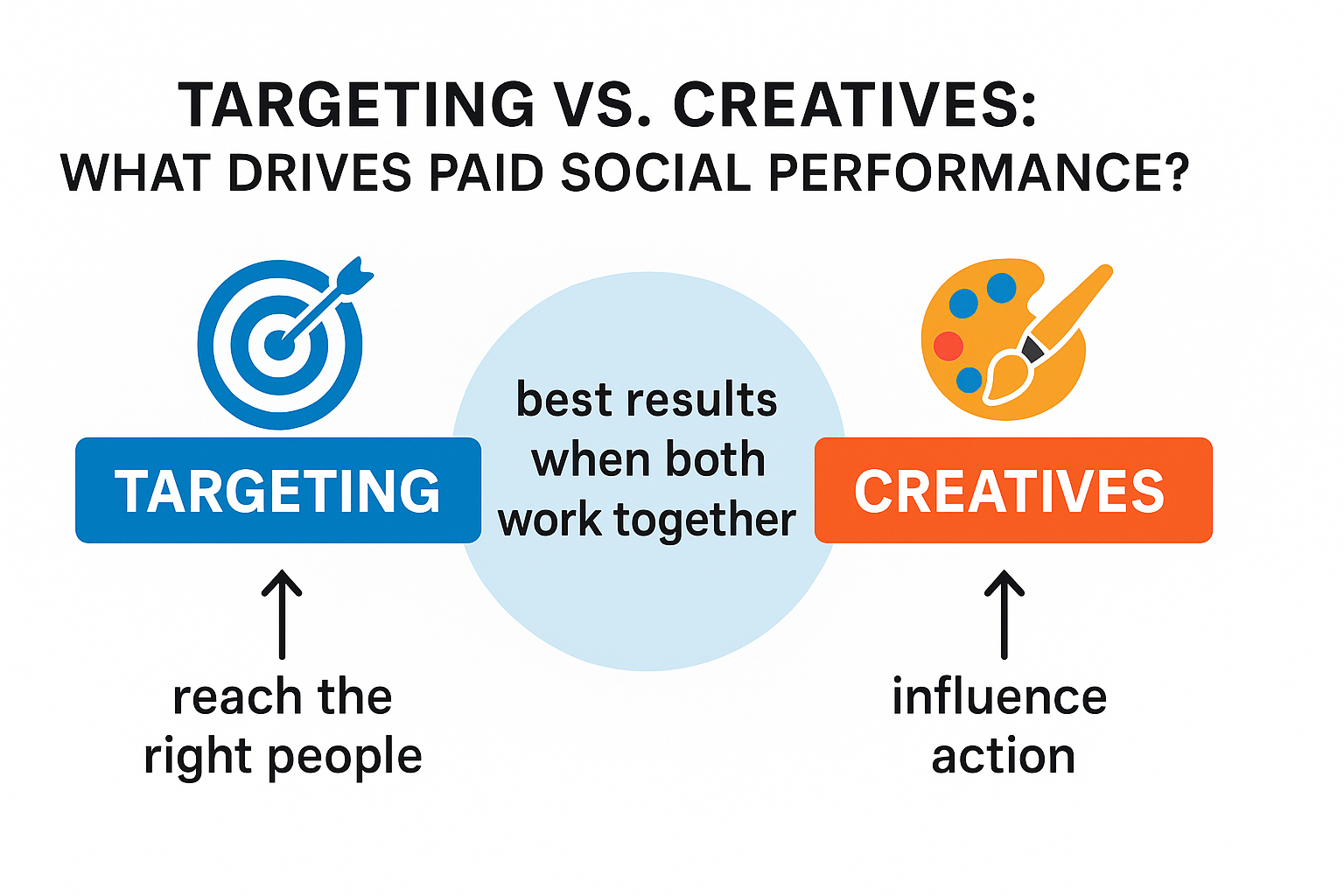
Marketers are split. Some swear by ultra-precise targeting. Others believe that compelling creatives drive everything. But here’s the truth: you can’t afford to get either one wrong. The real power of paid social comes when targeting and creatives work together.
Let’s break it down.
Why Targeting Still Drives Performance
Good targeting means your ads reach the people most likely to act — not just the ones who fit a basic demographic. It helps you avoid wasting money on users who scroll right past your offer.
Targeting isn’t just about age, gender, or interests. It's about intent, behavior, and stage in the customer journey.
Here’s what that looks like in action.
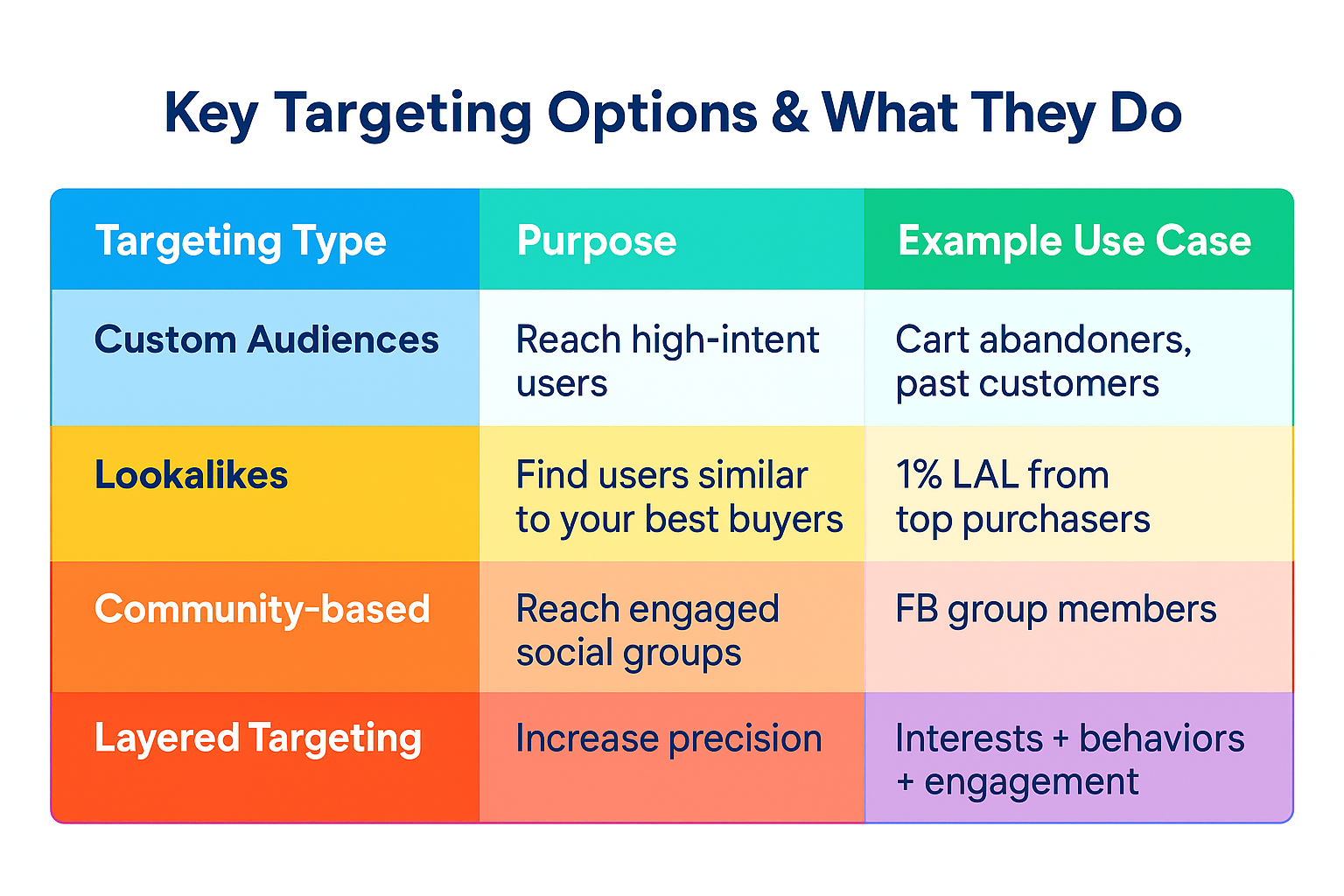
Key targeting options that matter:
-
Custom audiences: Visitors to your site, cart abandoners, newsletter subscribers, or past customers. Learn how to define and build high-intent audiences the right way.
-
Lookalike audiences: Based on your best customers, not just anyone who follows your page. You can refine this with insights from custom vs. lookalike audiences.
-
Community-based audiences: Facebook group members or Instagram page followers using tools like LeadEnforce.
-
Exclusions: Remove people who already converted, unsubscribed, or don’t qualify.
-
Layered targeting: Combine interests, behaviors, and engagement data for sharper precision. Learn how in this guide on layered detailed targeting.
Timing also matters. A warm audience at 10 a.m. on a weekday is not the same as that same audience late Sunday night. Context affects intent.
Strong targeting ensures your budget is spent where attention and intent already exist.
But Creatives Decide What Happens Next
Targeting gets your ad in front of someone. But creative determines whether they engage or scroll past.
People don’t read ads. They scan. And unless something grabs their attention instantly, they're gone.
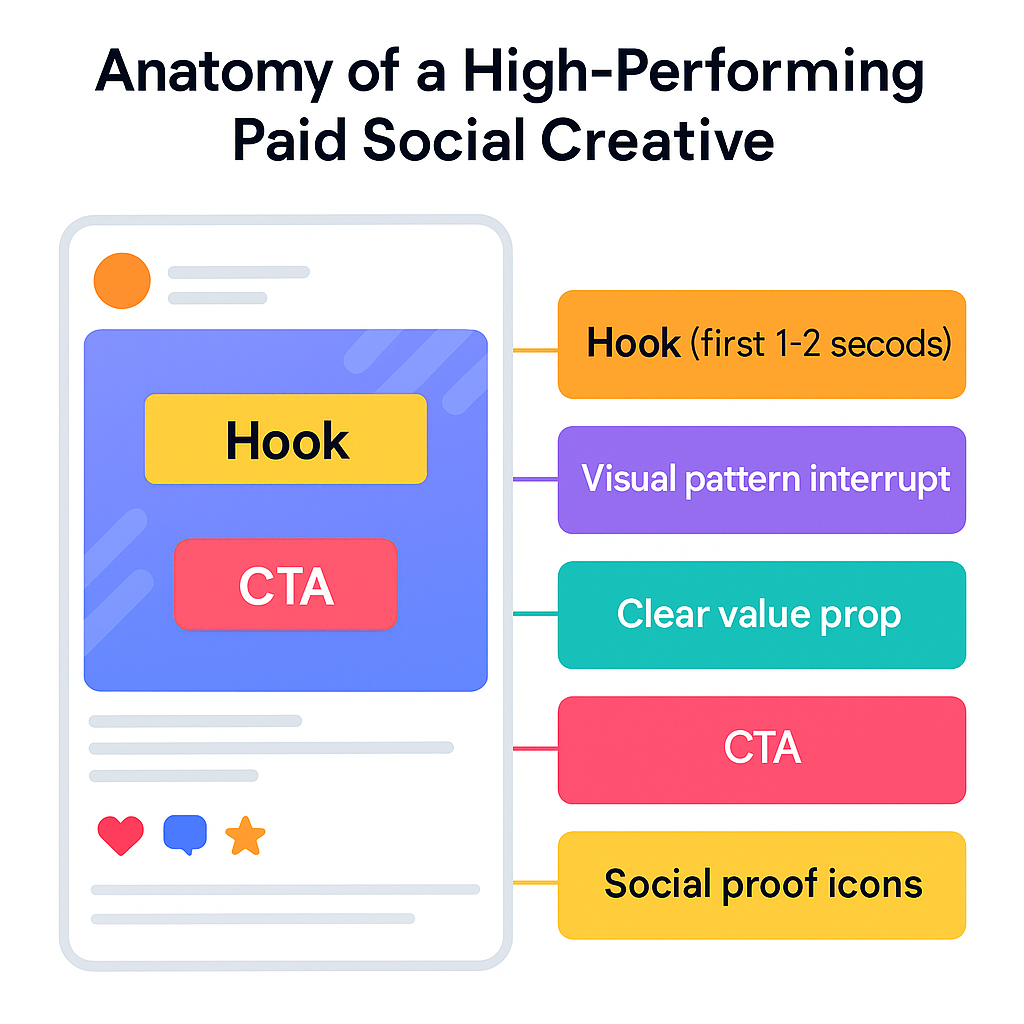
So what makes a paid social creative perform well?
-
Eye-catching visuals: Movement, contrast, or pattern interruption that stands out in the feed.
-
Clear messaging: What’s the offer? Who is it for? Why should they care? Say it fast.
-
Strong hook: Ask a smart question, make a bold claim, or highlight a relatable pain point in the first few seconds.
-
Proof: Use real customer quotes, screenshots, video testimonials, or social proof to build trust. If you're not using it, check out why social proof in Facebook ads is a game-changer.
-
Format fit: Adapt your content to the platform — Stories, Reels, in-feed video, or carousels should all be built natively.
-
Tone consistency: Match your landing page style and copy. A mismatch kills conversions.
Pro tip: Refresh your creatives regularly. If frequency is rising but click-through rates are falling, you might be facing ad fatigue — and that needs fixing fast.
When You Rely Too Much on One Side
Let’s look at both extremes.
-
If your targeting is perfect but your creative is weak, you'll get impressions — but few clicks or conversions.
-
If your creative is brilliant but your targeting is too broad or off, the right people won’t even see it.
One without the other leads to underperformance.
The best campaigns don’t just combine targeting and creative — they connect them. That means building ads with a specific audience segment in mind, not just making one-size-fits-all content and hoping it works for everyone.
How to Align Targeting and Creatives Effectively
To get better results with the same budget, you don’t need to overcomplicate your process. You just need to tighten the connection between who you’re speaking to and what you’re saying.
Here are practical ways to do that:
-
Start with audience insights: Look at what your top customers respond to. What topics, visuals, or pain points get them to engage?
-
Build segment-specific creatives: Make variations of your ad for different types of users (e.g., new vs. returning customers, cold vs. warm traffic).
-
Match creative to funnel stage:
-
Top-of-funnel = curiosity, storytelling, value-first.
-
Mid-funnel = education, comparisons, FAQs.
-
Bottom-of-funnel = urgency, social proof, offers.
-
-
A/B test audiences and creatives together: Don’t just test visuals or copy — test different audience segments with specific messages. You can learn more in this guide to Facebook ad testing strategies.
-
Keep exclusions clean: Retargeting users who’ve already converted wastes spend. Filter them out.
So, Which One Should You Focus on First?
If your campaigns are underperforming, start by identifying your weakest link.
-
If your CTR is low, your creative likely needs work.
-
If your CPC is high and irrelevant, your targeting may be too broad.
-
If your conversion rate is poor despite high CTR, you may have a landing page or messaging disconnect.
Improving one side without the other often leads to diminishing returns. The best results come from refining both — strategically and together.
Final Thoughts: Smart Ads Are Built, Not Lucked Into
Winning in paid social isn’t about choosing targeting or creatives. It’s about building campaigns that are cohesive from start to finish.
The best ads don’t just “look good” — they speak directly to the audience they’re designed for.
When you align targeting with creative — using tools like LeadEnforce to go deeper with group and page-based audiences — you stop wasting impressions and start building momentum.