Selling bundles or kits can be a powerful way to increase revenue and average order value — but only if people actually understand what they’re getting.
A strong creative format isn’t about looking pretty. It’s about communicating value, making the bundle feel essential, and helping buyers visualize the benefits.
Let’s dive into the best-performing creative formats and how to use them across Facebook and Instagram ads, landing pages, and beyond.
1. “What’s Inside” Visual Breakdown
People don’t buy what they don’t understand. That’s why this format — showing exactly what’s in the bundle — remains one of the most effective.
Ways to visualize it:
-
Flat-lay images: Use overhead photography to neatly display all items in the kit, labeled and spaced out. Think of it like an “unpacked” view that removes ambiguity and makes the set feel complete.
-
Carousel ads: Dedicate one card per product with a clean image and short benefit description. Finish the carousel with a final card that shows the full bundle and the offer — helping the user mentally “collect” the items as they swipe.
-
Icon rows or labeled visuals: Use minimalist graphics or product icons with short captions or tooltips (e.g. “Full-size cleanser – lasts 4 weeks”) to reduce cognitive load.
You can see how this works in creative carousel formats that convert, especially when the design is clean and the offer is clear.
2. Story-Based: Problem → Kit → Solution
When your bundle solves a clear problem, tell that story. People connect with narratives more than lists of features.
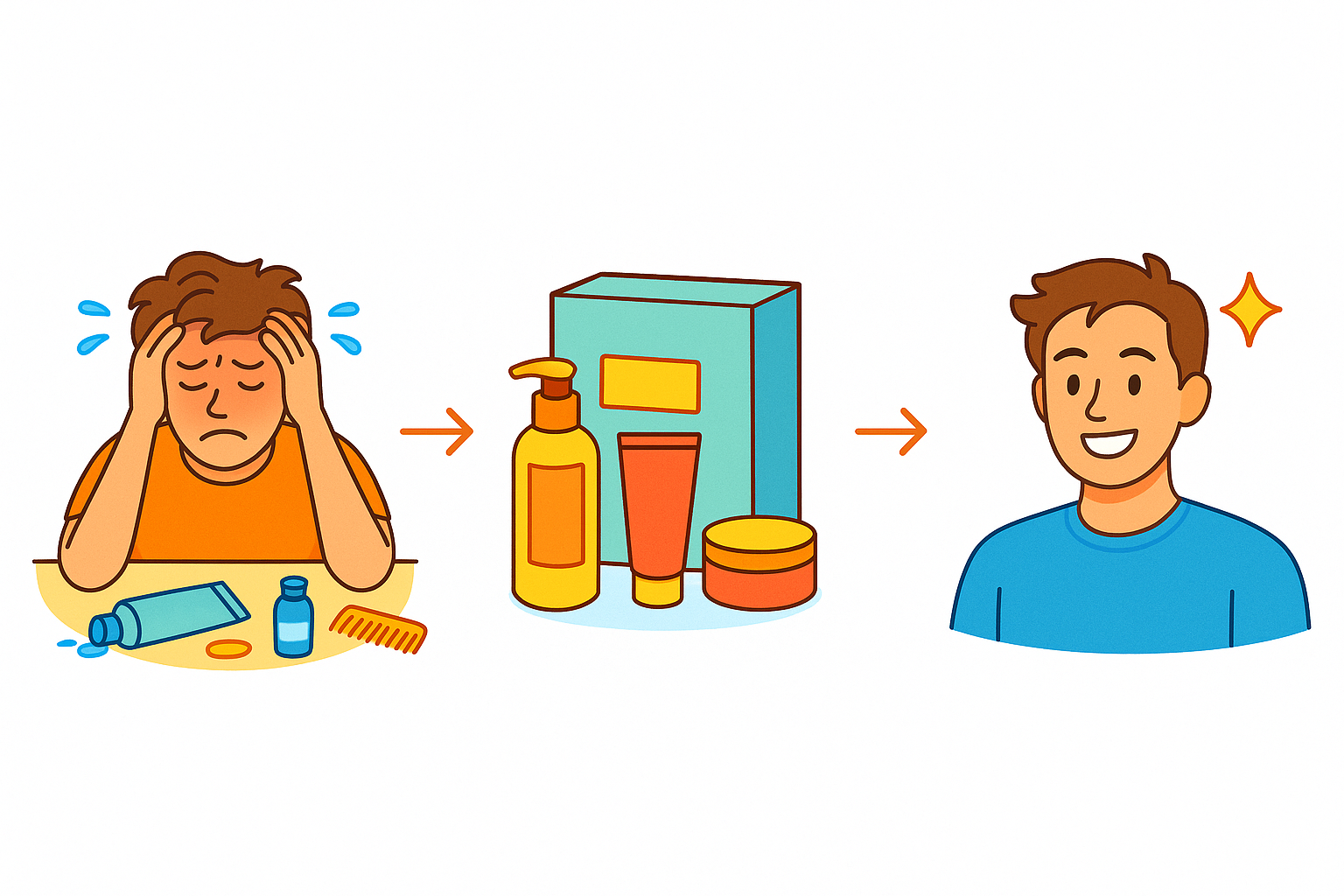
Creative flow to follow:
-
Frame the problem: Start your creative with a relatable pain point — for example, “Struggling with acne flare-ups?” or “Tired of mismatched accessories?”
-
Introduce your bundle as the solution: Show the full kit with a concise explanation: “Everything you need for clear skin — in one routine.”
-
Show the result: End with a visual or quote that communicates transformation — happier expressions, glowing results, or social proof like “5,000+ happy customers.”
This works beautifully for kits tied to self-improvement or step-by-step outcomes. If you're building a sequence of creatives, consider this funnel strategy that aligns each stage of the journey.
3. Upgrade Format: Single Product vs. Bundle
This format is less about price and more about perceived experience.
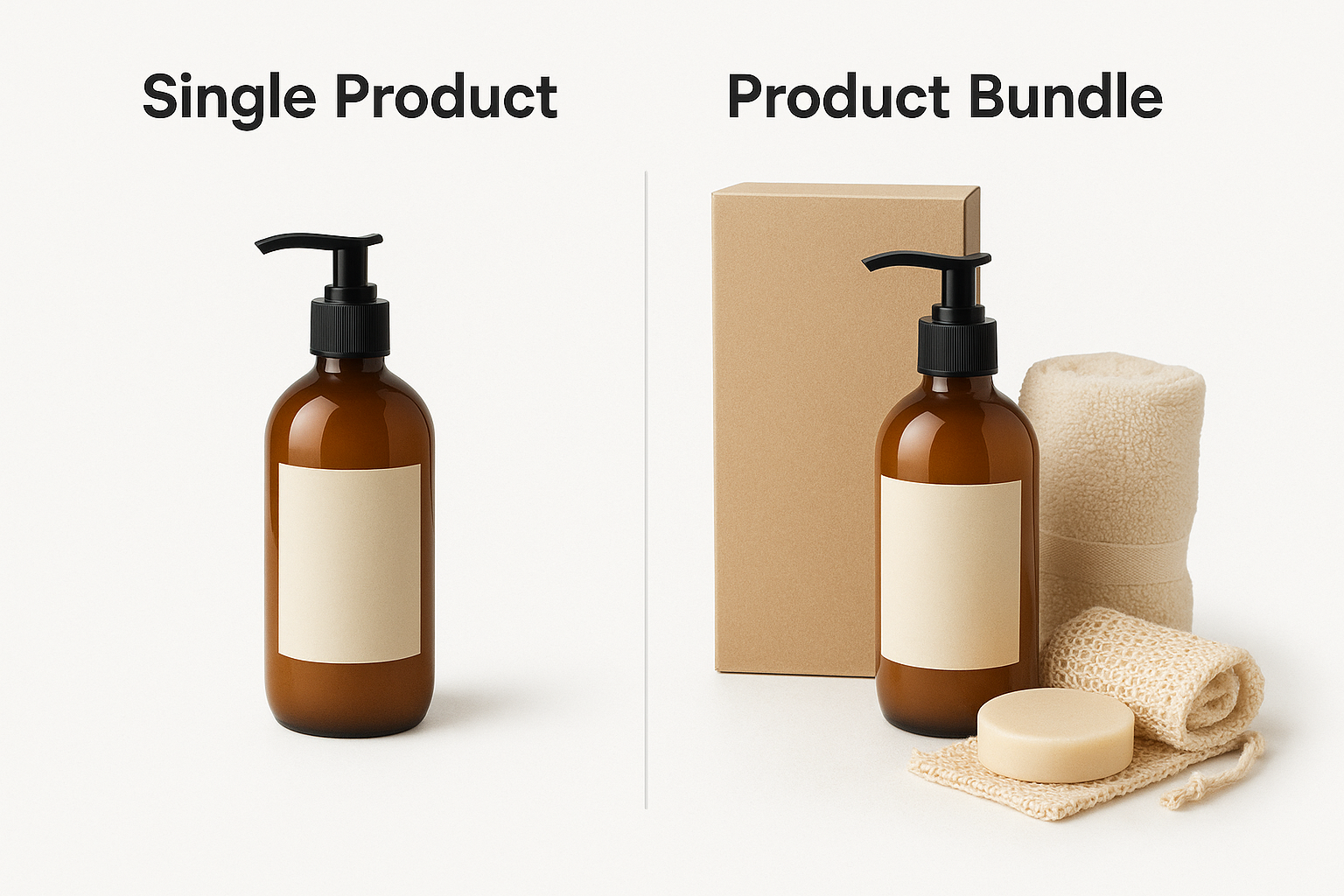
How to visualize it:
-
Two-panel image: One side shows a single item — the “starter” or basic version. The other side shows the full bundle, often with added lifestyle imagery, packaging, or bonuses to make it feel premium.
-
Unboxing-style videos or GIFs: Show the excitement of receiving multiple items together — bonus points if there’s special packaging or free gifts included.
-
Value ladder animation: Animate items stacking or sliding into place one by one, ending with the full value reveal. It signals “you’re getting more than you expected.”
This is especially effective when your Meta campaign goals are focused on larger order sizes or repeat purchases. Learn more about how to choose the right campaign objective to support your bundle.
4. Price Anchoring and Value Framing
Even high-priced bundles can sell well — if you frame them correctly.
Tactics that work:
-
Strikethrough pricing: Clearly show the original combined price of individual items, crossed out next to the discounted bundle price. This anchors value visually and reinforces the deal.
-
“Save X%” overlays: Add simple text labels like “Save 25%” or “Buy 3, Get 1 Free.” These should be legible even on mobile and ideally placed in the top corner of the creative.
-
Animated value stack reveals: Use motion graphics to show each item with its standalone price, then stack them up and reveal the bundle discount. This adds clarity and makes your ad more dynamic.
If you’re experimenting with how to present pricing and value, this creative testing guide can help you test what style actually drives results.
5. Real People, Real Kits: Social Proof That Sells
Buyers trust other buyers — and they especially trust people who bought the same bundle they’re considering.
Formats to try:
-
Short UGC videos or testimonials: Real users talking about how the full kit helped them solve a specific issue. These can be vertical Reels, in-feed videos, or even story-style slideshows.
-
Review-focused carousels: Each card highlights a single review about a different item in the bundle — or better, about how the kit made things easier (“Loved not having to buy things separately”).
-
Quote graphics or screenshots: Pull enthusiastic reviews from social media or customer service chats and pair them with visuals of the full kit.
When used well, social proof drives both emotional and logical buy-in. Here’s a deeper look at how to integrate testimonials and reviews into Facebook ads.
Final Note
If your bundle ad isn’t converting, don’t rush to lower the price. Ask:
-
Does the creative clearly show what’s included?
-
Is the value instantly visible?
-
Do buyers feel like they’re getting a better, easier, or smarter experience?
Formats that work for single products often underperform with bundles — because they don’t show the full picture.
And if your creatives are polished but underwhelming in performance, this might help: Why Your Facebook Ads Look Great But Still Don’t Sell.