Running Facebook or Instagram ads isn’t just about clicks and conversions. It’s about understanding the buyer behavior patterns that lead to bigger checkouts.
If you can identify the right moments of intent, you can influence larger purchases, better margins, and higher customer lifetime value.
Let’s break down the most reliable triggers — and how to act on them.
Why Bigger Orders Start Before the Purchase
Before someone hits “Buy Now,” they leave a trail of micro-signals. These are moments when they pause, compare, engage, or return. They may not seem important at first — but together, they tell a clear story.
Recognizing these signals allows you to guide users toward higher-value decisions.
Triggers you should be tracking:
-
Multiple site visits within a short time: Signals deep interest and possible hesitation.
-
Engagement with premium products: Suggests they’re willing to spend more if value is clear.
-
Interaction with reviews or comparisons: Indicates they’re validating a decision.
By catching and responding to these moments, you can shift your average order value significantly. For deeper strategies, see How to Identify High-Intent Audiences Using Facebook Insights.
1. Repeat Visits Within a Short Time Frame
When users come back to your site more than once in 24–72 hours, it’s a sign of elevated interest. They're doing more than browsing — they’re making decisions. This kind of behavior is typical of high-AOV buyers who take a bit longer but spend more.
This segment isn’t cold traffic. They’ve moved into the intent zone. Your ads should reflect that.
What this trigger looks like:
-
2+ visits to a product or landing page in 3 days.
-
Clicking on product links in both paid and organic sources.
-
Return visits through remarketing or branded search.
Use dynamic retargeting ads and urgency-based messaging. Show product bundles or limited-time incentives to seal the deal.
2. Engaging With High-Margin or Bundle Pages
If users spend time on your most profitable product pages, they’re already leaning toward a larger purchase. This behavior is common among value-focused buyers who want quality or quantity in one transaction.
But you can’t leave them to figure it out on their own. You need to highlight what makes these products worth it.
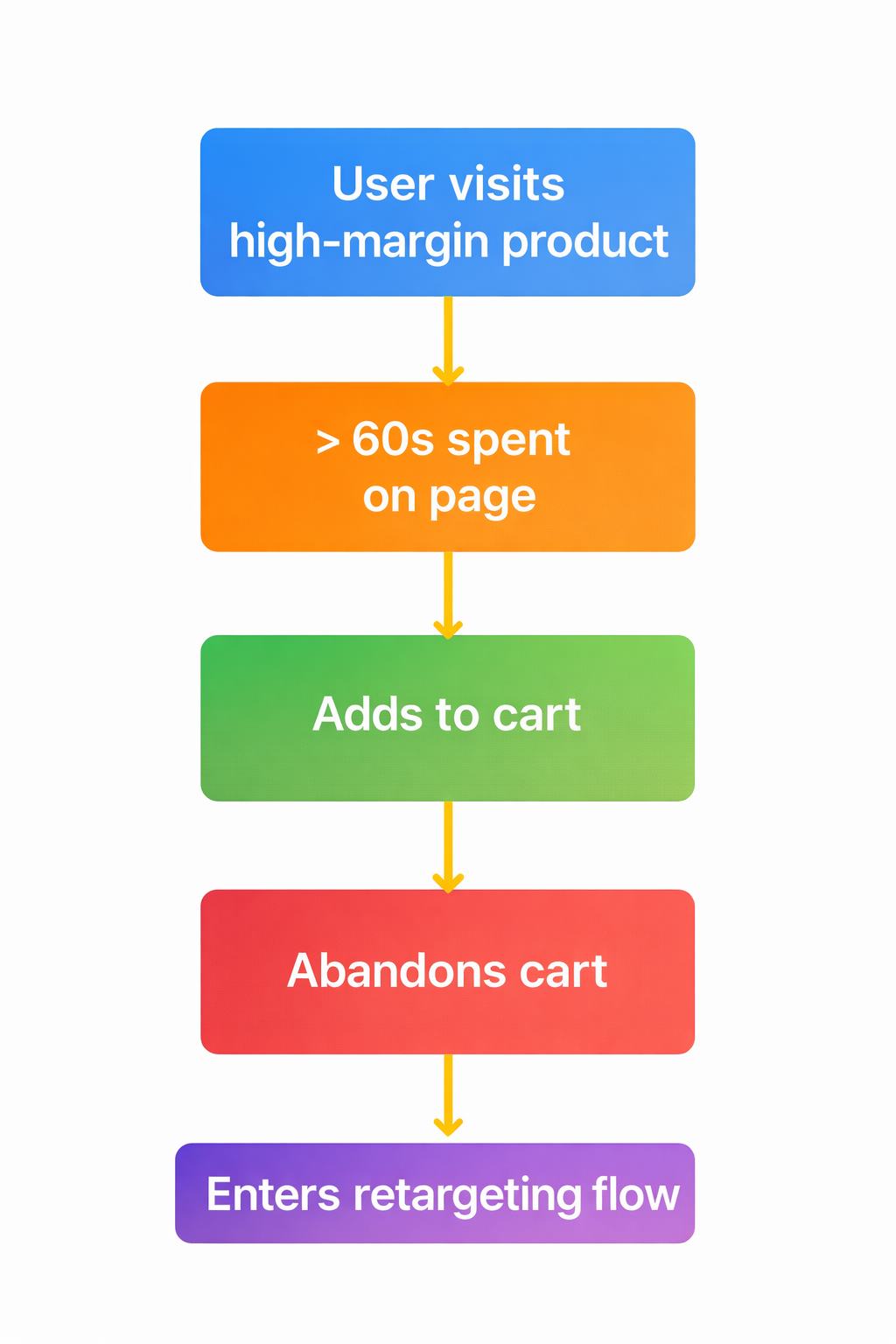
Smart signals to watch for:
-
Time on page > 60 seconds on high-ticket or bundled products.
-
Clicks on “More Info,” “Compare,” or “Specifications” tabs.
-
Add-to-cart events from multi-product landing pages.
Use insights from Behavior-Based Facebook Targeting to build high-margin buyer segments and serve premium product creatives.
3. Scroll Depth and Section-Level Interactions
Users who scroll through your entire landing page are actively evaluating. They’re digging for more — FAQs, reviews, guarantees — and trying to reduce their purchase risk. These are serious shoppers.
You’ve got their attention. Now turn it into a decision.
Signs of deep interaction:
-
Scrolling to 75% or 100% of the page.
-
Clicking on “Guarantee,” “Return Policy,” or “Shipping Info.”
-
Tapping embedded review stars, comparison blocks, or testimonials.
This is the moment to apply techniques from Facebook Ads Targeting for Repeat Purchases by emphasizing social proof and trust-building.
4. Interactions With User-Generated Content (UGC)
When a potential customer comments on, saves, or shares user-generated content, they’re engaging on a different level. They're responding to social proof — and likely picturing themselves with the product.
These aren’t passive viewers. They’re in the decision stage.
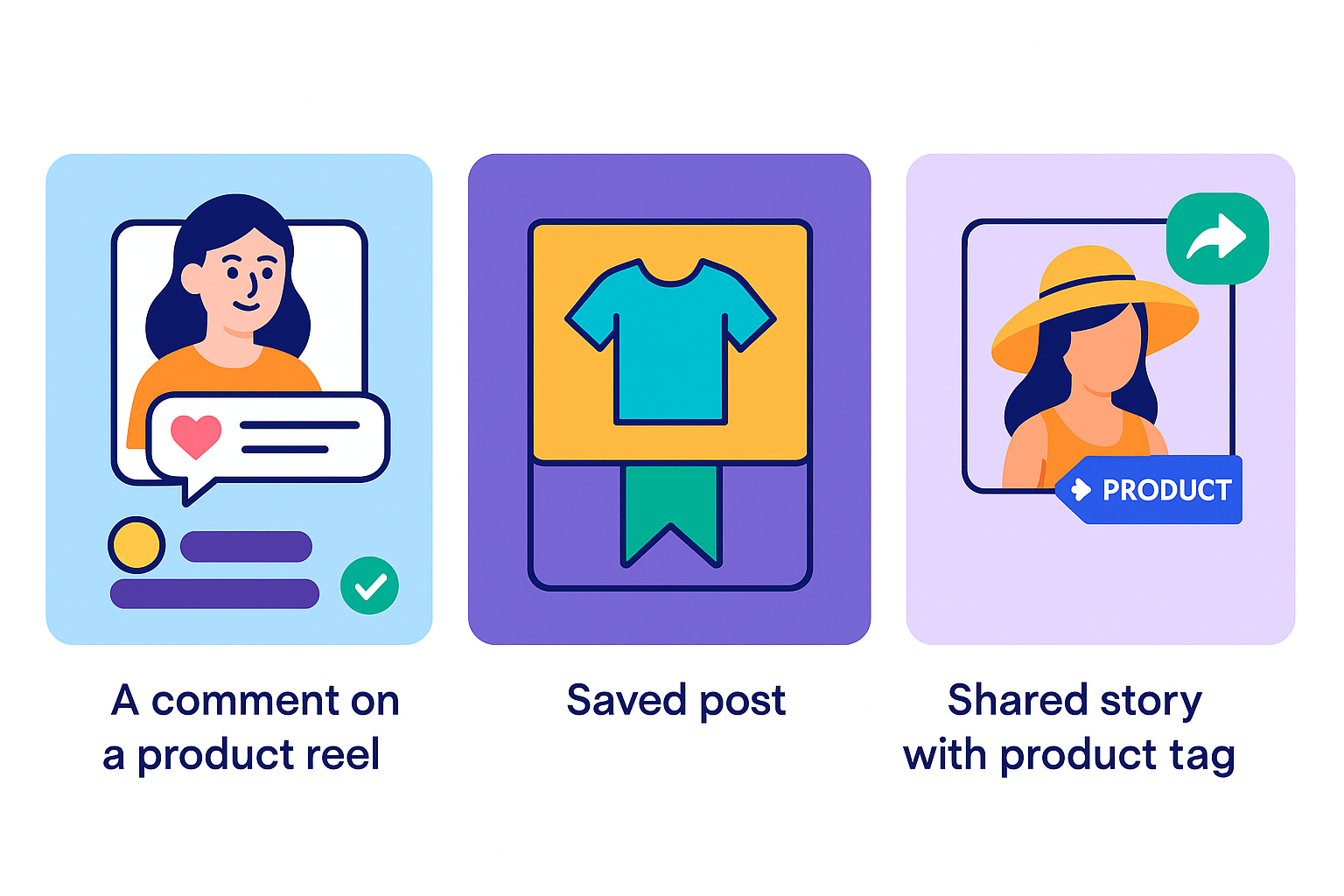
What to look for:
-
Saves or shares of video testimonials or product demos.
-
Comments on influencer content or review ads.
-
Viewing full UGC reels or stories (75%+ completion).
Double down with The Role of Social Proof in Facebook Ads. Authenticity outperforms polish — especially for higher-order buyers.
5. Add-to-Cart Behavior Without Immediate Checkout
This trigger gets overlooked — but it's powerful. A user adds something to their cart and walks away. It might seem like a lost lead, but often it’s someone gathering products, checking total cost, or waiting for an incentive.
Don’t treat cart abandoners like cold leads. They’re warm — just hesitant.
Key behaviors:
-
Cart created, but no checkout within 1–3 hours.
-
Cart includes multiple items or high-value products.
-
Returning to the cart from an email or ad but still not converting.
Learn how to recover more of these high-value abandoners with Facebook Retargeting That Works using creative variation and time-based segmentation.
Bringing It All Together: From Signal to Strategy
Once you identify the key triggers, the next step is acting on them with tailored campaigns. Not all signals mean the same thing — and not all users need the same message.
Start with segmentation. Then match each audience with the creative and offer most likely to increase their order value.
How to turn insights into action:
-
Map triggers to funnel stages: Are they browsing, considering, or hesitating?
-
Use event-based custom audiences: Time on site, page views, video watches.
-
Match creative to intent: Use testimonials for UGC engagers; urgency offers for delayed carts.
To build more precise segments, check out How to Optimize Audience Targeting for Facebook Ads with Limited Data.
Final Thoughts
Larger orders don’t come from guessing — they come from observation, segmentation, and precision.
If you’re only tracking conversions, you’re missing the moments that lead to conversions — and especially to high-value ones.
By focusing on specific buyer journey triggers, you can:
-
Predict who’s likely to buy more.
-
Serve the right message at the right time.
-
Grow your revenue without raising your budget.
Build campaigns that respond to real signals — not assumptions.