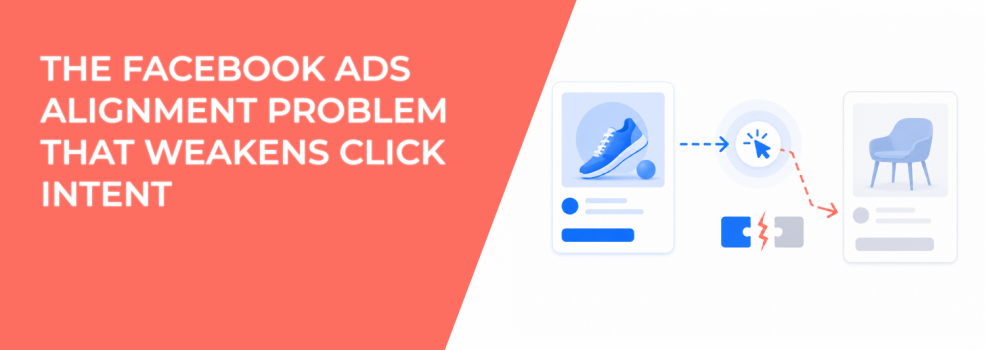
Many Facebook ads fail even when the individual components look strong. The hook attracts attention, the creative looks polished, the CTA is visible, and the landing page technically works.
But the campaign still struggles to convert.
This usually happens because the user journey lacks alignment. The user enters the funnel with one expectation and encounters a different direction before taking action. That disconnect weakens click intent long before the conversion event happens.
What Click Intent Actually Means
CTR alone does not measure intent quality. A user can click because the visual triggered curiosity, the headline created surprise, or the hook felt emotionally charged. That does not mean the user was prepared to continue deeper into the funnel.
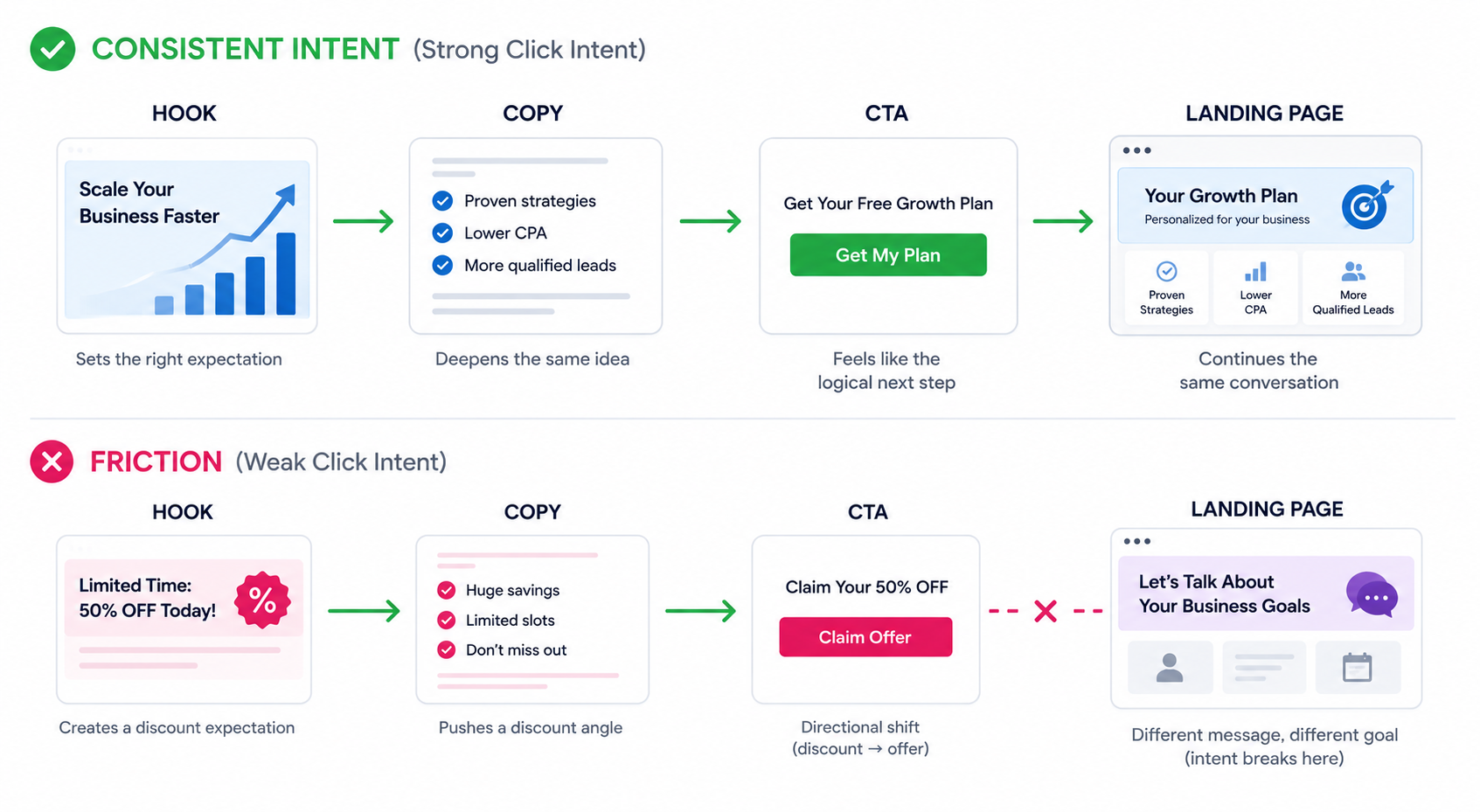
Strong click intent happens when the entire ad sequence feels consistent. The hook introduces the right expectation, the copy deepens the same idea, the CTA feels like the logical next step, and the landing page continues the same conversation.
When one of those stages shifts direction, friction appears immediately.
Why Alignment Problems Hurt Facebook Ads Performance
Meta evaluates much more than clicks. The algorithm watches what users do after entering the funnel, including bounce behavior, landing page engagement, conversion progression, and how similar users respond afterward.
Weak alignment interrupts those downstream behaviors. Inside Ads Manager, this often creates a recognizable pattern:
- Strong CTR with weak conversion rates.
- High outbound clicks but poor landing page engagement.
- Rising CPC during scaling.
- Good early performance followed by rapid CPA deterioration.
Many advertisers blame targeting when this happens. In reality, the user journey itself became inconsistent.
Where Alignment Usually Breaks
Most alignment problems happen between funnel stages rather than inside a single asset.
Here are some common examples of alignment breakdowns:
- Educational hook → aggressive CTA.
An ad starts with “Learn how ecommerce brands reduce return rates” but immediately pushes users into “Book a Sales Demo.” The hook suggests low-pressure education while the CTA demands high commitment too early. - Problem-focused creative → feature-heavy landing page.
The ad focuses on a pain point like “manual invoice processing,” but the landing page opens with technical API documentation and platform architecture. The emotional direction disappears after the click. - Casual UGC-style creative → enterprise positioning.
The ad feels conversational and native inside the feed, but the landing page suddenly switches into corporate enterprise language with pricing consultations and procurement terminology. - Discount-focused ad → trust-heavy funnel.
The creative attracts users with “50% Off Today,” but the landing page spends most of its space explaining brand philosophy and company history before showing products.
Each transition introduces resistance because the next stage no longer matches the previous expectation.
Why Cold Traffic Suffers the Most
Warm audiences can tolerate some friction because they already know the brand, product category, or offer structure. A retargeting audience may still progress through the funnel even if the CTA becomes more aggressive after the click.
Cold users do not have that context. They process Facebook ads quickly and make immediate assumptions about pricing, commitment level, and expected next action. If the funnel suddenly changes tone or direction, trust drops immediately.
This explains why some retargeting campaigns continue performing while prospecting campaigns collapse using nearly identical creatives. Existing familiarity compensates for alignment weaknesses temporarily.
How to Diagnose Alignment Problems Properly
Most advertisers review ads asset-by-asset. That approach misses the actual issue.
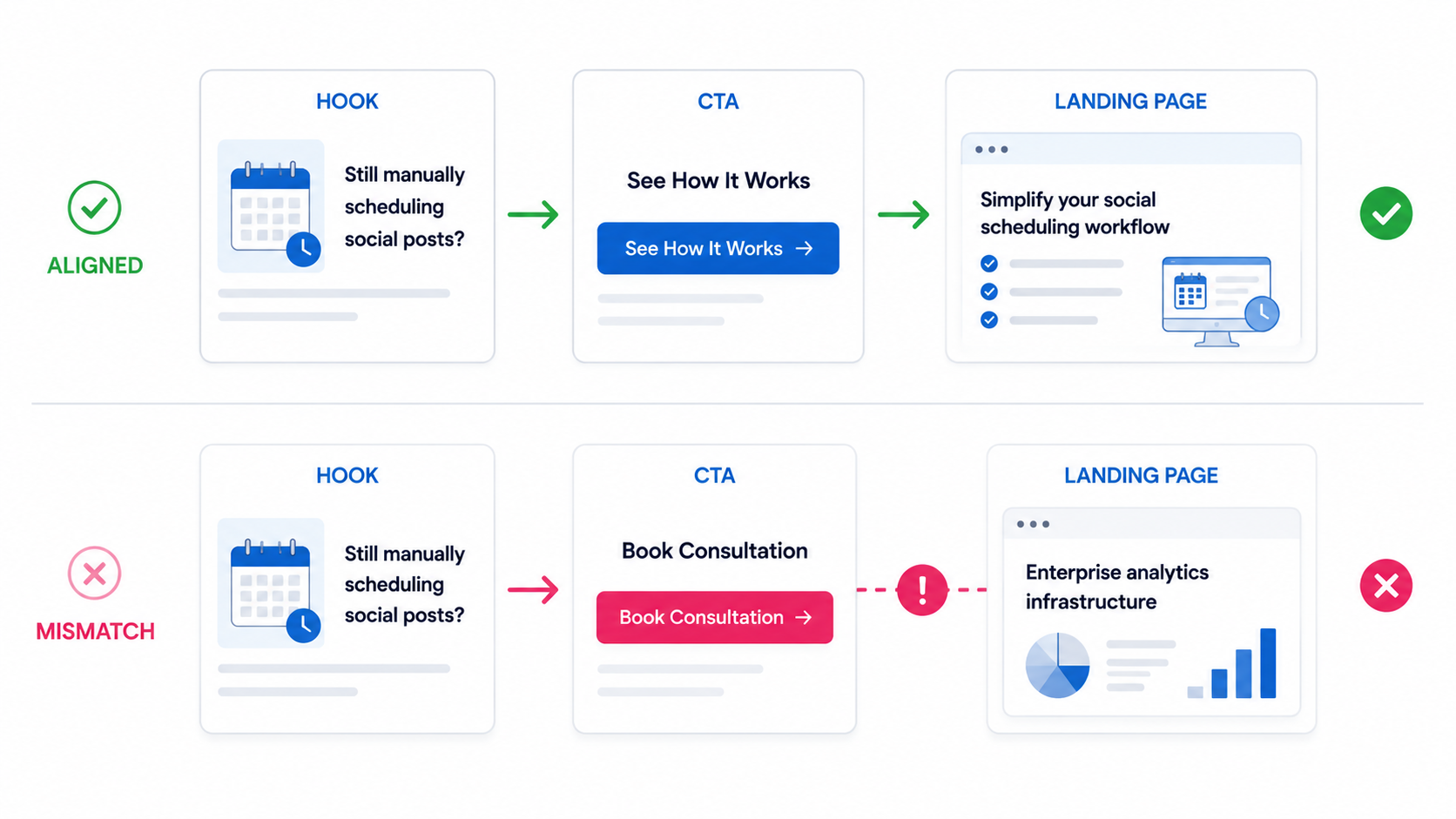
The better method is reviewing the funnel as a sequence of commitments. Ask these questions in order:
- What expectation does the hook create?
- Does the body copy reinforce the same direction?
- Does the CTA match the user’s awareness level?
- Does the landing page continue the same conversation?
For example, a hook like “Still manually scheduling social posts?” creates an operational productivity expectation. If the body copy suddenly shifts toward “enterprise analytics infrastructure,” the positioning becomes fragmented.
The CTA also matters heavily here. A cold audience often responds better to “See How It Works” than “Book Consultation” because the progression feels more natural.
Examples of Strong Alignment Structures
Strong-performing Facebook ads usually maintain one consistent psychological direction from first impression to post-click experience.
Here are examples of effective alignment:
- Operational pain → operational solution.
Hook: “Still manually scheduling social posts?”
Copy: “Automate publishing workflows across every platform.”
CTA: “Watch the Demo.”
Landing page: short walkthrough video with lightweight signup.
The commitment level increases gradually without changing tone.
- Ecommerce urgency → fast purchase flow.
Hook: “Limited restock for bestselling winter jackets.”
Copy: “Ships within 24 hours before inventory runs out again.”
CTA: “Shop Now.”
Landing page: direct product page with immediate checkout options.
The urgency continues consistently through the funnel.
- Educational B2B angle → educational conversion path.
Hook: “Why CAC increased 37% after iOS tracking changes.”
Copy: explains attribution instability briefly.
CTA: “Download the Breakdown.”
Landing page: gated report with supporting performance data.
The funnel stays educational instead of jumping immediately into sales pressure.
How to Improve Click Intent Without Changing Targeting
Many alignment fixes happen at the messaging level rather than the audience level. The highest-impact improvements usually come from simplifying transitions between stages.
For example, replacing “Book Demo” with “See Platform Workflow” often improves cold-traffic conversion rates because the CTA better matches the user’s current intent level.
Similarly, simplifying a landing page headline from “Enterprise Omnichannel Customer Engagement Infrastructure” to “Reduce Customer Support Response Time” usually improves continuity between the ad promise and the landing page experience.
Small changes like these often stabilize performance faster than creative redesigns or targeting changes because they remove friction from the user journey itself.
For deeper structural guidance, review how to create a seamless experience between ads and landing pages, how to match your ad copy to funnel stage, and how hook, body, and CTA structure affects conversion flow.
Final Takeaway
Most click-intent problems are not caused by weak creatives individually. They come from disconnected transitions between stages of the funnel.
The strongest Facebook ads feel cohesive from the first impression to the final action. The user never has to reinterpret the offer midway through the journey.
When hooks, copy, CTAs, and landing pages reinforce the same expectation, users move through the funnel with less hesitation and Meta receives cleaner optimization signals over time.