Ad targeting is changing.
A few years ago, demographic data was king. Age, gender, location — that was enough to build a decent campaign. Today? It’s a starting point, not a strategy. Modern targeting goes deeper: interests, behaviors, intent signals, and now, AI-powered prediction models.
So what happens when AI starts predicting who will buy before they even click?
Let’s take a look.
Why Traditional Targeting Is Losing Its Edge
Targeting based on basic demographics worked when options were limited. Now, with social platforms offering thousands of interest signals and behavioral clues, surface-level filters miss more than they catch.
Take interest-based targeting on Facebook. While it can still be effective, it often casts too wide a net. A user who likes a page about "marketing" might be a student, a CMO, or someone who just liked one post.
Understanding user intent and context has become far more important. That’s why more marketers are moving toward layered and dynamic targeting approaches.
Learn how to build smarter strategies in our Facebook Ad Targeting 101 guide.
What Predictive AI Models Actually Do
Predictive models don’t just react to user actions. They learn from massive amounts of anonymized data and use that to forecast what a person is likely to do next.
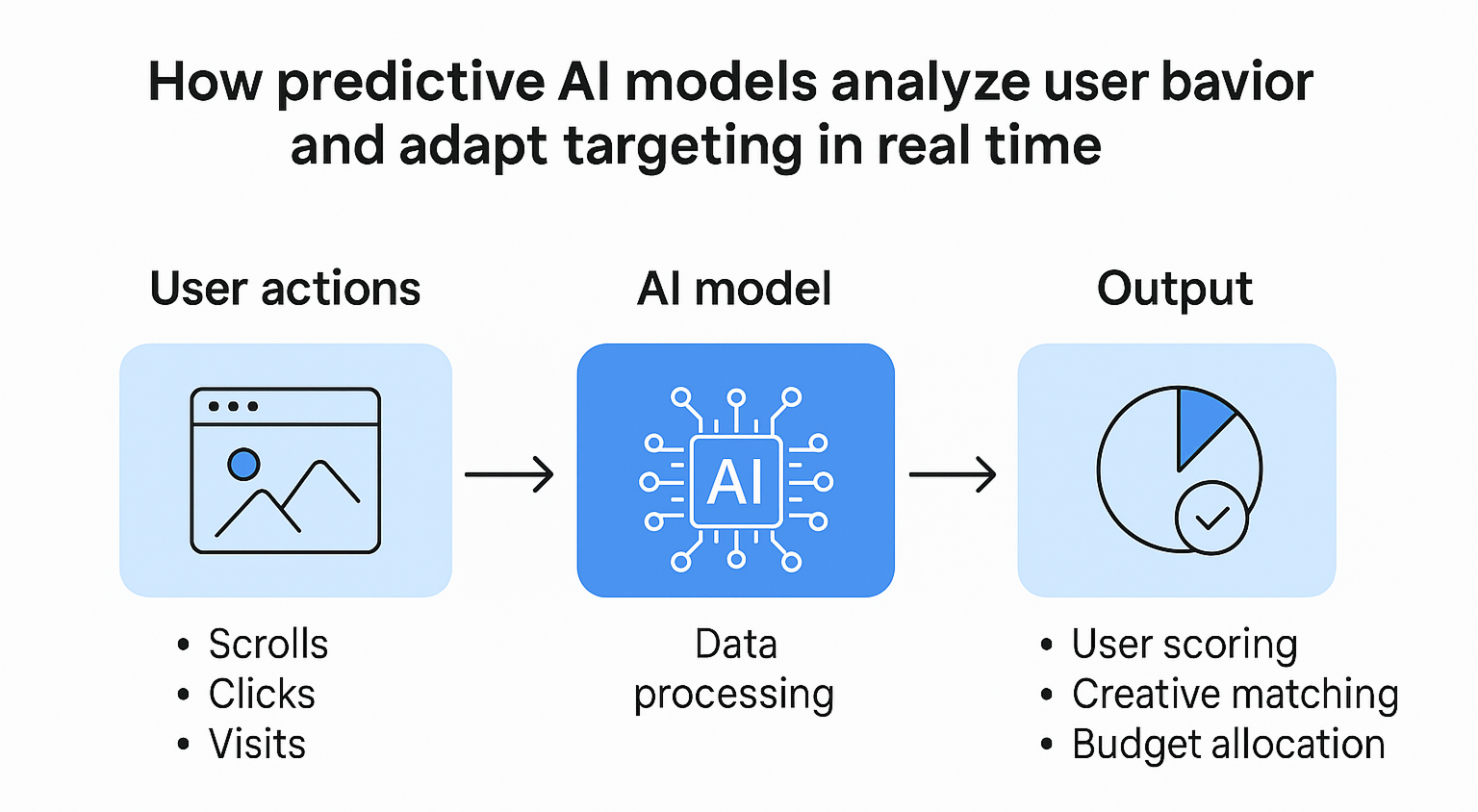
This includes:
-
Identifying patterns across multiple touchpoints — such as scroll behavior, content views, and cart abandonments. These signals reveal much more than a single click or like.
-
Ranking users based on likelihood to convert — not just based on their past behavior, but on how closely they match the conversion behaviors of similar users.
-
Scoring micro-segments in real time — instead of using static audience lists, AI adjusts rankings constantly as more user data is collected.
-
Testing creative variations automatically — by analyzing performance signals, AI determines which visuals and copy resonate most with each user group.
This enables advertisers to:
-
Prioritize high-intent users, even in large or broad audiences, by showing ads to those most likely to take meaningful actions.
-
Cut wasted spend by avoiding low-value impressions, reducing cost-per-result and improving budget efficiency.
-
Deliver more relevant ads to users based on what they need or want at that specific moment in their journey.
Ultimately, predictive models help you shift from reactive marketing to proactive, adaptive campaigns that improve over time without constant manual input.
What This Means for Your Campaign Strategy
You don’t need to be a data scientist to benefit from predictive targeting. You just need to know how to structure your campaigns to support smarter decision-making.
Start with clearer audience goals.
Many campaigns underperform because the audience is too broad or the goal isn’t aligned with the targeting method. For example, if your campaign objective is conversions but you’re targeting users who haven’t even visited your site, you're unlikely to see strong results.
This breakdown of Meta Ad Campaign Objectives explains how to choose the right one for your goal.
Use tiered audience structures.
Segment your audiences based on how familiar they are with your brand.

-
Cold — people who match interests or lookalikes but haven’t interacted with your business before. These users need introductory, awareness-driven messaging.
-
Warm — people who have viewed a page, watched a video, or engaged with an ad. They're aware of your brand but haven’t shown purchase intent yet.
-
Hot — users who added to cart, visited high-intent pages, or are on your email list. These people need persuasive, action-oriented content to convert.
Once segmented, apply AI-enhanced tools to dynamically optimize spend across these layers, letting the system shift more budget toward the highest-performing tiers.
Fix your foundation.
Before layering on advanced targeting, make sure you’re not making basic setup mistakes that restrict delivery. Many advertisers face performance drops from incorrect exclusions, budget caps, or overly narrow targeting.
AI Doesn’t Replace Strategy — It Amplifies It
Predictive targeting isn’t a shortcut. If anything, it rewards advertisers who have strong foundations: clear messaging, high-converting landing pages, and a well-structured funnel.
But it does offer a huge advantage to those who know how to use it.
With predictive AI, you can:
-
Launch smaller tests and scale faster — because the model identifies winners quickly and optimizes in real time.
-
React to real-time signals — instead of waiting days for performance metrics, you get faster feedback loops.
-
Spend less time on manual tweaks — and more time refining creative strategy and funnel alignment.
If you’re struggling with targeting decisions, this step-by-step guide to defining your audience can help build a clearer path forward.
Looking Ahead
As platforms continue to evolve and privacy standards tighten, advertisers who rely solely on lookalikes or interest targeting will fall behind. AI-powered targeting is here to stay — and it’s already rewriting the playbook.
Start building your skills around behavioral segmentation, predictive models, and campaign structure. The future won’t be about who you think your audience is. It will be about knowing what they’ll do next.
For more insights on adapting to AI in paid campaigns, read Facebook Ads Targeting Updates: How to Adapt in 2025.