If your Facebook ads aren’t converting well, your audience might be the issue.
Many advertisers still rely on interest targeting, demographics, or basic lookalike audiences. These are easy to use — but they often bring in the wrong people, or people who aren’t ready to take action.
There’s a better way to reach high-intent users.
It’s by using Facebook group audiences — and they’re one of the most overlooked sources of conversions.
Let’s look at why they work so well and how you can start using them in your campaigns.
What Are Facebook Group Audiences?
Facebook groups are online communities. People join them to learn something, solve a problem, or connect with others who share their goals.
That means group members are more engaged and more intentional than typical ad audiences. They comment, ask questions, and pay attention.
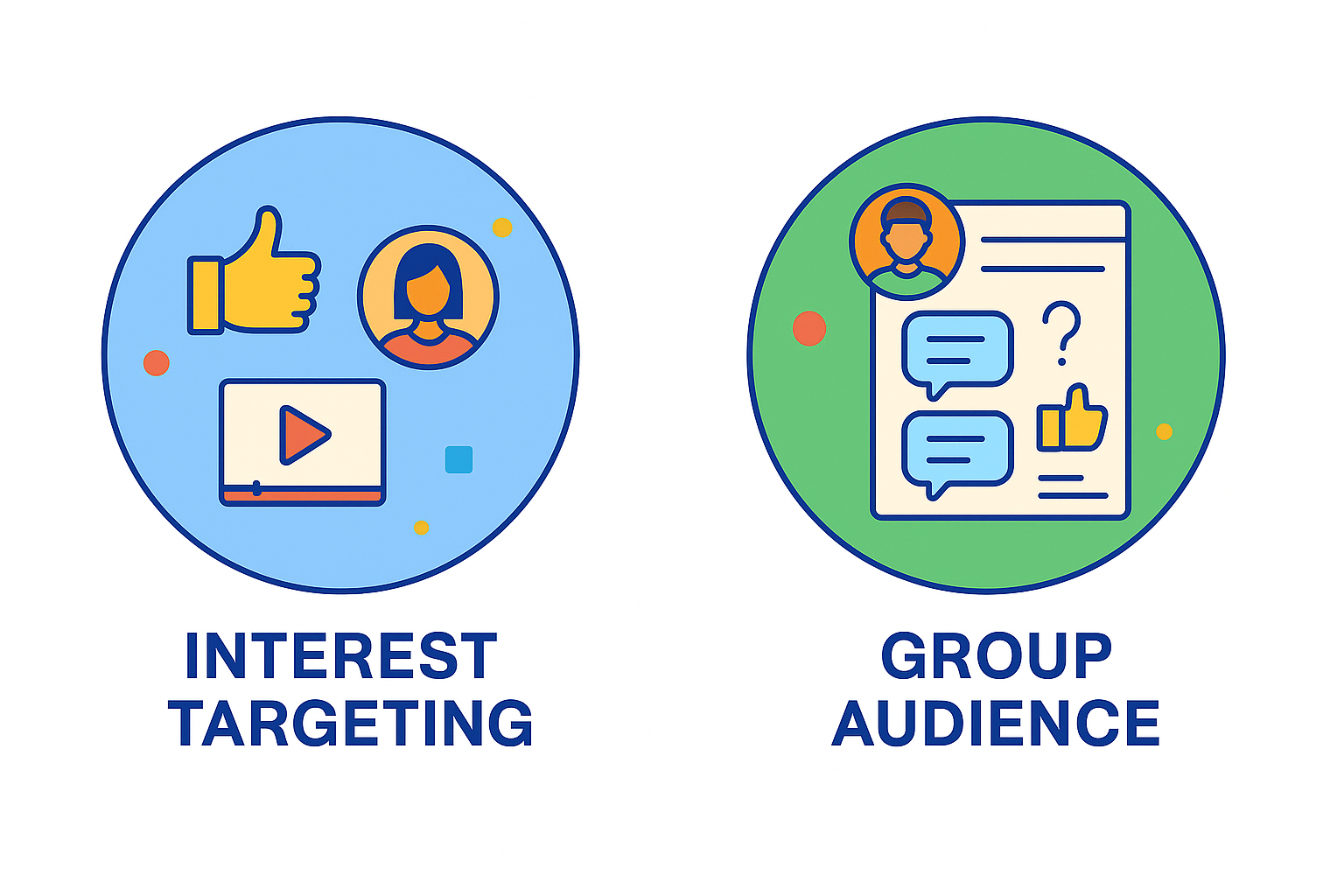
Compare this to someone who liked a Facebook page five years ago and never returned.
Which person would you rather target?
Here’s an example: you sell hiking gear. If you target the “outdoor recreation” interest, you might reach people who enjoy nature photos but don’t hike.
But if you target members of a group like “Backpacking for Beginners”, you’re more likely to reach people who are planning trips, researching gear, and looking for recommendations.
That’s a much better audience — and more likely to convert.
Why Group Audiences Perform Better
Here are four reasons why Facebook group audiences often outperform standard targeting:
1. They Show Stronger Intent
Group members are not just scrolling. Many are actively looking for products, advice, or solutions — especially in niche or problem-focused communities.
2. They Understand the Topic
You don’t have to explain everything from scratch. People in groups often know the basics and are already comparing their options.
3. They Trust Their Community
People ask for and share recommendations in groups. When your ad appears in the same context, it feels familiar — not intrusive.
4. They See Fewer Ads
Most advertisers don’t use group-based targeting. This means your ads stand out more, and users are less likely to be tired of seeing the same messaging.
Examples of Facebook Group Audiences in Action
Let’s look at how this works in real industries.
E-commerce Example: Eco-Friendly Products
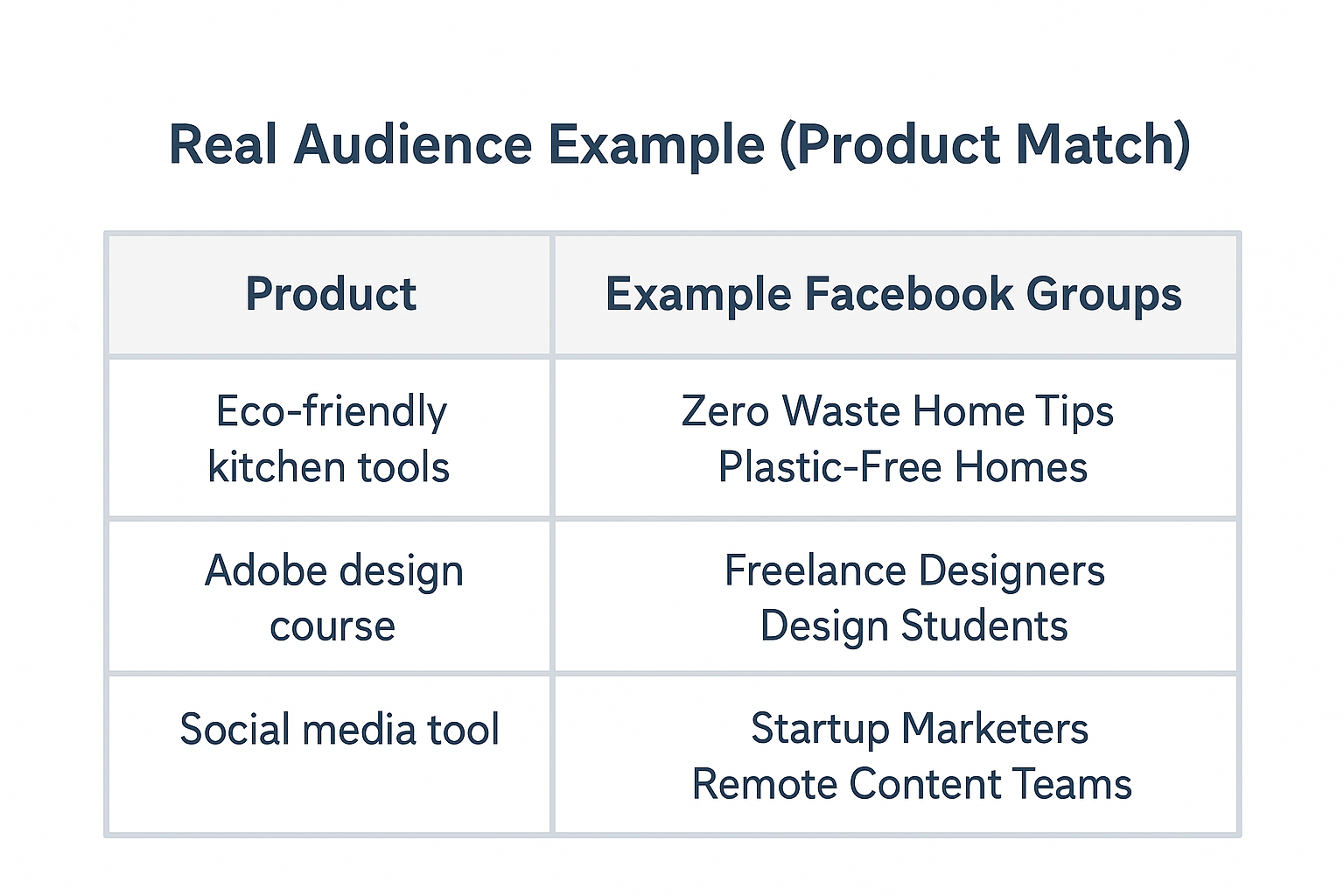
You sell sustainable home goods. Instead of targeting “green living,” you build audiences from groups like:
-
Zero Waste Home Tips,
-
Plastic-Free Swaps and Ideas,
-
Eco-Friendly Living for Families.
These members are already interested in what you sell — and they’re actively discussing product options.
Online Course Example: Graphic Design
You run a course on Adobe Illustrator. Instead of using “graphic design” as a broad interest, you focus on groups such as:
-
Freelance Graphic Designers,
-
Designers Learning Illustrator,
-
Career Switchers into Tech and Design.
These people are not just curious — they’re ready to invest in learning new skills.
SaaS Example: Social Media Tools
You sell a tool for social media managers. Rather than targeting “digital marketing,” you find groups like:
-
Remote Content Teams,
-
Freelance Social Media Managers,
-
Marketing Tools for Startups.
These members are discussing workflows and looking for better tools — exactly what you offer.
How to Use Facebook Group Audiences
You can’t target Facebook groups directly in Ads Manager. But you can still build group-based audiences. To learn how, follow this guide: How to Build Your Target Audience from a Facebook Group.
Once you’ve created the audience, here are three ways to use it well:
1. Match the Group’s Language
Use the same tone, phrases, or keywords that show up in the group. This builds trust and makes your ad feel like it belongs.
2. Focus on Real Problems
Don’t be generic. Base your messaging on the questions and pain points people talk about in the group.
3. Use Native-Looking Creative
Try using testimonials, quote graphics, or user-generated content. These feel more like helpful posts than traditional ads.
Why Most Advertisers Overlook This
Most marketers ignore group audiences because they don’t know how to reach them. They stay inside the safe zone of interest targeting — and keep getting average results.
But Facebook group audiences give you something better: real communities of people who care about your topic and are ready to act.
If you’re tired of low click-through rates and wasted spend, it’s time to stop targeting everyone — and start targeting the right people.
Final Takeaway
Facebook group audiences are more focused, more informed, and more motivated than typical ad audiences. They convert better because they care more.
If your current targeting is too broad or inconsistent, this strategy can give you a serious advantage.
Instead of advertising to the masses, you’re joining the right conversations — and speaking directly to people who are ready to listen.