A/B testing and experimentation are essential parts of successful advertising — but done wrong, they can drain your budget fast. Running ad experiments strategically allows you to make data-backed decisions, improve performance, and minimize waste.
Here’s how to test your ads the right way.
1. Define a Clear Hypothesis
Before launching any test, know exactly what you’re trying to learn. Instead of testing randomly, create a hypothesis like: “Changing the ad headline to include pricing will increase CTR by 20%.” Clear hypotheses prevent unnecessary testing and help you focus on measurable outcomes.
2. Test One Variable at a Time
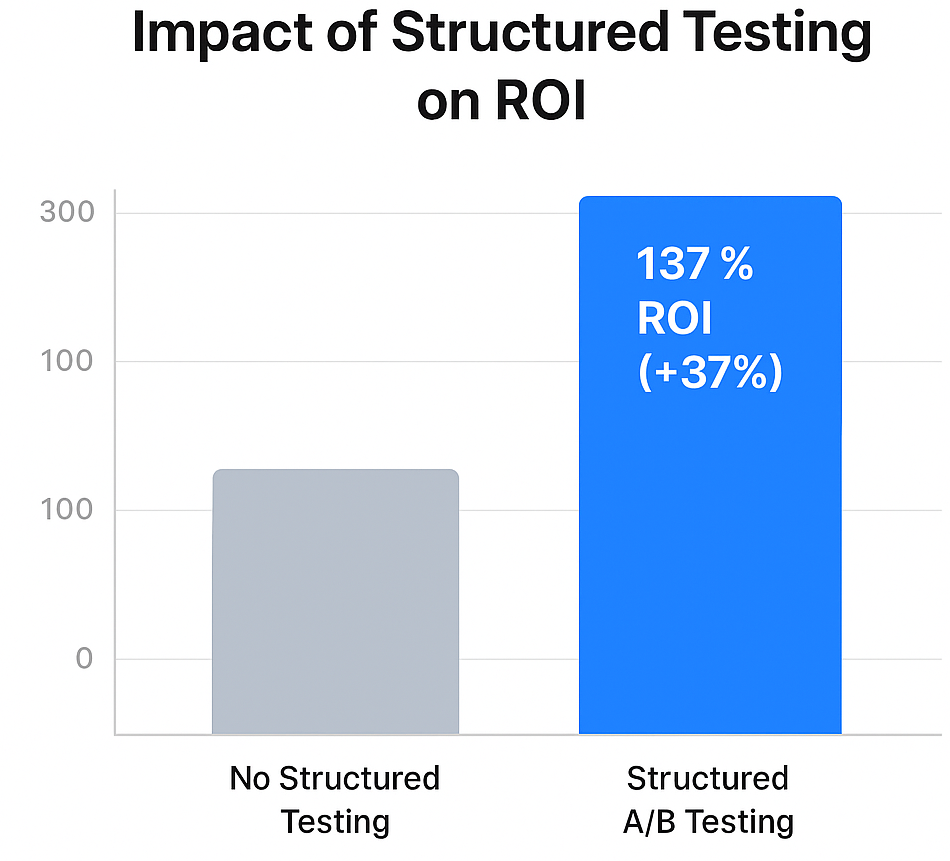
Structured A/B testing increases overall campaign ROI by up to 37% compared to unstructured testing
Keep your experiments clean. Testing multiple variables at once — such as image, headline, and CTA — makes it impossible to know which change caused the result. Tests isolating one variable produce 30–40% more reliable insights than multivariable tests.
3. Set a Realistic Budget and Duration
Small budgets spread across too many experiments won’t produce meaningful data. Allocate at least 10–15% of your monthly ad spend for testing and run each test for a minimum of one week or until statistical significance is reached.
4. Use Split Testing Tools
Most ad platforms offer native split-testing features that automate fair comparisons by distributing traffic evenly. This ensures accurate data and prevents bias toward one variant.
5. Focus on Key Metrics
Identify which metrics define success for your experiment — CTR, CPA, ROAS, or conversion rate. Focusing on one primary metric keeps analysis consistent and helps you spot what truly impacts performance.
6. Avoid Stopping Tests Too Early
Prematurely ending a test can lead to misleading conclusions. Wait until you have a statistically valid sample size. Data scientists suggest collecting at least 1,000 impressions per variant before making decisions.
7. Document Every Experiment
Keep a testing log with details about hypotheses, variables, budget, audience, and results. This record prevents repeating failed tests and helps you build a knowledge base for future campaigns.
8. Scale What Works Gradually
Once a winning variant emerges, increase the budget in small increments — 20–30% per phase — to ensure performance remains consistent at scale.
9. Combine Quantitative and Qualitative Insights
Numbers show what happened, but user feedback explains why. Review comments, messages, or surveys alongside metrics to understand deeper motivations behind user behavior.
10. Revisit and Refresh Regularly
What works today might not work next quarter. Continually retest creative, copy, and audience targeting to keep your campaigns optimized and ahead of trends.
Key Takeaway:
Smart ad experimentation isn’t about testing endlessly — it’s about testing with purpose. When you run structured, data-informed experiments, you make every dollar count and ensure your ad budget goes toward what truly drives results.
Further Reading: